baba
Free, no AIHebrew-English guide 92 of 100

Israeli Landscape Words, in Plain English

What nahal, vadi, makhtesh and ein mean on Israeli maps and signs.

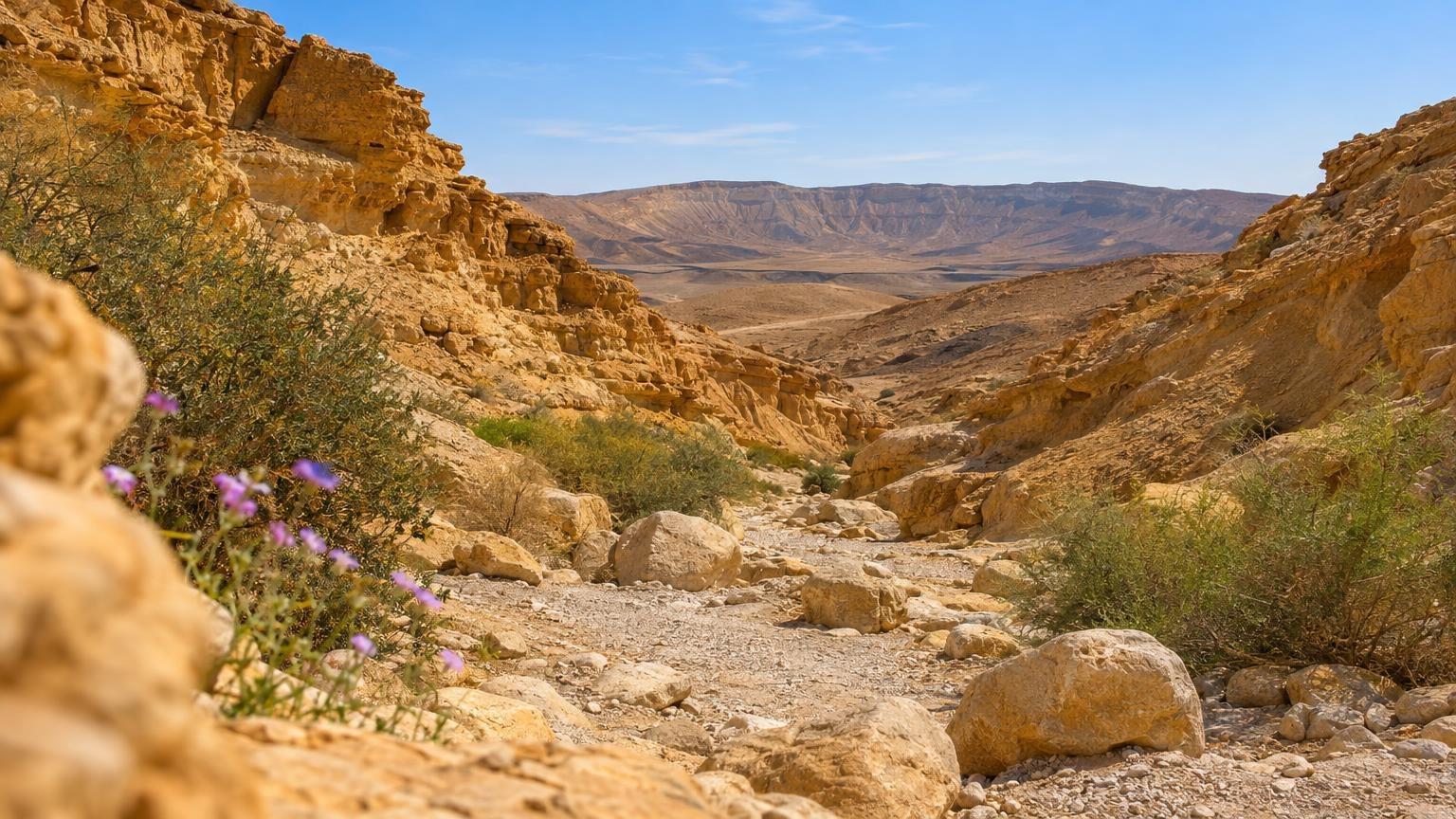
A wide Israeli desert landscape with a dry streambed and crater valley

Mix-Ups to Avoid

  1. Do not translate every nahal as a flowing river. A nahal is a watercourse that may be dry, so check an official source before you count on water.
  2. Do not call a makhtesh a crater. Makhtesh Ramon was made by erosion, not by a meteor or a volcano, so keep the word makhtesh in English.
  3. Do not read an Ein or En name as permission to swim or drink. Enter water only at designated sites, and do not drink natural spring water unless it is approved.
In This Guide7 entries

Streams And Valleys

On the label or sign

נחל
Nahal plus a proper name, as on maps and trail signs
נחל פרת
Nahal Prat, an example of the naming pattern

נחלWatercourse or stream channel

nahal

US English

Watercourse or stream channel

UK English

Watercourse, stream, or river channel

What it is

A nahal is a named natural drainage course. The word nahal can name the channel even when no water is visible.

The difference

English speakers expect a river with water in it. A nahal can be a vegetated stream, a rocky canyon bed, or a broad dry channel, and the bare word does not tell you which.

Common mistake

Do not assume a nahal on a map guarantees water; check the flow type and the current status before you go.
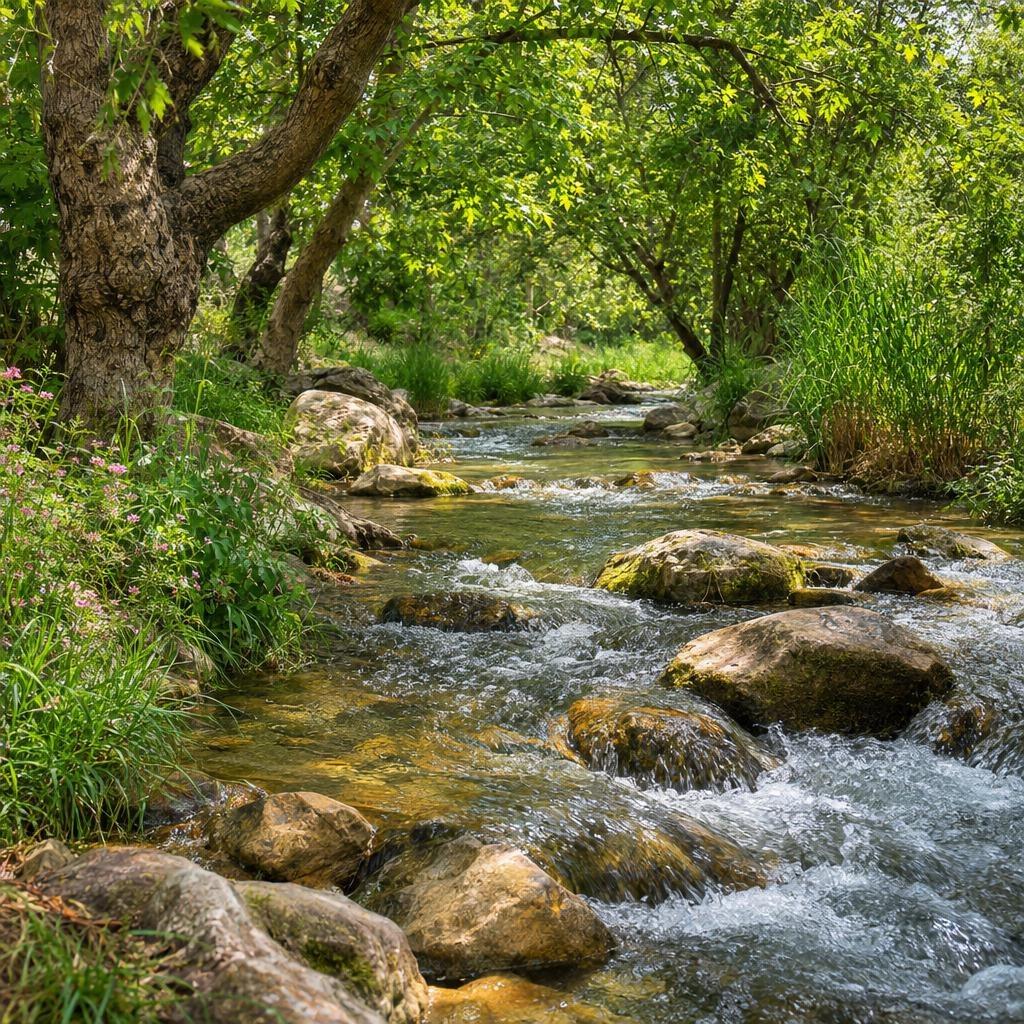
A flowing perennial stream, nahal eitan

On the label or sign

איתן
perennial, often in a description rather than the site name

נחל איתןPerennial stream

nahal eitan

US English

Perennial stream or perennial river

UK English

Perennial stream or perennial watercourse

What it is

A nahal eitan is a nahal whose water flows through the whole year. The Academy of the Hebrew Language defines nahal eitan as drawing its water throughout the entire year.

The difference

Perennial describes the flow, not the size. One named nahal can change along its course; the Nature and Parks Authority says Nahal Gilbon becomes perennial from the Alika springs downstream.

Common mistake

Do not assume every part of a named nahal has year-round water; confirm a nahal eitan on an official site rather than from one wet visit.

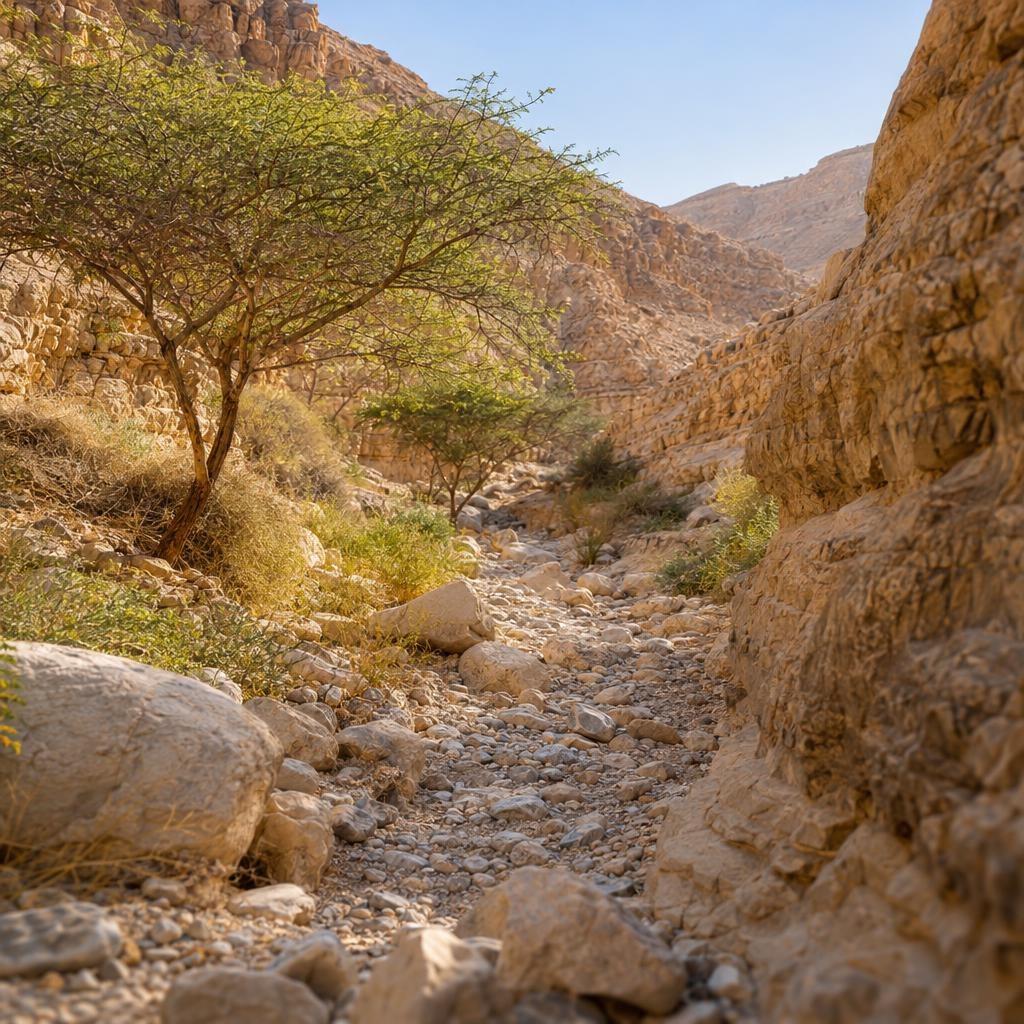
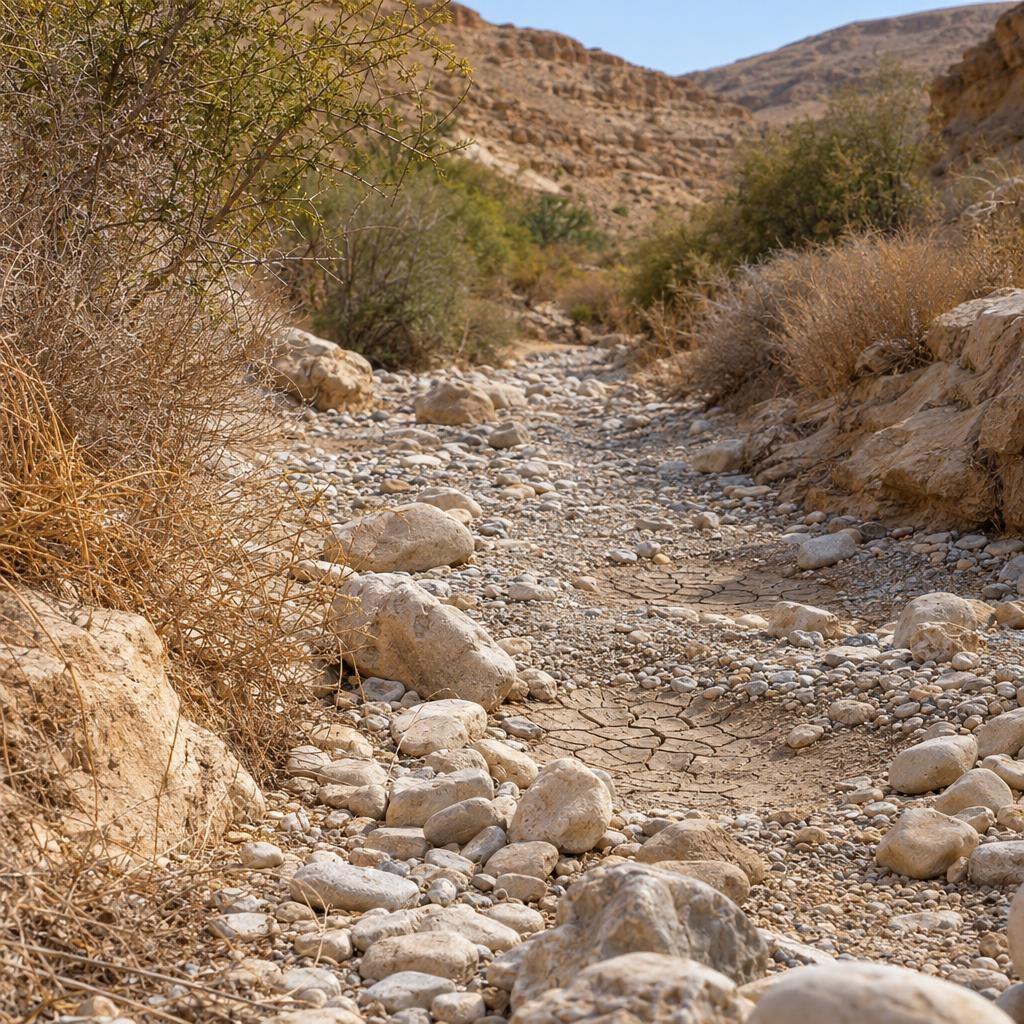
A dry ephemeral streambed in the desert, nahal akhzav

On the label or sign

נחל אכזב
ephemeral watercourse
נחל עונתי
seasonal watercourse

נחל אכזב / נחל עונתיEphemeral or seasonal stream

nahal akhzav / nahal onati

US English

Ephemeral stream; in the Southwest, a wash or arroyo

UK English

Ephemeral stream or seasonal watercourse

What it is

A nahal akhzav or nahal onati is a channel without continuous year-round flow. The bed of a nahal akhzav is often gravel, cobbles, sand, or bare rock and may be completely dry.

The difference

Ephemeral and intermittent are not perfect synonyms in English: an ephemeral reach depends on rain, while an intermittent reach flows for part of the year. A dry nahal akhzav is still an active drainage route, and flash floods can develop quickly after rain.

Common mistake

Do not treat a dry nahal akhzav as safe; check the Israel Meteorological Service flood forecast, because water can arrive even without rain overhead.

A rocky desert valley, a wadi

On the label or sign

ואדי
Wadi plus an Arabic name
נחל פרת (ואדי קלט)
Nahal Prat (Wadi Qelt), one feature with two names

ואדיWadi

vadi

US English

Wadi; explained as a dry wash or arroyo

UK English

Wadi; explained as an ephemeral valley or stream channel

What it is

Vadi is a Hebrew loanword the Academy of the Hebrew Language records as wadi. In Israel the word vadi often keeps an Arabic or traditional name for a valley or stream channel.

The difference

A vadi is not the dry opposite of a nahal. Nahal Prat and Wadi Qelt are one feature with major springs, and Nahal Taninim, also called Wadi az-Zarqa, has a lower reach that flows all year.

Common mistake

Do not treat wadi and nahal as two different landforms or translate every wadi as a dry riverbed; read the Hebrew and Arabic names as possible labels for the same place.

Landforms

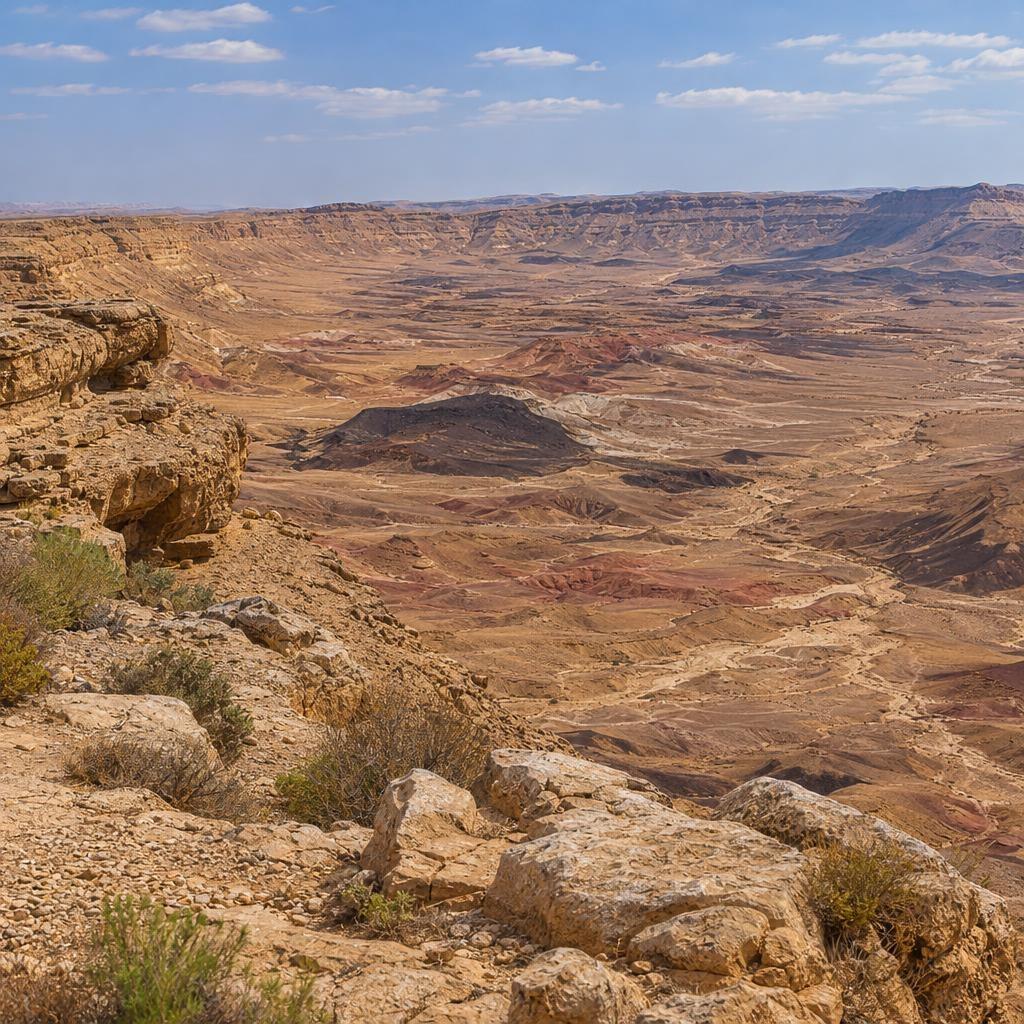
A makhtesh, the large erosion bowl of the Negev

On the label or sign

מכתש רמון
Makhtesh Ramon

מכתשMakhtesh (erosional landform)

makhtesh

US English

Makhtesh, or erosional makhtesh

UK English

Makhtesh, or erosional makhtesh

What it is

A makhtesh is a depression formed when erosion removes softer rock from inside a folded ridge beneath harder rock. A makhtesh drains through a single outlet.

The difference

English speakers hear crater and picture a meteor strike or a volcano. A makhtesh is neither, and the sources give no exact ordinary English substitute, so makhtesh is the accurate English word.

Common mistake

Do not call Makhtesh Ramon the Ramon Crater without explaining that a makhtesh is made by erosion; keep the word makhtesh.

Springs

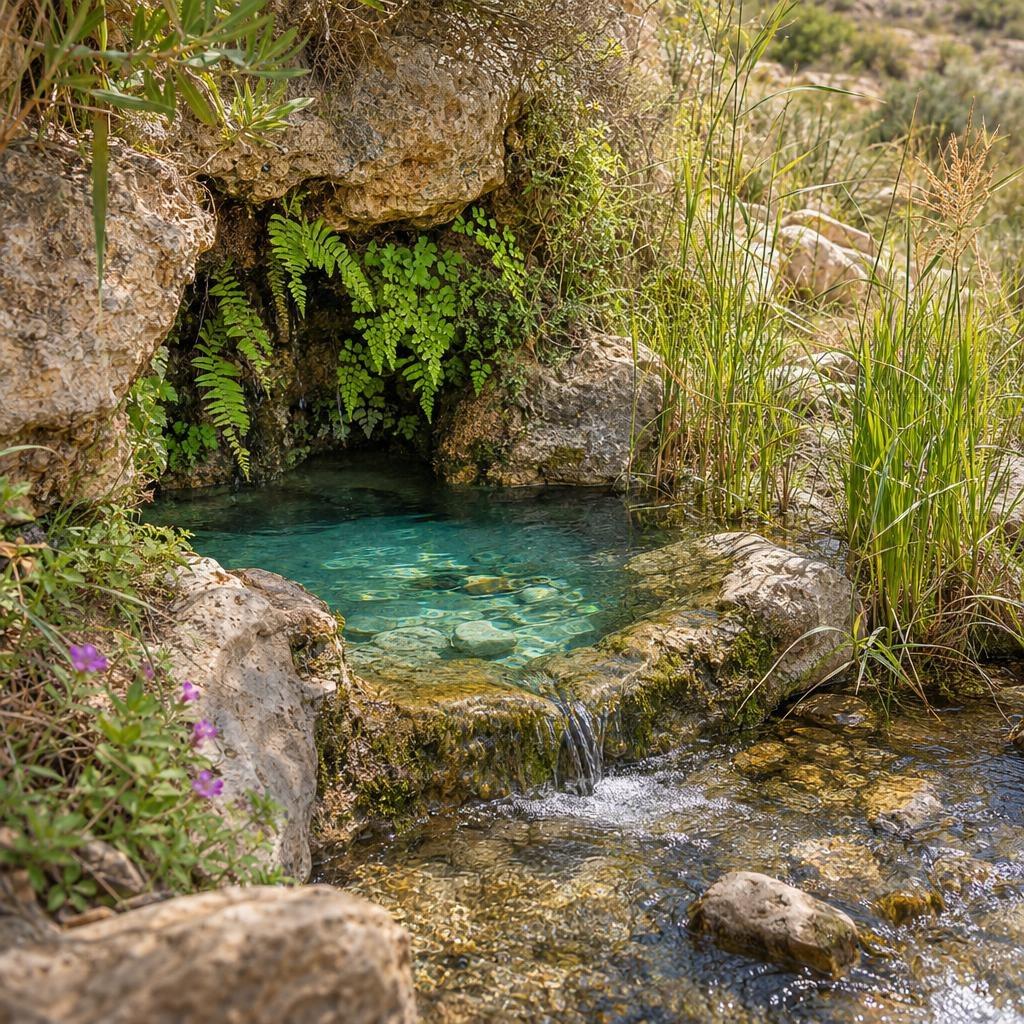
A natural spring, ein

On the label or sign

עין
Ein or En plus a proper name, a spring
עין גדי
En Gedi on road signs, Ein Gedi on park pages
מעיין
spring, in descriptive text

עין / מעייןSpring

ein / ma'ayan

US English

Spring; a weak, diffuse one is a seep

UK English

Spring; a weak, diffuse one is a seep

What it is

An ein is a natural point where groundwater comes out at the surface. Ein is the form used in place names, and ma'ayan is the normal everyday word for a spring.

The difference

In ordinary Hebrew the word ein also means eye, but in a place name ein means spring. An Ein or En name does not promise visible water, drinkable water, or permission to go in.

Common mistake

Do not translate every ein as eye or assume every Ein name marks a swimming pool; enter water only at designated sites and do not drink natural spring water unless it is approved.

On the label or sign

עינות / עיינות
two Hebrew spellings of einot in site names
עינות כוכב
Enot Kokhav on Ministry of Transport signs

עינות / מעיינותSprings or group of springs

einot / ma'ayanot

US English

Springs, or a group of springs

UK English

Springs, or a group of springs

What it is

Einot plus a name usually labels a cluster of springs or a spring area. Ma'ayanot is the ordinary plural in descriptive writing.

The difference

A plural name such as einot does not guarantee that every spring still flows. The Nature and Parks Authority reported in December 2025 that the Einot Fakhum springs had almost disappeared after a rain-poor winter.

Common mistake

Do not search only for Ein; also search En, Einot, Enot, and Aynot to find the same place.

You See This on a Sign or Map. Read It This Way.

You see this on a sign or map. Read it this way.
English you might expectHebrew on the signKeep in mind
River or streamנחלnahalA watercourse; water is not guaranteed.
Perennial streamנחל איתןnahal eitanWater all year, but check each section.
Dry wash or arroyoנחל אכזבnahal akhzavCan flood quickly after rain.
WadiואדיvadiOften an Arabic name for a nahal; may hold water.
CraterמכתשmakhteshMade by erosion; say makhtesh.
Springעין / מעייןein / ma'ayanSearch both En and Ein spellings.
SpringsעינותeinotAlso spelled Enot, Einot, or Aynot.

Knowing the word is half of it. Say it out loud.

A Hebrew speaking app with Maya and David, AI tutors who hold conversations, explain corrections and help you practise what you need to say. Private beta on iPhone and Android. Public store launch is still ahead. Free Classic lessons to start, no card needed.

Explore baba Learn

How we checked this guide

By the baba team. Checked on against 28 sources, mostly Israeli retailers, manufacturers and government pages, and updated . Products, labels and rules change, so check the pack or the office before you rely on a detail. Our methodology.

Frequently Asked Questions

Is a nahal a river?

Not always. A nahal is a watercourse or stream channel, and the word can name a channel with no visible water. A nahal eitan flows all year, while a nahal akhzav does not.

What is the difference between a nahal and a wadi?

A wadi is often an Arabic or traditional name for the same feature as a nahal. Nahal Prat and Wadi Qelt are one place, and that place has major springs.

Is Makhtesh Ramon a crater?

No. A makhtesh is a depression formed by erosion inside a folded ridge, with one drainage outlet. Makhtesh Ramon was not made by a meteor or a volcano.

What does Ein mean in Israeli place names?

In a place name, ein means spring. The everyday Hebrew word for a spring is ma'ayan, and on signs the same element may be spelled En or Ein.

Can I swim or drink at an Israeli spring?

Only where the site allows it. The Nature and Parks Authority permits water entry only at designated sites, and natural spring water is not to be drunk unless approved by the Ministry of Health or another competent authority.

More Hebrew-English Guides

All guides