baba
Free, no AIHebrew-English guide 96 of 100

The Israeli Beach, in Plain English

What matzil, the flag colors, matkot and shimshiya mean at the beach.

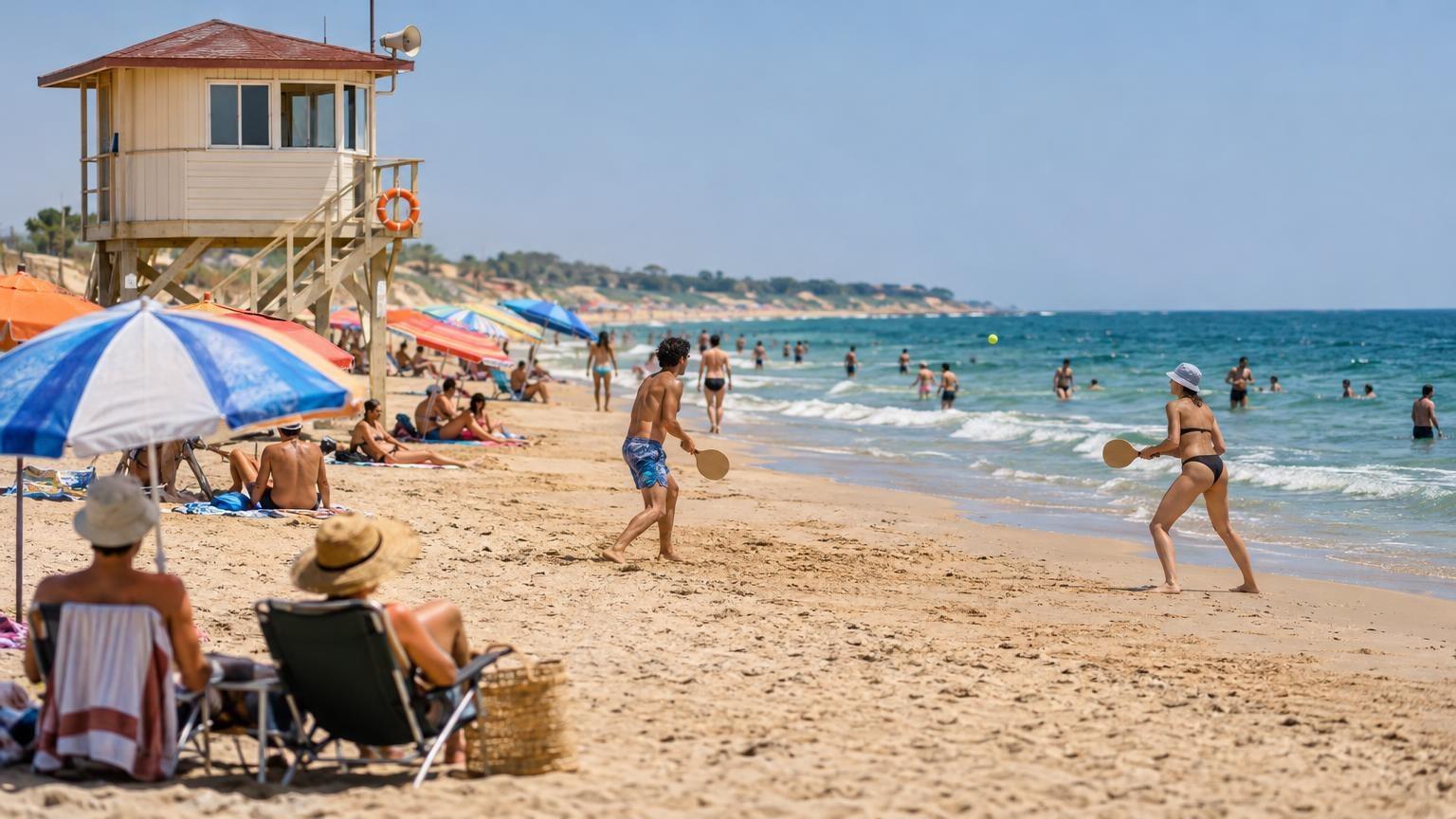
An Israeli Mediterranean beach with a lifeguard tower, umbrellas and paddle ball players

Mix-Ups to Avoid

  1. Do not read the Israeli red flag as no swimming. Red means swimming is permitted only in the restricted area, while black means swimming is prohibited.
  2. Do not take beach chairs, shade or a café as proof that lifeguards are working. Check the posted lifeguard hours and the flag above the lifeguard station.
  3. Do not treat a purple flag or a Blue Flag as the swimming signal. Purple warns of jellyfish, Blue Flag is an environmental award, and only white, red and black are legal sea-state flags.
In This Guide30 entries

Where You Can Swim

On the label or sign

חוף רחצה מוכרז
declared bathing beach

חוף רחצה מוכרזDeclared bathing beach

khof rakhatza mukhraz

US English

Declared or designated bathing beach

UK English

Designated bathing beach

What it is

A khof rakhatza mukhraz is a beach formally declared for bathing, where the authority runs the required services during published hours. The 2026 Ministry of the Interior list covered 106 declared Mediterranean beaches, 34 at the Kinneret, 16 at the Dead Sea, and four at the Red Sea.

The difference

Declared is a legal and service status. A khof rakhatza mukhraz does not mean the whole visible shoreline is open for swimming.

Common mistake

Do not judge by chairs or a café; check the official Ministry map, where a blue rectangle marks a khof rakhatza mukhraz, and the sign at the entrance.
On the label or sign

אסור לרחצה
prohibited for bathing

חוף אסור לרחצה / מקום רחצה אסורSwimming-prohibited beach

khof asur lirkhatza / mekom rakhatza asur

US English

Swimming-prohibited beach or area

UK English

Bathing-prohibited beach or area

What it is

A khof asur lirkhatza is an area officially designated as prohibited for bathing. Authorities must post prohibition signs there.

The difference

A khof asur lirkhatza is different from a declared beach that is closed for the day. The word asur means prohibited.

Common mistake

Do not swim at a khof asur lirkhatza; the Ministry map marks a prohibited bathing area with a red rectangle.

On the label or sign

המקום אינו מקום מוכרז לרחצה
this place is not a declared bathing place
אין שירותי הצלה ועזרה ראשונה
no lifeguard or first aid services

חוף לא מוכרז / חוף חסר סטטוסUndeclared beach

khof lo mukhraz / khof khasar status

US English

Undeclared or unclassified beach

UK English

Undesignated or unclassified beach

What it is

A khof lo mukhraz is a stretch of shore that is not a declared bathing place. The Ministry counts khof khasar status separately from declared and prohibited coast.

The difference

A 2026 opening instruction says a town without a relevant bylaw should sign a khof lo mukhraz as not declared, without lifeguard or first aid services, and dangerous for bathing.

Common mistake

Do not judge a khof lo mukhraz by the crowd; check the official map and read the signs.

On the label or sign

רחצת נשים
women's bathing
רחצת גברים
men's bathing

חוף נפרדSeparate-bathing beach

khof nifrad

US English

Gender-segregated or separate-swimming beach

UK English

Segregated or separate-bathing beach

What it is

A khof nifrad is a declared beach with separate bathing times for women and men, provided for religious and modesty needs. In summer 2026 the Ministry listed 16 such beaches, and each sets its own days and hours.

The difference

A khof nifrad is a schedule and privacy designation, not a kashrut grade. Netanya's Tzanz beach publishes separate schedules and states separately that its kiosk is mehadrin kosher.

Common mistake

Do not assume the food at a khof nifrad has any particular kosher certification; check each kiosk locally.

Lifeguards

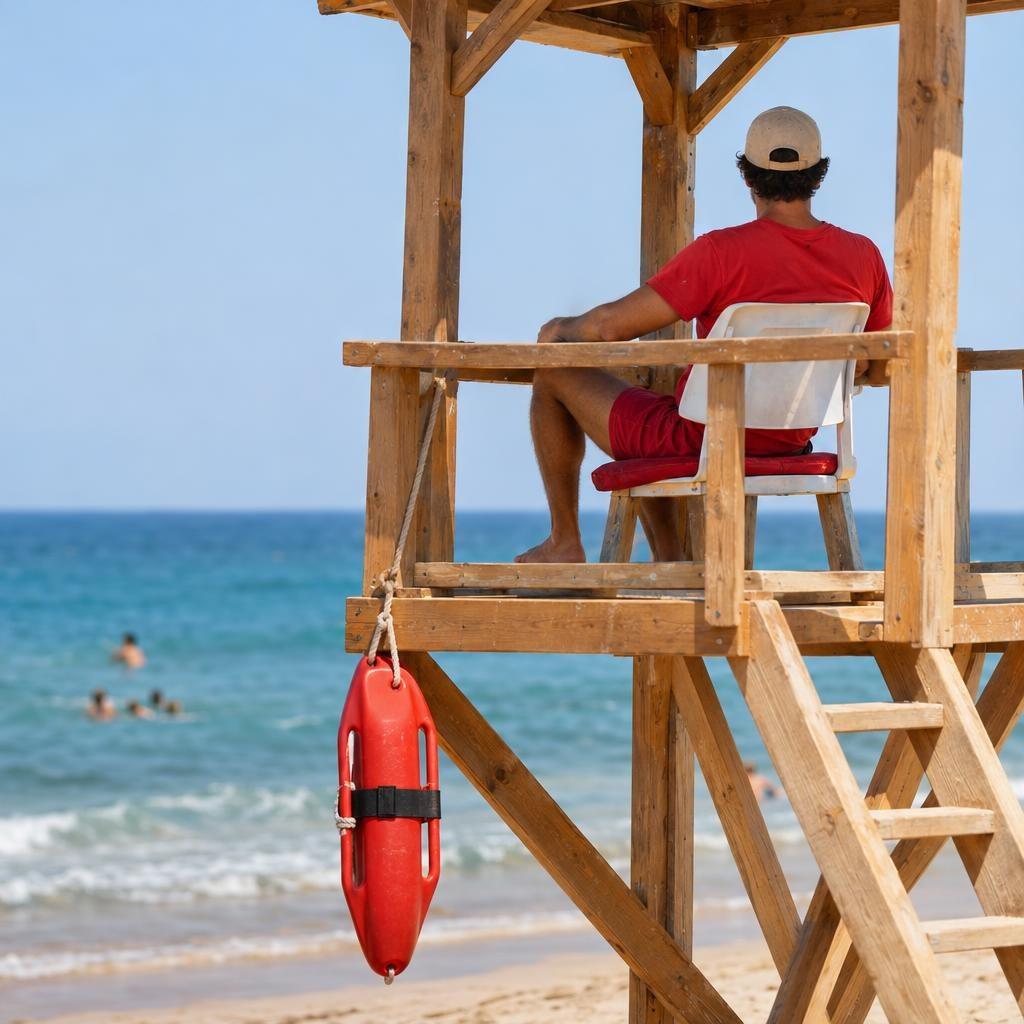
A lifeguard on a tower watching the sea, matzil

מציל / מצילהLifeguard

matzil / matzila

US English

Lifeguard

UK English

Lifeguard

What it is

A matzil is a trained beach lifeguard, and matzila is the feminine form. Official English guidance uses lifeguard and lifeguard services.

The difference

Seeing a matzil is not the safety signal by itself. What counts is an active lifeguard service at a declared beach, during its published hours, with the station flag flying.

Common mistake

Do not swim just because a person in lifeguard clothing is nearby; enter the water only at a declared beach while the matzil service is operating.

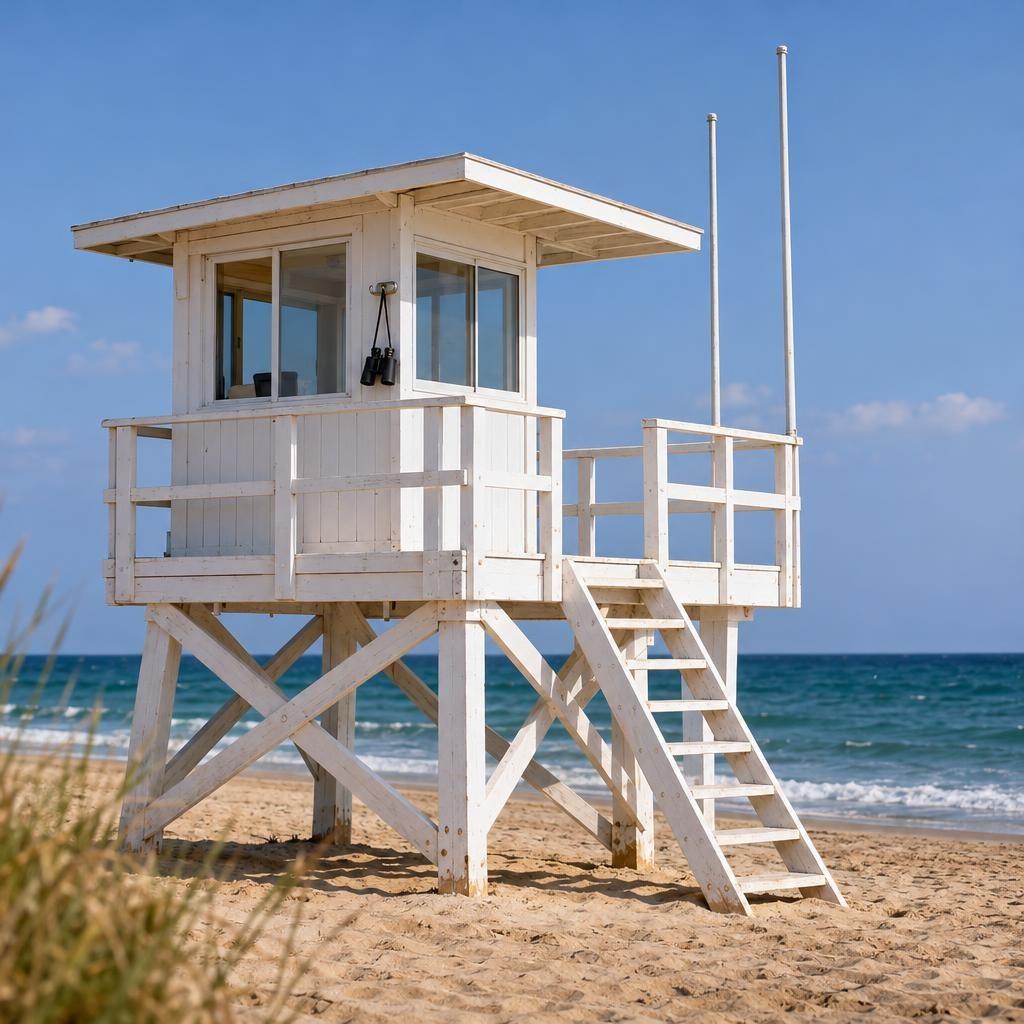
A lifeguard tower on the beach, tachanat hatzala

On the label or sign

תחנת הצלה
lifeguard station

תחנת הצלה / סוכת מצילLifeguard station

takhanat hatzala / sukat matzil

US English

Lifeguard station or lifeguard hut

UK English

Lifeguard station or hut

What it is

The takhanat hatzala is the staffed lifeguard base facing the water, with the sea-state flag above it. Public guidance also tells swimmers to check the flag beside the sukat matzil.

The difference

A takhanat hatzala is different from a first aid point. The station's operating hours must be posted on the station and at the beach entrance.

Common mistake

Do not only check that a takhanat hatzala exists; check that the station is operating and read the flag above it.

On the label or sign

שעות פעילות שירותי ההצלה
lifeguard service hours

שעות רחצה / שעות פעילות שירותי ההצלהLifeguard hours

shaot rakhatza / shaot pe'ilut sheirutei ha-hatzala

US English

Swimming hours or lifeguard hours

UK English

Bathing hours or lifeguard hours

What it is

Shaot rakhatza are the local daily hours when the lifeguard station operates. The 2026 national instructions required hours between sunrise and sunset, at least eight hours a day, posted at the entrance and the station.

The difference

Shaot rakhatza vary by town, beach, date, and weekday. In 2026 the main season, עונת הרחצה (onat ha-rakhatza), ran from 9 April to 10 October, and 85 beaches then kept winter lifeguard service on their own schedules.

Common mistake

Do not guess shaot rakhatza from daylight, crowds, or another beach; read the current sign or town page for that beach.

On the label or sign

אין שירותי הצלה
no lifeguard service

אין שירותי הצלהNo lifeguard service

ein sheirutei hatzala

US English

No lifeguard service

UK English

No lifeguard service

What it is

Ein sheirutei hatzala is a direct warning that lifeguard services are not active. Sheirutei hatzala are the active supervised bathing service, not an ambulance service.

The difference

No white, red, or black flag should fly above the station outside bathing hours. For the 2026 season closure, authorities were told to lower the flags and post the words ein sheirutei hatzala.

Common mistake

Do not read a missing black flag as permission to swim; no flag can mean no lifeguard service.

אזור מותר לרחצה / שטח מותר לרחצהPermitted swimming area

ezor mutar lirkhatza / shetakh mutar lirkhatza

US English

Permitted swimming area

UK English

Permitted bathing area

What it is

The ezor mutar lirkhatza is the specific stretch of water the lifeguard has marked for bathing. Under a red flag, bathing is allowed only in this limited area and under the lifeguard's directions.

The difference

The ezor mutar lirkhatza is not the full width of a declared beach. The Ministry's safety campaign tells swimmers to check the marked safe area.

Common mistake

Do not swim anywhere along the beach; follow the signs, marker flags, and lifeguard directions for the ezor mutar lirkhatza.

כריזה / מערכת כריזהPA announcement

kriza / ma'arekhet kriza

US English

PA announcement or public-address system

UK English

Tannoy or PA announcement

What it is

Kriza is the loudspeaker system at the lifeguard station. Lifeguards use the kriza to warn swimmers, move them to a safer area, or order them out of the water.

The difference

A kriza instruction can come before any visible flag change, and direct lifeguard instructions still govern.

Common mistake

Do not ignore a Hebrew kriza announcement; watch whether other swimmers are being moved or told to leave.

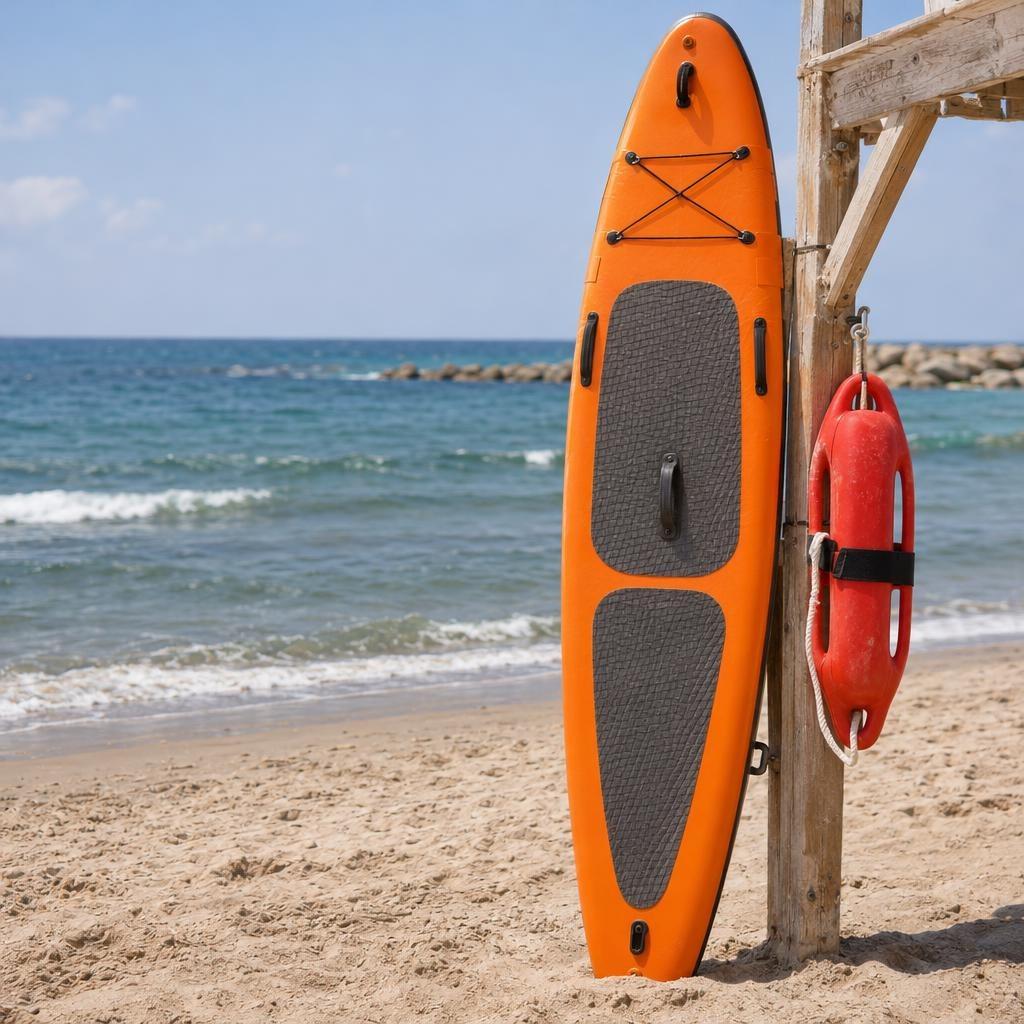
A lifeguard rescue board on the sand

חסקה / סירת הצלהLifeguard rescue board

khasaka / sirat hatzala

US English

Israeli lifeguard rescue paddle board

UK English

Israeli lifeguard rescue craft or board

What it is

A khasaka is the paddle rescue craft used by Israeli sea lifeguards. Official practical exam instructions call the khasaka a rescue boat and test a lifeguard paddling it to a casualty and back.

The difference

A khasaka is not an ordinary surfboard or stand-up paddleboard. The 2026 closure instructions list the khasaka with jet skis and first aid equipment.

Common mistake

Do not translate khasaka as surfboard; say lifeguard rescue board.

Flags And Warnings

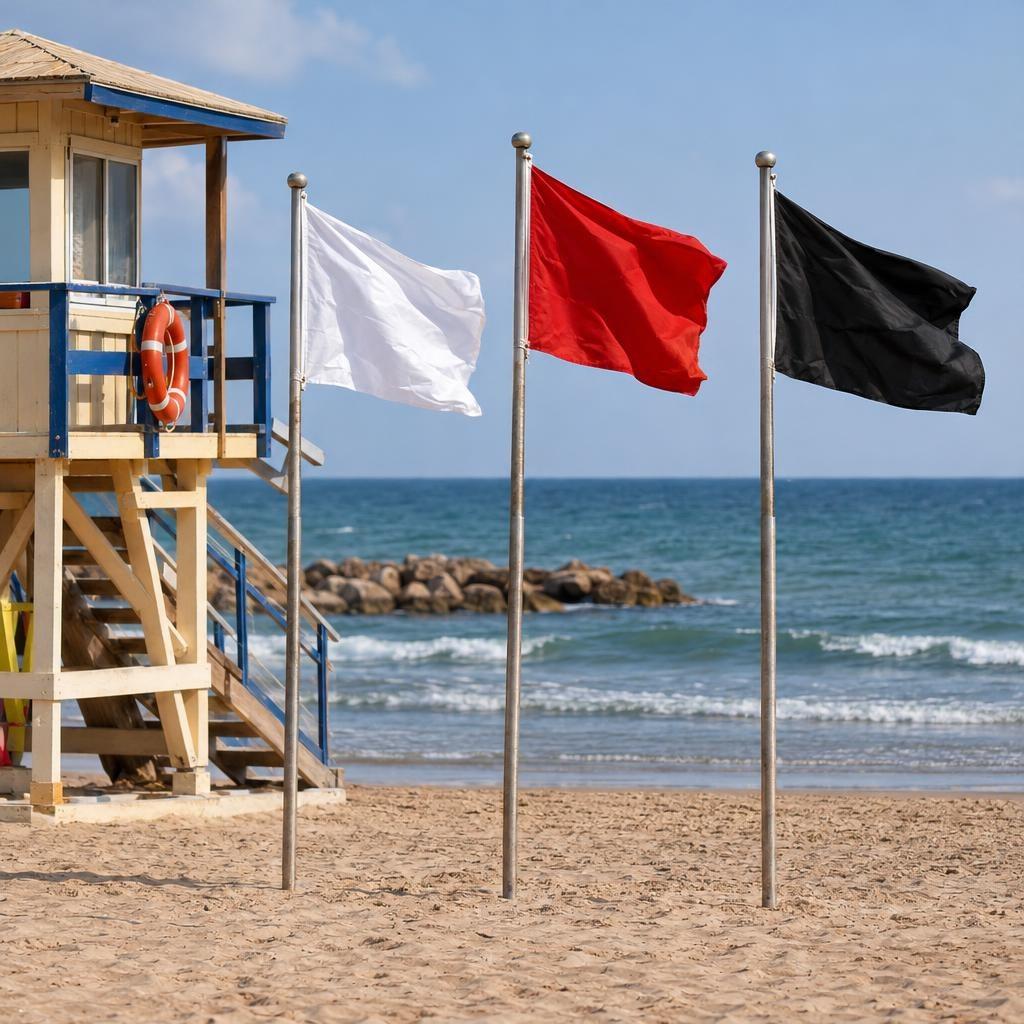
White, red and black beach flags beside a lifeguard tower

On the label or sign

הרחצה מותרת
bathing permitted

דגל לבןWhite flag: swimming permitted

degel lavan

US English

White lifeguard flag: swimming permitted

UK English

White lifeguard flag: bathing permitted

What it is

A degel lavan above an operating lifeguard station means bathing is permitted. The legal phrase is הרחצה מותרת (ha-rakhatza muteret).

The difference

The degel lavan does not promise a hazard-free sea. Currents, holes, jellyfish, and health warnings can still apply.

Common mistake

Do not read a degel lavan as completely safe; still follow the lifeguard and any posted warnings.

On the label or sign

הרחצה מותרת בהגבלה
bathing permitted with restrictions

דגל אדוםRed flag: restricted swimming

degel adom

US English

Red lifeguard flag: swimming permitted with restrictions

UK English

Red lifeguard flag: bathing permitted with restrictions

What it is

A degel adom means the sea is hazardous and bathing is permitted with restrictions. The legal phrase is הרחצה מותרת בהגבלה (ha-rakhatza muteret be-hagbala).

The difference

In Israel the degel adom does not mean a total ban. Expect the lifeguard to keep swimmers inside a smaller marked section.

Common mistake

Do not treat the Israeli degel adom as no swimming; swim only in the restricted area and follow the lifeguard's directions.

On the label or sign

הרחצה אסורה
bathing prohibited

דגל שחורBlack flag: swimming banned

degel shakhor

US English

Black lifeguard flag: swimming prohibited

UK English

Black lifeguard flag: bathing prohibited

What it is

A degel shakhor means bathing is prohibited. Under the degel shakhor, the lifeguard must order bathers out of the water.

The difference

The degel shakhor flies above the station during operating hours, usually with announcements. The legal phrase is הרחצה אסורה (ha-rakhatza asura).

Common mistake

Do not enter the water under a degel shakhor, and get out when the lifeguard tells you to.

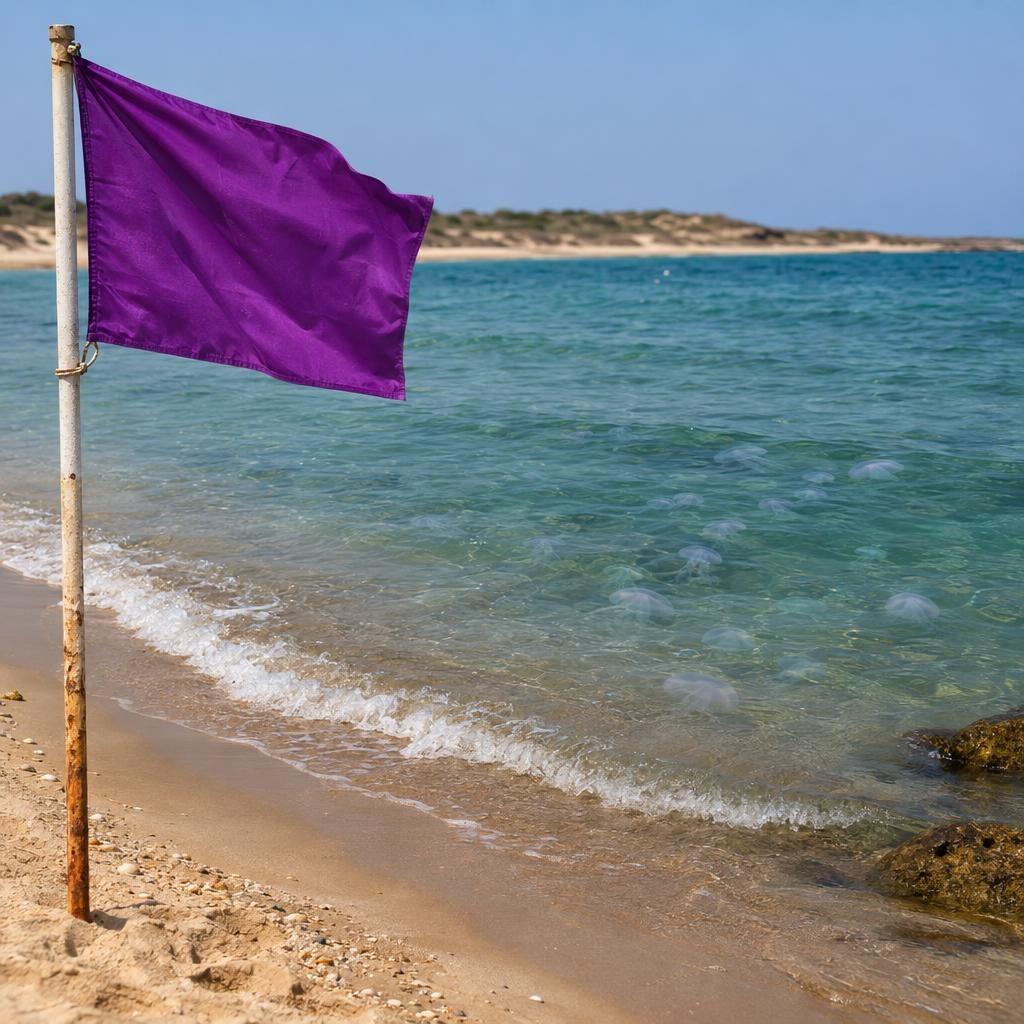
A purple jellyfish flag at the beach

דגל סגולPurple jellyfish flag

degel sagol

US English

Purple jellyfish warning flag

UK English

Purple jellyfish warning flag

What it is

A degel sagol warns of jellyfish. An Interior Ministry bulletin says the degel sagol is used when jellyfish concentration is high.

The difference

The 2026 legal list of beach flags contains only white, red, and black, so the degel sagol is best described as an extra hazard warning, not a fourth permission level.

Common mistake

Do not use the degel sagol to decide whether swimming is allowed; read the white, red, or black flag separately.

דגל כחולBlue Flag award

degel kakhol

US English

Blue Flag environmental award

UK English

Blue Flag environmental award

What it is

Degel kakhol is the Blue Flag, an international voluntary certification for beaches that meet environmental education, water quality, environmental management, safety, and service criteria.

The difference

The degel kakhol is not the day's sea-state flag and does not grant permission to swim.

Common mistake

Do not confuse a degel kakhol beach with calm water or an open lifeguard station; check the white, red, or black flag above the station.

On the label or sign

ים מזוהם! הרחצה אסורה
polluted sea, bathing prohibited

אזהרת רחצה / איסור רחצה עקב זיהוםPollution swimming warning

azharat rakhatza / isur rakhatza ekev zihum

US English

Swimming advisory; swimming ban due to pollution

UK English

Bathing warning; bathing ban due to pollution

What it is

An azharat rakhatza is a public health or authority warning against bathing, separate from the flag color. For example, on 7 November 2026 the Health Ministry warned against bathing along the Mediterranean coast because rain could carry runoff and drainage to the beaches.

The difference

An azharat rakhatza can apply even when the weather is pleasant and the water looks clear.

Common mistake

Do not let a white flag or clear water override an azharat rakhatza; check dated Health Ministry and town notices.

Sea Hazards

זרם חוזר / זרם פריצהRip current

zerem khozer / zerem pritza

US English

Rip current

UK English

Rip current

What it is

A zerem khozer is a rip current, a flow returning out to sea. The Ministry's 2026 campaign describes a zerem khozer as a deceptively smooth, wave-free strip between breaking waves.

The difference

The calm-looking strip is where the zerem khozer flows, so smooth water there is a warning sign. The Israel Meteorological Service calls the hazard a rip current in English.

Common mistake

Do not enter at the calm gap between breaking waves; stay in the marked area and follow the lifeguard.

בור / בורותUnderwater hole

bor / borot

US English

Underwater hole or sudden drop-off

UK English

Underwater hole or sudden drop

What it is

A bor is a sudden deep depression in the sea bottom near the shore. The Ministry campaign describes a bather stepping from waist-deep water into a roughly two-metre bor.

The difference

A bor may not be visible from the shore, so a gentle sandy beach does not stay uniformly shallow.

Common mistake

Do not wander outside the marked area; a bor is felt as a sudden loss of footing.

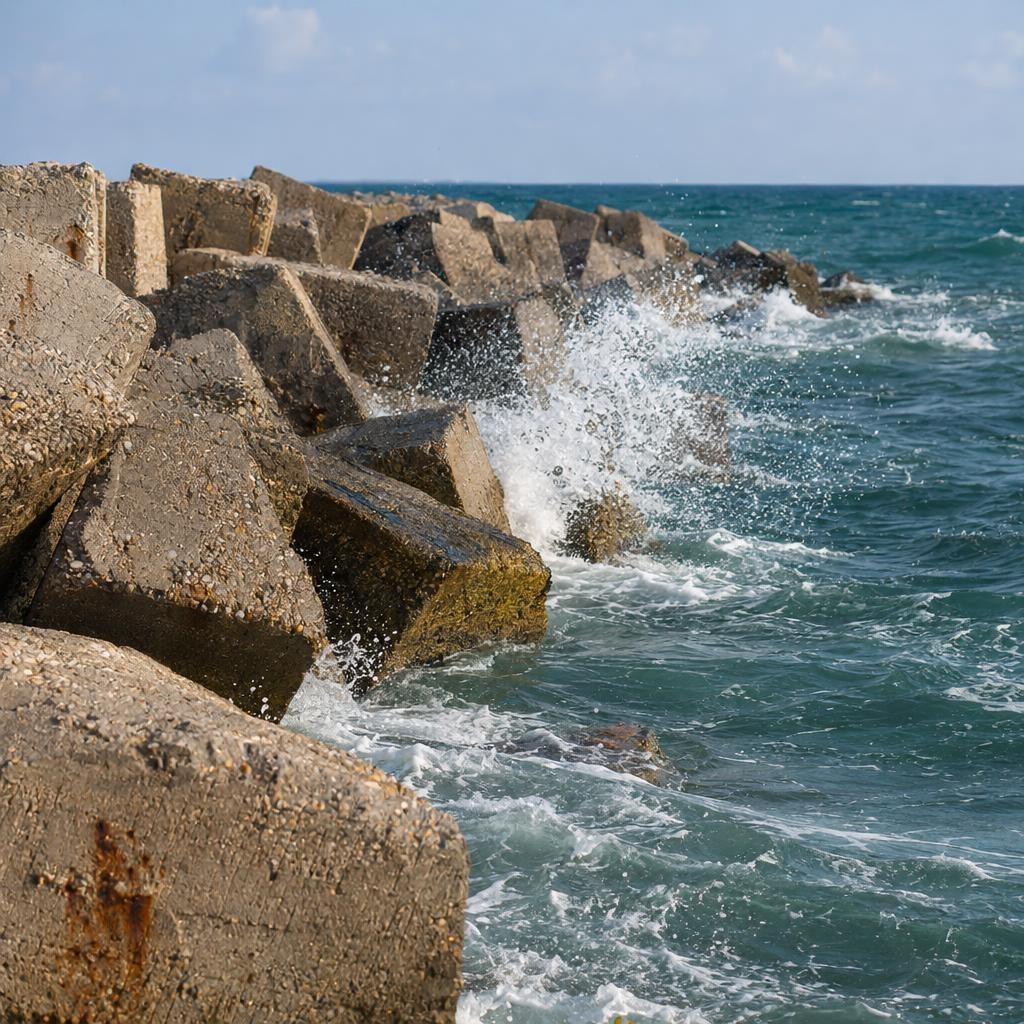
A breakwater along an Israeli beach

שובר גליםBreakwater

shover galim

US English

Breakwater

UK English

Breakwater

What it is

A shover galim is a breakwater, a rock, concrete, or block structure built to break waves. A shover galim often creates a calmer-looking bay.

The difference

The Israel Meteorological Service warns against swimming near a shover galim because dangerous currents can form beside it, and against standing on one where waves can strike.

Common mistake

Do not treat the calmer water beside a shover galim as safer; swim away from breakwaters.

Matkot

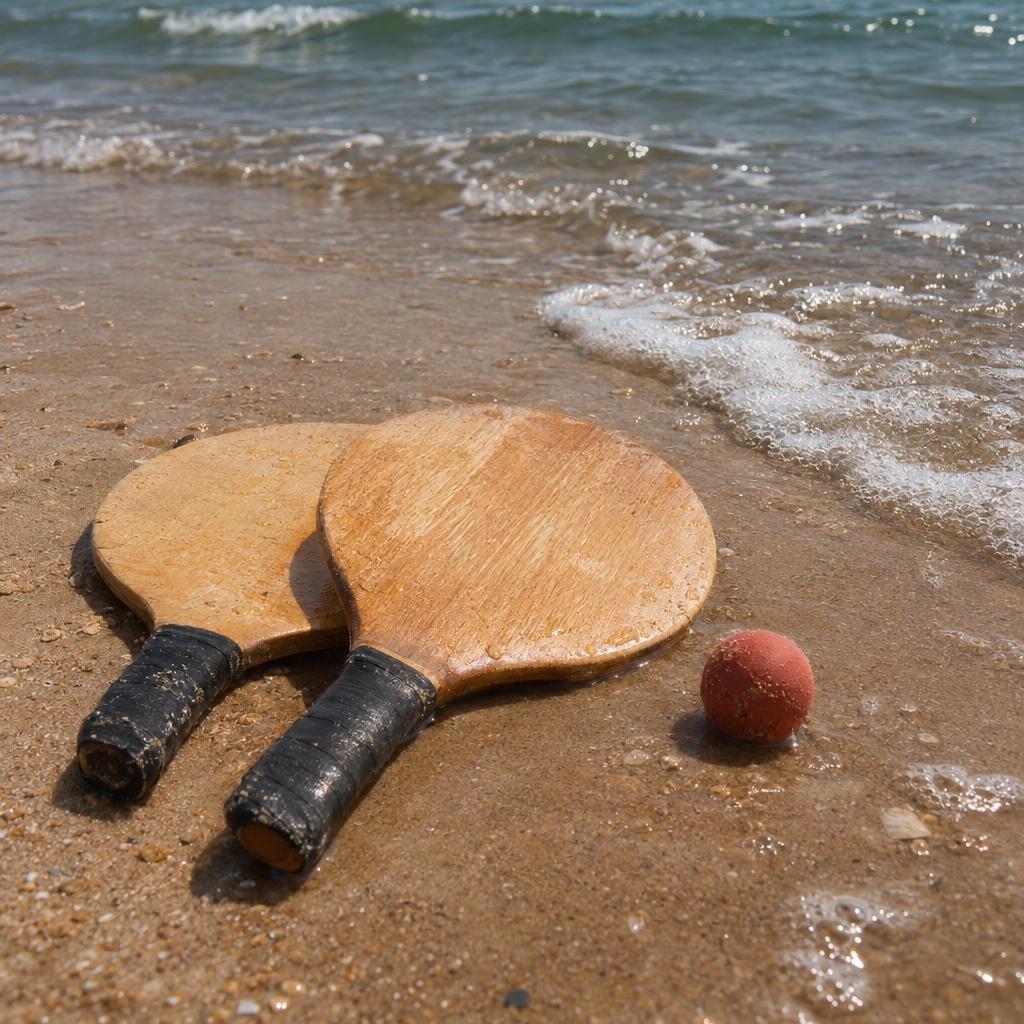
Two matkot paddles and a ball on the sand

On the label or sign

זוג מטקות
a pair of matkot paddles
מחבט עץ לטניס חופים
wooden beach tennis paddle

מטקה / מטקותMatkot paddle

matka / matkot

US English

Solid paddle or beach paddle

UK English

Solid bat or paddle

What it is

A matka is one short-handled, solid-faced paddle, usually wooden or plastic, and matkot is the plural and the name of the game. Israeli retailers sell a pair of matkot with a small rubber or foam ball.

The difference

A matka has a solid face, with no strings like a tennis racket. Retail listings may call matkot wooden beach tennis paddles.

Common mistake

Say matka for one paddle and matkot for the pair or the game.

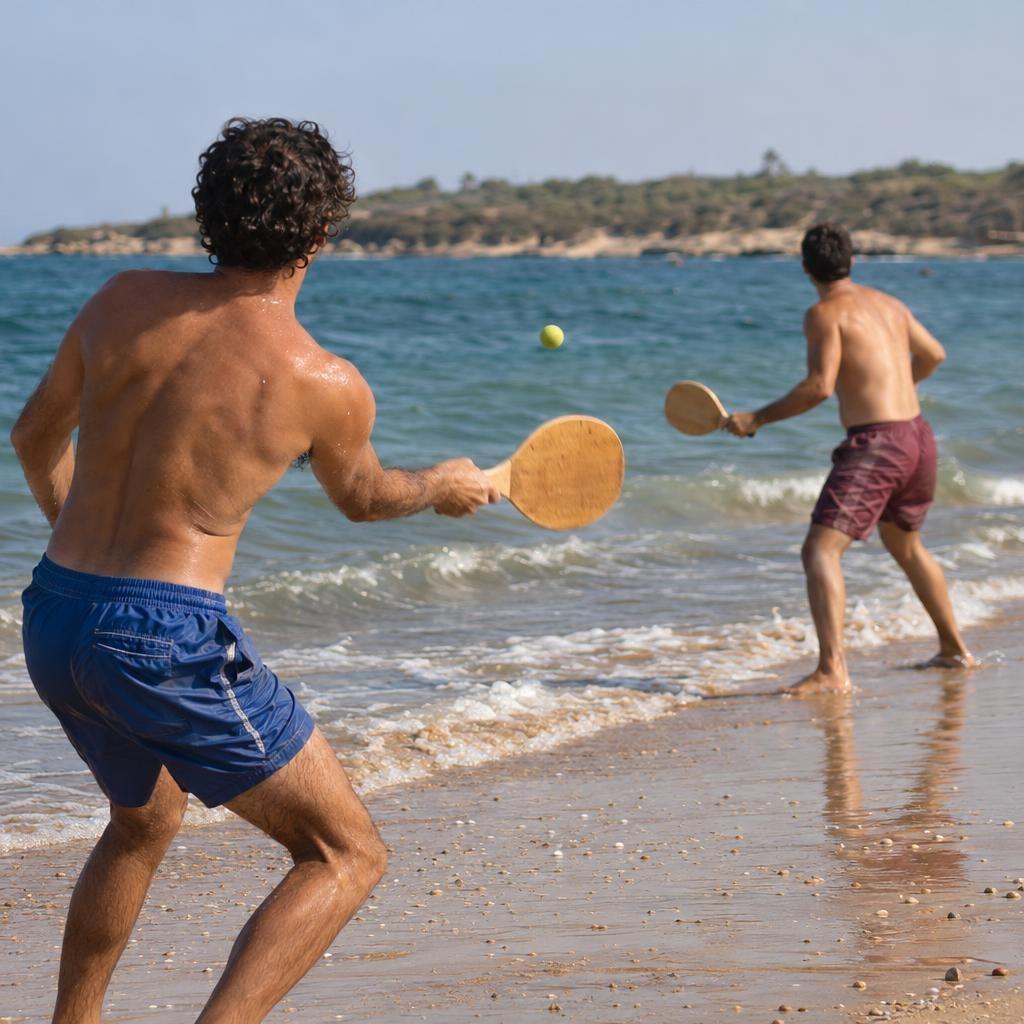
Two people playing matkot on the beach

On the label or sign

אזור משחקים
games area

משחק מטקות / לשחק מטקותPlaying matkot

mis'khak matkot / lesakhek matkot

US English

Beach paddleball; to play matkot

UK English

Beach bat-and-ball; to play matkot

What it is

Mis'khak matkot is an informal rally in which two or more players keep a small ball moving between solid paddles, with no net or scored court.

The difference

Matkot is not formal beach tennis, whose 2026 ITF rules set a court, net, ball, and regulated racket. Tel Aviv's beach rules ban matkot, Frisbee, and ball games inside the declared swimming area.

Common mistake

Do not play matkot anywhere on the beach; use the designated games or sports area that a declared beach must provide.

On the label or sign

כדורי מטקות
matkot balls
ספוג
foam

כדור מטקותMatkot ball

kadur matkot

US English

Matkot or paddleball ball

UK English

Matkot bat-and-ball ball

What it is

A kadur matkot is the small ball used with matkot paddles. Israeli retail sets use rubber balls, and some shops also sell slow foam or rubber-latex balls in the kadur matkot category.

The difference

A kadur matkot is chosen for the speed and material of the set, so check what the retailer intends before you buy.

Common mistake

Do not grab a standard tennis ball for matkot; look for a kadur matkot or a set pictured with two paddles.

Shade, Seats And Facilities

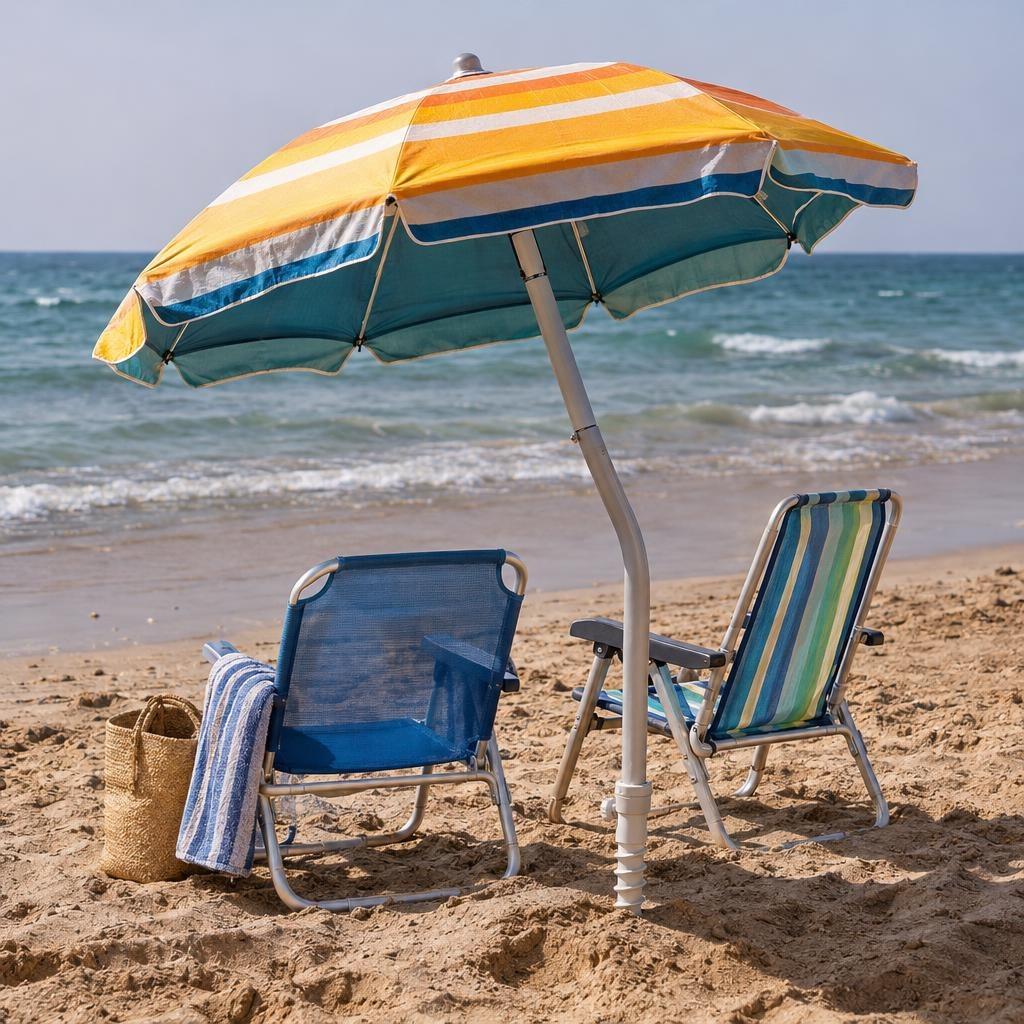
A beach umbrella planted in the sand, shimshiya

On the label or sign

שמשייה לים
beach umbrella
יתד לשמשיית ים
beach umbrella stake
עוגן חוף
beach sand anchor

שמשייה / שמשיית חוףBeach umbrella

shimshiya / shimshiyat khof

US English

Beach umbrella

UK English

Beach parasol or sunshade

What it is

A shimshiya is a portable beach umbrella, a canopy on one central pole. Current Israeli beach products are commonly about 1.6 to 2.5 metres across.

The difference

A shimshiya is smaller and built differently from a tziliya, a fabric canopy on several poles. The stake or sand anchor for a shimshiya may be sold separately.

Common mistake

Do not assume a shimshiya includes a sand anchor; check for a יתד (yated) or עוגן (ogen) in the box.

On the label or sign

צילייה
canopy
מחסה
shelter

צילייה / ציליית חוףBeach canopy

tziliya / tziliyat khof

US English

Beach canopy or sun shelter

UK English

Beach canopy or sun shelter

What it is

A tziliya is a broad fabric shade stretched over poles or anchored to the sand. A tziliya often uses guy lines or sandbags.

The difference

A tziliya is not an umbrella on one central pole. Shops list tziliyot separately from umbrellas and enclosed shelters.

Common mistake

Do not ask for a shimshiya when you want family-sized shade with several supports; ask for a tziliya.

On the label or sign

סככות צל נגישות
accessible shade shelters

סככת צלFixed shade shelter

sakat tzel

US English

Fixed shade shelter or shade structure

UK English

Fixed shade shelter

What it is

A sakat tzel is a fixed or semi-fixed public shade structure. The beach order requires shade shelters at declared bathing places, placed so they do not block the lifeguards' view.

The difference

A sakat tzel is not rentable equipment, and its presence does not prove lifeguards are on duty.

Common mistake

Do not take a sakat tzel as a sign that swimming is supervised; check the lifeguard hours and flag.

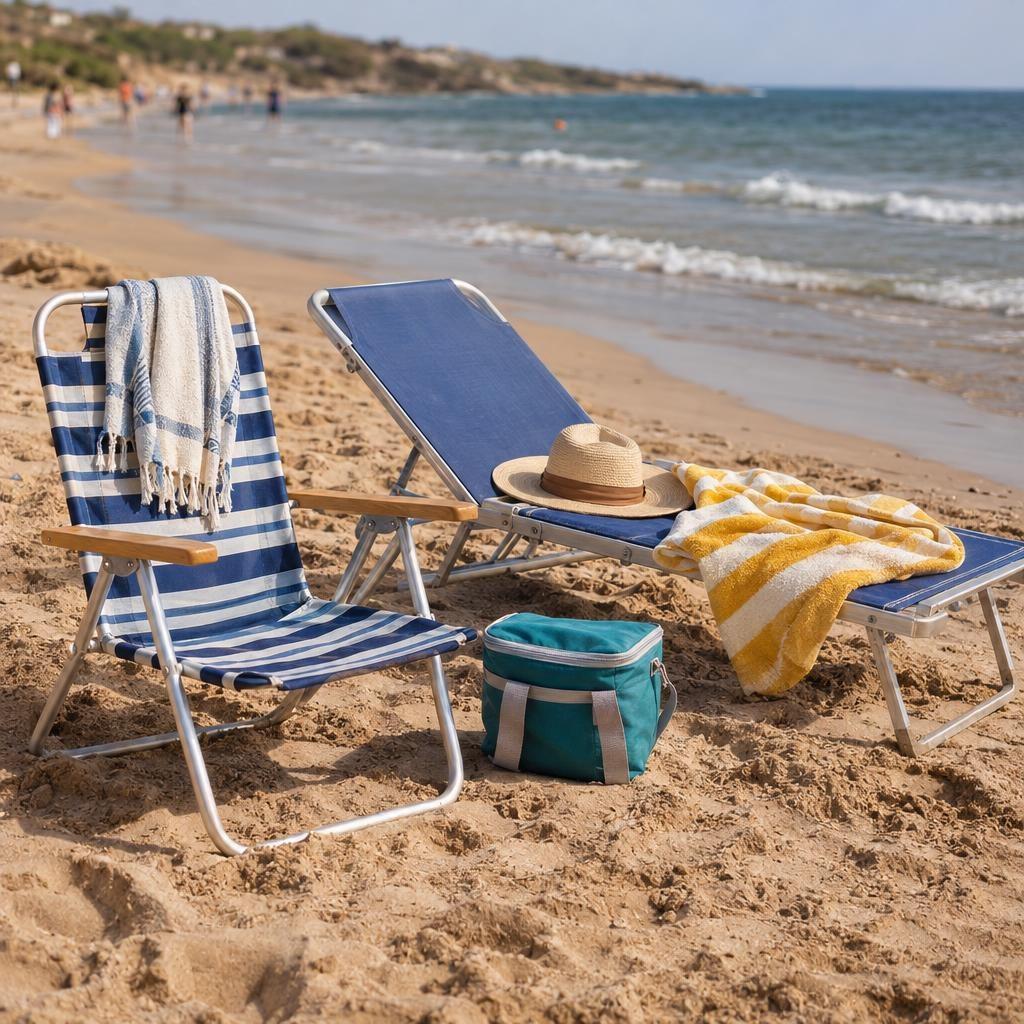
A beach chair and lounger on the sand

On the label or sign

כיסא
chair

כיסא / כיסא נוח / כיסא מרגועBeach chair

kise / kise noakh / kise margoa

US English

Beach chair or deck chair

UK English

Deckchair or beach chair

What it is

A kise is a seated beach rental item. Tel Aviv's English page translates the rental kise as deck chair, and some places say kise noakh or kise margoa.

The difference

A kise is not the flatter mitat shizuf. The two are separate rental categories.

Common mistake

Use the word on the rental board: a kise for a seat and a mitat shizuf for a lounger.

On the label or sign

מיטת שיזוף
sun lounger

מיטת שיזוףSun lounger

mitat shizuf

US English

Sun lounger or sunbed

UK English

Sun lounger or sunbed

What it is

A mitat shizuf is a long, low reclining lounger for lying down. Eilat's price list translates mitat shizuf as sunbed hire.

The difference

A mitat shizuf is a separate rental category from a kise and from a shimshiya. Eilat and Tel Aviv list the mitat shizuf separately on their rental pages.

Common mistake

Ask for a mitat shizuf when you want to lie down, and call it a sun lounger or sunbed in English.

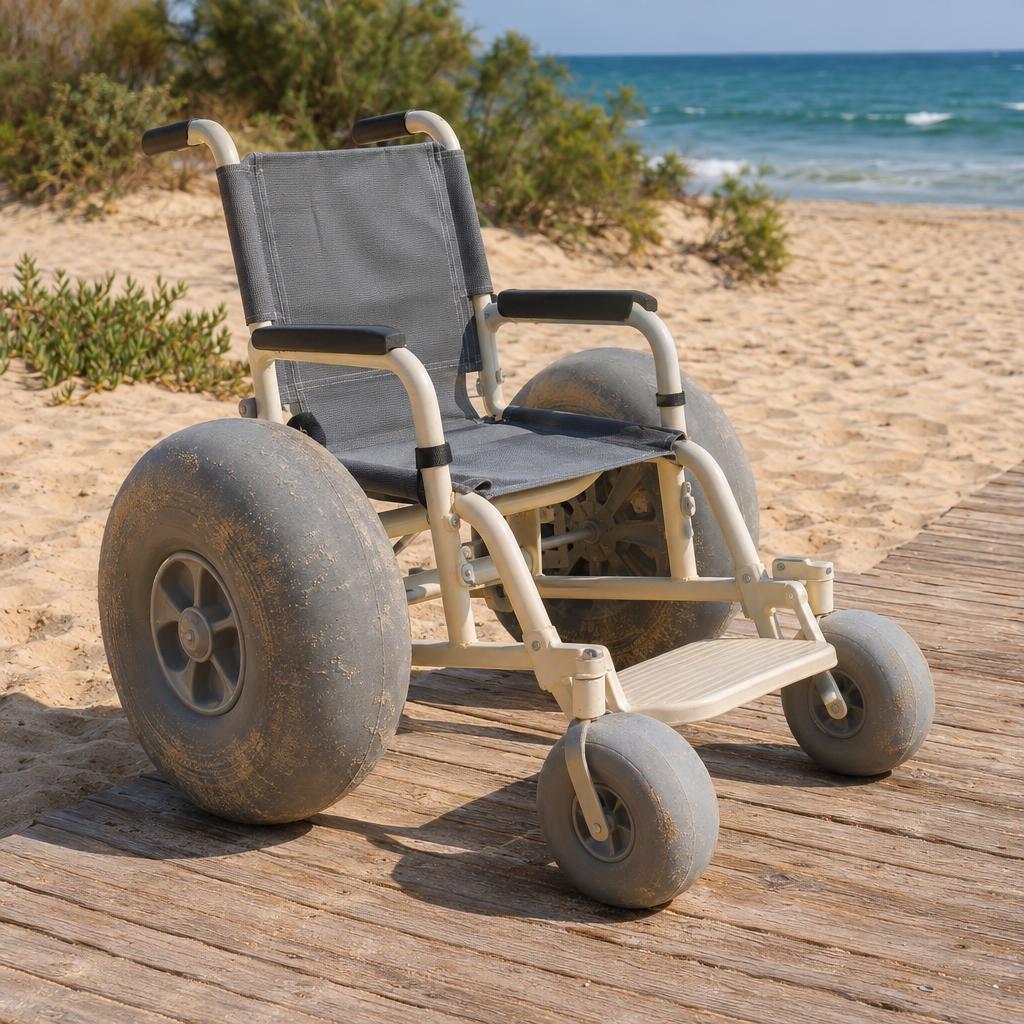
A beach wheelchair with big floating wheels

On the label or sign

כיסאות רחצה לנכים
bathing chairs for disabled people

כיסא רחצה / כיסא צףBeach wheelchair

kise rakhatza / kise tzaf

US English

Beach wheelchair or floating beach chair

UK English

Beach wheelchair or floating bathing chair

What it is

A kise rakhatza is accessibility equipment for reaching or entering the water. The Ministry list records כיסאות רחצה לנכים (kis'ot rakhatza la-nekhim) by beach, and some towns use כיסאות צפים (kis'ot tzafim) for floating chairs.

The difference

A kise rakhatza is not an ordinary rental kise, and not every accessible chair is designed to float. Availability and assistance vary by beach.

Common mistake

Do not expect a kise rakhatza at every beach; check the beach's accessibility page and ask the lifeguard or first aid staff.

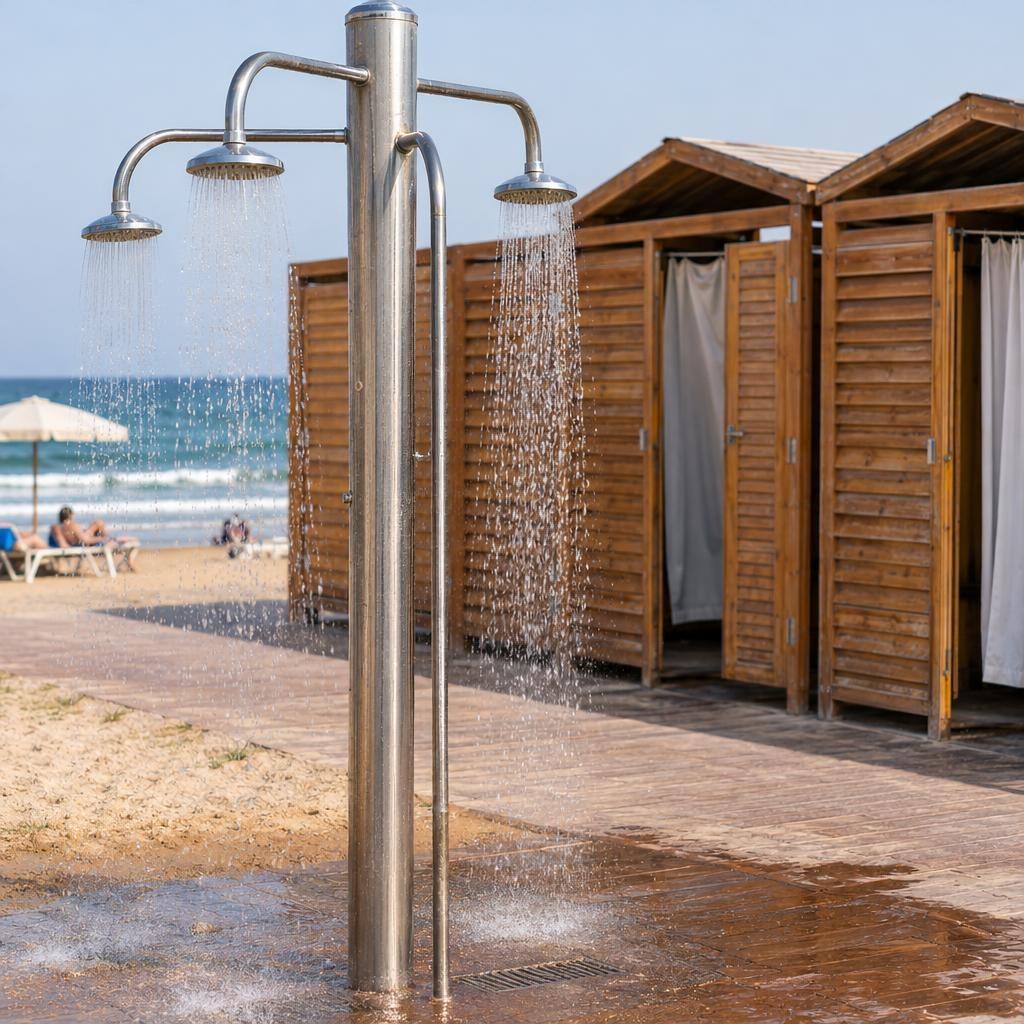
Outdoor beach showers and changing rooms

On the label or sign

מקלחות
showers
מלתחות
changing rooms
שירותים
toilets

מקלחות / מלתחותShowers and changing rooms

miklakhot / maltakhot

US English

Showers; changing rooms

UK English

Showers; changing rooms

What it is

Miklakhot are beach showers and maltakhot are changing rooms. Both are public facilities separate from the lifeguard station.

The difference

Open miklakhot do not show that the swimming service is operating. Facilities are local and seasonal.

Common mistake

Do not take open miklakhot as permission to swim; check the lifeguard hours and flag.

The Sign Says This. Here Is What It Means.

The sign says this. Here is what it means.
What it meansHebrew on the signKeep in mind
Swimming permittedדגל לבן / הרחצה מותרתdegel lavan / ha-rakhatza muteretNot a promise of zero hazards.
Permitted with restrictionsדגל אדום / מותרת בהגבלהdegel adom / muteret be-hagbalaRed is not a ban in Israel.
Swimming prohibitedדגל שחור / הרחצה אסורהdegel shakhor / ha-rakhatza asuraLeave the water.
Jellyfish warningדגל סגולdegel sagolExtra warning, not a permission level.
No lifeguard on dutyאין שירותי הצלהein sheirutei hatzalaDo not swim.
LifeguardמצילmatzilFeminine: matzila.
Rip currentזרם חוזרzerem khozerCalm strip between waves.
PaddleballמטקותmatkotNo net; not formal beach tennis.
Beach umbrellaשמשייהshimshiyaOne central pole.
Beach canopyצילייהtziliyaFabric on several poles.
Sunbedמיטת שיזוףmitat shizufA separate rental from a chair.

Knowing the word is half of it. Say it out loud.

A Hebrew speaking app with Maya and David, AI tutors who hold conversations, explain corrections and help you practise what you need to say. Private beta on iPhone and Android. Public store launch is still ahead. Free Classic lessons to start, no card needed.

Explore baba Learn

How we checked this guide

By the baba team. Checked on against 37 sources, mostly Israeli retailers, manufacturers and government pages, and updated . Products, labels and rules change, so check the pack or the office before you rely on a detail. Our methodology.

Frequently Asked Questions

What does a red flag mean at an Israeli beach?

A red flag at an Israeli beach means swimming is permitted with restrictions. Swim only in the area the lifeguard has limited, and follow the lifeguard's directions; a black flag means swimming is prohibited.

What does a purple flag mean at an Israeli beach?

A purple flag warns of jellyfish. The legal sea-state flags are only white, red, and black, so read those separately to know whether swimming is permitted.

What is matkot?

Matkot is the Israeli beach game of keeping a small ball moving between two solid paddles, with no net or scored court. One paddle is a matka, and matkot is not formal ITF beach tennis.

What is the difference between a shimshiya and a tziliya?

A shimshiya is a beach umbrella on one central pole. A tziliya is a broader fabric canopy stretched over several poles or anchored to the sand.

Can I swim at an Israeli beach when there is no lifeguard?

The Ministry of the Interior says to enter the water only at a declared beach while lifeguard services are operating. Chairs, shade, or open showers do not prove that lifeguards are on duty.

More Hebrew-English Guides

All guides