
baba
Free, no AIHebrew-English guide 98 of 100

Israeli Street Games, in Plain English

What tofeset, makhbo'im, klas and gogo'im are in English.

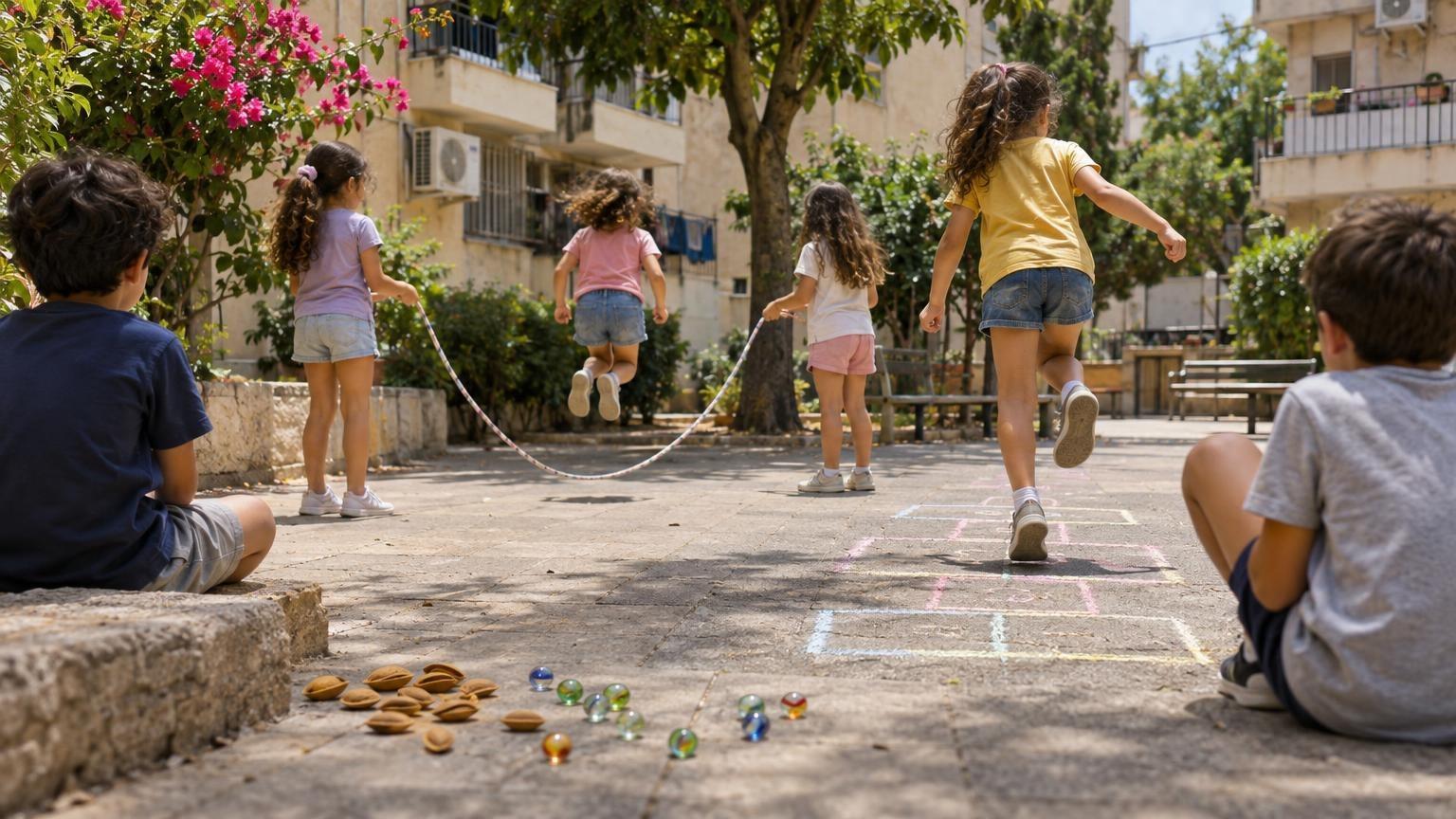
Children's street games in an Israeli neighborhood courtyard

Mix-Ups to Avoid

  1. Do not translate gogo'im as marbles. Gogo'im are apricot stones and a family of games played with them, while marbles are gulot.
  2. Do not assume a game name fixes the rules. Tofeset, makhanayim and klas all have local versions, so ask which rules the group plays.
  3. Do not send children to play these street games on the street. The Ministry of Education says roads, sidewalks and car parks are unsafe, even when quiet.
In This Guide19 entries

Chasing And Hiding

Children playing tag in a playground, tofeset

תופסתTag

tofeset

US English

Tag

UK English

Tag

What it is

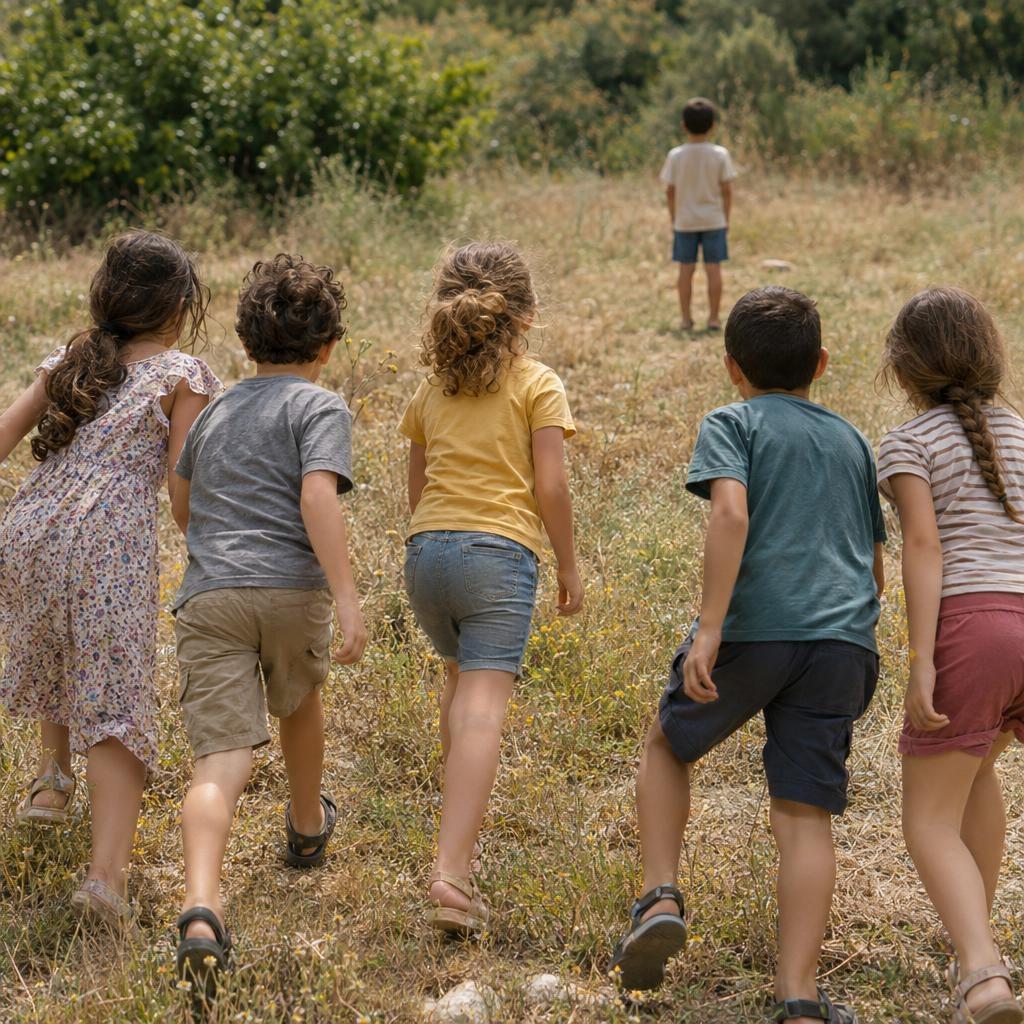
Tofeset is the Israeli family of chasing games. In the basic form a catcher, התופס (ha-tofes), tries to touch the runners, and the touched player becomes the catcher.

The difference

Tofeset is not one fixed ruleset. Ministry of Education sources document color, height, chain, line, pairs, mice, and hospital versions; in color tofeset, touching the called color makes a runner safe.

Common mistake

Do not assume tofeset means ordinary tag; ask איזו תופסת (eizo tofeset), which kind of tag, before you join.
פרה עיוורתBlind man's buff

para iveret

US English

Blind man's buff

UK English

Blind man's buff or blind man's bluff

What it is

Para iveret is a tag game in which the catcher cannot see. The Ministry of Education describes para iveret as tag with the catcher's eyes closed.

The difference

Para iveret literally means blind cow, but blind cow is not the English title. The cited Israeli source does not specify identifying players by touch.

Common mistake

Do not translate para iveret as blind cow or add identification-by-touch rules; call para iveret blind man's buff.

A child counting at a tree in hide and seek, machbo'im

מחבואיםHide-and-seek

makhbo'im

US English

Hide-and-seek, often with a home base

UK English

Hide-and-seek, often with a home base

What it is

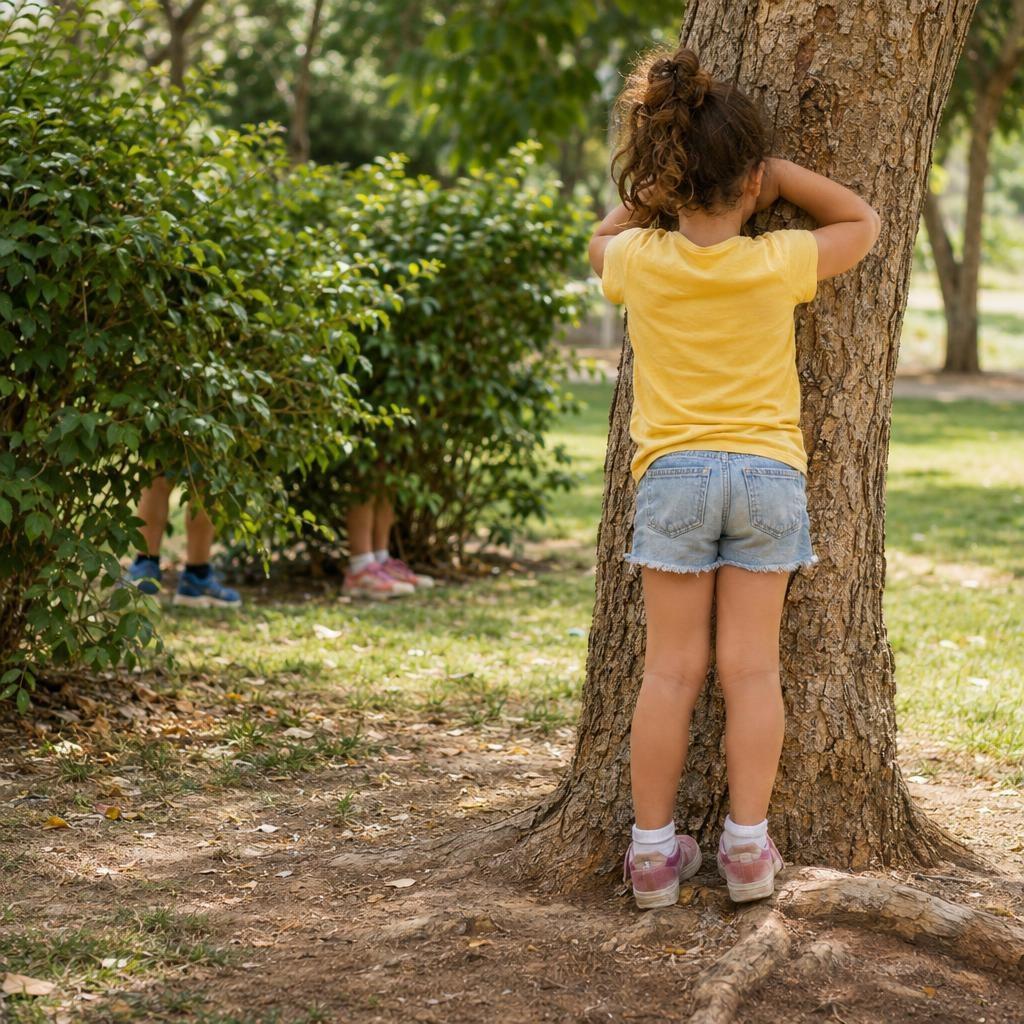
In makhbo'im one player, העומד (ha-omed), faces a tree or wall and counts while the others hide. In the documented Israeli version, the seeker who spots someone races back to the base, touches it, and calls one, two, three plus the player's name.

The difference

The name translates easily, but makhbo'im has a base race rule that plain hide-and-seek may not have.

Common mistake

Do not bring base-free English rules to makhbo'im; agree on the home tree or wall first.

Children freezing in a line in the game dag maluach

אחת, שתיים, שלוש, דג מלוחSalted fish

akhat, shtayim, shalosh, dag malu'akh

US English

Closest: Red Light, Green Light

UK English

Closest: Grandmother's Footsteps

What it is

In dag malu'akh one caller stands about 15 metres away, turns away, and chants the title while players creep forward, freezing when the caller turns. A player caught moving goes back to the start.

The difference

In the documented Israeli ending, a player who reaches the caller touches them, the caller tells a story, and on the words dag malu'akh everyone races home; whoever is caught becomes the caller. Red Light, Green Light and What's the Time, Mr Wolf? do not have that story ending.

Common mistake

Do not describe dag malu'akh as only Red Light, Green Light; include the story and the final dash.

גולם במעגלDrop the handkerchief

golem ba-ma'agal

US English

Closest: Drop the Handkerchief or Duck, Duck, Goose

UK English

Closest: Drop the Handkerchief

What it is

In golem ba-ma'agal seated players keep their hands behind their backs. A walker circles, puts a small object or cloth in someone's hands, and runs for the empty seat while that player chases.

The difference

A runner caught in golem ba-ma'agal sits in the middle until a later caught player replaces them. Duck, Duck, Goose has the chase but not the hidden object or the middle seat.

Common mistake

Do not read golem as describing the child; golem ba-ma'agal is just the game's title.

ים־יבשהSea and land

yam yabasha

US English

Sea-land (descriptive); like Simon Says

UK English

Sea-land (descriptive); like Simon Says

What it is

In yam yabasha the inside of a hoop or chalk circle is sea and the outside is land. Players jump to the side the leader calls, and the leader speeds up or tries to confuse them.

The difference

Yam yabasha is not a geography quiz and is not played at the beach. A player who jumps the wrong way is out for a while, and the last one left wins.

Common mistake

Do not expect a beach game; listen for the leader's calls of yam and yabasha and jump to the right side.

Hopping And Jumping

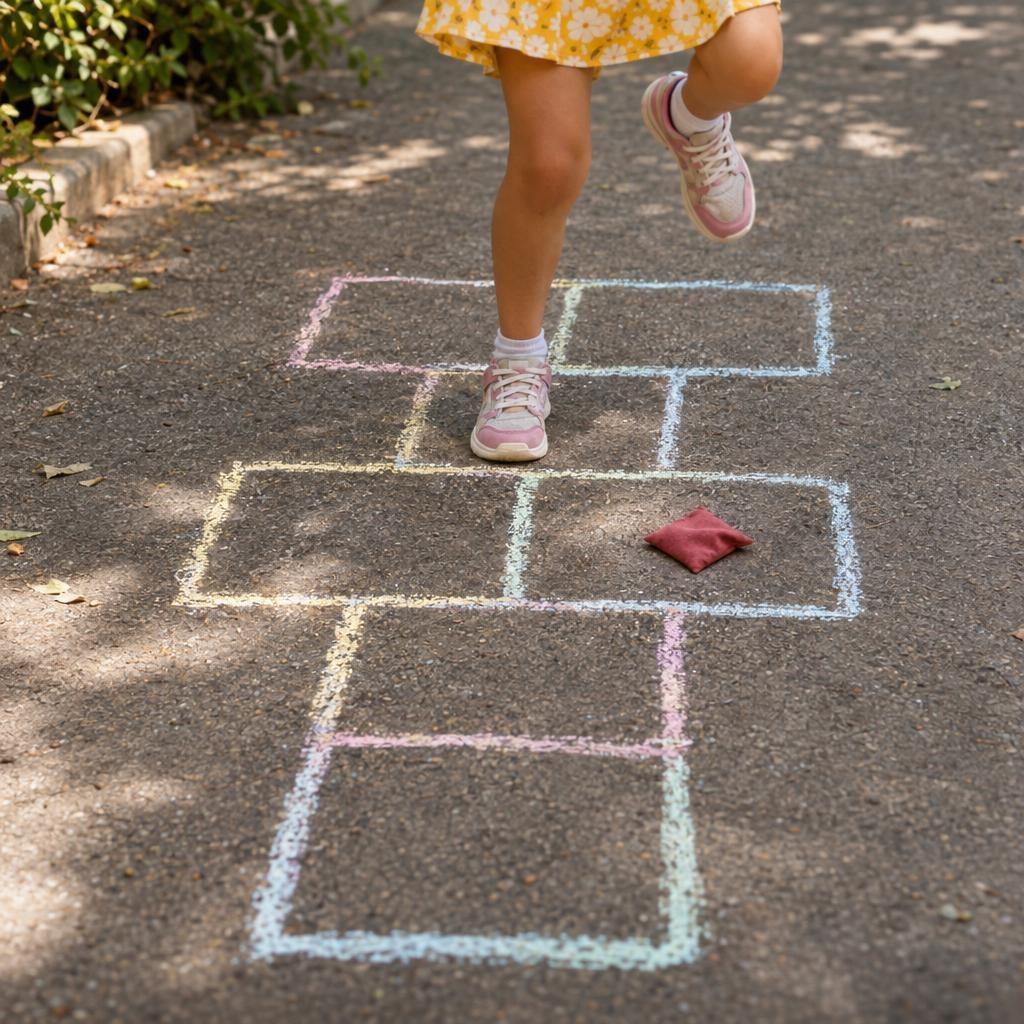
A chalk hopscotch grid with a beanbag, klas

קלאסHopscotch

klas

US English

Hopscotch

UK English

Hopscotch

What it is

Klas is hopscotch. In the Ministry of Education version, players throw a beanbag or flat stone into spaces 1 to 8 in turn, hop the course mostly on one foot, and land on two feet at 8.

The difference

The Israeli klas court in the Ministry source has eight spaces, while a British Council version draws ten squares. A klas turn is lost if the marker lands on a line or outside its space.

Common mistake

Do not draw a familiar US or UK court as the only correct klas diagram; numbers, layout, and pickup order vary.

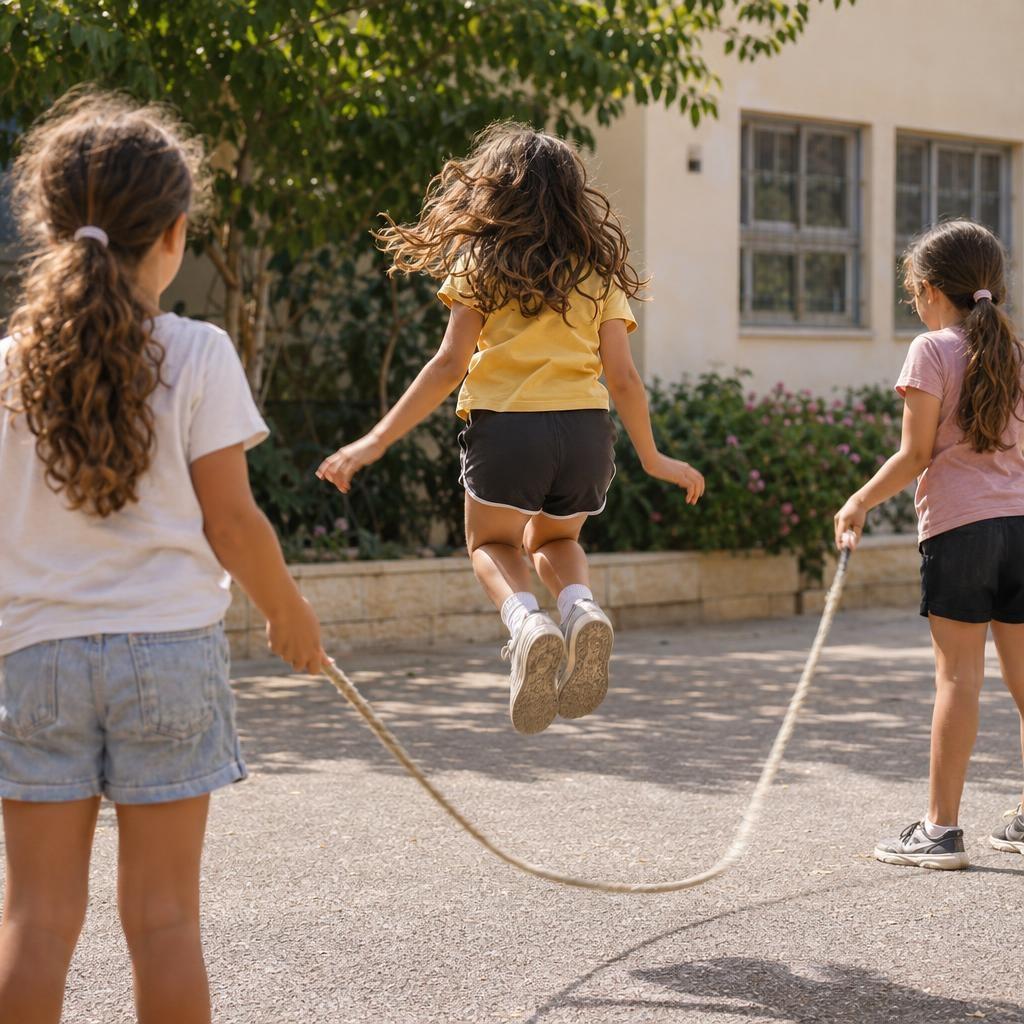
Children jumping long rope in a courtyard

קפיצה בחבל / חבל / דלגיתJump rope

kfitza ba-khevel / khevel / dalgit

US English

Jump rope; long-rope jumping

UK English

Skipping; skipping rope

What it is

Kfitza ba-khevel is jumping rope. In the official group form, two players turn a long rope while another enters, jumps, and may call the next player's name.

The difference

Hebrew may name the action, kfitza ba-khevel, the rope, khevel, or a personal skipping rope, dalgit. US English says jump rope and UK English says skipping rope.

Common mistake

Do not assume khevel always means a personal rope; a dalgit is the individual skipping rope.

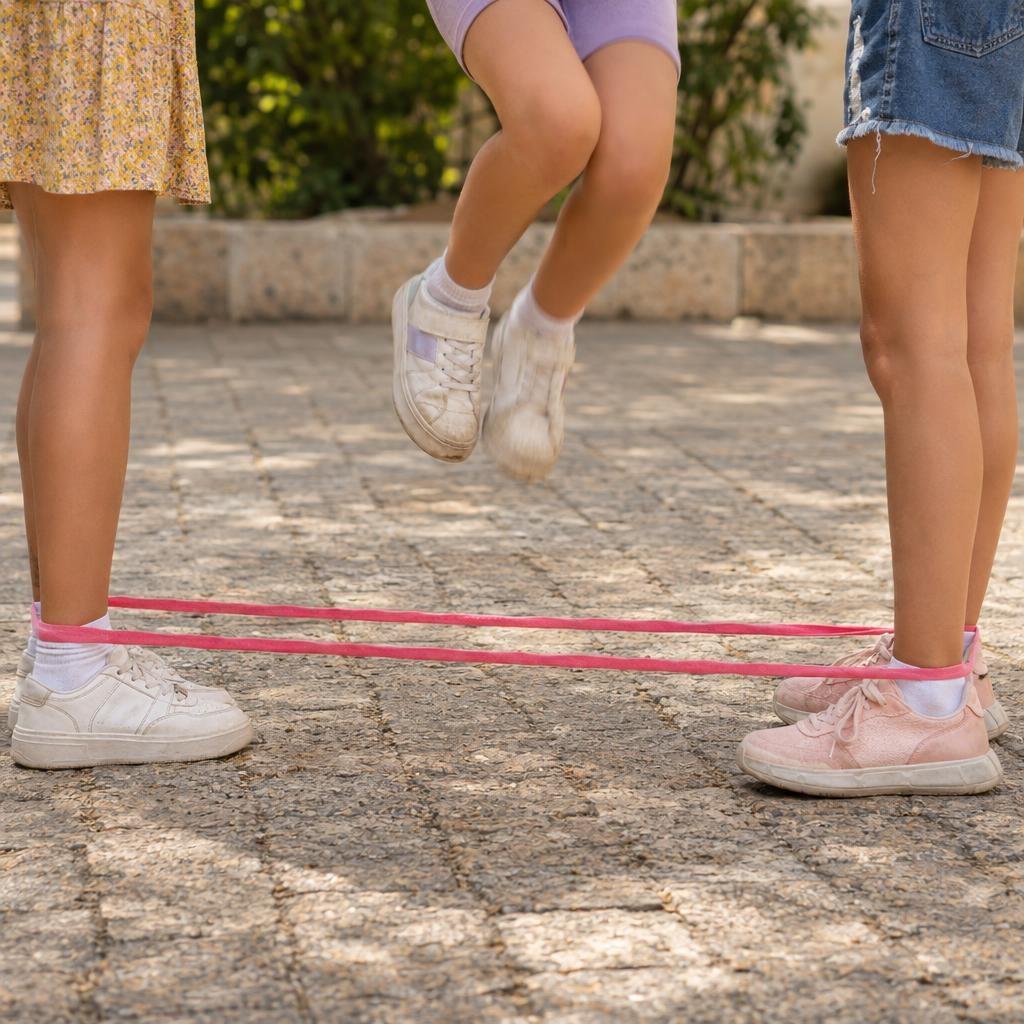
Children jumping over a long elastic loop, gumi yapani

גומי יפני / קפיצה בגומיChinese jump rope

gumi yapani / kfitza be-gumi

US English

Chinese jump rope or elastics

UK English

Chinese jump rope or elastics

What it is

In gumi yapani two players hold a 2 to 2.5 metre elastic loop around their legs while a third jumps a set pattern. After each success the elastic rises from ankles to shin, knee, thigh, and waist.

The difference

Gumi yapani is not ordinary jump rope, and gumi here means elastic, not chewing gum. The Hebrew name says Japanese, while the English name says Chinese.

Common mistake

Do not confuse gumi yapani with rope jumping; gumi yapani needs a long closed elastic loop and two holders.

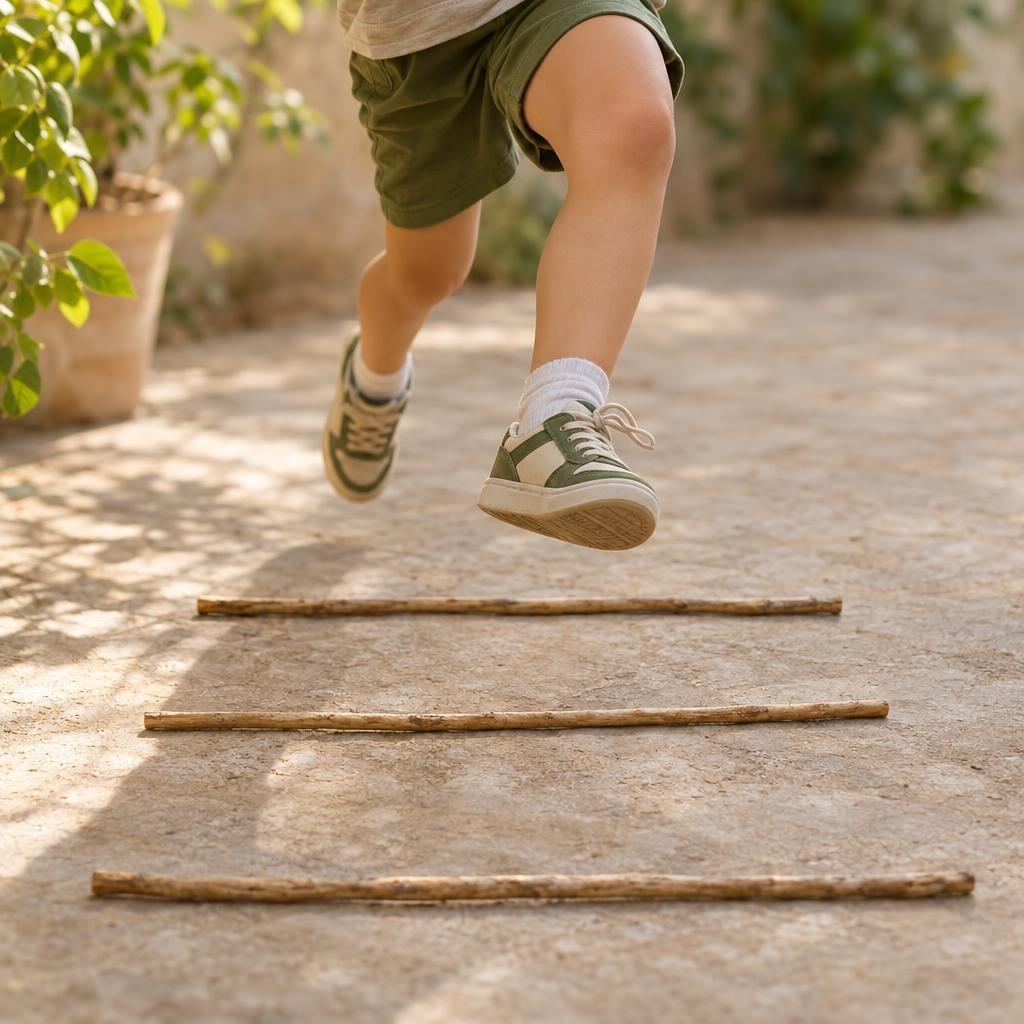
Three sticks on the ground for a jumping game

שלושה מקלות / שלוש מקלותThree sticks

shlosha maklot / shalosh maklot

US English

Three sticks; no standard exact equivalent

UK English

Three sticks; no standard exact equivalent

What it is

In shlosha maklot three parallel sticks start at equal gaps, and players run and place one step between each pair without touching a stick. The last jumper moves the final stick to their landing mark, so the gaps grow until players are out.

The difference

Shlosha maklot is not a three-legged race. The standard title is shlosha maklot, but the Ministry notes people commonly say shalosh maklot, and a 2026 Ministry booklet still teaches the game.

Common mistake

Do not translate shlosha maklot as three-legged race; explain it as a jumping game with three sticks.

Stones And Marbles

Apricot pits for gogoim games with a shoe box target

גוגואים / אג'ואים / עג'מים / עג'וקיםApricot-stone games

gogo'im / ajo'im / ajamim / ajukim

US English

Apricot-pit games; no fixed US name

UK English

Apricot-stone games; no fixed UK name

What it is

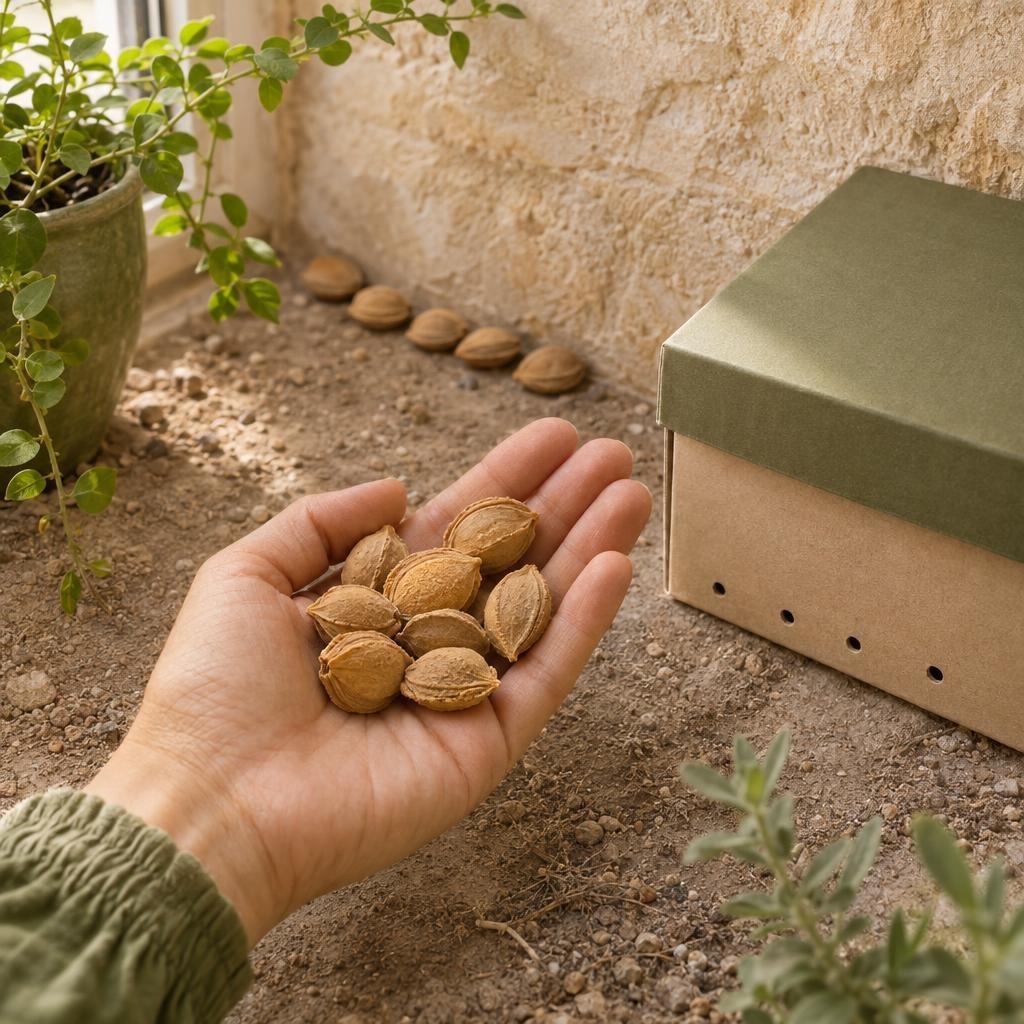
Gogo'im are dried apricot stones and a family of games played with them. Documented forms include closest to the wall, called karov la-kir, throwing at other stones, and shooting through numbered holes in a shoe box.

The difference

Gogo'im resemble marbles in principle, but the pieces are fruit stones and there is no single ruleset. Jerusalem speakers say ajo'im, and Rehovot-area testimony gives ajamim or ajukim.

Common mistake

Do not translate gogo'im as marbles or treat ajo'im as a different game; fresh gogo'im follow the short apricot season, and cleaned stones keep for later.

Glass marbles near holes in sand, gulot

גולותMarbles

gulot

US English

Marbles

UK English

Marbles

What it is

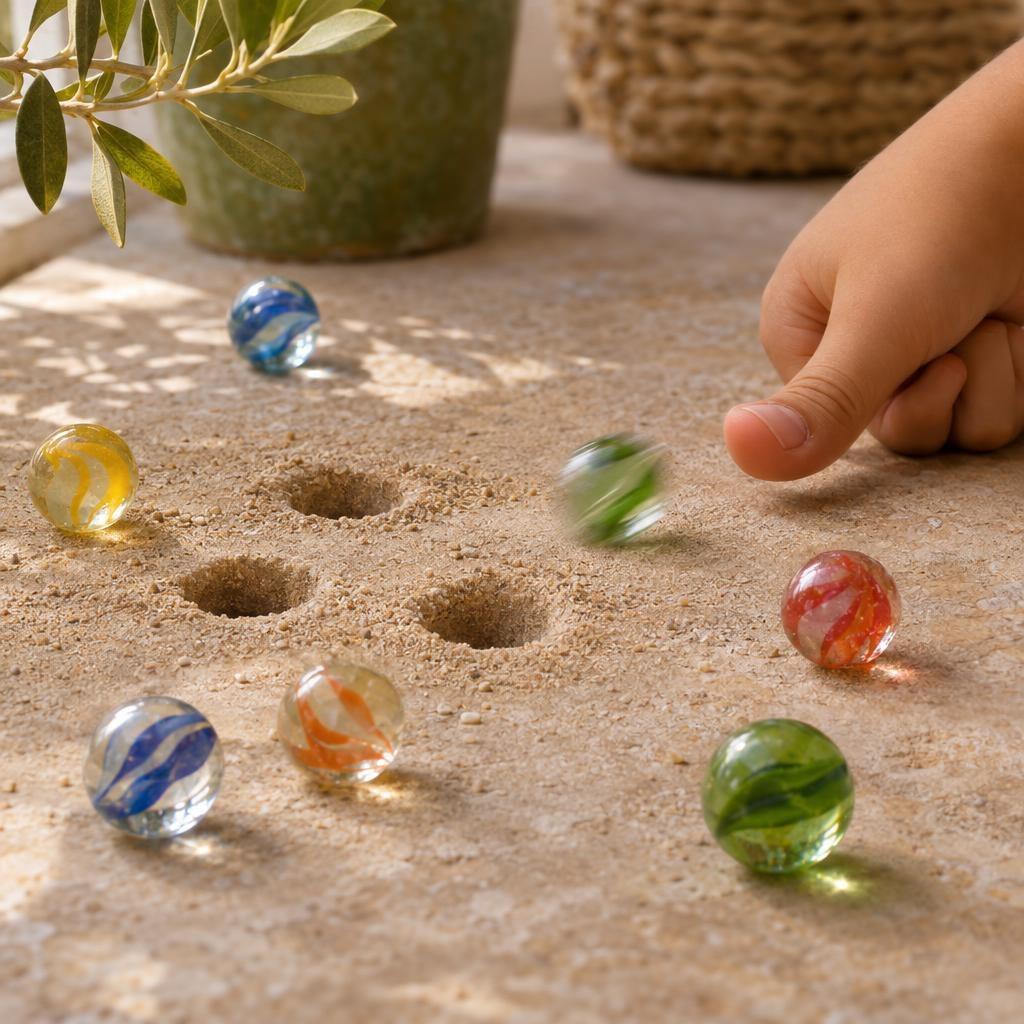
Gulot are marbles. In the documented yard version each player has one marble, flicks it with the thumb along three small holes in the sand, and gets another turn when it drops into a hole.

The difference

Gulot uses glass or other round marbles, while gogo'im uses apricot stones. The three-hole course is one sourced Israeli version of gulot.

Common mistake

Do not call every small throwing game gulot; gulot means marbles only.

Five small stones in a game of chamesh avanim

חמש אבניםFive stones

khamesh avanim

US English

Five stones; closest family: jacks

UK English

Five stones or jacks

What it is

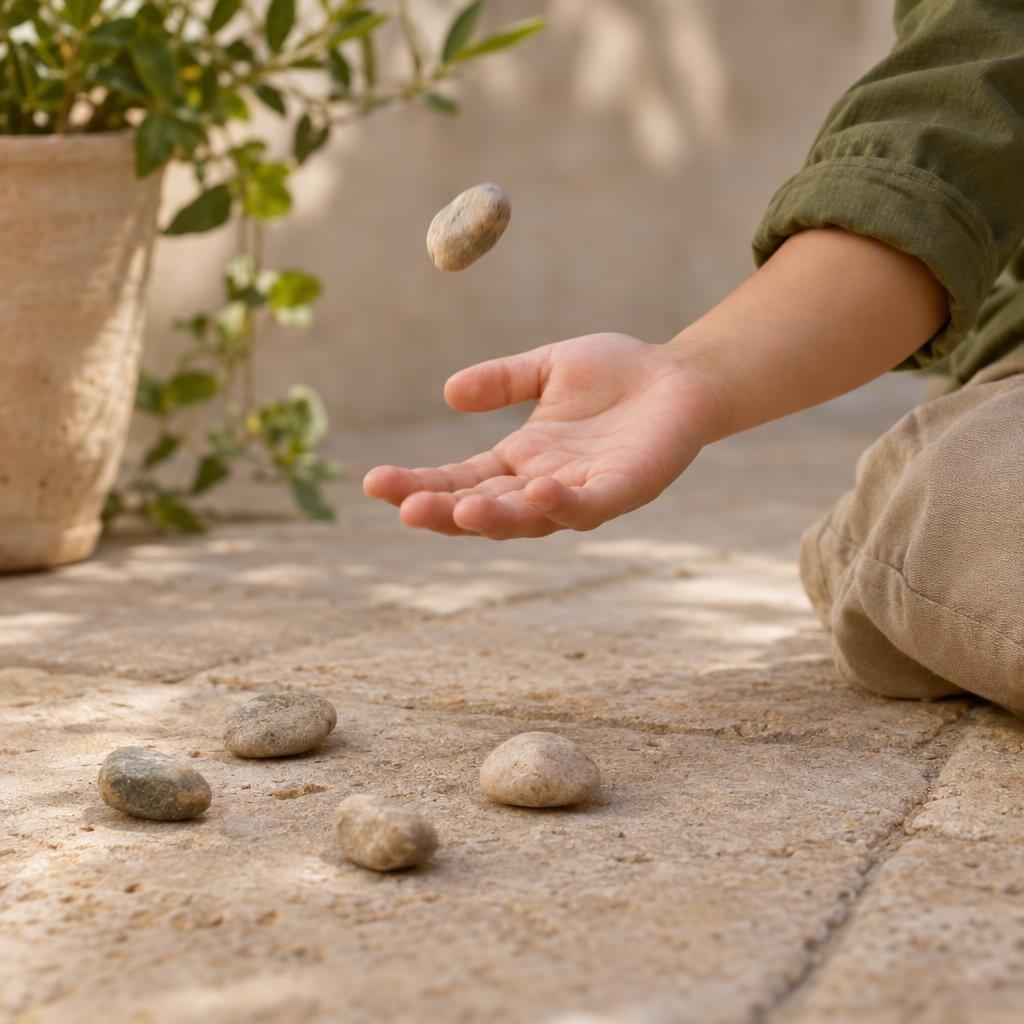
Khamesh avanim is played with five small stones or stone-shaped pieces. A player tosses one piece, collects one or more from the ground before catching it, and moves through stages of ones, twos, one plus three, all four, and a bridge.

The difference

Khamesh avanim uses five stones and no bouncing ball, unlike the familiar US set of metal jacks.

Common mistake

Do not expect ten metal jacks and a rubber ball for khamesh avanim; you need five similar stones.

A tower of seven flat stones with a ball, sheva avanim

שבע אבניםSeven stones

sheva avanim

US English

Seven stones (descriptive)

UK English

Seven stones (descriptive)

What it is

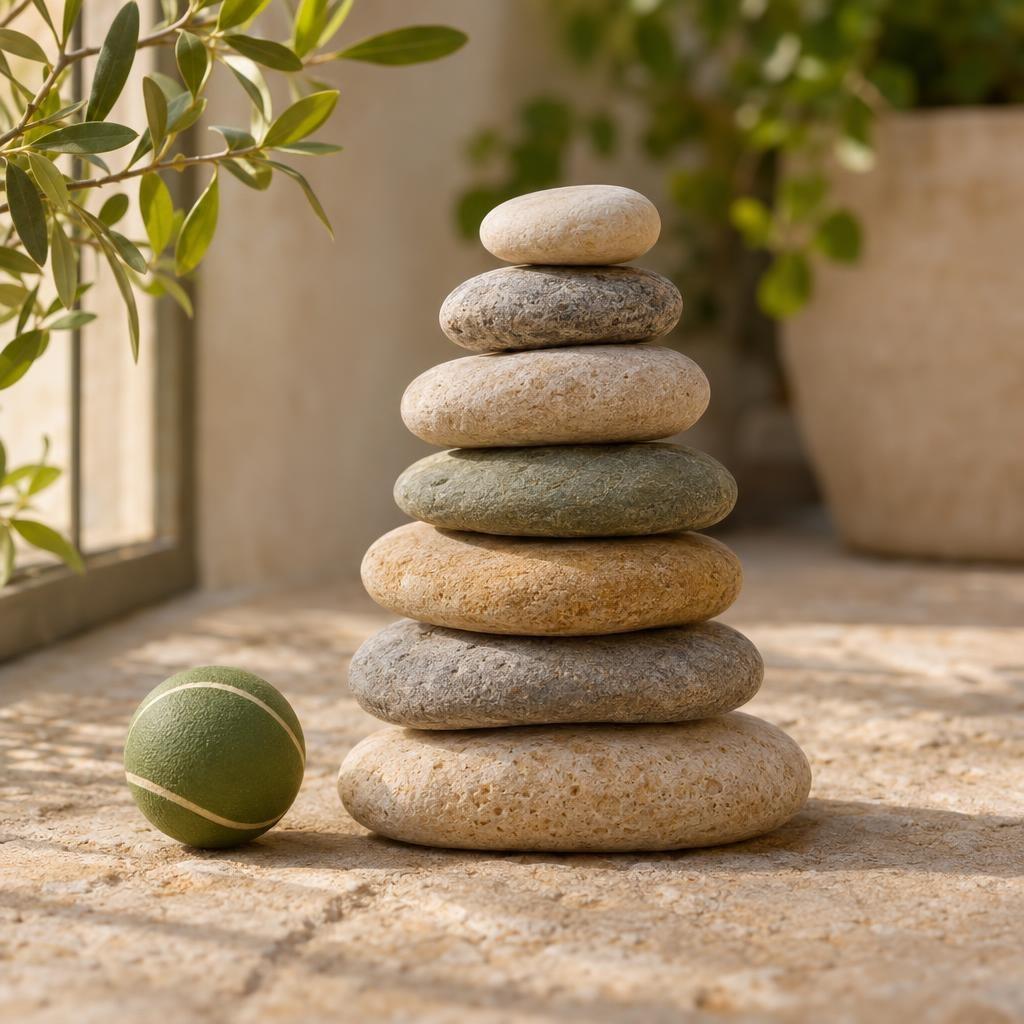
Sheva avanim is a team game with a ball and seven flat stones. One team builds a tower and the other gets three throws to knock it down; then play turns into a chase while the attackers try to rebuild.

The difference

Sheva avanim is not khamesh avanim, which is a hand skill game, and not sheva al ha-kir, which is a wall ball game.

Common mistake

Do not confuse sheva avanim with khamesh avanim; sheva avanim needs two teams, a ball, and a stone tower.

Ball Games

Two teams playing machanayim, an Israeli dodgeball

מחנייםDodgeball

makhanayim

US English

Closest: dodgeball

UK English

Closest: dodgeball

What it is

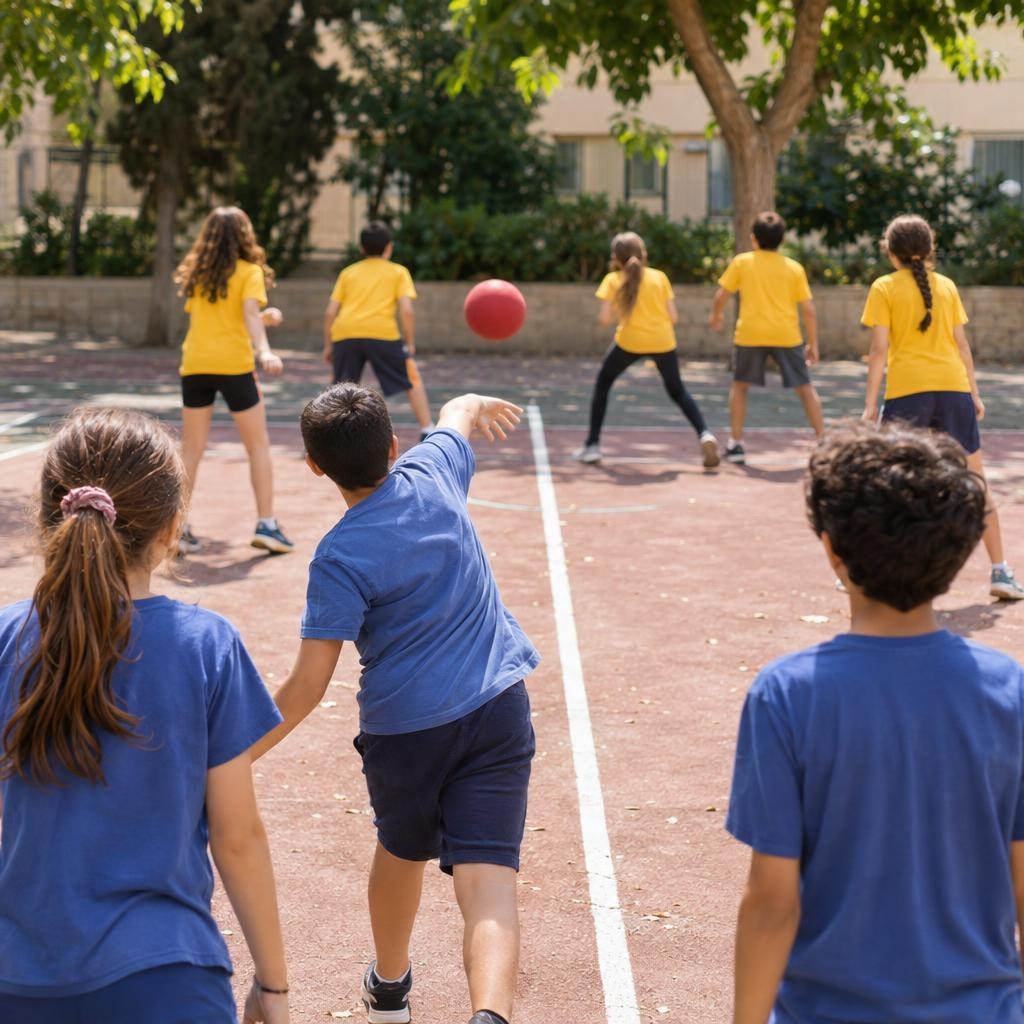
Makhanayim is a two-team throwing game across a center line, in which a player hit by the ball is out.

The difference

Dodgeball is the practical translation, but makhanayim court, catch, and re-entry rules can differ. Ministry materials document colored-ball versions where catching one color can bring a teammate back.

Common mistake

Do not assume standard dodgeball rules; ask which makhanayim rules are in force.

עמודוSPUD

amudu

US English

SPUD (closest rules match)

UK English

SPUD (closest rules match)

What it is

In amudu a ball is thrown high and a name is called. That player goes for the ball while the others scatter, a stop call freezes everyone, and the holder then aims at a player who must stand still.

The difference

Amudu is not simply dodgeball. Penalties and the number of steps vary, and only the throw, call, scatter, and freeze sequence is stable across sources.

Common mistake

Do not call amudu dodgeball; the closest English game is SPUD.

שבע על הקירWall-ball sequence

sheva al ha-kir

US English

Wall-ball sequence; no fixed exact equivalent

UK English

Wall-ball sequence; no fixed exact equivalent

What it is

In sheva al ha-kir players throw a tennis ball against a wall and catch it while doing a memorized series of actions, such as one clap, front and back claps, or a turn. Missing the catch passes the turn.

The difference

Despite the word sheva, seven, the cited sheva al ha-kir sequence lists more than seven actions and is driven by a rhyme.

Common mistake

Do not confuse sheva al ha-kir with sheva avanim or assume exactly seven actions.

Team And Trail Games

שוטרים וגנביםCops and robbers

shotrim ve-ganavim

US English

Cops and robbers, as team hide-and-seek or tag

UK English

Cops and robbers, as team hide-and-seek or tag

What it is

Shotrim ve-ganavim splits players into police and thieves. In the documented version the police count together to 50 while the thieves hide, then catch them and bring them to an agreed point, and the teams swap once all are caught.

The difference

The cited schoolyard shotrim ve-ganavim is a structured team chase and hiding game, not free-form pretend play.

Common mistake

Do not picture pretend gunplay; shotrim ve-ganavim is a team game with a count, a search, and a collection point.

סימני דרךTrail signs

simanei derekh

US English

Closest: trail signs or hare and hounds

UK English

Closest: trail signs or hare and hounds

What it is

In simanei derekh one group marks a route with agreed signs, such as chalk arrows, and another group follows and decodes it.

The difference

Simanei derekh is not a road sign lesson or an ordinary treasure hunt. The symbols are agreed by each group.

Common mistake

Do not treat simanei derekh as a treasure hunt; agree on the symbols before one group sets off.

You Know the English Game. Use This Hebrew Name.

You know the English game. Use this Hebrew name.
English gameIsraeli nameKeep in mind
TagתופסתtofesetAsk which version.
Hide-and-seekמחבואיםmakhbo'imUsually with a home base race.
HopscotchקלאסklasOften an eight-space court.
MarblesגולותgulotNot gogo'im.
Apricot-stone gamesגוגואיםgogo'imAjo'im in Jerusalem.
Jacksחמש אבניםkhamesh avanimFive stones, no ball.
Chinese jump ropeגומי יפניgumi yapaniHebrew says Japanese.
Red Light, Green Lightאחת, שתיים, שלוש, דג מלוחdag malu'akhEnds with a story and a dash.
DodgeballמחנייםmakhanayimLocal rules vary.
SPUDעמודוamuduThrow, call, scatter, freeze.
Blind man's buffפרה עיוורתpara iveretLiterally blind cow.

Knowing the word is half of it. Say it out loud.

A Hebrew speaking app with Maya and David, AI tutors who hold conversations, explain corrections and help you practise what you need to say. Private beta on iPhone and Android. Public store launch is still ahead. Free Classic lessons to start, no card needed.

Explore baba Learn

How we checked this guide

By the baba team. Checked on against 31 sources, mostly Israeli retailers, manufacturers and government pages, and updated . Products, labels and rules change, so check the pack or the office before you rely on a detail. Our methodology.

Frequently Asked Questions

What are gogo'im?

Gogo'im are dried apricot stones and the family of games played with them, such as closest to the wall. Gogo'im are not marbles, which are gulot in Hebrew.

Is klas the same as hopscotch?

Yes, klas is hopscotch. The Ministry of Education version uses eight spaces and a beanbag or flat stone, so the court can differ from the one you know.

What is tofeset in English?

Tofeset is tag. Tofeset is a family of chasing games with color, height, chain, and other versions, so ask which kind is being played.

What does dag malu'akh mean?

Dag malu'akh means salted fish and is the Israeli game closest to Red Light, Green Light. In the documented Israeli version, the caller tells a story and everyone races home at the words dag malu'akh.

Is gumi yapani Japanese jump rope?

Gumi yapani means Japanese elastic in Hebrew, and English speakers call the game Chinese jump rope or elastics. Two players hold a long elastic loop around their legs while a third jumps a pattern.

More Hebrew-English Guides

All guides