baba
Free, no AIHebrew-English guide 99 of 100

The Israeli Plant Nursery, in Plain English

What atsits, deshen, adama and the balcony herbs are in English.

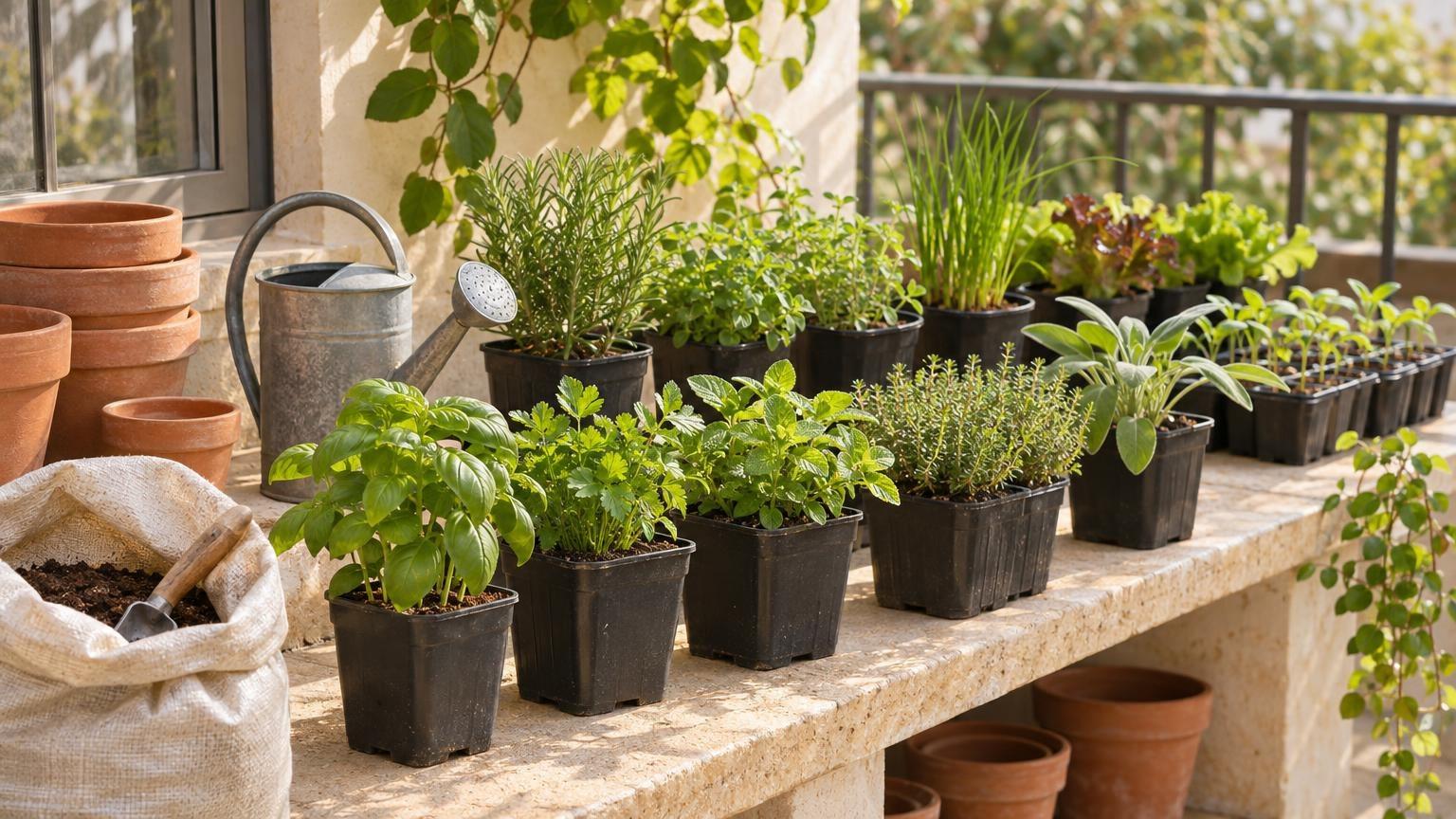
An Israeli plant nursery bench with potted herbs, pots and a watering can

Mix-Ups to Avoid

  1. Do not ask for adama for a balcony pot. Adama is just soil; ask for ta'arovet shtila, a light potting mix, because heavy garden soil is wrong for balcony containers.
  2. Say which atsits you mean. Atsits is both an empty pot and a potted plant, so ask for atsits reik for the pot or tsemakh be-atsits for the plant.
  3. Do not mix up the lemon herbs. Luiza is lemon verbena, limonit or esev limon is lemongrass, and melisa is lemon balm: three different plants.
In This Guide60 entries

At The Nursery

On the label or sign

משתלת…
the start of a nursery name on a sign

משתלהPlant nursery

mishtala

US English

Plant nursery or garden center

UK English

Plant nursery or garden centre

What it is

A mishtala is a place that grows or sells plants. A mishtala has departments for herb plants, pots, planters, potting mixes, and fertilizers.

The difference

In English, nursery alone can mean childcare, but mishtala always means plants.

Common mistake

Do not reach for a childcare word when you want plants; ask for a mishtala.
On the label or sign

צמחי תבלין
herb plants section

צמח / צמחי תבליןHerb plants

tsemakh / tsimkhei tavlin

US English

Plant; herb plants

UK English

Plant; herb plants

What it is

Tsimkhei tavlin is the Israeli nursery category for herb plants. The tsimkhei tavlin section can hold culinary herbs, tea plants, and aromatic shrubs side by side.

The difference

Tsimkhei tavlin is broader than the English word herbs, and the plants in the category do not share one care regime. Basil sits next to lemon verbena, shiba, and scented pelargonium.

Common mistake

Do not assume every plant in tsimkhei tavlin is a leafy herb you eat freely or waters the same way.

A tray of seedlings, shtilim

On the label or sign

עציץ 12 ס״מ
a 12 cm nursery pot

שתילSeedling or young plant

shtil

US English

Seedling, young plant, or transplant

UK English

Seedling, young plant, or plug plant

What it is

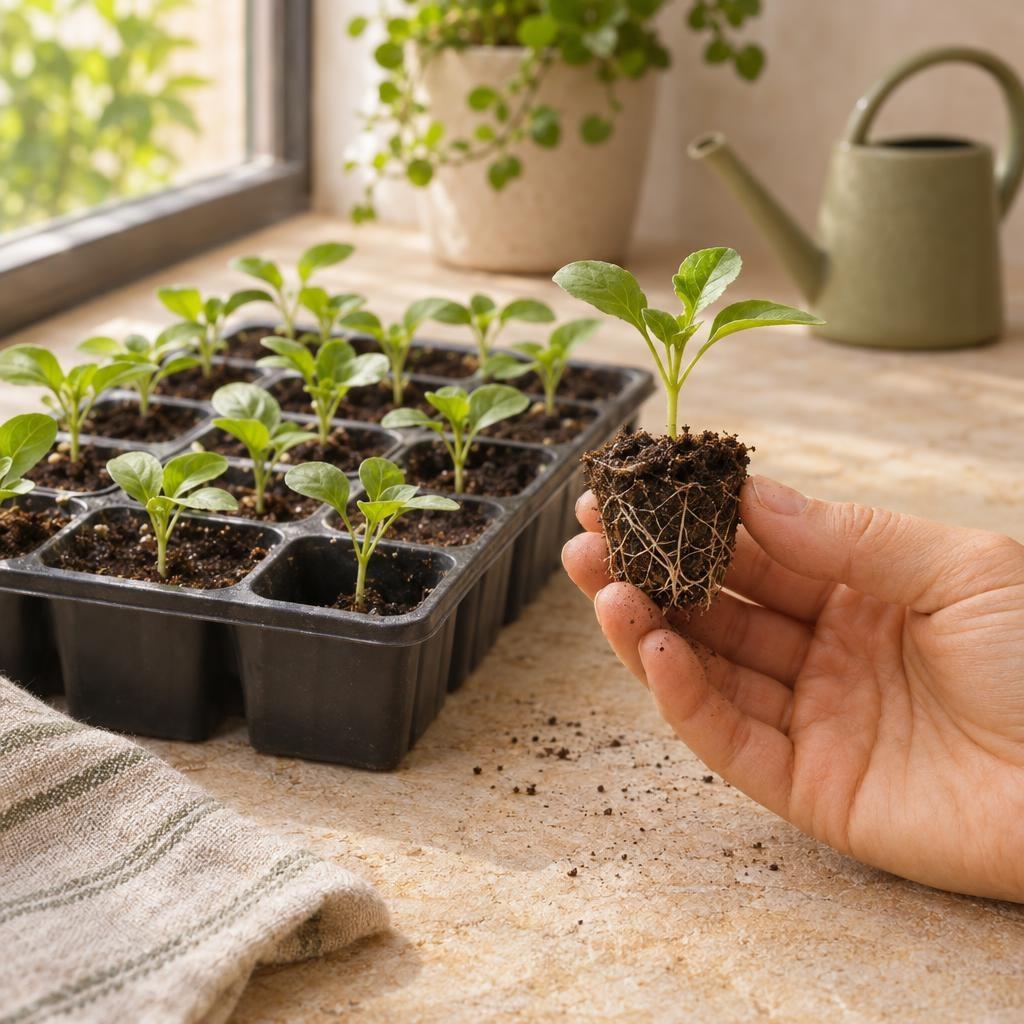
A shtil is a young plant meant for planting out, raised from seed or from part of another plant. A shtil is often sold in a small nursery pot labelled by diameter, such as 12 cm.

The difference

A shtil is not a seed. In English, sapling usually suggests a young tree, which a shtil often is not.

Common mistake

Do not translate every shtil as sapling; say young plant or seedling.

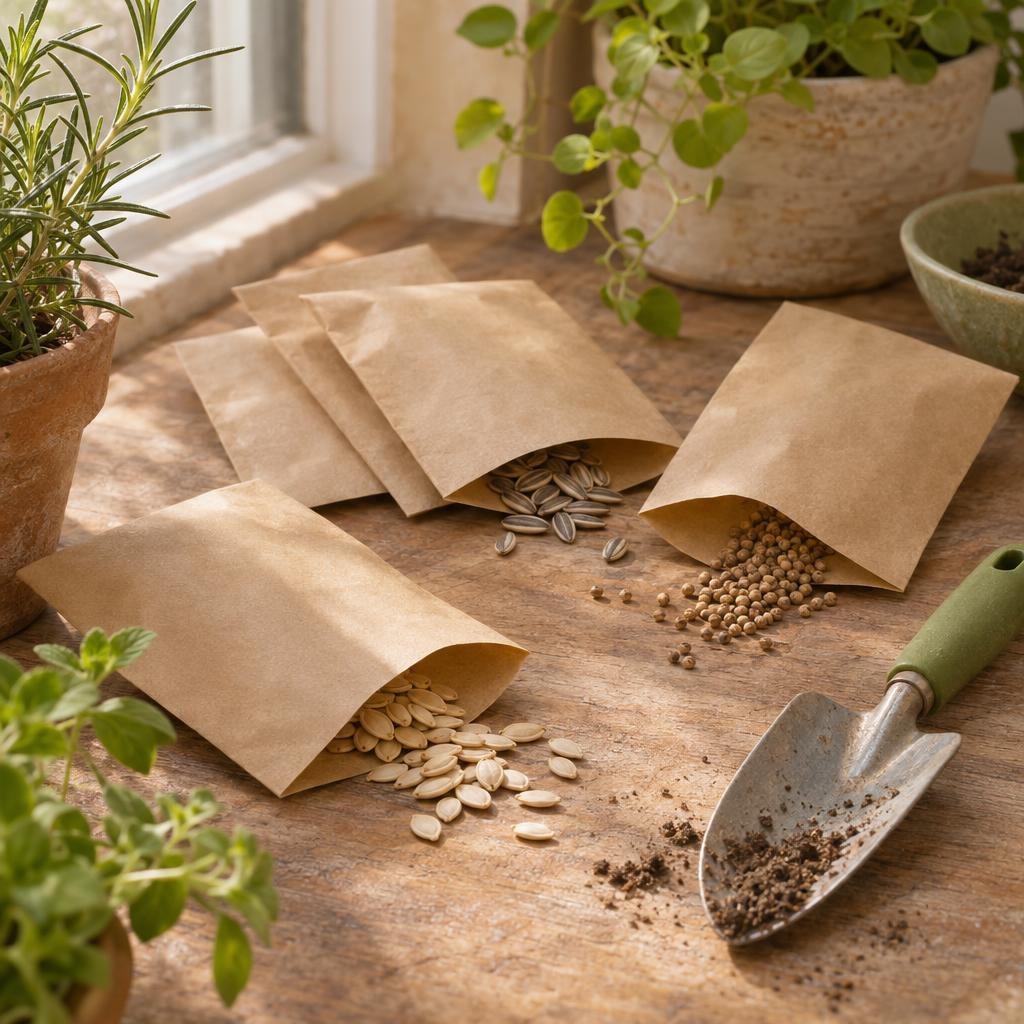
Seed packets, zera'im

On the label or sign

זרעי תבלינים
herb seeds

זרעיםSeeds

zera'im

US English

Seeds

UK English

Seeds

What it is

Zera'im are seeds, sold in flat packets separate from live plants. Herb seed packets are marked זרעי תבלינים (zir'ei tavlinim).

The difference

A packet of zera'im with a familiar English name may not hold the same local species you expect.

Common mistake

Check the botanical name on a packet of zera'im where it is given, and say shtil if you want a live plant.

יחורCutting

yikhur

US English

Cutting

UK English

Cutting

What it is

A yikhur is a piece of an existing plant used to grow a new plant. Nurseries may sell an already rooted yikhur.

The difference

A yikhur is not a seedling. An unrooted yikhur has stem and leaves but no established root ball.

Common mistake

Do not call any small plant a yikhur unless you know it was grown from a cutting.

Pots And Planters

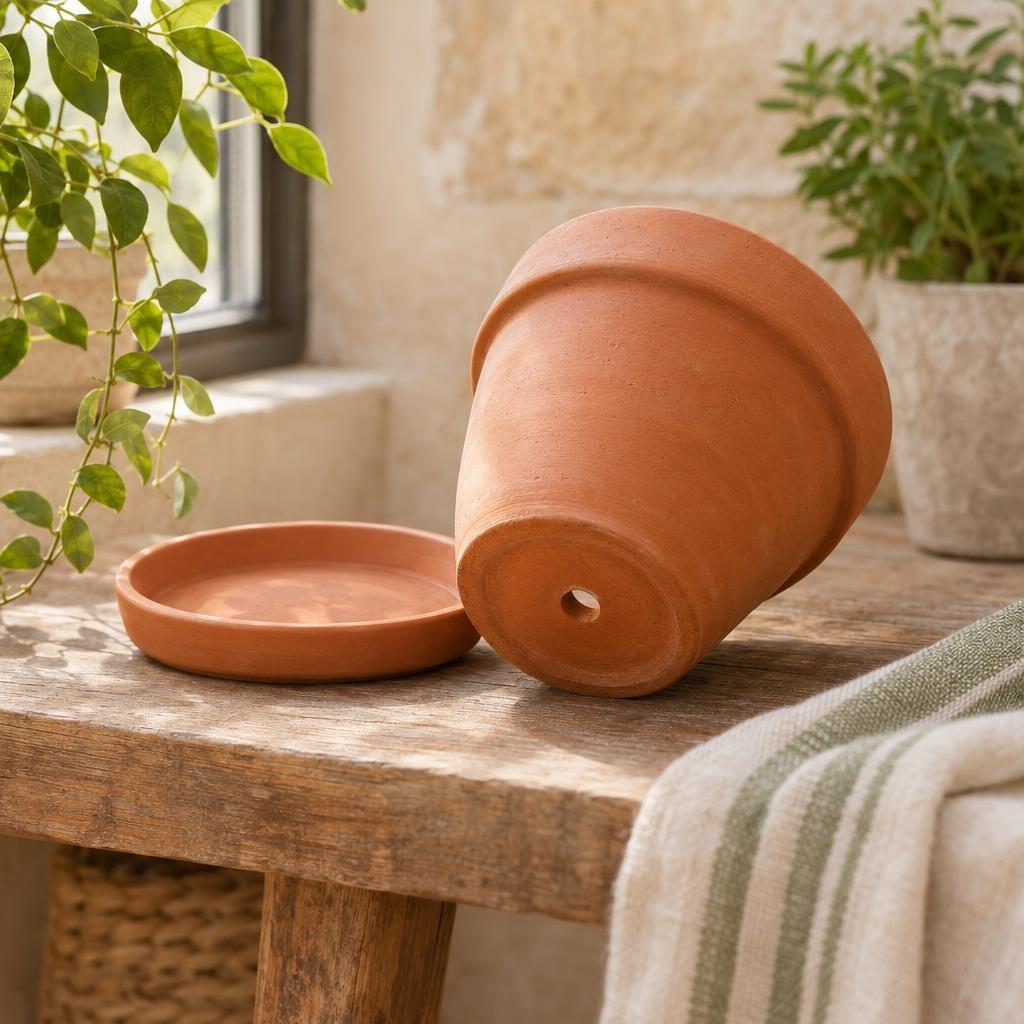
A terracotta flowerpot and saucer, atsits

On the label or sign

עציץ ריק
empty pot
כלי שתילה
planting container
מכל גידול
growing container

עציץFlowerpot or potted plant

atsits

US English

Flowerpot or plant pot; also a potted plant

UK English

Flowerpot or plant pot; also a pot plant

What it is

An atsits is a flowerpot, and in everyday speech an atsits is also the plant growing in the pot. Shops list live plants as עציץ בזיליקום or עציץ נענע.

The difference

The sentence קניתי עציץ (kaniti atsits) does not tell you whether someone bought an empty pot or a plant.

Common mistake

Say עציץ ריק (atsits reik) for an empty pot and צמח בעציץ (tsemakh be-atsits) for a plant in a pot.

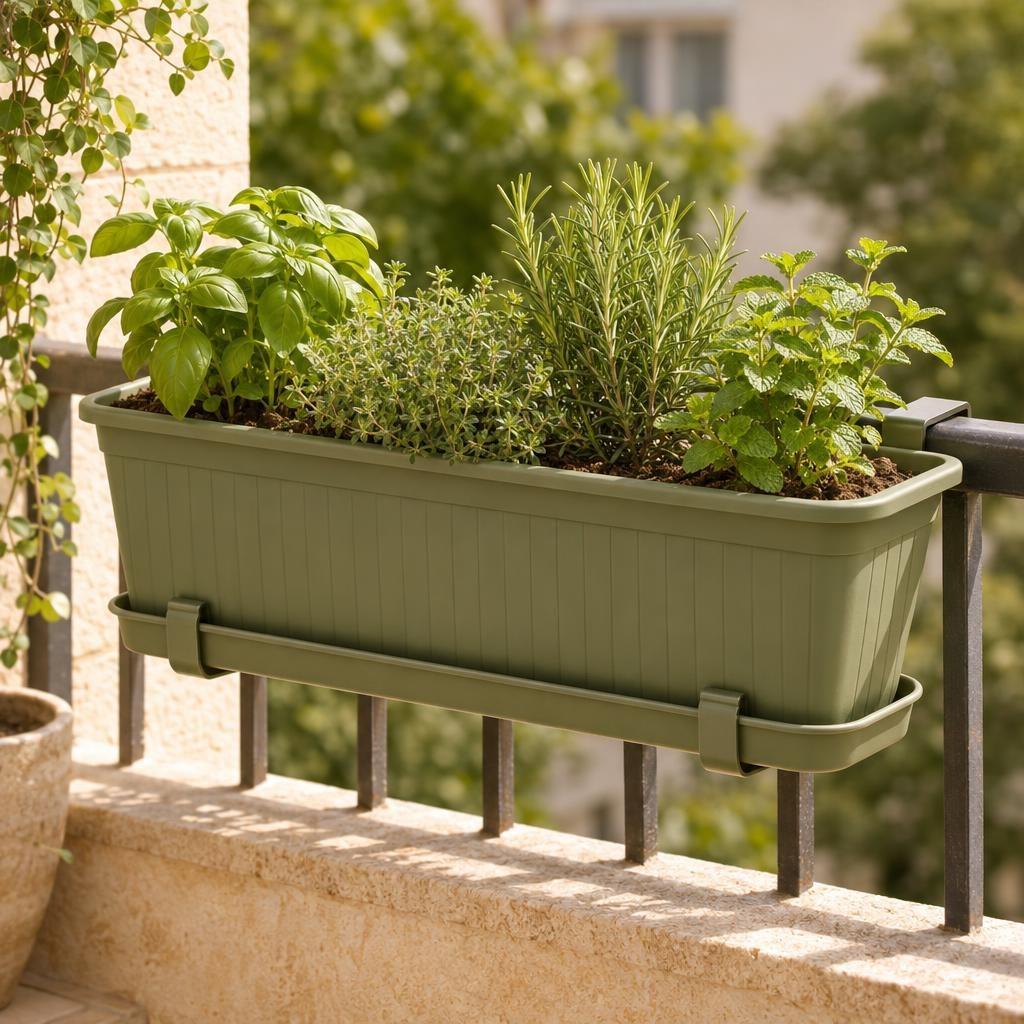
A long balcony planter box with herbs, adanit

On the label or sign

אדנית למעקה
railing planter

אדניתPlanter box

adanit

US English

Planter or window box

UK English

Planter or window box

What it is

An adanit is a long box-shaped planting container, especially for a sill, railing, or balcony. Shops sell an adanit in lengths such as 40, 60, or 80 cm.

The difference

An adanit is not only a window box. On balconies the word adanit also covers free-standing and railing planters.

Common mistake

Do not limit adanit to window boxes; ask for אדנית למעקה (adanit la-ma'ake) for a railing planter.

On the label or sign

תחתית אדנית
planter tray

תחתית לעציץ / תחתית אדניתPot saucer

takhtit le-atsits / takhtit adanit

US English

Pot saucer or planter tray

UK English

Pot saucer or planter tray

What it is

A takhtit is a tray that catches water under a pot or planter. A takhtit is sold separately in matching centimetre sizes, such as 22 and 27 cm pot saucers.

The difference

A takhtit manages runoff but does not replace drainage holes in the pot.

Common mistake

Do not leave roots standing in water collected in the takhtit, and never seal the pot.

On the label or sign

לניקוז ואוורור
for drainage and aeration, on mix labels

חורי ניקוז / מנוקז היטבDrainage holes

khorei nikuz / menukaz heitev

US English

Drainage holes; well-drained

UK English

Drainage holes; free-draining

What it is

Khorei nikuz are openings in a pot that let extra water out. Ministry balcony guidance makes drainage a basic requirement for containers.

The difference

A decorative pot without khorei nikuz is not the same as a drained nursery pot.

Common mistake

Do not plant straight into a pot with no khorei nikuz; check the base for holes.

Soil And Potting Mix

אדמהSoil or earth

adama

US English

Soil, earth, ground; colloquially dirt

UK English

Soil, earth, ground

What it is

Adama is the broad everyday word for soil, earth, or ground.

The difference

Adama does not name a mix made for containers. A bag for pots should normally say תערובת שתילה or מצע.

Common mistake

Do not ask only for adama for a balcony pot; ask for ta'arovet shtila.

אדמת גן / קרקע גנניתGarden soil

adamat gan / karka gananit

US English

Garden soil or topsoil

UK English

Garden soil or topsoil

What it is

Adamat gan is mineral soil for beds and landscaping. Adamat gan feels dense and mineral rather than springy and fibrous.

The difference

Adamat gan is heavier than potting mix, and Ministry guidance warns against filling balcony containers with heavy garden soil.

Common mistake

Do not treat adamat gan and potting mix as the same thing; use light ta'arovet shtila on a balcony.

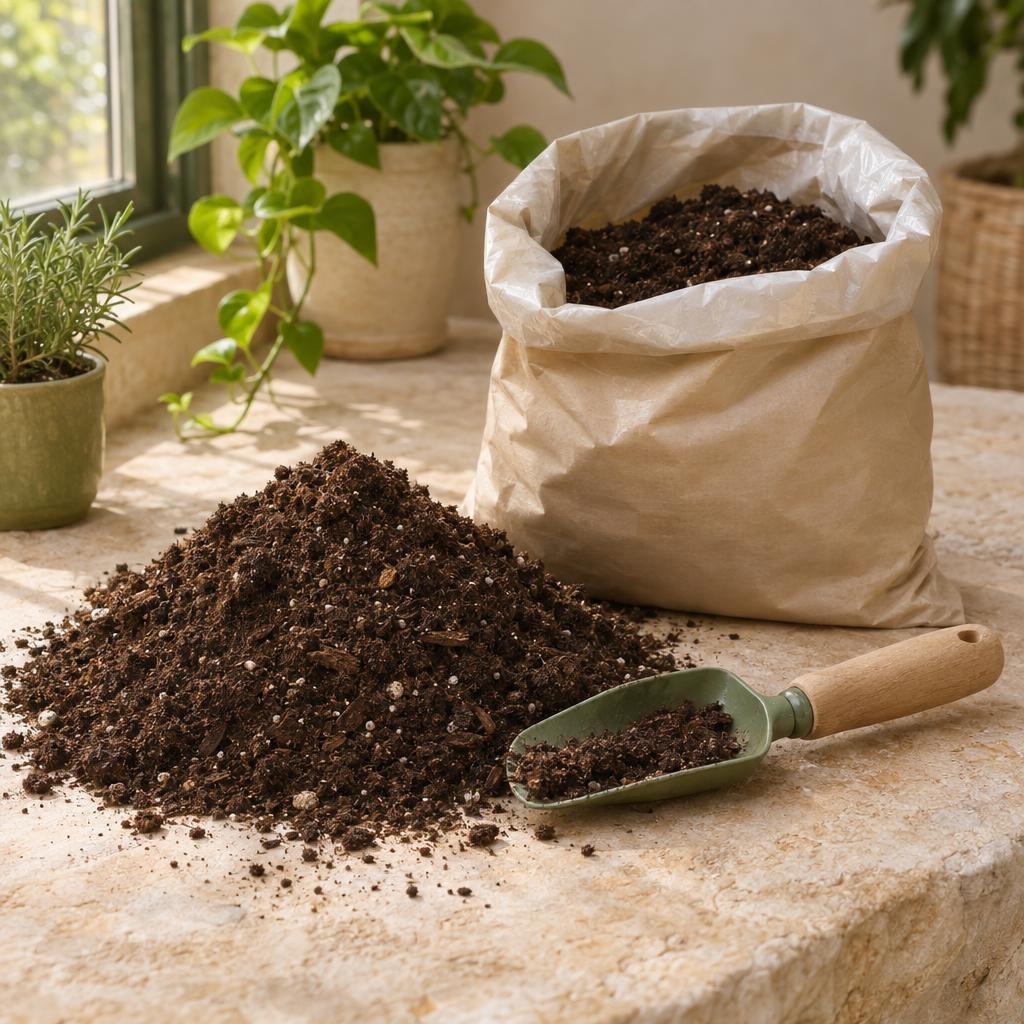
A mound of dark potting mix, ta'arovet shtila

On the label or sign

עציצים ואדניות
pots and planters
מצע מנותק
soilless growing medium

תערובת שתילה / מצע גידולPotting mix

ta'arovet shtila / matsa gidul

US English

Potting mix; growing medium

UK English

Potting compost; growing medium

What it is

Ta'arovet shtila is a mix made for containers, and matsa gidul is the technical word for growing medium. Ministry guidance lists peat, coir, perlite, vermiculite, tuff, and compost among possible ingredients.

The difference

Ta'arovet shtila may hold little or no mineral soil, so US potting soil can mislead, and UK potting compost is not the same as the amendment kompost. On a bag, matsa means growing medium, not a bed.

Common mistake

Do not fill a balcony planter with earth from outside; buy a bag of ta'arovet shtila marked for pots and planters.

כבולPeat

kavul

US English

Peat or peat moss

UK English

Peat

What it is

Kavul is peat, a brown fibrous ingredient that holds water. Kavul often comes first in an ingredient list.

The difference

Kavul is an ingredient, not a complete potting recipe by itself.

Common mistake

Do not buy straight kavul as if it were a ready-balanced potting mix.

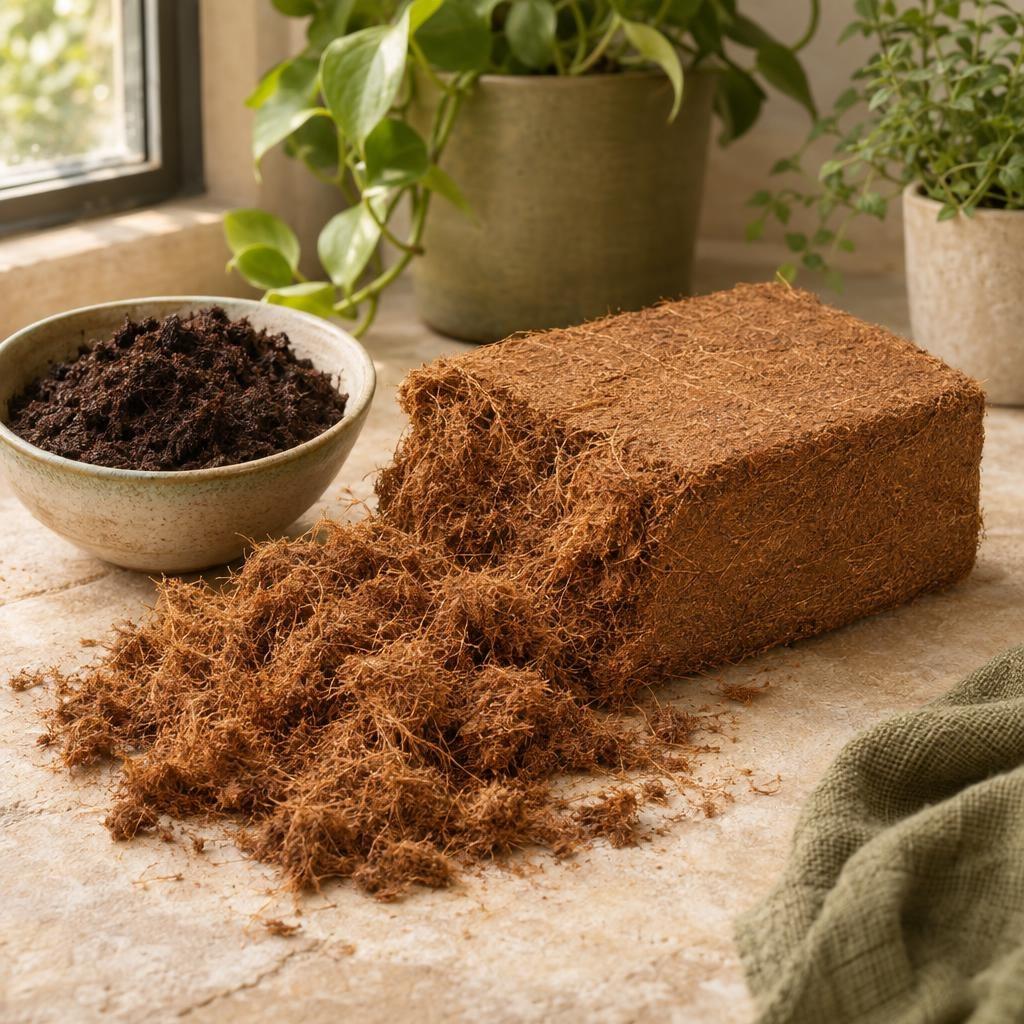
Coconut coir and peat, kokos and kavul

קוקוס / סיבי קוקוסCoir

kokos / sivei kokos

US English

Coco coir

UK English

Coir or coco coir

What it is

Kokos is processed coconut fibre used in growing media and as a possible partial substitute for peat. Kokos comes loose in a bag or as a compressed block.

The difference

On a garden label, kokos means coir, not edible coconut, and kokos does not supply fertilizer.

Common mistake

Do not read kokos on a bag as food coconut or expect kokos to feed the plant.

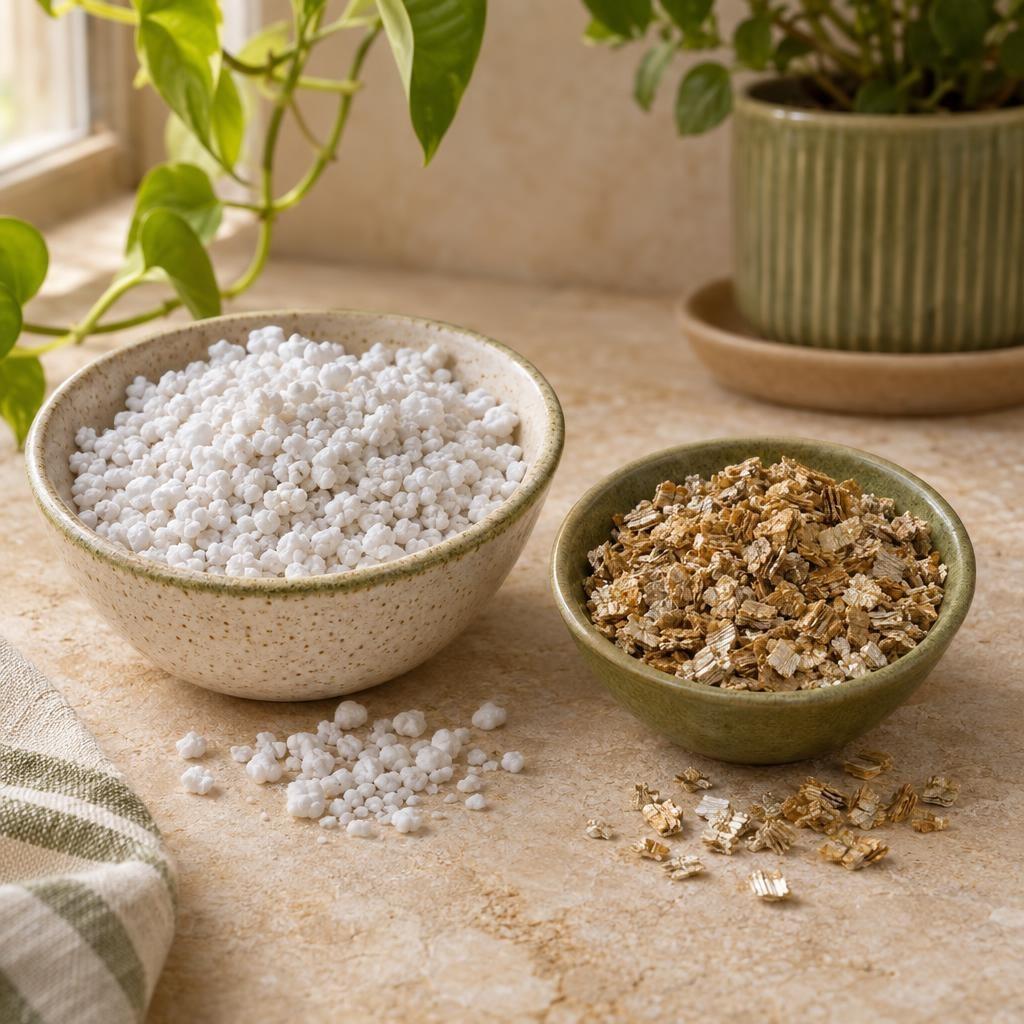
Perlite and vermiculite in bowls, perlait and vermikulit

פרלייטPerlite

perlayt

US English

Perlite

UK English

Perlite

What it is

Perlayt is perlite, very light white expanded mineral granules that add air space and drainage to a mix.

The difference

Perlayt is not plant food. The white particles of perlayt are often mistaken for foam, fertilizer pellets, or mold.

Common mistake

Do not mistake perlayt in a mix for fertilizer or mold.

ורמיקוליטVermiculite

vermikulit

US English

Vermiculite

UK English

Vermiculite

What it is

Vermikulit is vermiculite, light layered gold-brown mineral flakes used in mixes.

The difference

Vermikulit handles water and air differently from perlite, so the two names are not interchangeable.

Common mistake

Do not call every light mineral ingredient perlite; vermikulit is a different material.

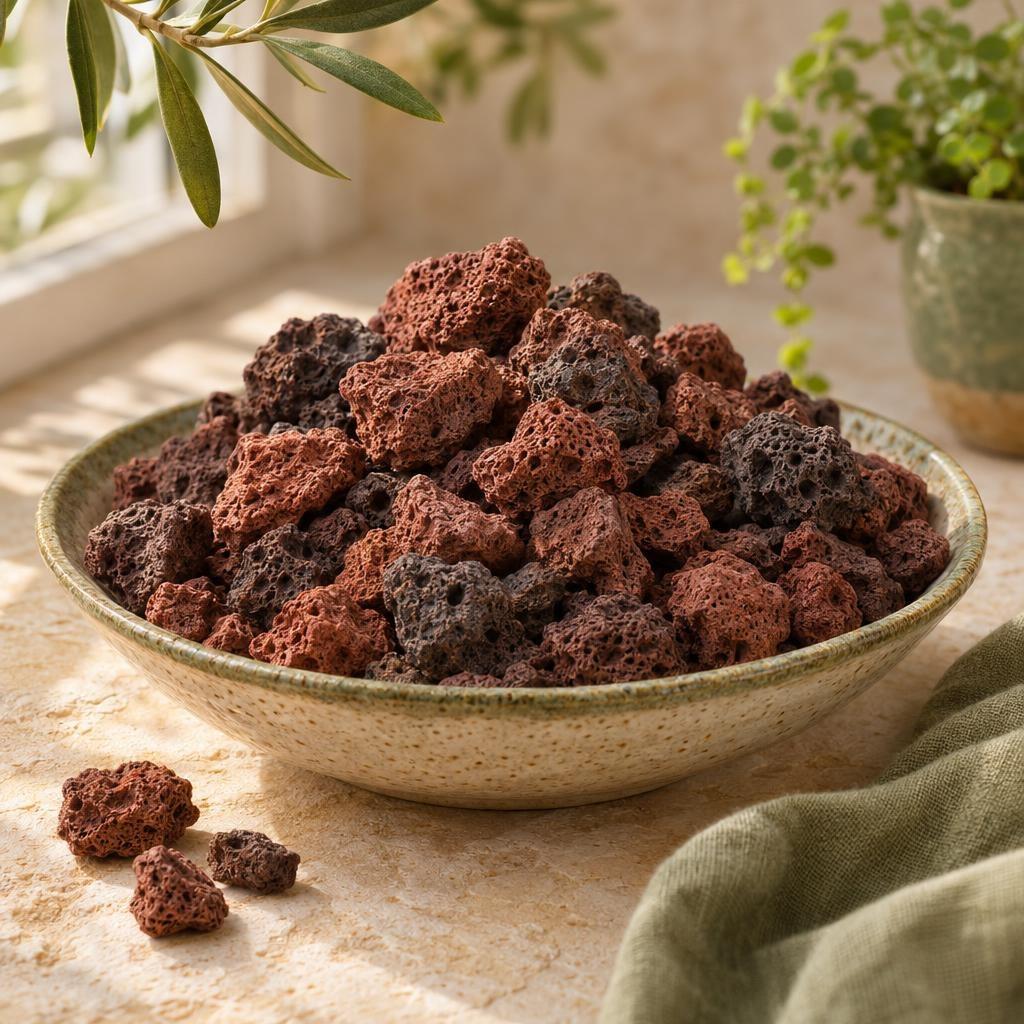
Volcanic tuff grit in a bowl, tuf

טוףVolcanic tuff

tuf

US English

Volcanic tuff or lava rock

UK English

Volcanic grit or lava rock

What it is

Tuf is porous mined volcanic material, widely used in Israeli growing media and drainage layers. Tuf comes in grades, such as 4 to 8 mm.

The difference

Tuf is much heavier than perlite, which matters on a balcony.

Common mistake

Do not translate tuf as turf, and think about balcony load before adding a heavy layer of tuf.

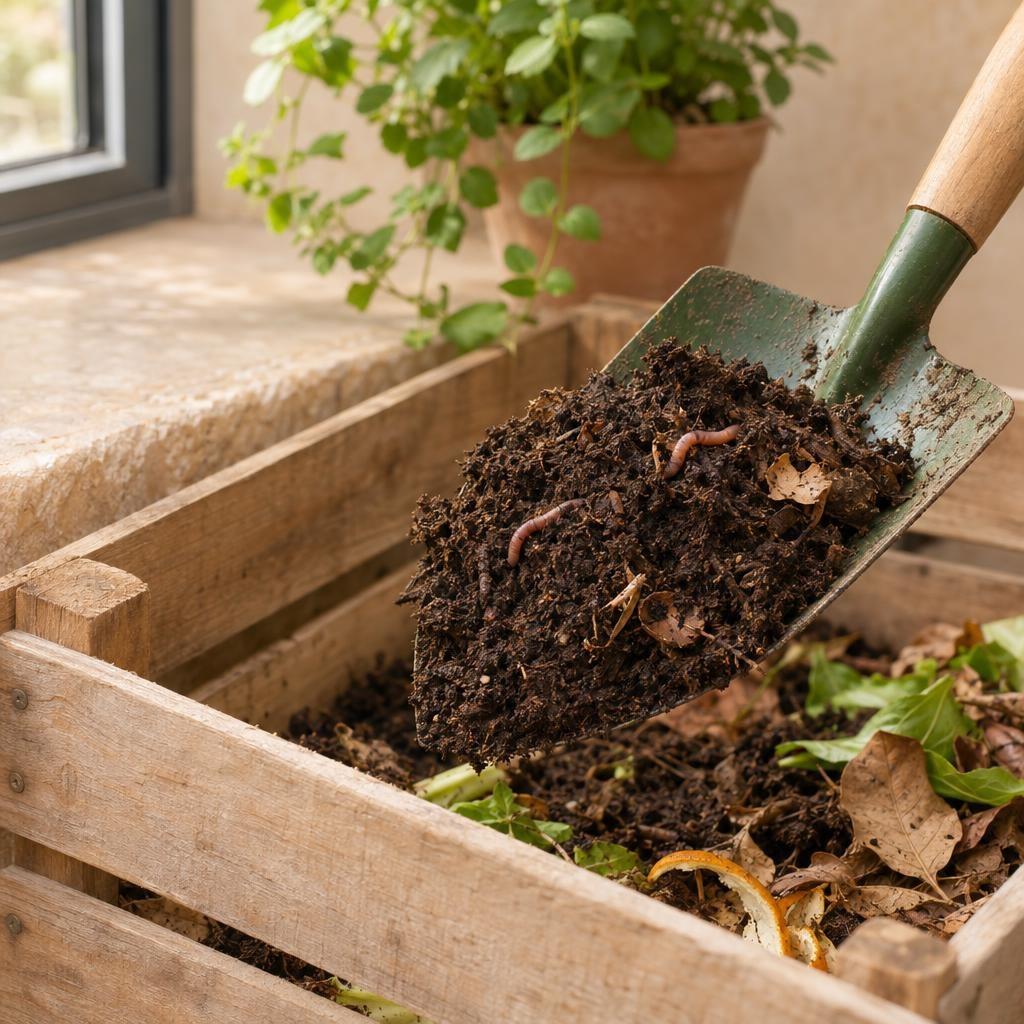
Compost on a shovel, kompost

קומפוסטCompost

kompost

US English

Compost

UK English

Garden compost or soil improver

What it is

Kompost is decomposed organic material used as a nutrient-rich amendment. A current Home Center example is a 25 L bag of ביו קומפוסט.

The difference

Kompost is not automatically a complete container mix, and kompost is not the same as UK potting compost.

Common mistake

Do not fill a whole pot with kompost; mix kompost into a proper potting mix.

הומוס תולעים / קומפוסט תולעיםWorm castings

humus tola'im / kompost tola'im

US English

Worm castings or vermicompost

UK English

Worm castings or vermicompost

What it is

Humus tola'im is worm castings, a fine dark amendment made through worm composting.

The difference

On a garden package, humus means the organic matter, not the chickpea spread. Humus tola'im is an amendment, not the whole growing medium.

Common mistake

Do not read humus on a garden bag as hummus, and do not fill a pot with humus tola'im alone.

Fertilizer

On the label or sign

אוניברסלי
all-purpose
לפורחים
for flowering plants
לצמחי תבלין וירקות
for herbs and vegetables

דשן / דשן אורגניFertilizer

deshen / deshen organi

US English

Fertilizer; organic fertilizer

UK English

Fertiliser; organic fertiliser

What it is

Deshen is fertilizer, a plant nutrient product that may be liquid or granular, organic or mineral, immediate or controlled release. Deshen organi is fertilizer based on organic inputs.

The difference

Deshen is a category, not one interchangeable product. Organic does not tell you the dose or the release pattern of a deshen.

Common mistake

Do not treat every deshen as the same product or add more than the label rate.

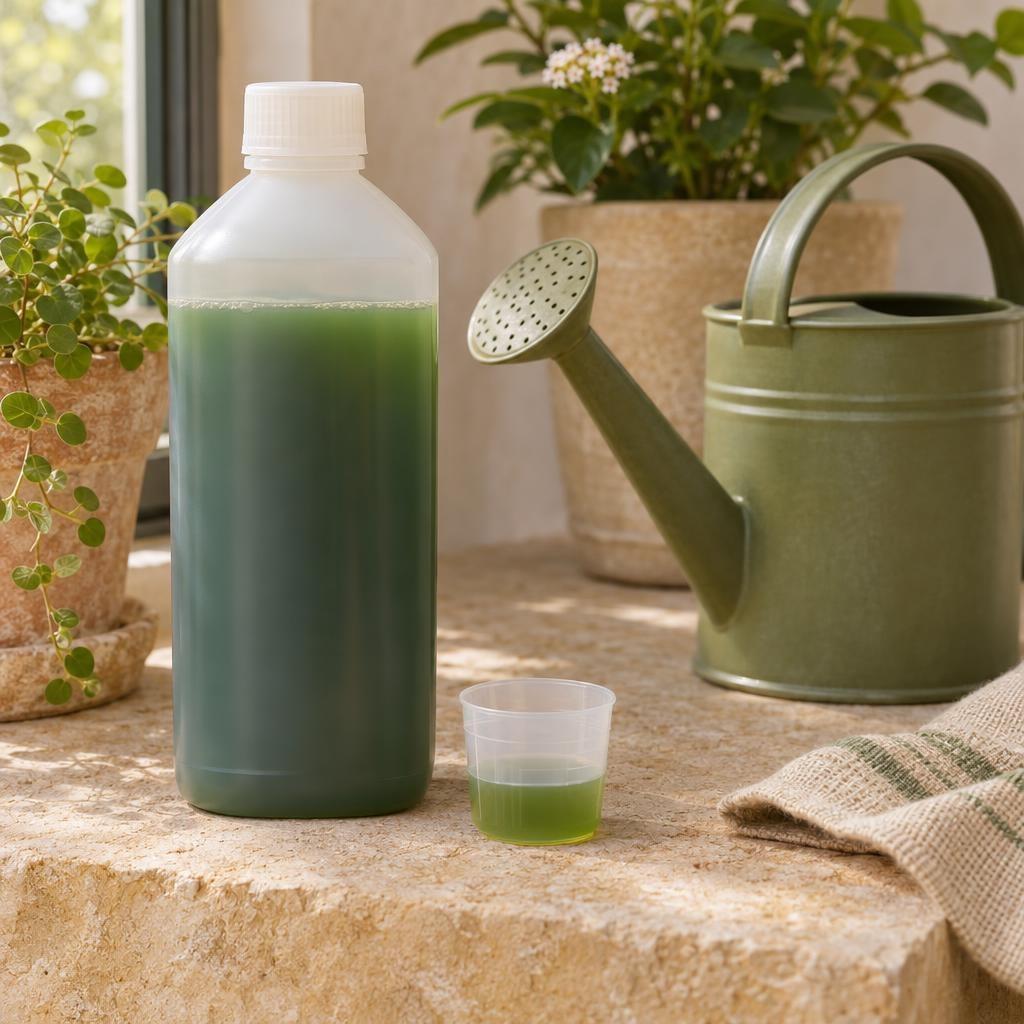
A bottle of liquid fertilizer with a measuring cap, deshen nozli

דשן נוזליLiquid fertilizer

deshen nozli

US English

Liquid fertilizer

UK English

Liquid feed or liquid fertiliser

What it is

Deshen nozli is a liquid fertilizer concentrate, often sold in 1 L bottles. The label gives target plants, dilution, and how often to apply deshen nozli.

The difference

Deshen nozli is a concentrate to dilute or dose by the label, not a ready drink for the plant.

Common mistake

Do not pour deshen nozli straight into a pot, and check the label before using a houseplant product on herbs you eat.

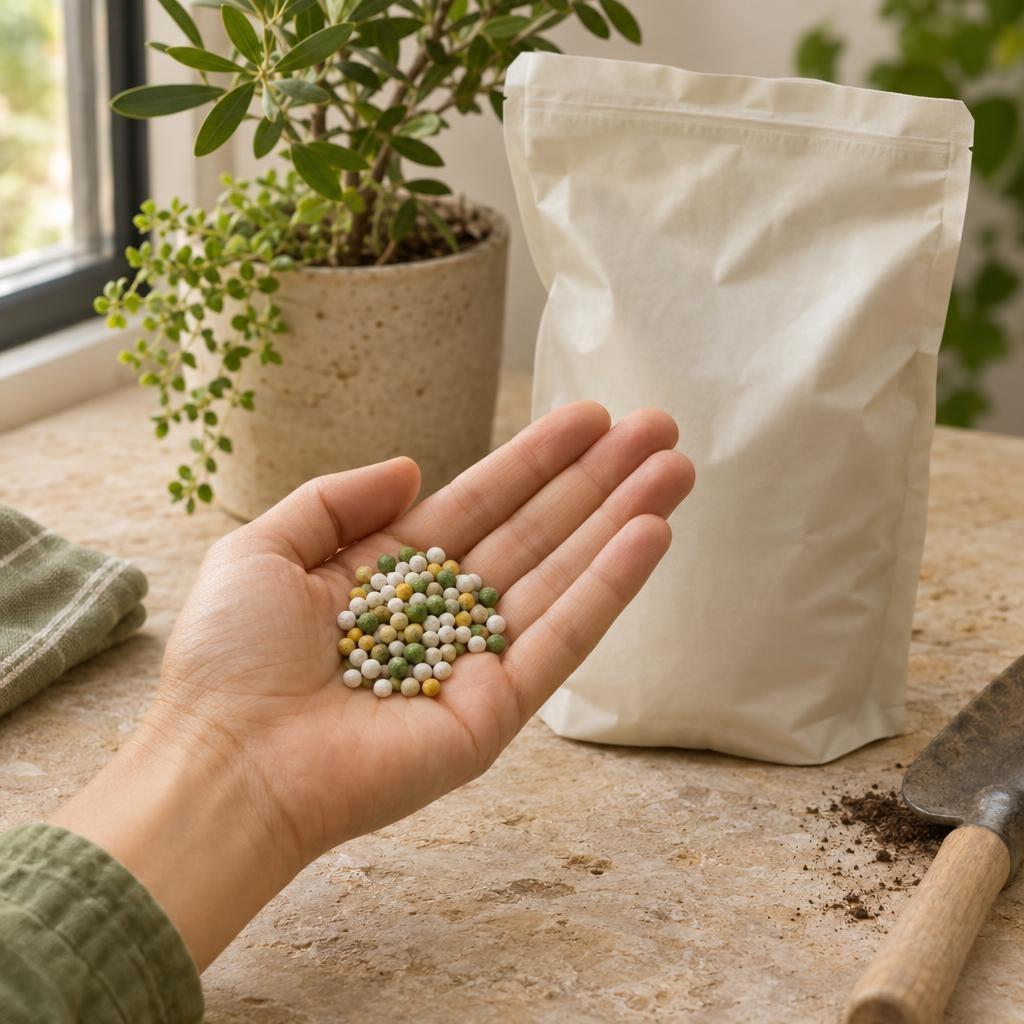
Slow-release fertilizer granules, deshen be-shikhrur iti

On the label or sign

6 חודשים
six months
12 חודשים
twelve months

דשן בשחרור איטי / מבוקרSlow-release fertilizer

deshen be-shikhrur iti / mevukar

US English

Slow-release or controlled-release fertilizer

UK English

Slow-release or controlled-release fertiliser

What it is

Deshen be-shikhrur iti is coated granules that release nutrients over a stated period. Current products are labelled for six or twelve months.

The difference

אוסמוקוט (Osmocote) is a brand name, not the generic word for deshen be-shikhrur iti. Some potting mixes already contain fertilizer.

Common mistake

Do not call every granular fertilizer Osmocote, and do not add liquid feed on top without checking what the mix already holds.

N-P-K / חנקן־זרחן־אשלגןN-P-K numbers

khankan, zarkhan, ashlagan

US English

Nitrogen, phosphorus, potassium analysis

UK English

Nitrogen, phosphorus, potassium analysis

What it is

N-P-K on a deshen label gives the three headline nutrient figures: nitrogen, phosphorus, and potassium. Liquid products may also list trace elements, מיקרואלמנטים.

The difference

Israeli Ministry material explains the N-P-K figures are concentrations by weight and that phosphorus and potassium may be given as oxides, so the numbers are a formula, not a dose.

Common mistake

Do not read higher N-P-K numbers as better or copy a dose from one product to another.

Watering And Tools

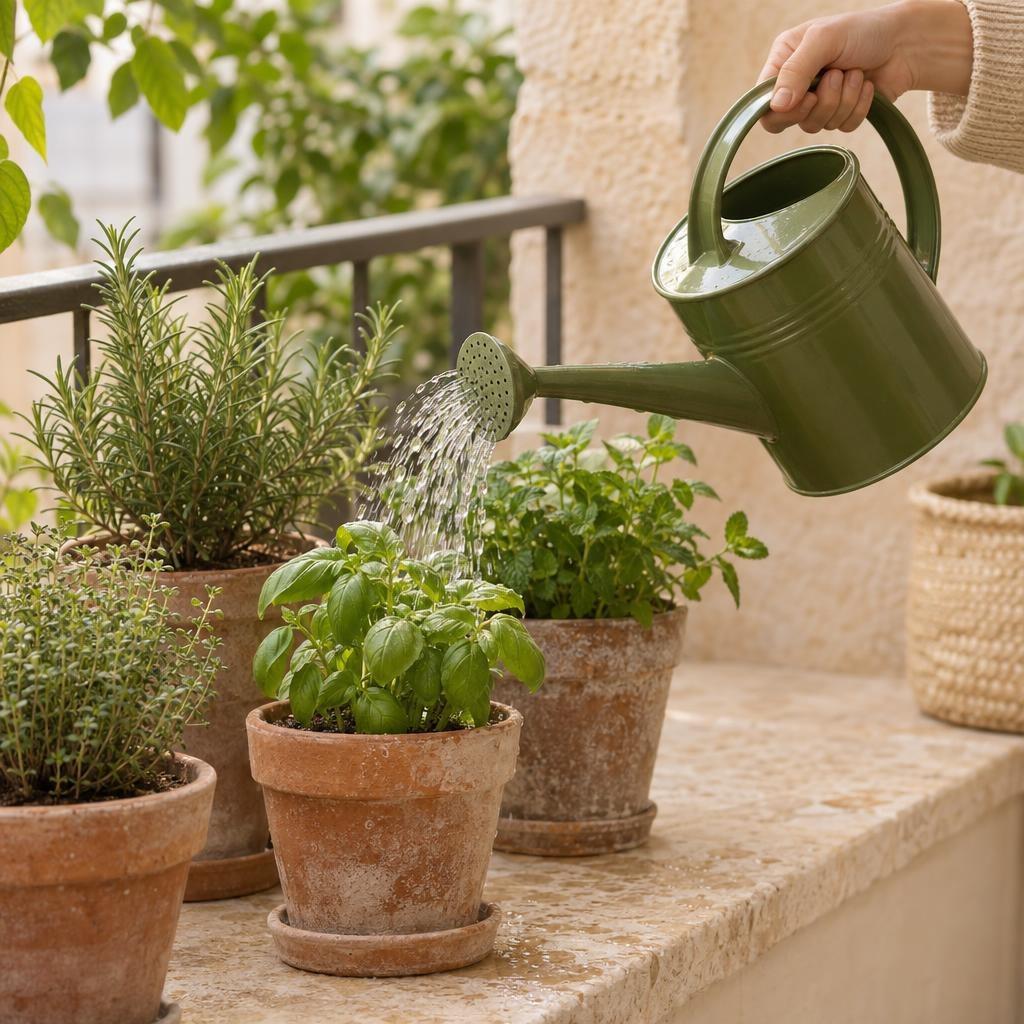
A watering can over potted herbs, mashpekh

On the label or sign

השקיה
watering, irrigation
רבה וסדירה
plenty of water, regularly

משפךWatering can

mashpekh

US English

Watering can

UK English

Watering can

What it is

A mashpekh is a watering can, sold by capacity, for example משפך לגינה 5 ליטר. Watering itself is השקיה (hashkaya).

The difference

In other contexts mashpekh can also mean a funnel. How much water a plant needs depends on the plant, the sun, the mix, the pot, and the season.

Common mistake

Say משפך לגינה (mashpekh la-gina) when context is unclear, and do not give every herb the same watering schedule.

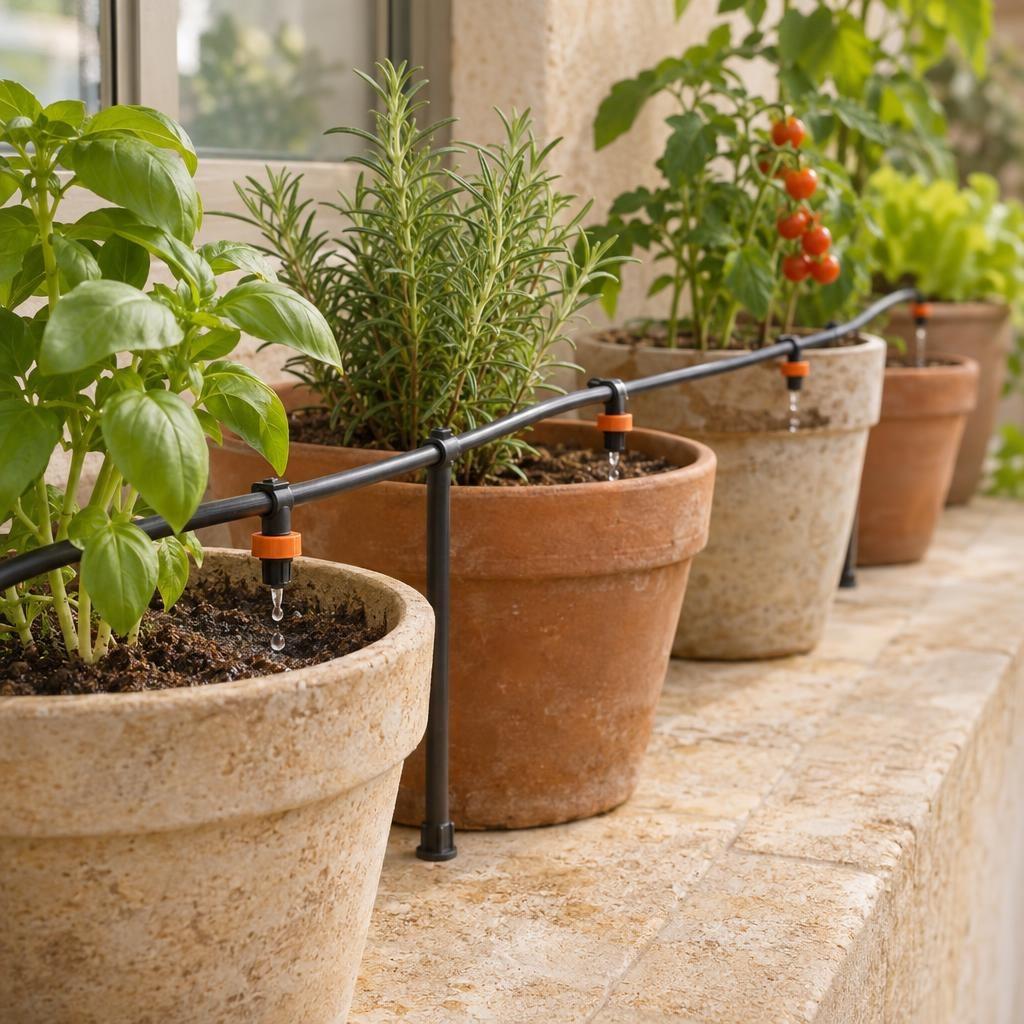
A drip irrigation line into pots, taftefet

טפטפת / מערכת השקיהDrip emitter

taftefet / ma'arekhet hashkaya

US English

Drip emitter; irrigation system

UK English

Dripper; irrigation system

What it is

A taftefet is a drip emitter, and a ma'arekhet hashkaya is the irrigation system that feeds it. Ministry guidance recommends automatic irrigation where a balcony has a water point.

The difference

One taftefet per pot does not mean every pot gets the water it needs.

Common mistake

Do not assume equal emitters mean equal watering; plan the taftefet layout for each plant and for when you are away.

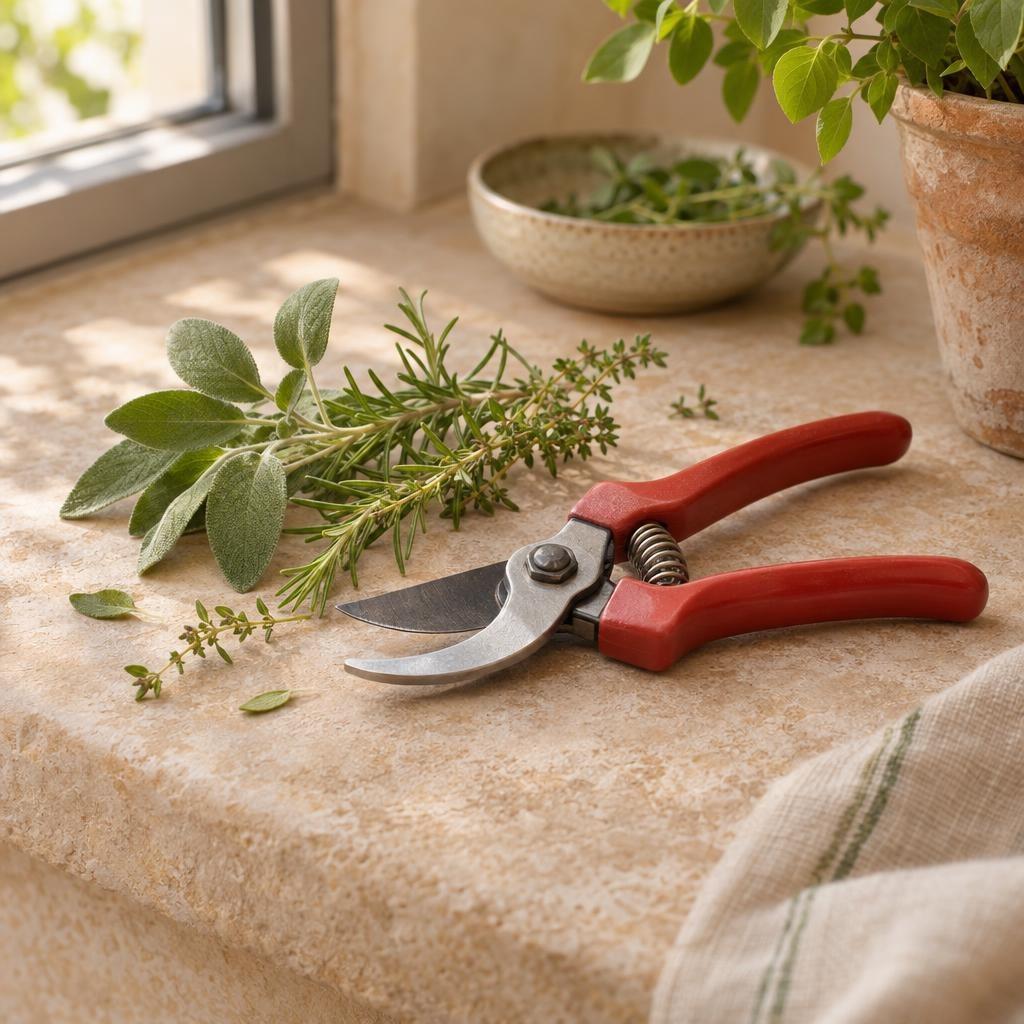
A pair of secateurs with cut herb stems, mazmera

On the label or sign

מזמרת פרחים
flower shears

מזמרהPruning shears

mazmera

US English

Pruning shears or hand pruners

UK English

Secateurs

What it is

A mazmera is a hand tool with short blades and spring handles for pruning and harvesting stems.

The difference

A mazmera is a small hand tool, not a large hedge shear.

Common mistake

Do not buy a big hedge shear for small herb stems; ask for a mazmera.

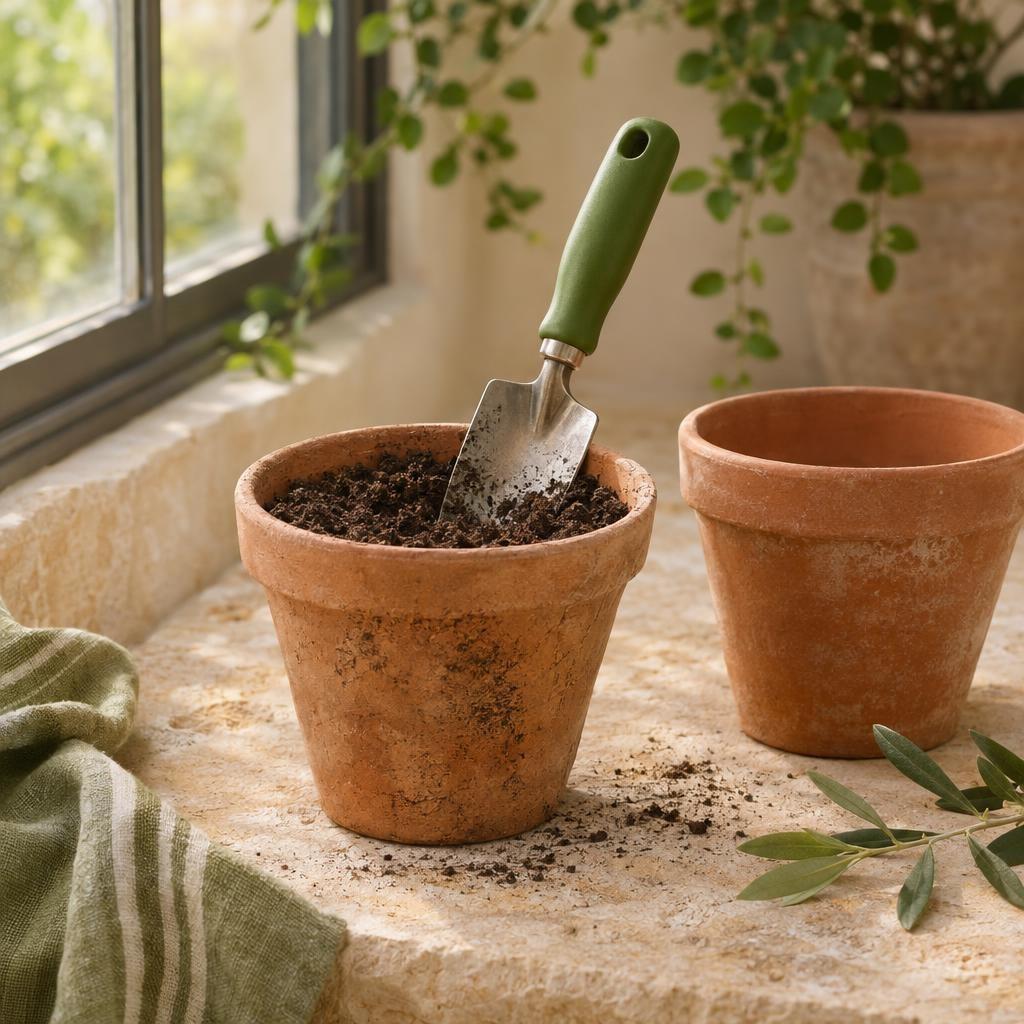
A hand trowel stuck in a pot of soil, kaf shtila

כף שתילהHand trowel

kaf shtila

US English

Hand trowel

UK English

Hand trowel

What it is

A kaf shtila is a small scoop with a short handle for moving potting mix and planting.

The difference

Kaf alone means spoon, but in kaf shtila the word kaf means a garden trowel.

Common mistake

Do not translate kaf shtila as a spoon; ask for a kaf shtila when you want a trowel.

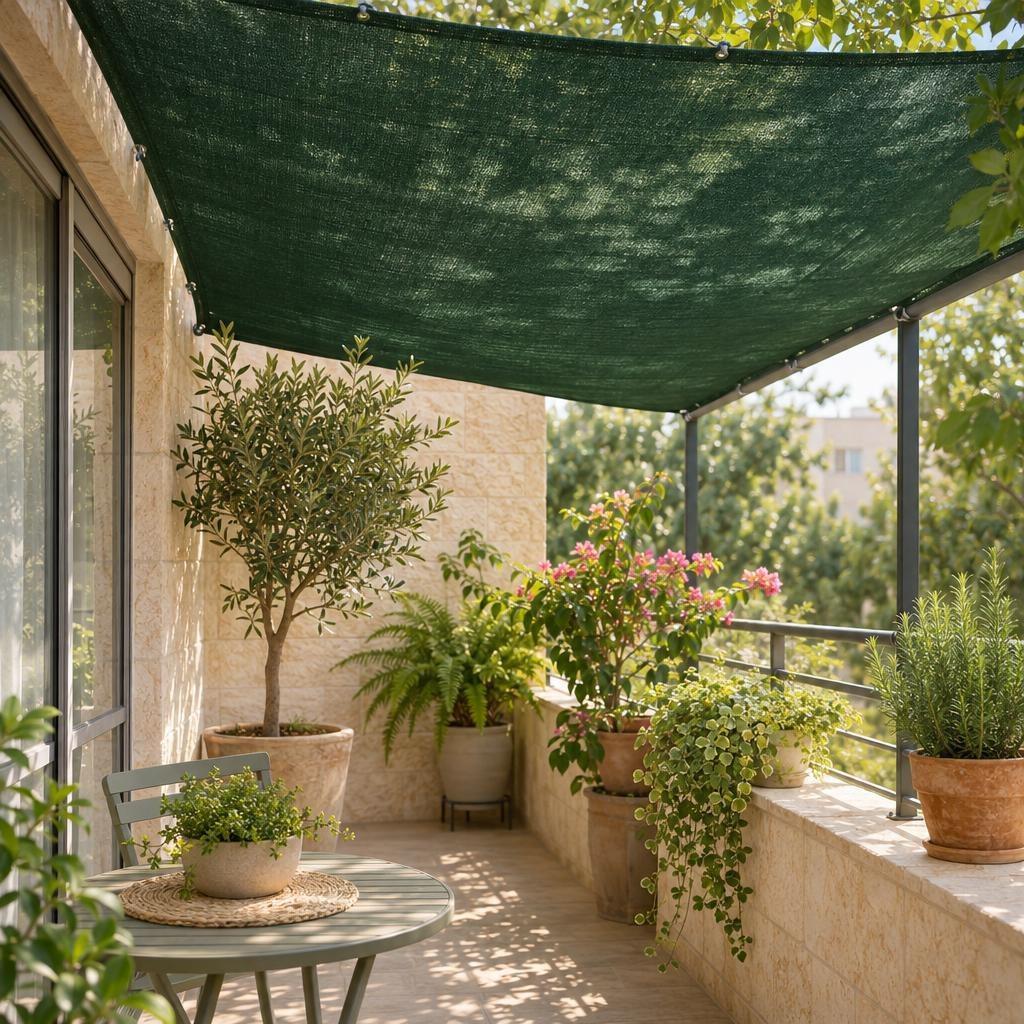
Shade netting over a balcony, reshet tsel

רשת צלShade net

reshet tsel

US English

Shade cloth

UK English

Shade netting

What it is

A reshet tsel is a mesh that reduces sun, sold by size and shade percentage. Ministry guidance says a 30% shade net may sometimes suit an exposed balcony.

The difference

The 30% figure depends on the balcony and is not a universal rule. A dense reshet tsel of 80 to 90% for privacy is very different from light shade.

Common mistake

Do not hang a dense privacy reshet tsel over sun-loving herbs; check the shade percentage.

Leafy Herbs

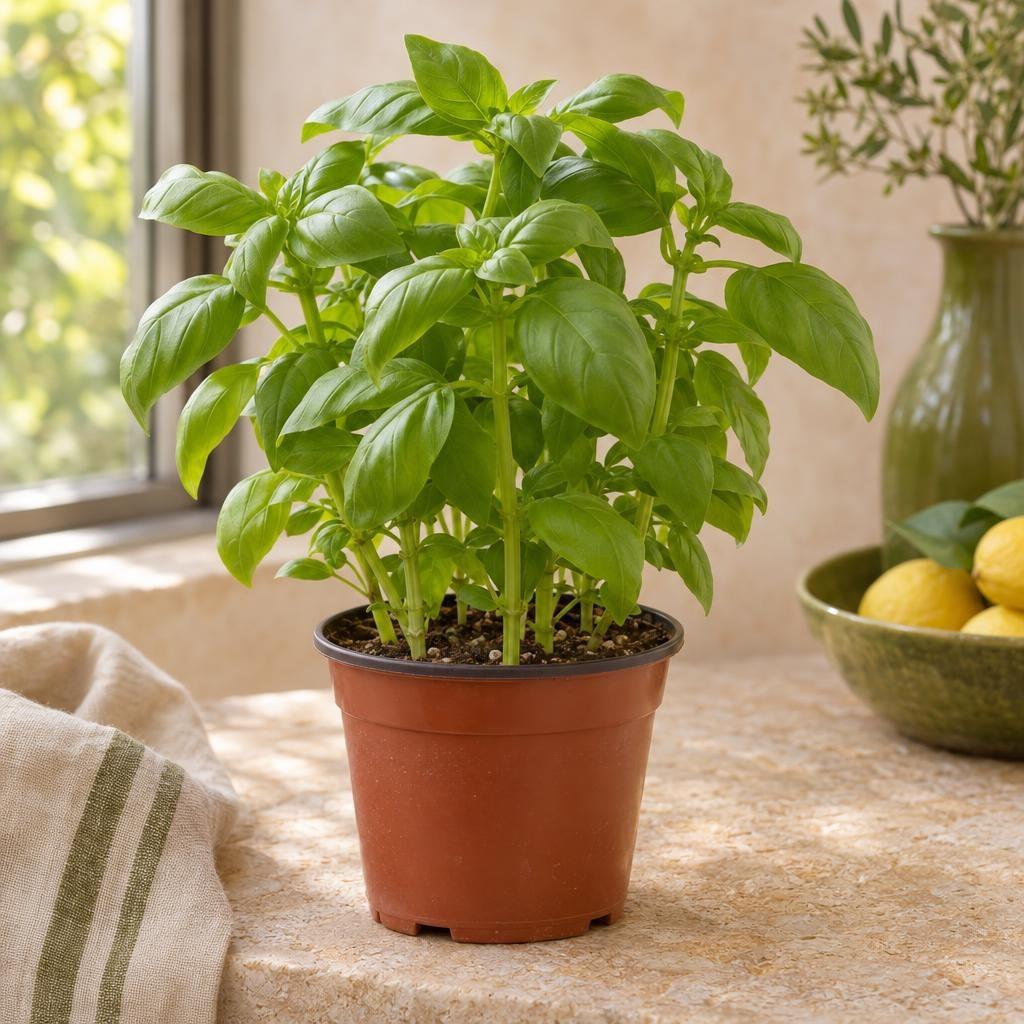
A pot of basil, reichan

On the label or sign

עציץ בזיליקום
basil plant in a pot

ריחן / בזיליקוםBasil

reikhan / bazilikum

US English

Basil, usually sweet basil

UK English

Basil, usually sweet basil

What it is

Reikhan is basil, Ocimum basilicum, a soft herb with bright green leaves and square stems. Reikhan is commonly sold in a 12 cm nursery pot and as seed.

The difference

Israeli guidance treats reikhan as heat tolerant but cold sensitive, needing regular, fairly high watering, unlike the low-water Mediterranean herbs beside it.

Common mistake

Do not trust a catalogue tag that calls reikhan perennial; cold and basil downy mildew limit the plant.

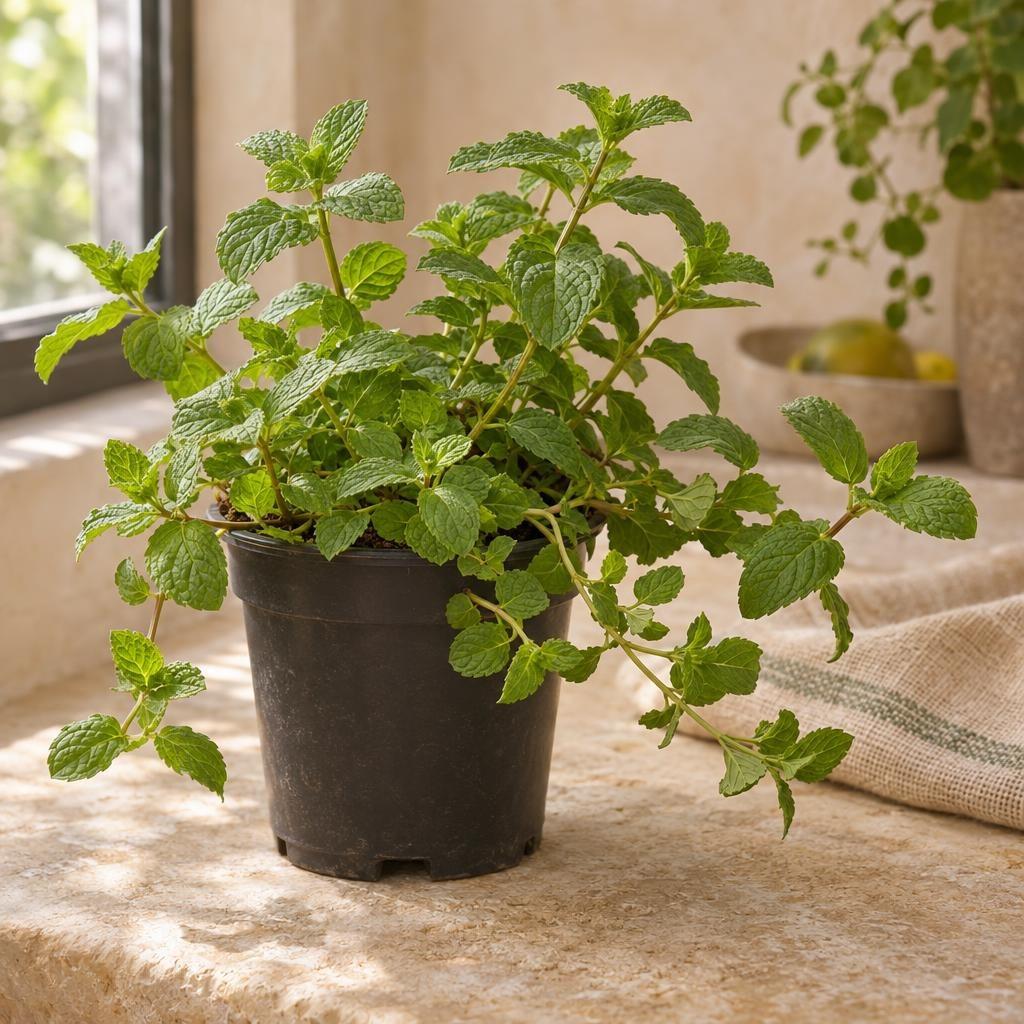
A pot of mint, nana

On the label or sign

עציץ נענע
mint plant in a pot

נענעMint

nana

US English

Mint; often closest to spearmint

UK English

Mint; often closest to spearmint

What it is

Nana is mint, a fast-spreading herb with creeping stems that likes moisture. Nana is sold in 12 cm pots and needs high, regular watering.

The difference

Nana is an umbrella word covering several Mentha species and cultivars, not one English species.

Common mistake

Do not translate every nana as peppermint, and keep nana out of mixed boxes where its runners can take over.

נענע חריפה / מנטהPeppermint

nana kharifa / menta

US English

Peppermint

UK English

Peppermint

What it is

Nana kharifa is peppermint, Mentha × piperita, according to the 2026 Ministry fresh herb standard. Nana kharifa spreads like other mints and needs moist mix and regular water.

The difference

Menta on informal retail labels is less exact than nana kharifa, and tea herb catalogues list menta separately from nana.

Common mistake

Do not assume menta and nana always name two fixed plants; read the tag.

מליסה רפואיתLemon balm

melisa refu'it

US English

Lemon balm

UK English

Lemon balm

What it is

Melisa refu'it is lemon balm, Melissa officinalis, a soft leafy herb in the mint family used for lemon-scented infusions.

The difference

Israeli guidance gives melisa partial to full shade and high water, unlike sun-loving lemon verbena.

Common mistake

Do not treat melisa, luiza, and limonit as interchangeable; they are three different lemon-scented plants.

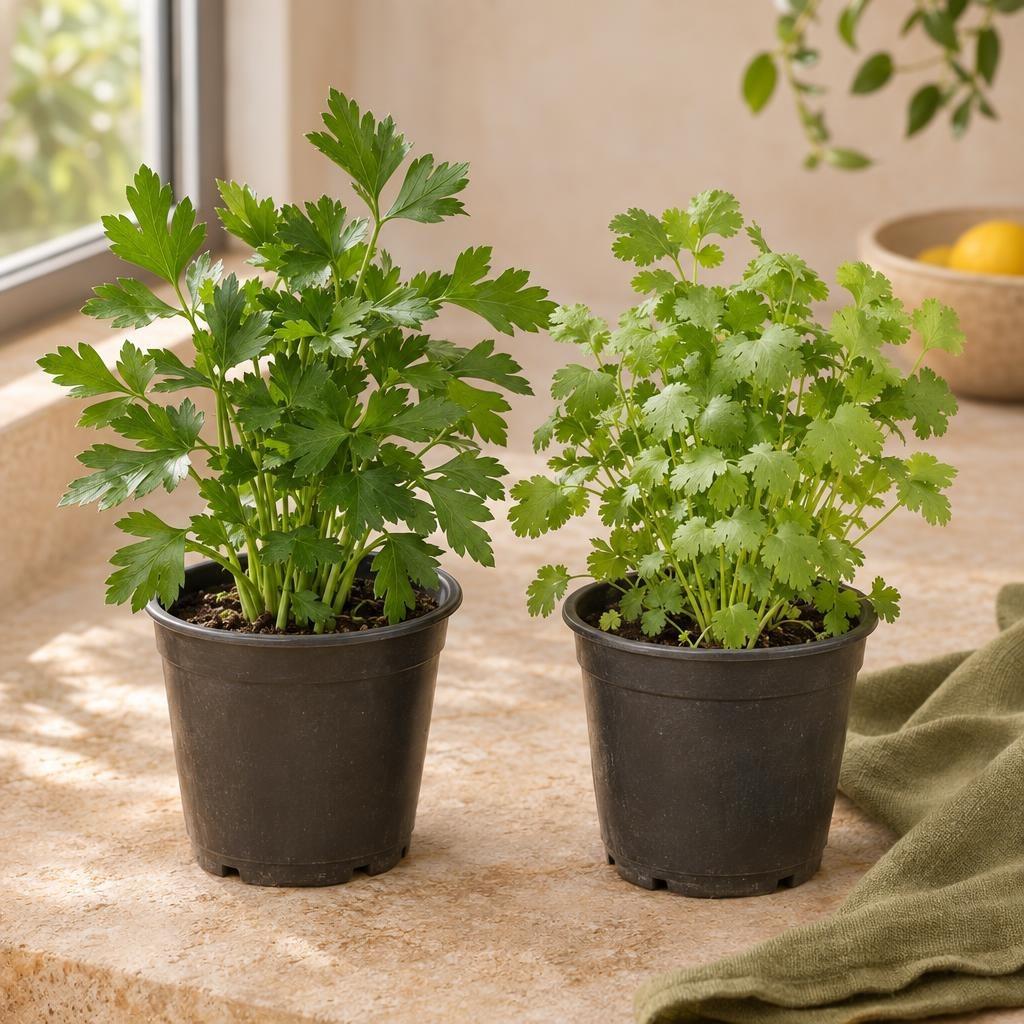
Pots of parsley and coriander, petrozilya and kusbara

פטרוזיליהParsley

petrozilya

US English

Parsley, flat-leaf or curly

UK English

Parsley, flat-leaf or curly

What it is

Petrozilya is parsley, Petroselinum crispum, a leafy biennial grown and picked as a seasonal herb. Petrozilya is sold in 12 cm pots and as seed.

The difference

Israeli November guidance groups petrozilya with cool-season herbs to plant then. Flat and curly petrozilya are different purchases.

Common mistake

Do not treat a perennial tag on petrozilya as a promise of endless leaves.

כוסברה / גד השדהCilantro or coriander

kusbara / gad ha-sadeh

US English

Cilantro for leaves; coriander for seed

UK English

Coriander for plant, leaves, and seeds

What it is

Kusbara is Coriandrum sativum, sold in 12 cm pots and as seed. Kusbara belongs to the cool-season planting group in Israeli guidance.

The difference

The US split between cilantro leaves and coriander seed does not exist in everyday Hebrew; kusbara covers the crop.

Common mistake

Do not reject kusbara when you ask for cilantro, and do not expect kusbara to stay leafy through summer heat.

כרפס ריחני / סלריCelery

karpas reikhani / seleri

US English

Celery; leaf celery when sold for leaves

UK English

Celery; leaf celery when sold for leaves

What it is

Karpas is celery, Apium graveolens, with celery-scented divided leaves on grooved stalks. Nurseries sell karpas as a herb start.

The difference

A karpas start grown for leaves is not necessarily the thick-stalked supermarket type.

Common mistake

Do not expect a small seleri herb pot to grow supermarket bunches of thick stalks.

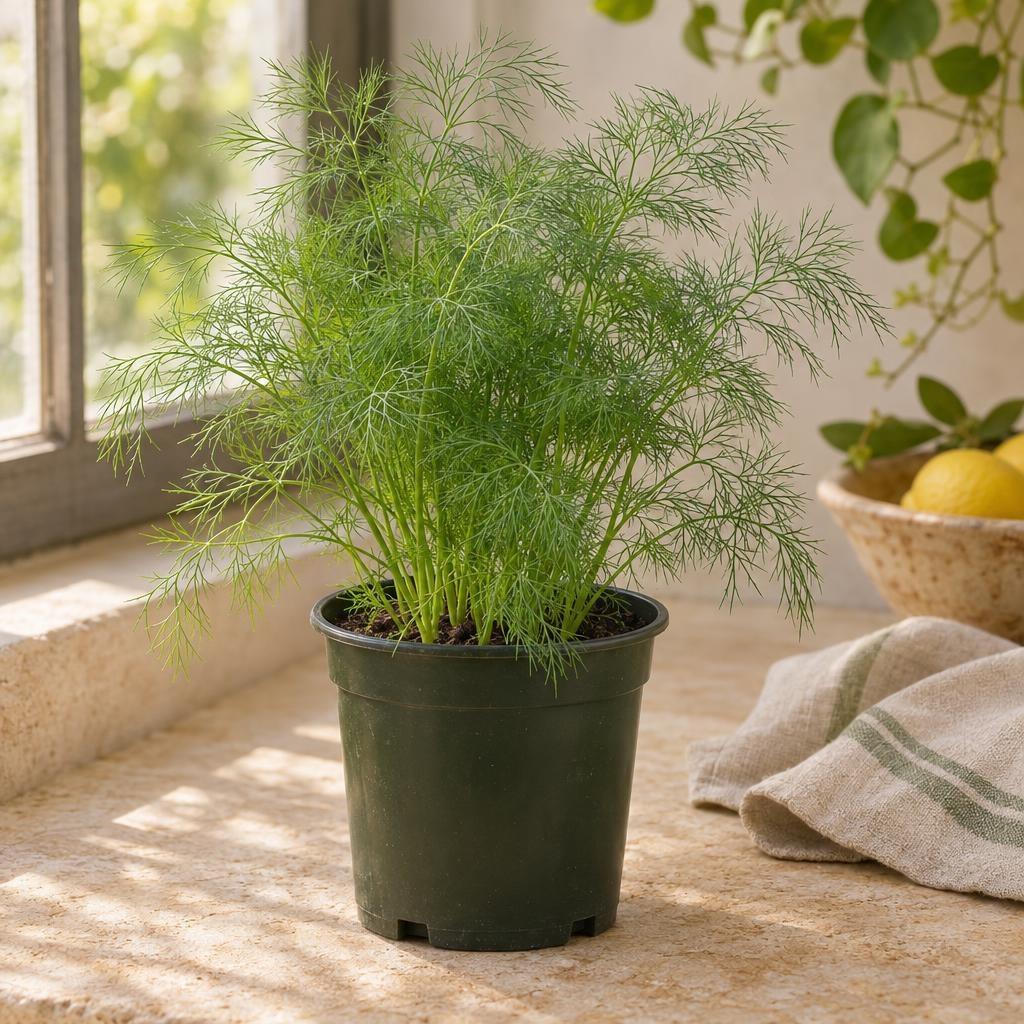
A pot of dill, shamir

שמירDill

shamir

US English

Dill

UK English

Dill

What it is

Shamir is dill, Anethum graveolens, an aromatic annual grown for feathery blue-green leaves and later seed.

The difference

Shamir is usually sold as seed or a young seasonal start, not as a woody perennial pot. Israeli guidance puts shamir in the cool-season group.

Common mistake

Do not confuse shamir leaves with fennel; dill seed comes from the same shamir plant.

שומר פשוטCommon fennel

shumar pashut

US English

Common fennel; Florence fennel for bulb types

UK English

Common fennel; Florence fennel for bulb types

What it is

Shumar pashut is common fennel, Foeniculum vulgare, a tall anise-scented herb with fine threadlike leaves.

The difference

Leaf and seed shumar pashut is not the same purchase as the vegetable with a swollen base, and shumar needs much more space than a compact herb.

Common mistake

Do not buy shumar pashut seed expecting a grocery-style bulb or plant shumar in a shallow herb box.

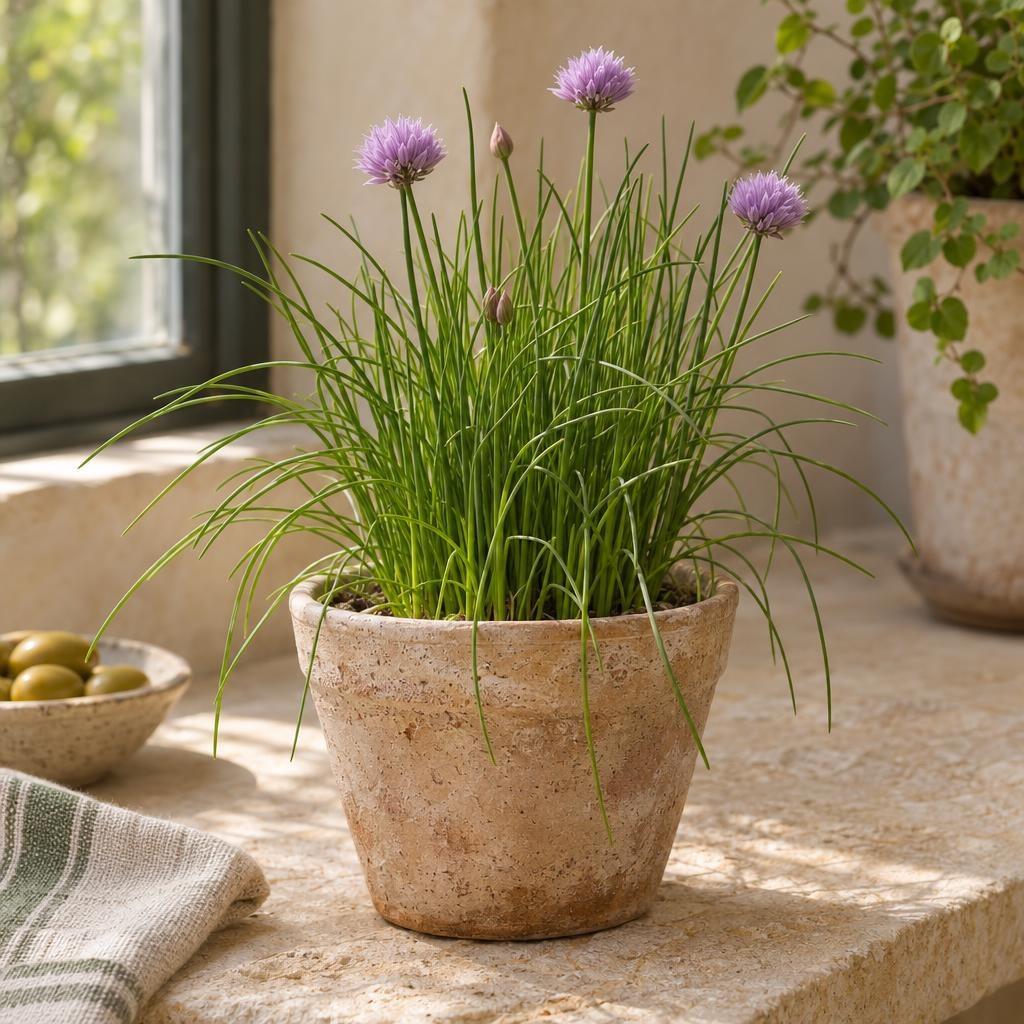
A pot of chives, irit

עירית / שום העיריתChives

irit / shum ha-irit

US English

Chives

UK English

Chives

What it is

Irit is chives, Allium schoenoprasum, a clumping perennial with thin hollow onion-scented leaves and purple spring flowers. The 2026 Ministry standard gives the English name chive.

The difference

Irit is not green onion; some listings wrongly equate irit with בצל ירוק.

Common mistake

Do not translate irit as green onion or scallion; irit is chives.

בצל ירוקGreen onion

batsal yarok

US English

Scallion or green onion

UK English

Spring onion

What it is

Batsal yarok is young onion grown for green tops and a small white base. Batsal yarok has thicker tubular leaves rising from a distinct white lower stem.

The difference

Batsal yarok is a vegetable that often shares the herb bench, but batsal yarok is not irit.

Common mistake

Do not buy irit when a recipe needs the bulk and crunch of batsal yarok.

Mediterranean Herbs

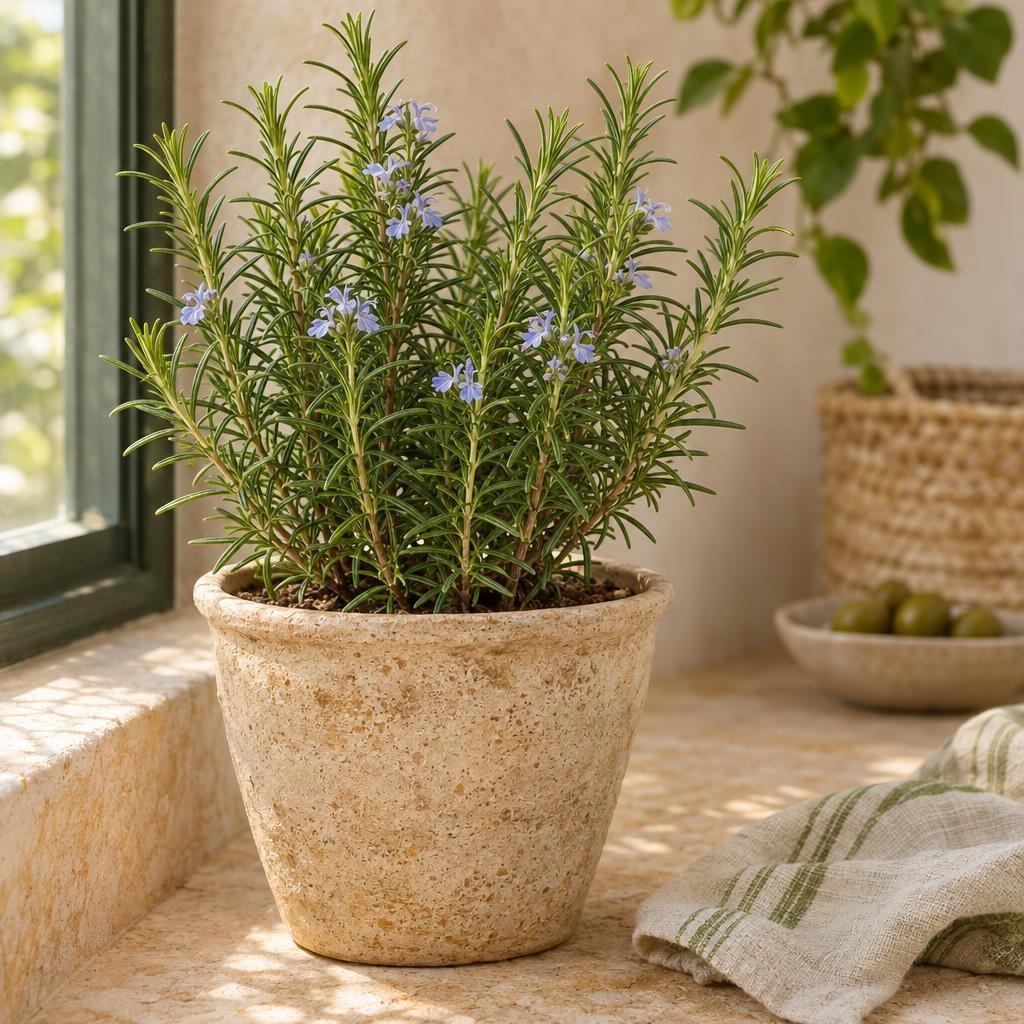
A pot of rosemary, rozmarin

רוזמריןRosemary

rozmarin

US English

Rosemary

UK English

Rosemary

What it is

Rozmarin is rosemary, a woody Mediterranean shrub with narrow needlelike aromatic leaves. Israeli balcony guidance treats rozmarin as full sun, low water, and tolerant of heat and cold.

The difference

Rozmarin is unlike the tender leafy herbs, and a small starter can grow into a large shrub.

Common mistake

Do not water rozmarin like basil or mint.

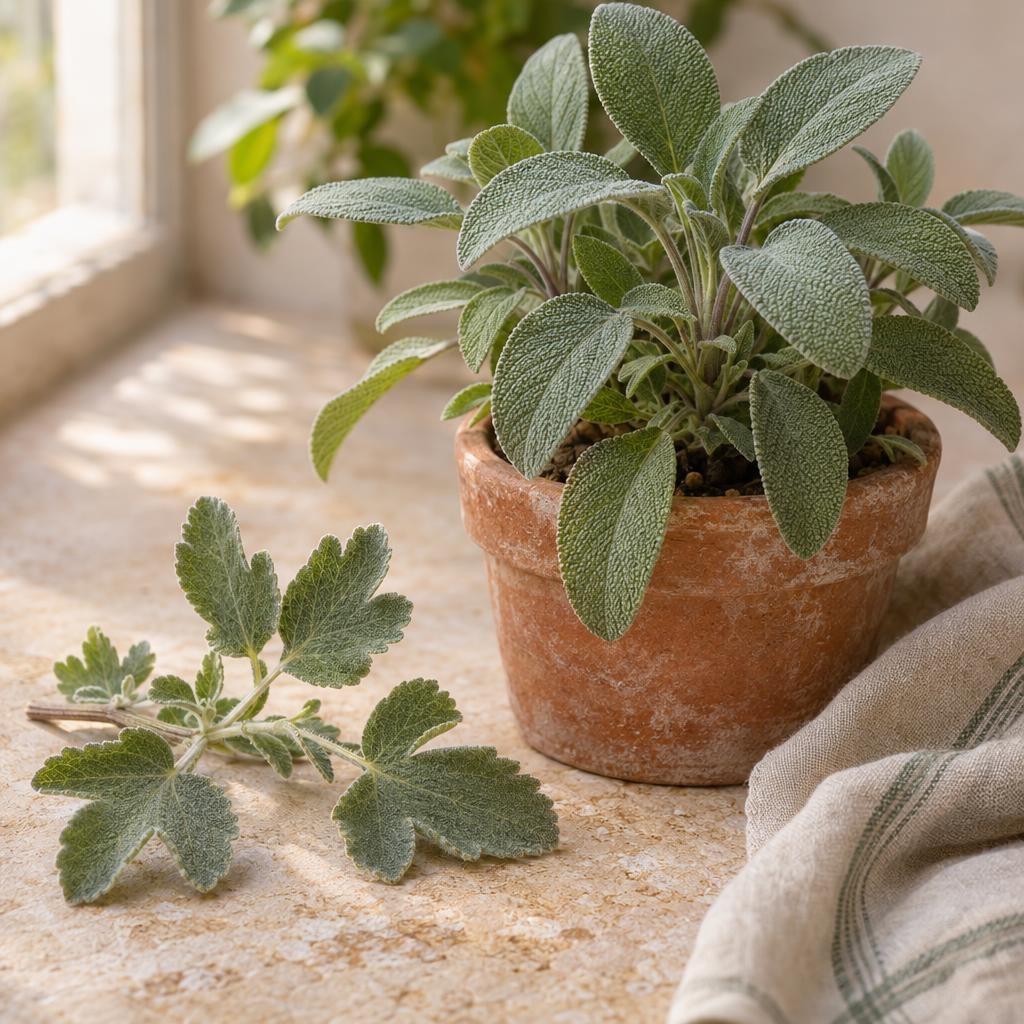
A pot of sage with a local three-lobed sage sprig, marva

מרווה רפואיתCommon sage

marva refu'it

US English

Common sage or garden sage

UK English

Common sage or garden sage

What it is

Marva refu'it is Salvia officinalis, the closest match to the culinary sage in American and British recipes. Marva refu'it has rough grey-green leaves and needs little water and well-drained mix.

The difference

Marva refu'it is different from the local three-lobed sage, marva meshuleshet.

Common mistake

Do not buy any ornamental marva assuming it is culinary sage; ask for marva refu'it.

מרווה משולשת / מרמיהThree-lobed sage

marva meshuleshet / meramya

US English

Three-lobed sage or Greek sage

UK English

Three-lobed sage or Greek sage

What it is

Marva meshuleshet is Salvia fruticosa, a local Mediterranean sage whose leaves usually have a large central lobe and smaller side lobes.

The difference

Marva meshuleshet is related to common sage but not the same. Marva meshuleshet is also a protected wild plant.

Common mistake

Do not collect marva meshuleshet from the wild; buy a nursery-grown plant.

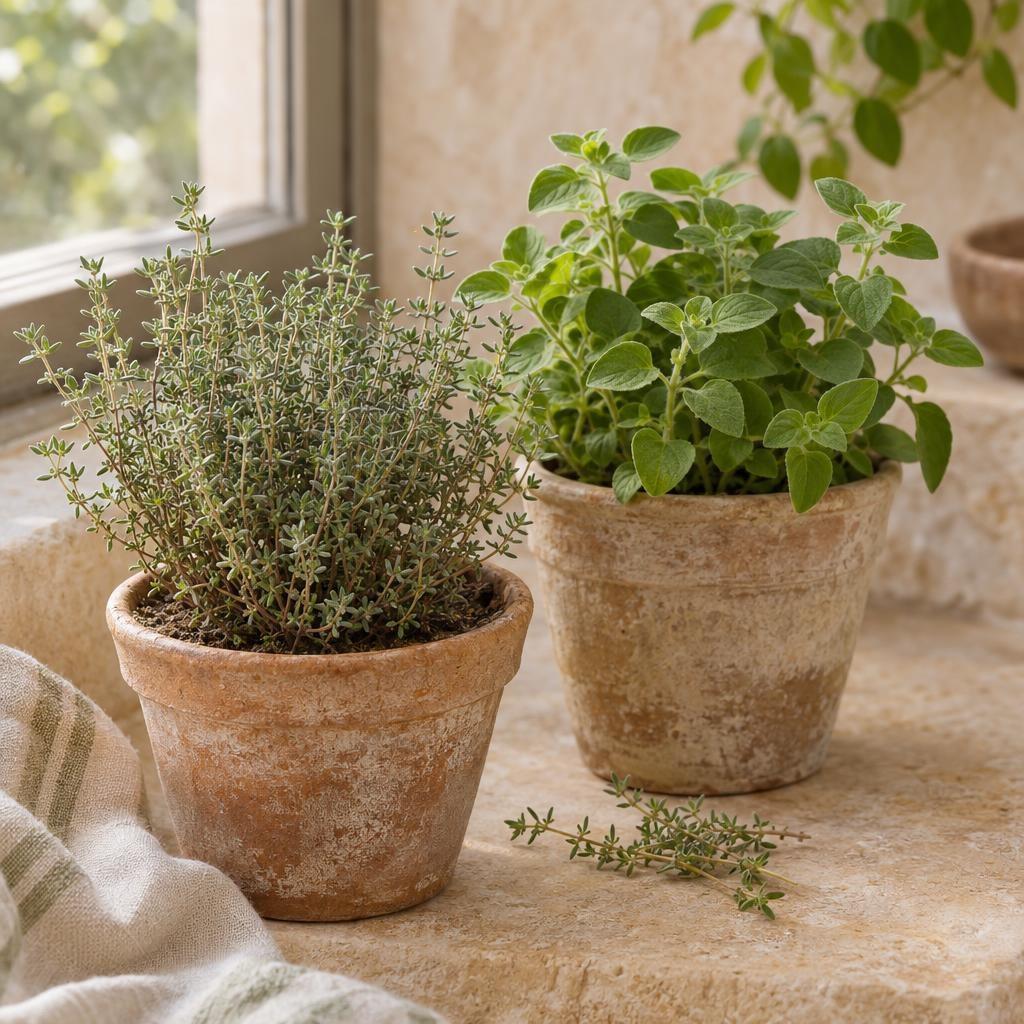
Pots of thyme and oregano, timin and oregano

טימין / בת־קורנית פשוטהThyme

timin / bat-koranit peshuta

US English

Common thyme

UK English

Common thyme

What it is

Timin is common thyme, Thymus vulgaris, with very small grey-green leaves on fine woody stems. Timin needs full sun and little water and is sold in 12 cm pots.

The difference

Timin is the everyday nursery word, while the formal Hebrew name on a tag may be בת־קורנית פשוטה.

Common mistake

Do not miss a tag headed bat-koranit when you are looking for timin.

אורגנו / אזובית פשוטהOregano

oregano / azovit peshuta

US English

Oregano or wild marjoram

UK English

Oregano or wild marjoram

What it is

Oregano is Origanum vulgare, with green oval leaves that spread by underground shoots. Oregano needs full sun and little water.

The difference

Oregano is not Israeli za'atar, even though both belong to Origanum and their names overlap in translation.

Common mistake

Do not buy oregano when a recipe or a speaker means fresh za'atar.

On the label or sign

מיורן
marjoram

מיורן מתוק / אזובית תרבותיתSweet marjoram

mayoran matok / azovit tarbutit

US English

Sweet marjoram

UK English

Sweet marjoram

What it is

Mayoran matok is Origanum majorana, a milder culinary herb with paler, narrower greyish leaves.

The difference

Mayoran is a separate species from oregano and from za'atar.

Common mistake

Do not treat mayoran, oregano, and za'atar as three names for one plant.

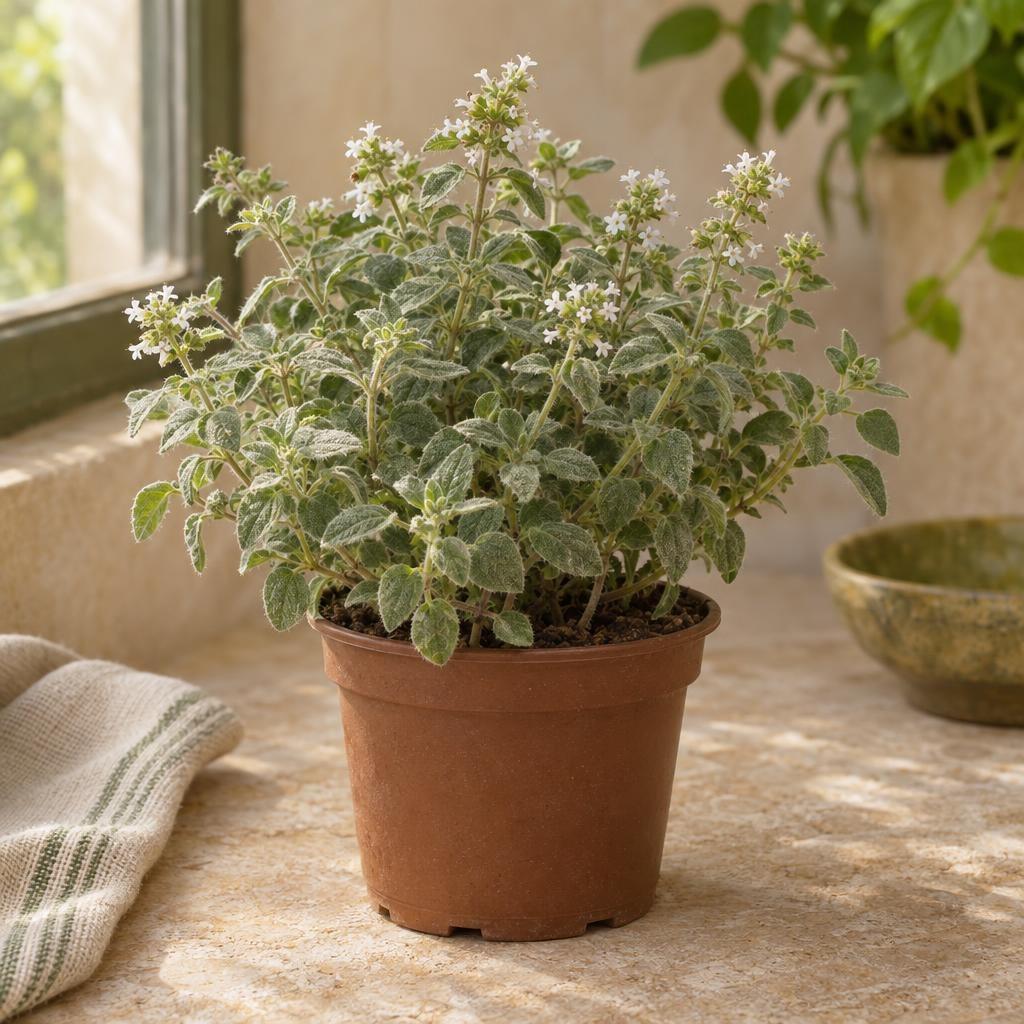
A za'atar herb plant in a pot

זעתר / אזוב מצויZa'atar plant

za'atar / ezov matsui

US English

Za'atar plant; Syrian or Lebanese oregano

UK English

Za'atar plant; Syrian or Lebanese oregano

What it is

Live za'atar is usually Origanum syriacum, with grey, hairy aromatic leaves and white flowers. Za'atar needs full sun to partial shade and little water.

The difference

Za'atar also names the prepared spice mix, so the living plant and the blend are different products. English hyssop is a risky shortcut, and wild za'atar is protected.

Common mistake

Ask for a שתיל of za'atar so you do not get spice mix or seed, and do not pick wild za'atar.

זוטה לבנהWhite micromeria

zuta levana

US English

White micromeria; also white-leaved savory

UK English

White micromeria; also white-leaved savory

What it is

Zuta levana is a local aromatic shrub with small round greyish leaves and a mintlike scent, used mainly for a tea-like infusion. Zuta levana is commonly sold in 12 cm pots.

The difference

Sources give zuta levana different scientific names, Micromeria fruticosa or Clinopodium serpyllifolium, so the tag may show either.

Common mistake

Do not call zuta levana hyssop or mint, and do not reject a correct plant because the scientific name differs.

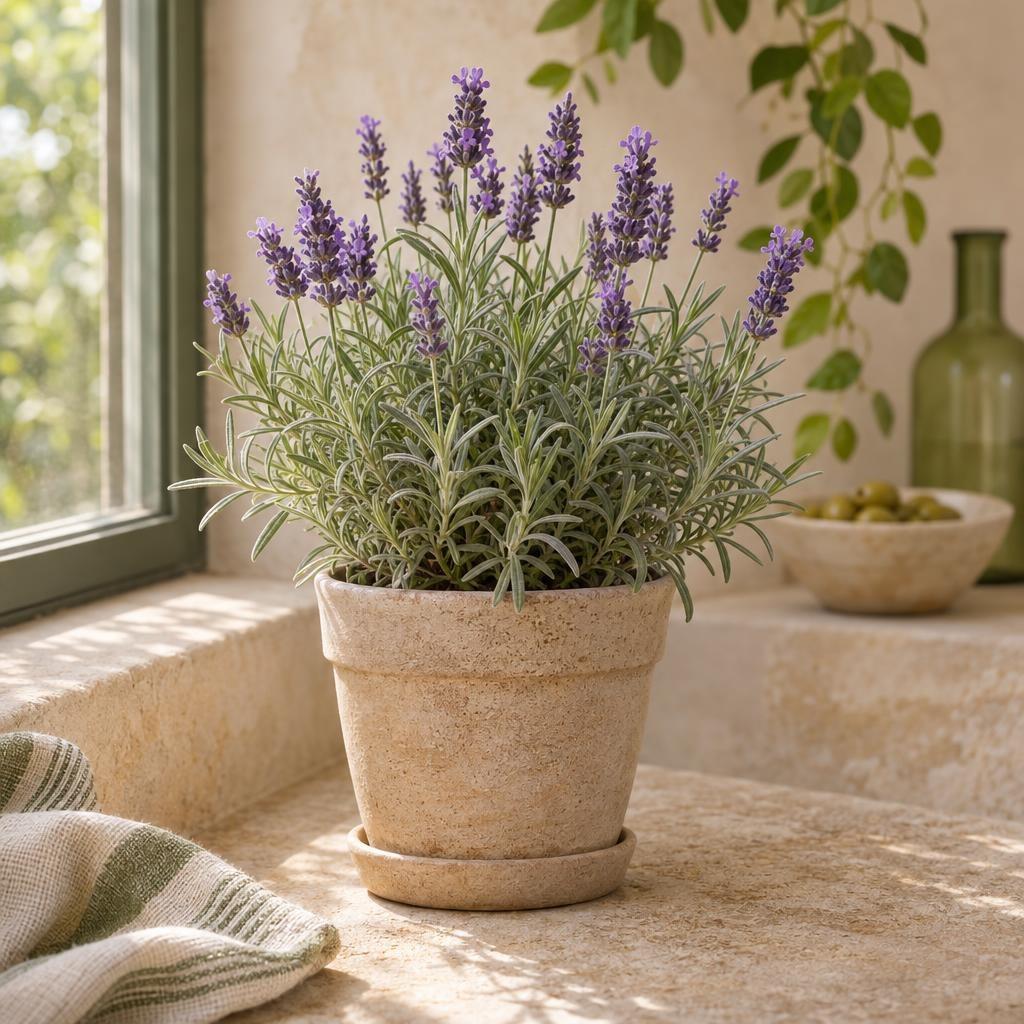
A pot of lavender, ezovyon

אזוביון / לבנדרLavender

ezovyon / lavender

US English

Lavender; the species matters

UK English

Lavender; the species matters

What it is

Ezovyon is lavender, a group of Lavandula species with grey aromatic leaves and purple flower spikes. Ezovyon needs full sun, little water, and good drainage.

The difference

Israeli guidance lists French lavender and English lavender separately, so lavender alone does not say whether a plant suits cooking.

Common mistake

Do not assume any ornamental ezovyon is the culinary species, and do not water ezovyon like basil.

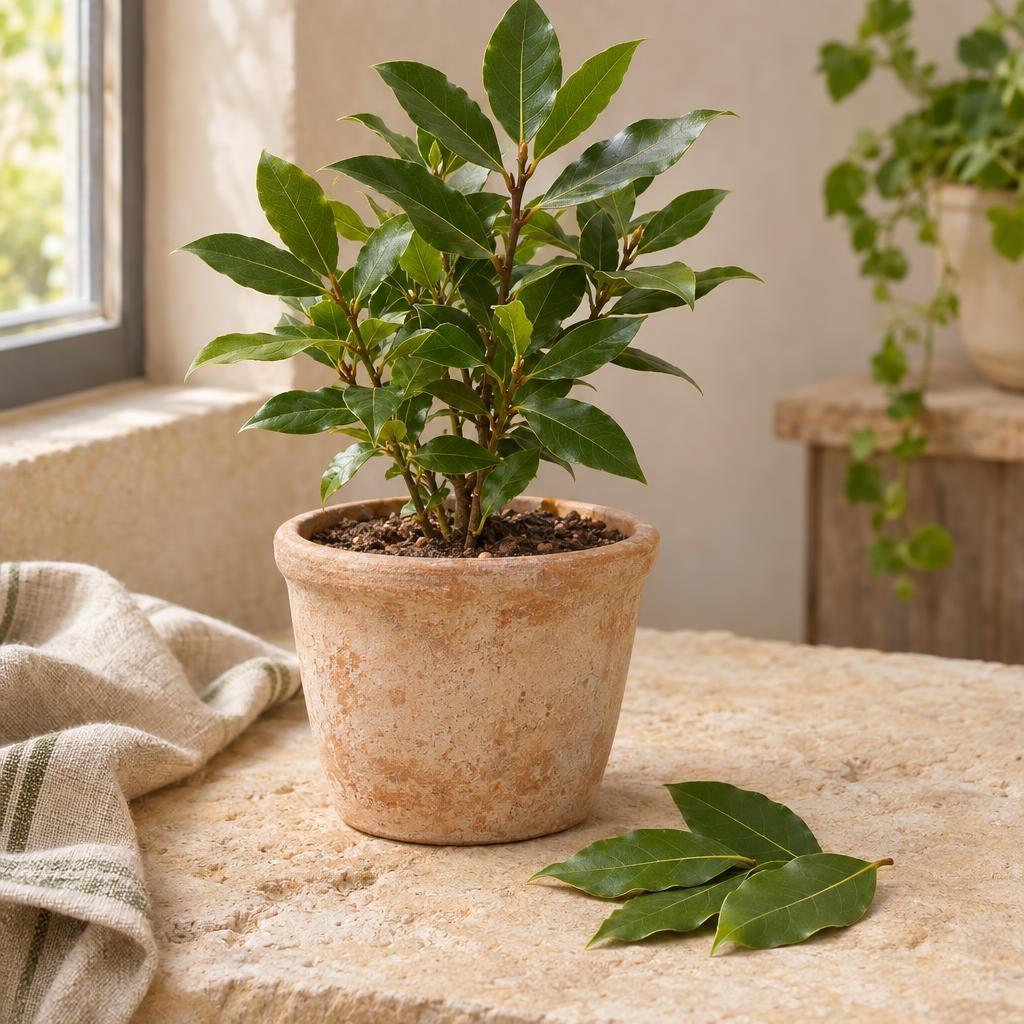
A potted bay laurel with picked leaves, alei dafna

ער אציל / עלי דפנהBay laurel

ar atsil / alei dafna

US English

Bay laurel; bay leaves

UK English

Bay laurel; bay leaves

What it is

Ar atsil is bay laurel, Laurus nobilis, a slow-growing tree or shrub with tough, glossy dark green leaves. Alei dafna names the culinary bay leaves.

The difference

Ar atsil is sold as a woody shrub or tree, not a small herb pot, and needs pruning to stay container-sized.

Common mistake

Do not expect a small herb pot when you buy ar atsil, or confuse bay with ornamental plants called laurel in English.

Tea And Aromatic Plants

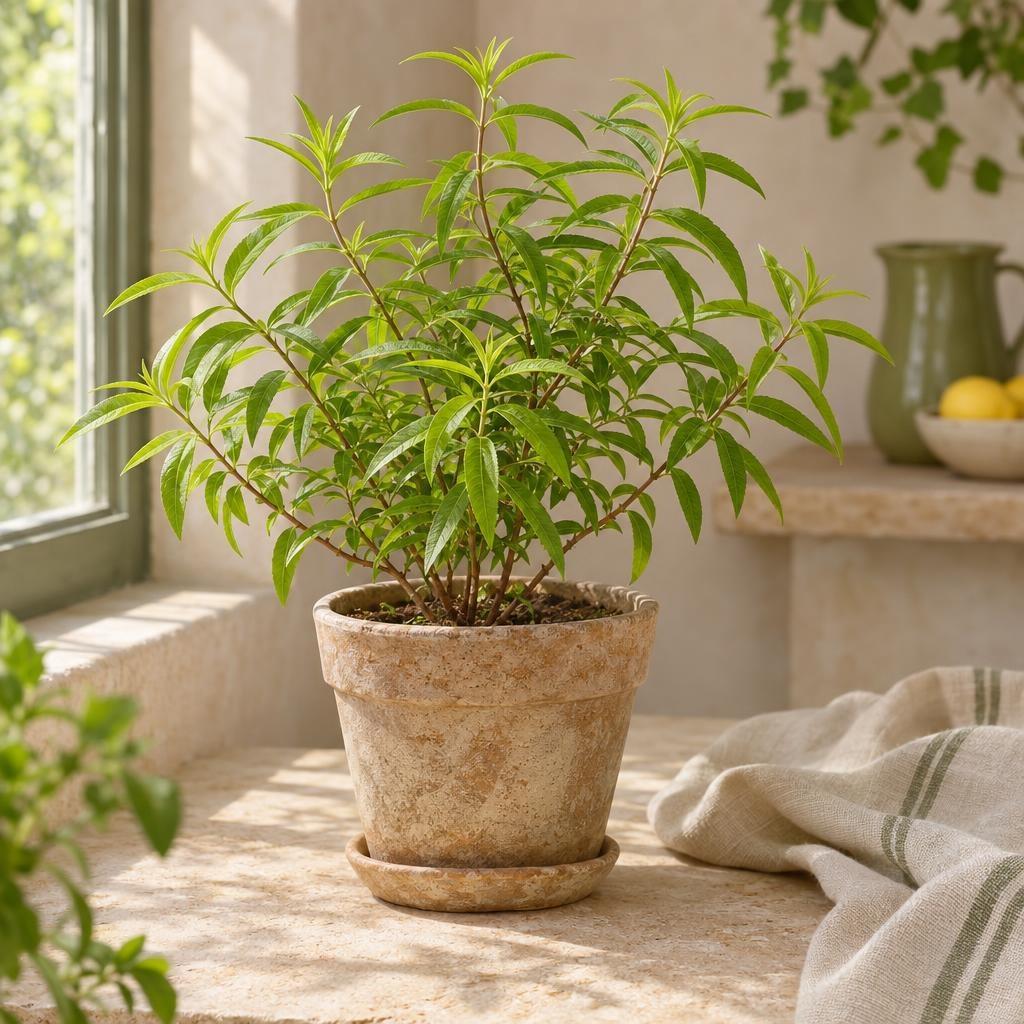
A pot of lemon verbena, luiza

לואיזה / ליפיה לימוניתLemon verbena

luiza / lipya limonit

US English

Lemon verbena

UK English

Lemon verbena

What it is

Luiza is lemon verbena, Aloysia citrodora, a lemon-scented shrub with narrow leaves on woody stems. Luiza needs full sun and medium, regular water.

The difference

Luiza is a shrub, not a grass, and Ministry guidance gives a mature size of around 2 to 2.5 metres.

Common mistake

Do not confuse luiza with limonit, lemongrass, or melisa, lemon balm, just because all three smell of lemon.

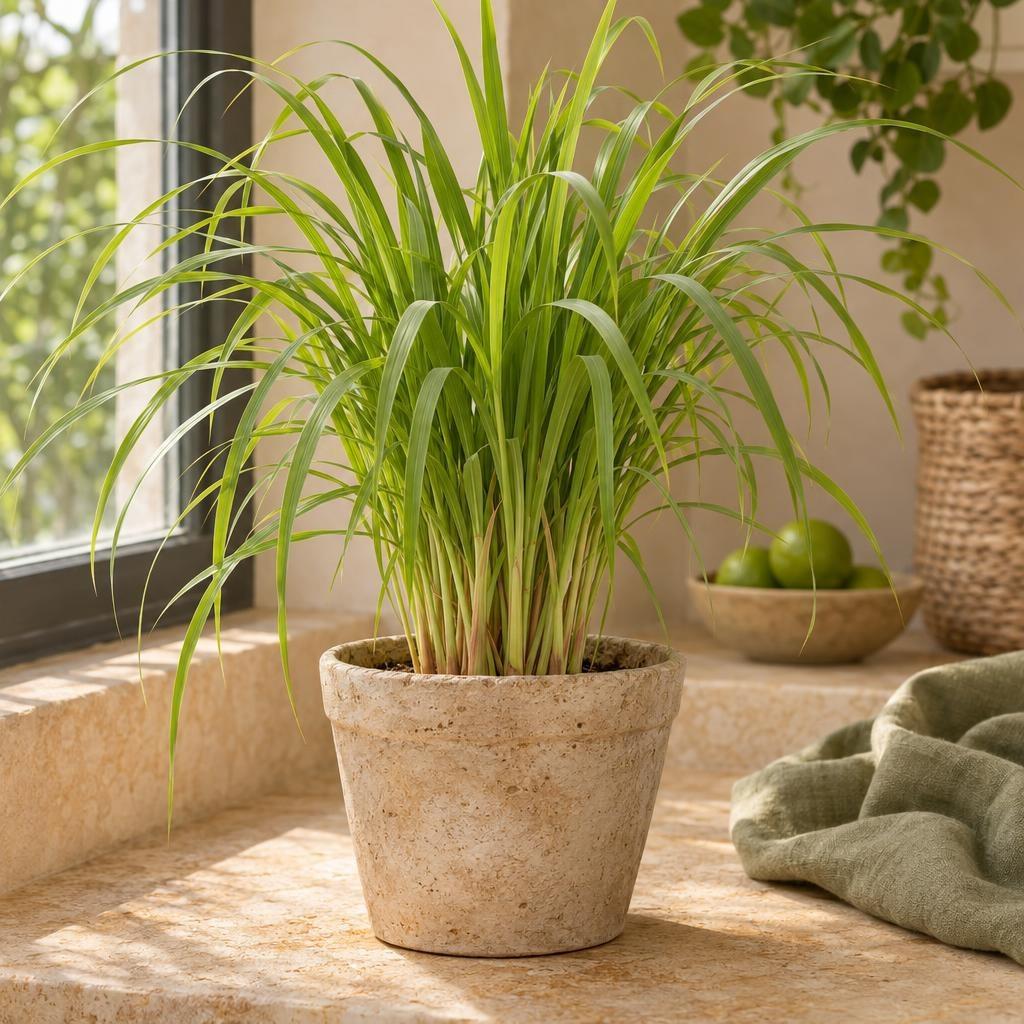
A pot of lemongrass, esev limon

עשב לימון / לימוניתLemongrass

esev limon / limonit

US English

Lemongrass

UK English

Lemongrass

What it is

Esev limon is lemongrass, Cymbopogon citratus, a clumping tropical grass with long, rough, straplike leaves. Esev limon needs full sun and medium water.

The difference

Esev limon is botanically and visually unlike lemon verbena and lemon balm. Nurseries sell esev limon as limonit.

Common mistake

Do not buy luiza for an Asian recipe that needs thick lemongrass bases; ask for esev limon.

סטביהStevia

stevia

US English

Stevia or sweetleaf

UK English

Stevia or sweetleaf

What it is

Stevia is Stevia rebaudiana, grown for intensely sweet leaves. An Israeli nursery lists stevia specifically for pots, patios, and balconies.

The difference

The living stevia plant is not the same as white commercial stevia sweetener. The cited nursery recommends regular moisture without saturation and some summer afternoon shade.

Common mistake

Do not treat stevia like a drought-tolerant Mediterranean herb or measure a leaf like packaged sweetener.

שיבא / לענה שיחניתTree wormwood

shiba / la'ana sikhanit

US English

Tree wormwood or shrubby wormwood

UK English

Tree wormwood or shrubby wormwood

What it is

Shiba is Artemisia arborescens, an aromatic grey shrub used in small amounts for a notably bitter tea-like infusion. Shiba is sold as a 12 cm tea plant.

The difference

Shiba is not tarragon, even though both formal names begin with la'ana.

Common mistake

Do not use shiba by the handful like mint; a little shiba goes a long way.

טרגון / אסטרגוןTarragon

targon / estragon

US English

Tarragon

UK English

Tarragon

What it is

Targon is tarragon, Artemisia dracunculus, a perennial culinary herb with an anise-like flavor and narrow green leaves.

The difference

Targon is a different Artemisia from shiba. The 2026 Ministry standard gives the English name tarragon.

Common mistake

Do not buy shiba when you want targon.

קמומיל / בבונג דו־גוניGerman chamomile

kamomil / babung du-goni

US English

German chamomile

UK English

German chamomile

What it is

Kamomil is German chamomile, an annual whose small daisy-like flower heads are the familiar infusion ingredient.

The difference

Kamomil is seasonal rather than a permanent balcony plant, and the flowers, not the leaves, are used.

Common mistake

Do not buy an ornamental daisy because it looks like kamomil, or expect kamomil to behave like perennial mint.

פלרגון חריף / גרניום לימוניScented pelargonium

pelargon kharif / geranium limoni

US English

Scented-leaved pelargonium

UK English

Scented-leaved pelargonium

What it is

Pelargon kharif is Pelargonium graveolens, and nurseries often call scented pelargoniums geranium limoni. The leaves release rose, lemon, or other scents when rubbed.

The difference

Geranium limoni is a Pelargonium, not a true Geranium.

Common mistake

Do not assume every geranium leaf is the same tea herb; check the species and its intended use.

קארי / דם־המכבים האיטלקיCurry plant

kari / dam ha-makabim ha-italki

US English

Curry plant

UK English

Curry plant

What it is

Kari in an Israeli nursery is the curry plant, Helichrysum italicum, a silver aromatic shrub whose leaves smell like curry.

The difference

Kari is not curry leaf, Murraya koenigii, and not a source of curry powder.

Common mistake

Do not buy kari to supply curry leaves for an Indian recipe.

Cress And Salad Leaves

רשאד / שחליים תרבותייםGarden cress

rashad / shakhalayim tarbutiyim

US English

Garden cress

UK English

Garden cress

What it is

Rashad is garden cress, Lepidium sativum, a fast annual with small peppery seedlings, often sold as seed or in grow kits.

The difference

Rashad is not watercress. Rashad is the common retail name, and shakhalayim tarbutiyim is the formal Hebrew.

Common mistake

Do not confuse rashad with gargir ha-nekhalim, or treat a spelling variant of rashad as a different plant.

A tray of arugula plants, roket

On the label or sign

זרעי תבלינים רוקט
arugula seeds

רוקט / ארוגולהArugula or rocket

roket / arugula

US English

Arugula

UK English

Rocket

What it is

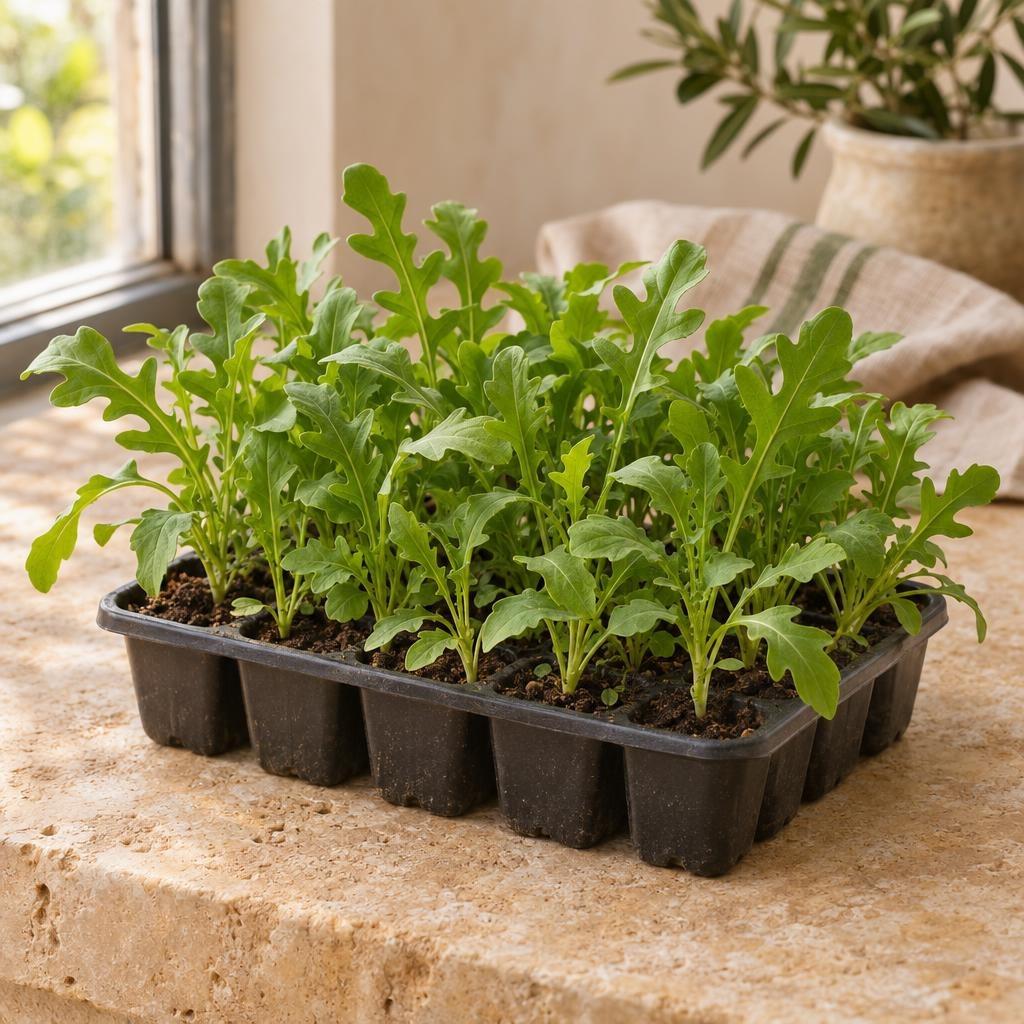
Roket is Eruca sativa, an upright annual with deeply lobed peppery leaves. Roket is commonly sold as seed.

The difference

US arugula and UK rocket are the same crop as roket. Roket is not watercress.

Common mistake

Do not think rocket and arugula are different crops; both are roket.

גרגיר הנחליםWatercress

gargir ha-nekhalim

US English

Watercress

UK English

Watercress

What it is

Gargir ha-nekhalim is watercress, Nasturtium officinale, a water-loving perennial with creeping hollow stems and rounded compound leaves.

The difference

Gargir ha-nekhalim is not garden cress and not rocket; Israeli flora describes it growing in spring water.

Common mistake

Do not water gargir ha-nekhalim like thyme, and check the tag says gargir ha-nekhalim, not rashad.

Your Recipe or Plan Says This. Ask for This.

Your recipe or plan says this. Ask for this.
You wantAsk forKeep in mind
Potting mix or potting soilתערובת שתילהta'arovet shtilaNot adama, which is plain soil.
Empty flowerpotעציץ ריקatsits reikAtsits alone can mean the plant.
Window box or railing planterאדניתadanitCovers railing and free-standing planters.
Slow-release fertilizerדשן בשחרור איטיdeshen be-shikhrur itiOsmocote is a brand name.
CilantroכוסברהkusbaraHebrew does not split leaf and seed.
ChivesעיריתiritNot batsal yarok.
Scallions or spring onionsבצל ירוקbatsal yarokNot irit.
Peppermintנענע חריפהnana kharifaPlain nana is broader.
OreganoאורגנוoreganoNot za'atar.
Lemongrassעשב לימון / לימוניתesev limon / limonitNot luiza, lemon verbena.
TarragonטרגוןtargonNot shiba.
Arugula or rocketרוקטroketOne crop, two English names.

Knowing the word is half of it. Say it out loud.

A Hebrew speaking app with Maya and David, AI tutors who hold conversations, explain corrections and help you practise what you need to say. Private beta on iPhone and Android. Public store launch is still ahead. Free Classic lessons to start, no card needed.

Explore baba Learn

How we checked this guide

By the baba team. Checked on against 49 sources, mostly Israeli retailers, manufacturers and government pages, and updated . Products, labels and rules change, so check the pack or the office before you rely on a detail. Our methodology.

Frequently Asked Questions

Does atsits mean a pot or a plant?

Both. Atsits is a flowerpot, and in everyday speech atsits is also the plant growing in the pot. Say atsits reik for an empty pot and tsemakh be-atsits for a potted plant.

What is potting soil called in Hebrew?

Ask for ta'arovet shtila, potting mix, or matsa gidul, growing medium. Adama is the broad word for soil, and heavy adamat gan, garden soil, is wrong for balcony containers.

Is za'atar the same as oregano?

No. The live za'atar plant is usually Origanum syriacum, while oregano is Origanum vulgare. Za'atar also names the prepared spice mix, which is a different product.

Is irit chives or green onion?

Irit is chives, Allium schoenoprasum. Green onion, scallion, or spring onion is batsal yarok.

What is the difference between luiza, limonit and melisa?

Luiza is lemon verbena, a shrub; limonit or esev limon is lemongrass, a tropical grass; and melisa is lemon balm, a soft mint-family herb. All three smell of lemon but need different care.

More Hebrew-English Guides

All guides