baba
Free, no AIHebrew-English guide 77 of 100

Israeli Life Events, in Plain English

What brit, bar mitzvah, hina, chuppah and the gift check mean.

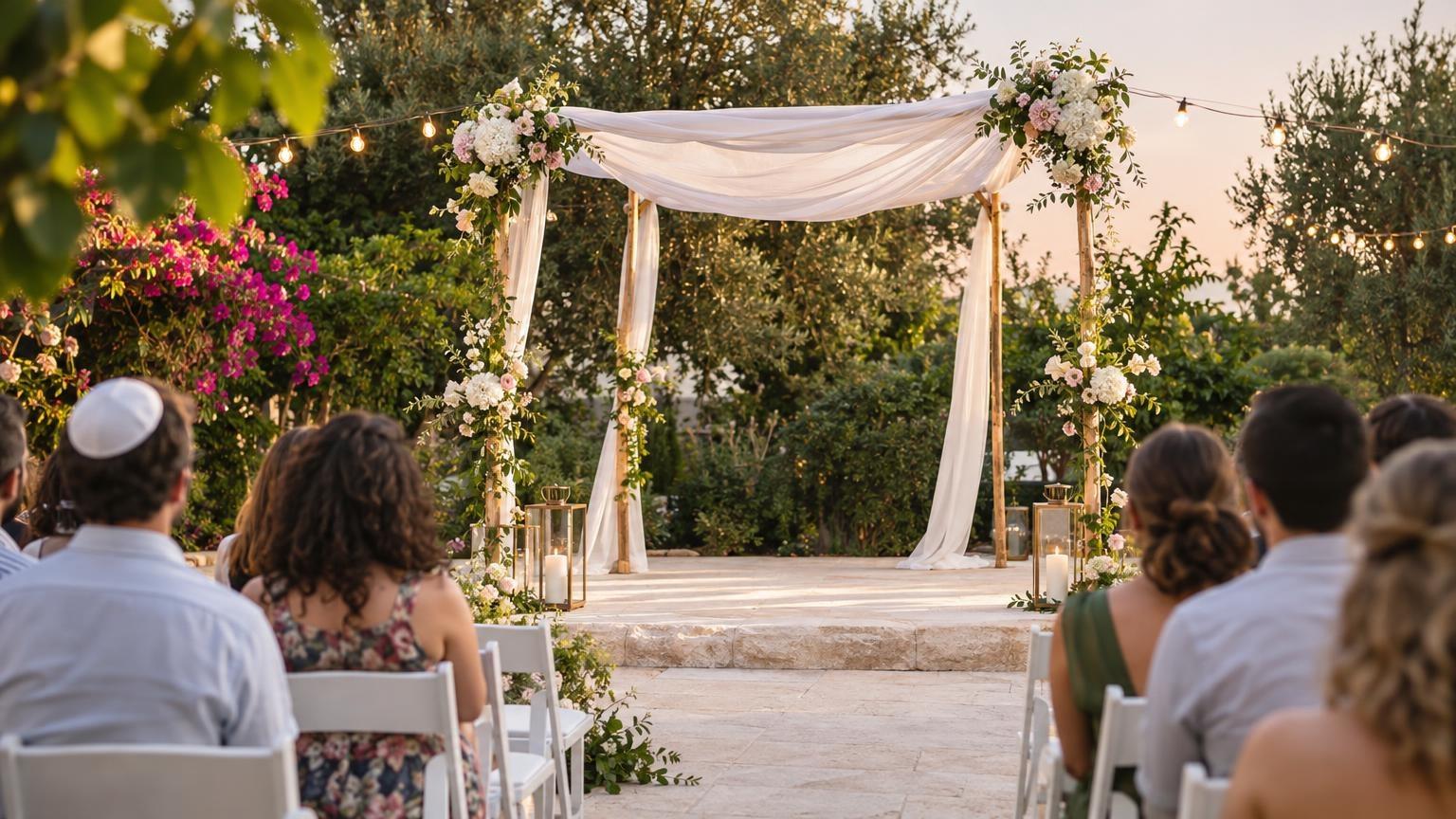
An Israeli wedding chuppah in a garden with rows of chairs

Mix-Ups to Avoid

  1. קבלת פנים on a wedding invitation is the reception before the ceremony. The later time, שעת חופה, is when the ceremony starts.
  2. In modern speech אירוסין means engagement, but under the wedding canopy אירוסין means the binding קידושין stage. Let the context decide.
  3. Do not leave the payee blank on a gift check or guess the couple's names. Ask for the exact payee wording or use the couple's own gift link.
In This Guide28 entries

Birth

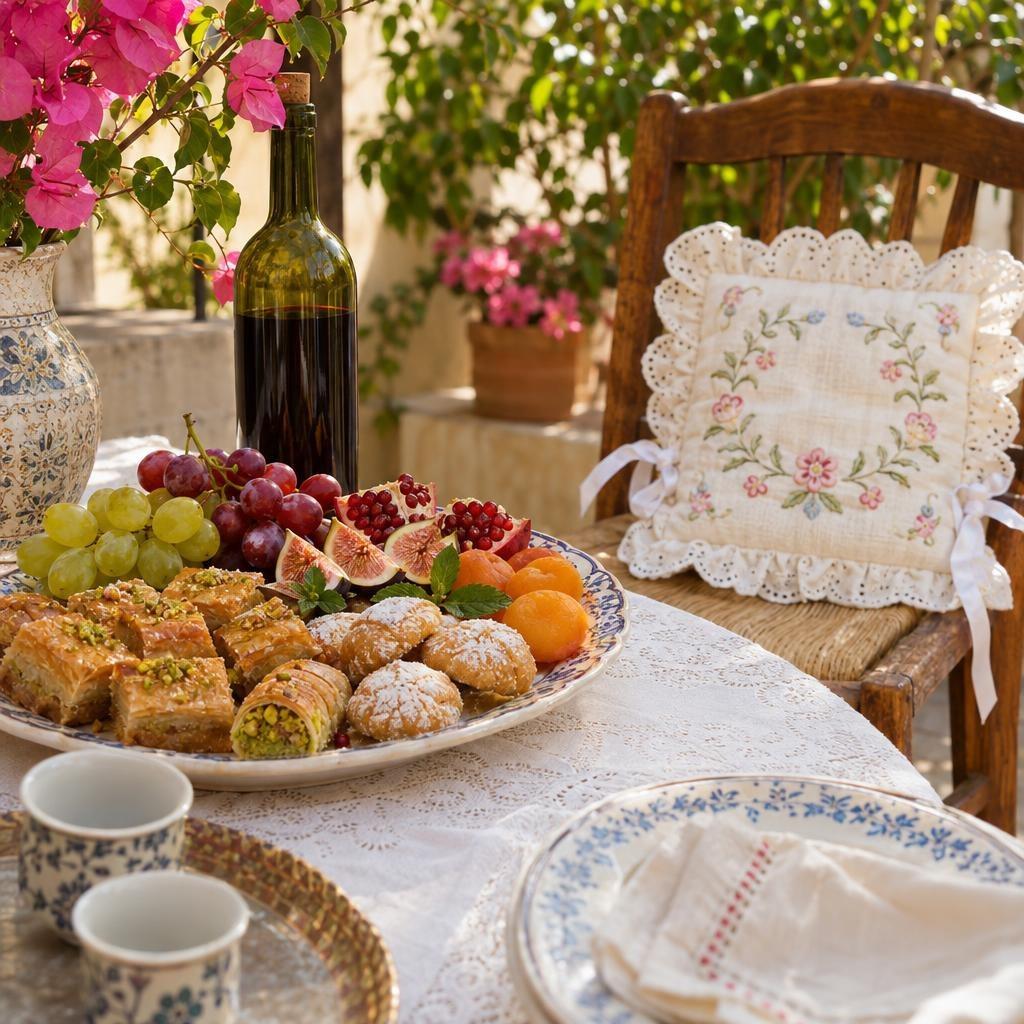
A celebration table for a brit, se'udat brit

On the label or sign

שולם זוכר
Ashkenazi pronunciation of shalom zachar

שלום זכרWelcome for a baby boy

shalom zachar

US English

Shalom zachor; Friday-night welcome for a baby boy

UK English

Same as US

What it is

שלום זכר is an Ashkenazi custom on the first Friday night after a boy's birth, with a light gathering, Torah words and food such as chickpeas or lentils.

The difference

שלום זכר is not the circumcision. Expect a small home gathering after the Sabbath meal, not an event-hall ceremony.

Common mistake

Do not arrive at a שלום זכר prepared for the brit, and do not assume every family holds one; שלום בת is a modern parallel some families use.
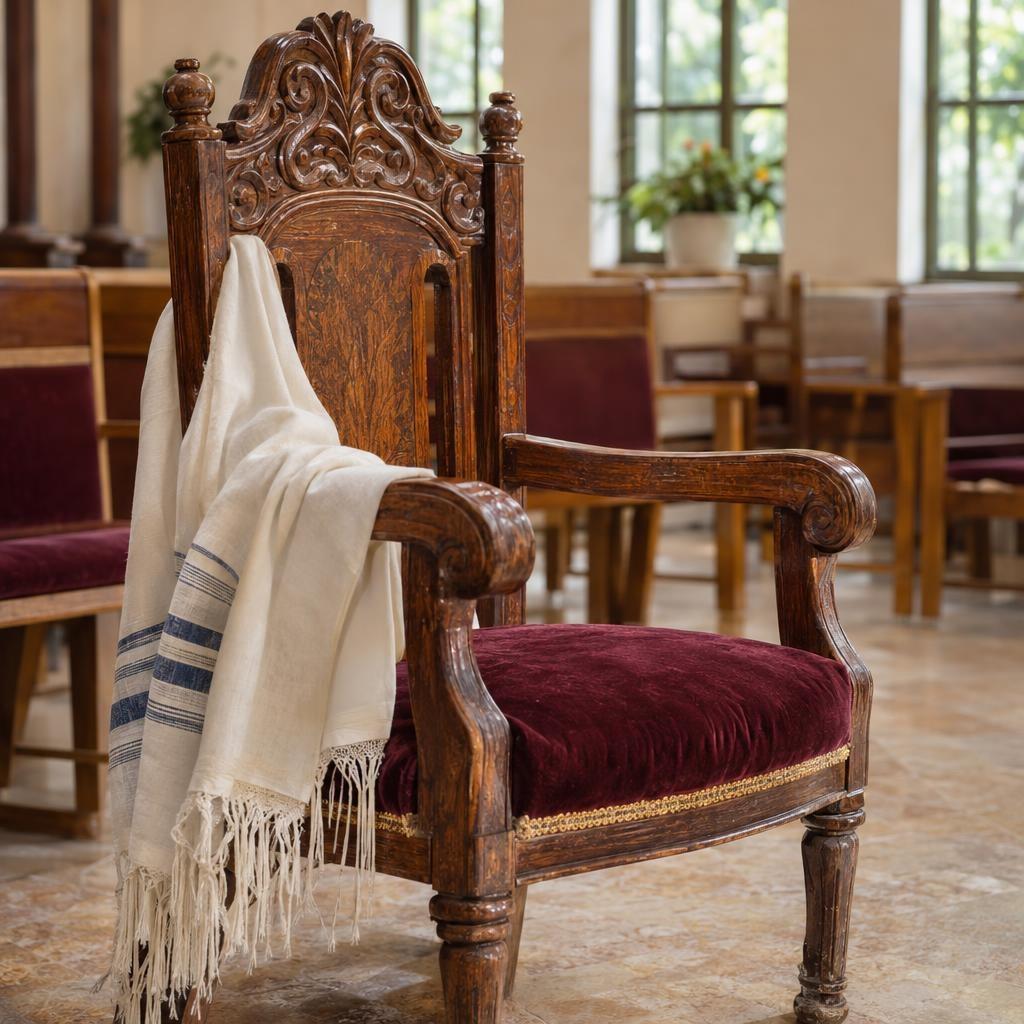
An ornate empty chair used at a brit, kise Eliyahu

On the label or sign

מוהל
ritual circumciser
רופא־מוהל
physician-mohel

ברית מילה / בריתBrit milah

brit mila / brit

US English

Brit milah; bris

UK English

Brit milah; sometimes bris

What it is

ברית מילה is the Jewish circumcision covenant, usually with the boy's Hebrew naming, traditionally on day eight with a medical delay when needed. On invitations, a bare ברית normally means ברית מילה.

The difference

ברית literally means covenant, and ברית מילה is more than a baby naming. The person who performs the ברית מילה is a מוהל, who is not automatically a physician.

Common mistake

Do not translate ברית as a baby naming or a party only; the Ministry of Health recommends a currently certified mohel.

סנדקSandak

sandak

US English

Sandak; person holding the baby at the brit

UK English

Same as US

What it is

The סנדק is the honored person seated with the baby on their knees while the mohel performs the brit.

The difference

A סנדק is a ritual honor rather than a Christian godparent. The observable core role of the סנדק is holding the baby during the ceremony.

Common mistake

Do not translate סנדק as godfather or infer a lifelong legal guardianship.

On the label or sign

לרגל הולדת בתנו
on the birth of our daughter

זבד הבת / שמחת בת / בריתהCelebration for a baby girl

zeved habat / simchat bat / brita

US English

Baby-naming or celebration for a girl

UK English

Same as US

What it is

זבד הבת is a traditional naming and thanksgiving rite for a newborn girl, שמחת בת is a broad modern label, and בריתה is a colloquial word often used for a larger party.

The difference

Unlike ברית מילה, a שמחת בת has no circumcision and no fixed date. The three names do not promise the same ritual.

Common mistake

Do not treat בריתה as a circumcision; ask the family if the practical details matter.

פדיון הבןRedemption of the firstborn

pidyon haben

US English

Redemption of the firstborn son

UK English

Same as US

What it is

פדיון הבן is a ceremony on the 31st day for a qualifying firstborn son, in which the father gives the redemption value to a kohen.

The difference

פדיון הבן is separate from the brit and does not apply to every firstborn boy. Birth order, the delivery and kohen or Levite family conditions decide.

Common mistake

Do not assume every eldest son has a פדיון הבן or move the ceremony to day 30.

Bar And Bat Mitzvah

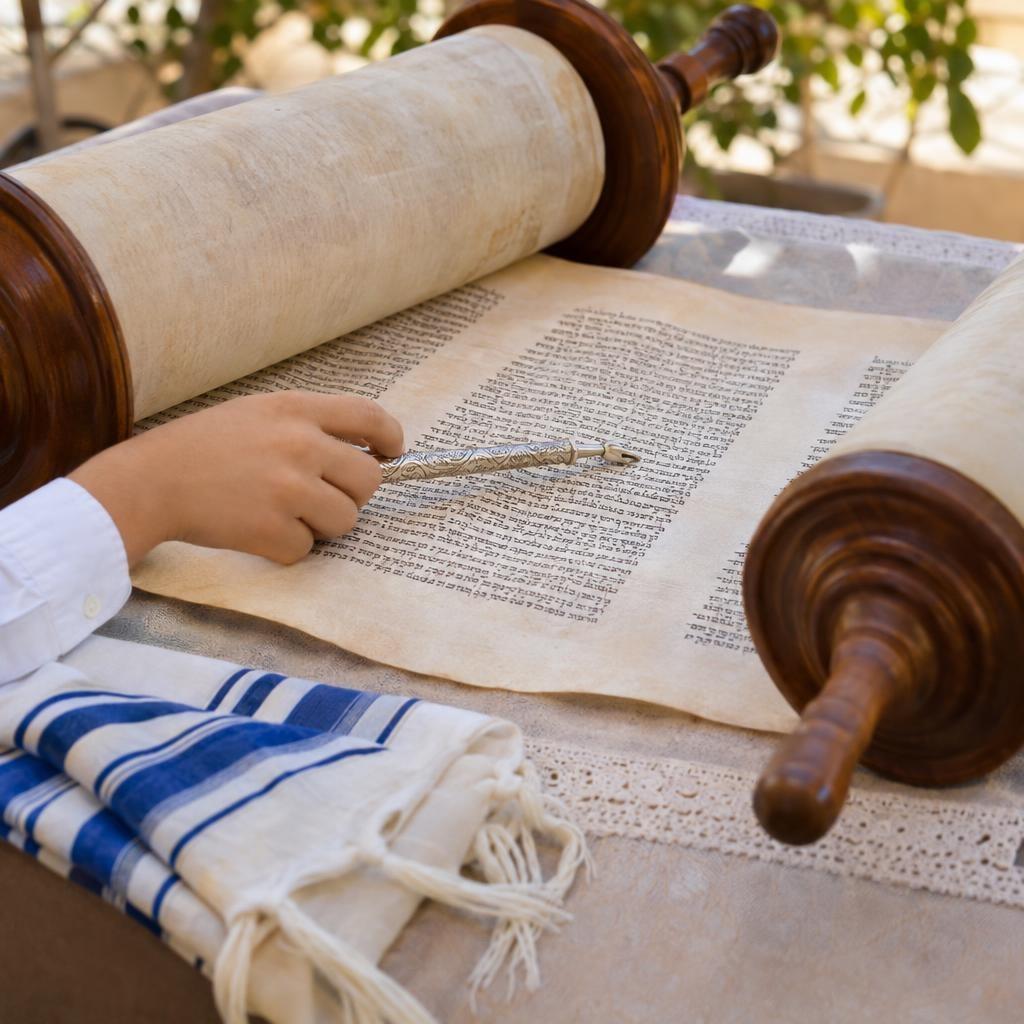
A Torah scroll and a pointer at a bar mitzvah, bar mitzva

On the label or sign

מסיבת בר מצווה
bar mitzvah party
חתן בר מצווה
the bar mitzvah boy

בר מצווהBar mitzvah

bar mitzva

US English

Bar mitzvah

UK English

Bar mitzvah

What it is

בר מצווה literally means son of commandment: the religious status a Jewish boy reaches at 13. In everyday speech, בר מצווה also names the synagogue service, the party, or both.

The difference

A בר מצווה is not a generic 13th birthday party, and religious timing follows the Hebrew date. In חתן בר מצווה, the word חתן means the boy being honored, not a groom.

Common mistake

Do not assume a synagogue invitation includes the party; an invitation may list עלייה לתורה and מסיבת בר מצווה separately.

On the label or sign

חוגגת בת מצווה
celebrating her bat mitzvah

בת מצווהBat mitzvah

bat mitzva

US English

Bat mitzvah

UK English

Bat mitzvah

What it is

בת מצווה is the matching status for a Jewish girl, traditionally at 12. A בת מצווה may be marked with a speech and party, a learning program, a synagogue ritual, or a mix.

The difference

A בת מצווה is not simply a בר מצווה one year earlier. Torah-reading practice for a בת מצווה varies by community and denomination.

Common mistake

Do not expect the same Orthodox ritual as a בר מצווה; read the program on the invitation.

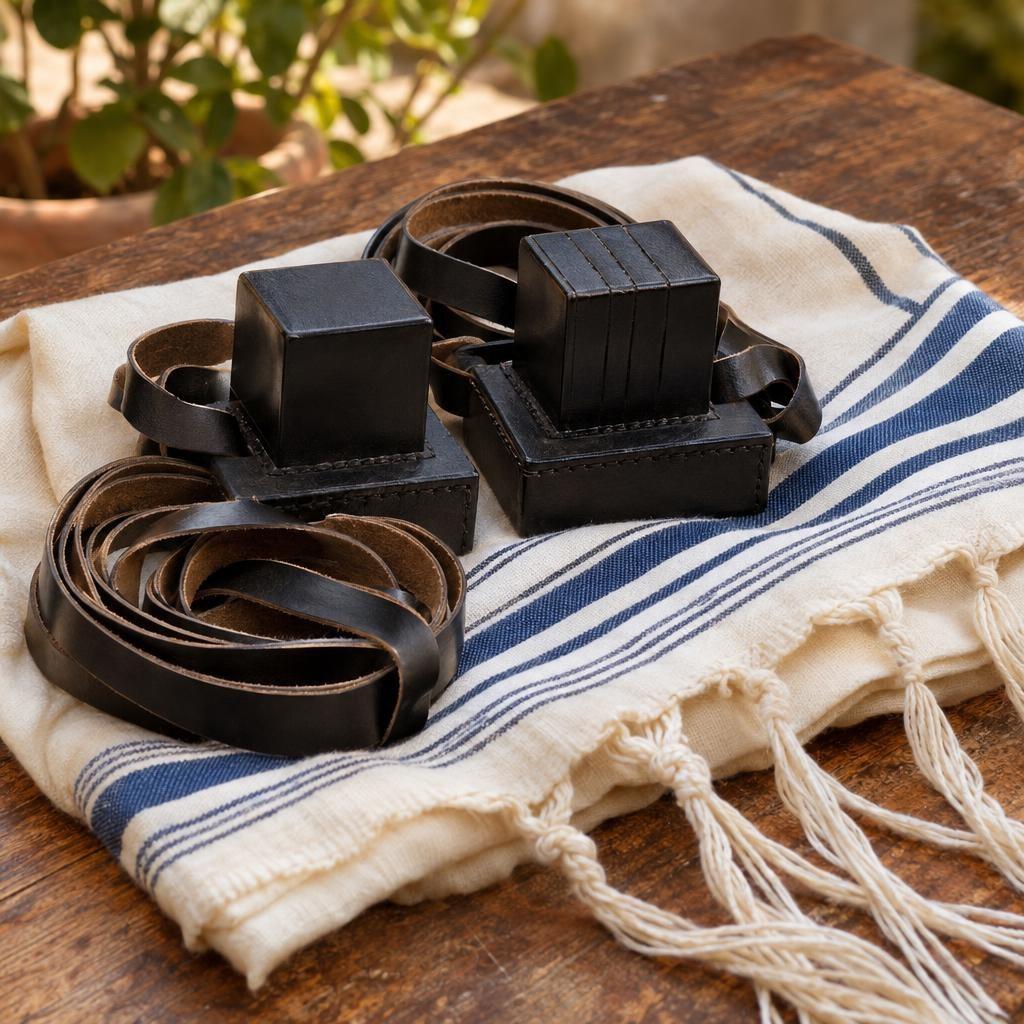
Tefillin laid on a prayer shawl, tefillin

הנחת תפיליןPutting on tefillin

hanachat tefillin

US English

Putting on tefillin

UK English

Laying tefillin

What it is

הנחת תפילין is the ritual use of tefillin, the black leather boxes and straps. הנחת תפילין is often a weekday-morning part of a boy's בר מצווה.

The difference

הנחת תפילין is a religious act, not the name of the whole party. A weekday tefillin event and a Sabbath Torah service have different programs.

Common mistake

Do not expect a weekday הנחת תפילין and a Shabbat service to run the same way; check the day and time on the invitation.

On the label or sign

בעל קורא
Torah reader

עלייה לתורהBeing called to the Torah

aliya laTorah

US English

Being called to the Torah

UK English

Same as US

What it is

עלייה לתורה means being called up to recite the blessings over a Torah reading. A trained בעל קורא may read aloud while the person called up follows quietly.

The difference

In עלייה לתורה, the word aliya does not mean immigration to Israel. An עלייה לתורה does not always mean chanting the whole portion.

Common mistake

Do not translate עלייה לתורה as immigration, and do not assume the celebrant chants the entire reading.

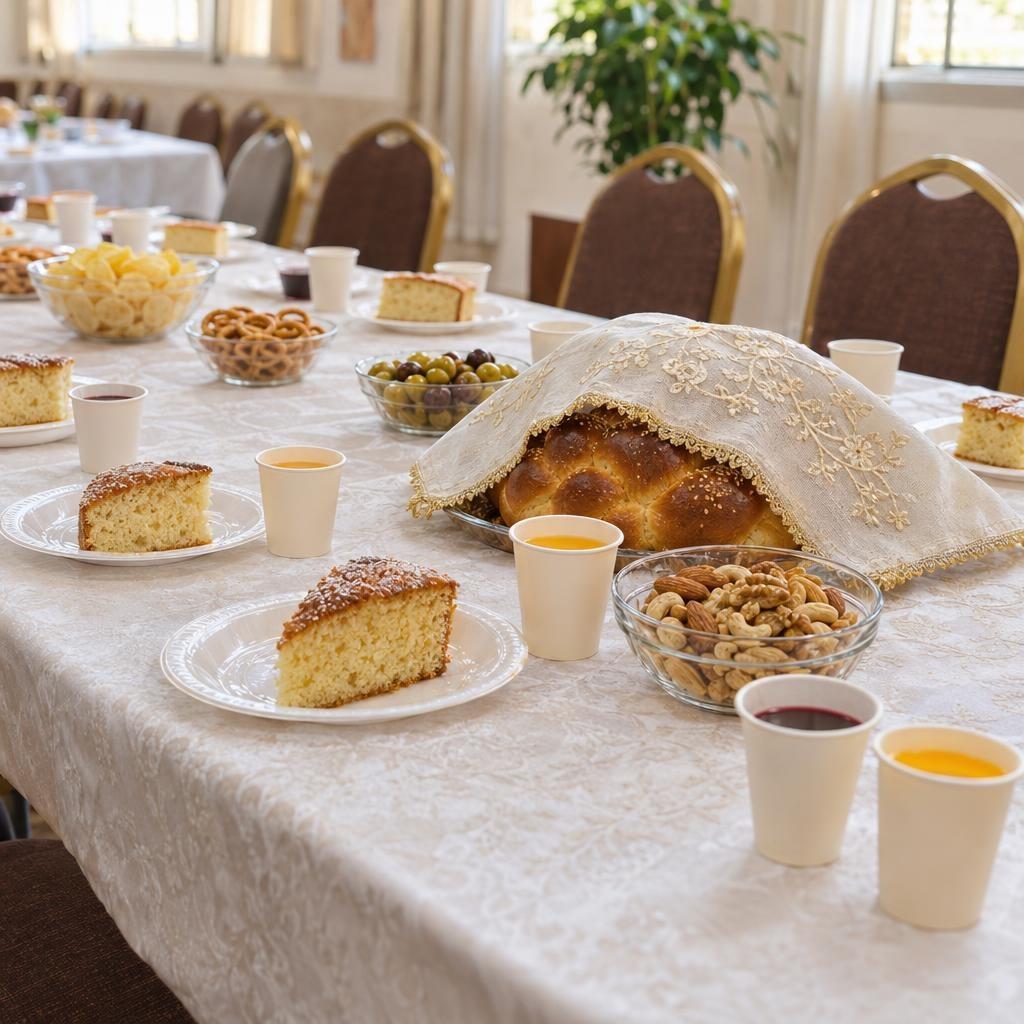
A kiddush table with cake, wine cups and snacks

קידוש / סעודת מצווה / מסיבהKiddush, meal or party

kiddush / se'udat mitzva / mesiba

US English

Synagogue refreshments; celebratory meal; party

UK English

Same as US

What it is

A קידוש is refreshments after a Sabbath or festival service, a סעודת מצווה is a religious celebratory meal, and a מסיבה is the party. A family may hold one, two or all three.

The difference

A קידוש is not the whole בר מצווה or בת מצווה. The venue and time on the invitation show which part you are invited to.

Common mistake

Do not assume an invitation to the synagogue קידוש includes the later מסיבה.

Before The Wedding

On the label or sign

התארסנו!
we got engaged!
מסיבת אירוסין
engagement party

אירוסיןEngagement (two meanings)

erusin

US English

Engagement

UK English

Engagement

What it is

In modern Israeli speech, אירוסין usually means the couple's engagement before the wedding. In classical and halakhic language, אירוסין is the binding קידושין stage, now performed under the wedding canopy.

The difference

The same word אירוסין names two very different stages. A modern engaged couple is not already married.

Common mistake

Do not translate every אירוסין as an engagement party; מסיבת אירוסין is the party, while ברכת האירוסין belongs to the ceremony.

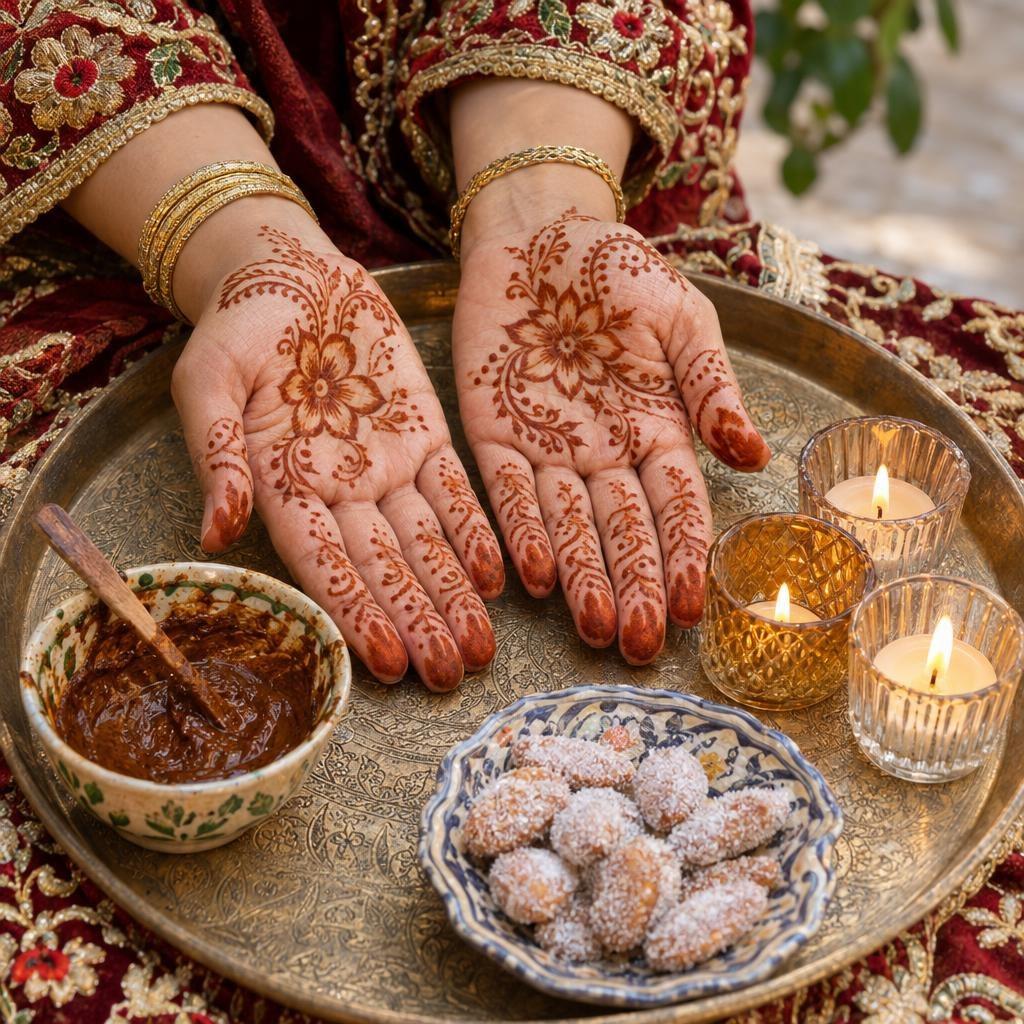
Hands with henna patterns at a henna party, hina

חינהHenna ceremony

hina

US English

Henna ceremony

UK English

Henna ceremony

What it is

חינה is a pre-wedding henna celebration rooted in many Jewish communities of Muslim lands, the former Ottoman sphere, India and Georgia, with an Ethiopian parallel. In many forms, henna paste decorates the couple's hands as a blessing and protective symbol.

The difference

A חינה is neither universal nor an engagement party, and a חינה is separate from the קידושין under the canopy. Moroccan-style Israeli events feature kaftans, a jellaba and a fez, but other communities dress differently.

Common mistake

Do not call every חינה Moroccan or arrive as if a חינה were the wedding ceremony.

The Wedding

On the label or sign

החתן והכלה
the groom and bride

חתן / כלהGroom and bride

chatan / kala

US English

Groom; bride

UK English

Bridegroom; bride

What it is

At a wedding, חתן and כלה are the groom and bride. In family talk, חתן and כלה can also mean son-in-law and daughter-in-law.

The difference

In חתן בר מצווה, חתן means the boy being honored, not a groom.

Common mistake

Do not translate every חתן as groom; read the compound and the event.

On the label or sign

שעת חופה
ceremony time

קבלת פניםPre-ceremony reception

kabbalat panim

US English

Pre-ceremony reception

UK English

Pre-ceremony drinks reception

What it is

On an Israeli invitation, קבלת פנים is the guest arrival period before the canopy, often with food and drinks. Invitations usually print two times, for example קבלת פנים 19:30 and חופה וקידושין 20:30.

The difference

קבלת פנים comes before the ceremony, unlike the US or UK wedding reception after the ceremony.

Common mistake

Do not arrive at the חופה time thinking קבלת פנים is the party afterward; come for the first time printed.

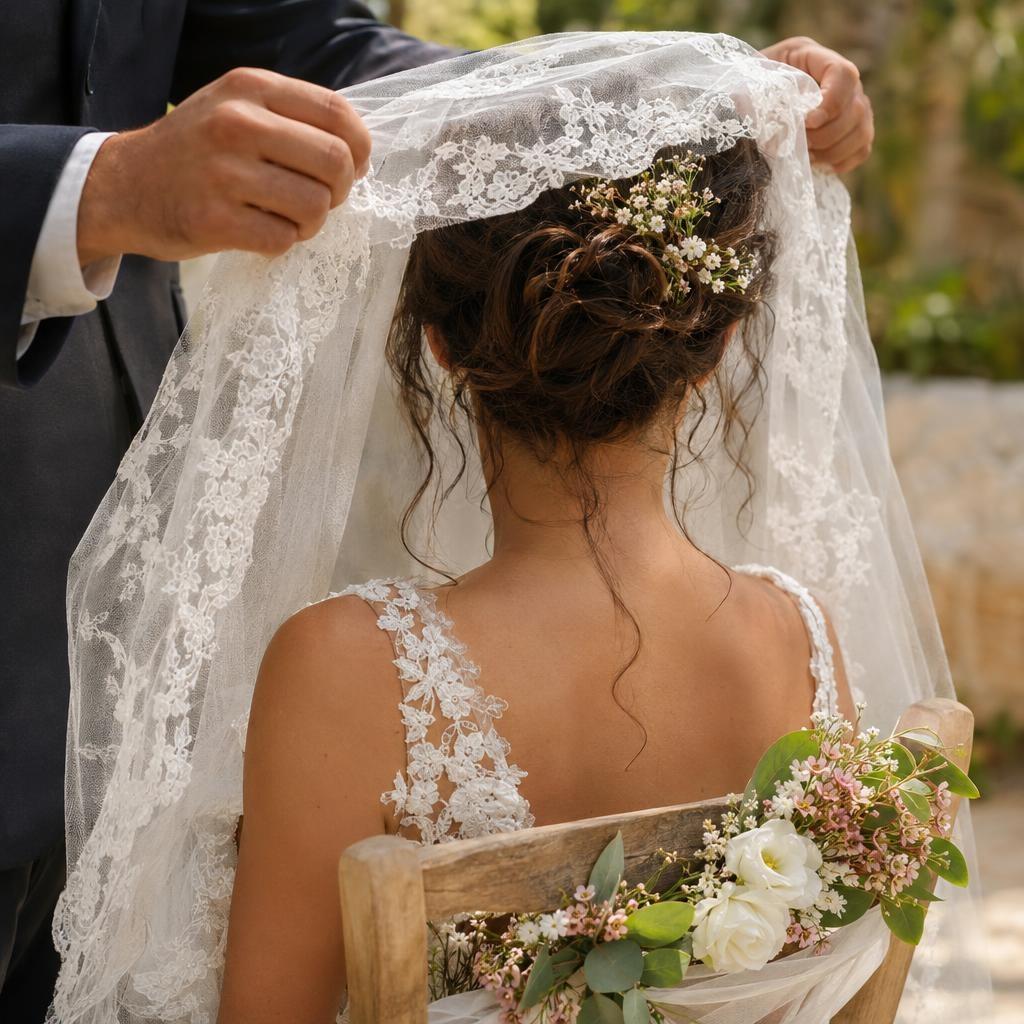
A groom veiling the bride from behind, badeken

בדקןVeiling ceremony

badeken

US English

Veiling ceremony

UK English

Veiling ceremony

What it is

בדקן is an Ashkenazi custom in which the groom lowers the veil over the bride's face before the canopy.

The difference

The veil itself is the הינומה; בדקן is the act or ceremony. בדקן is a custom, not an essential element of the Orthodox marriage, and may be absent outside Ashkenazi practice.

Common mistake

Do not call the veil the בדקן; the veil is the הינומה.

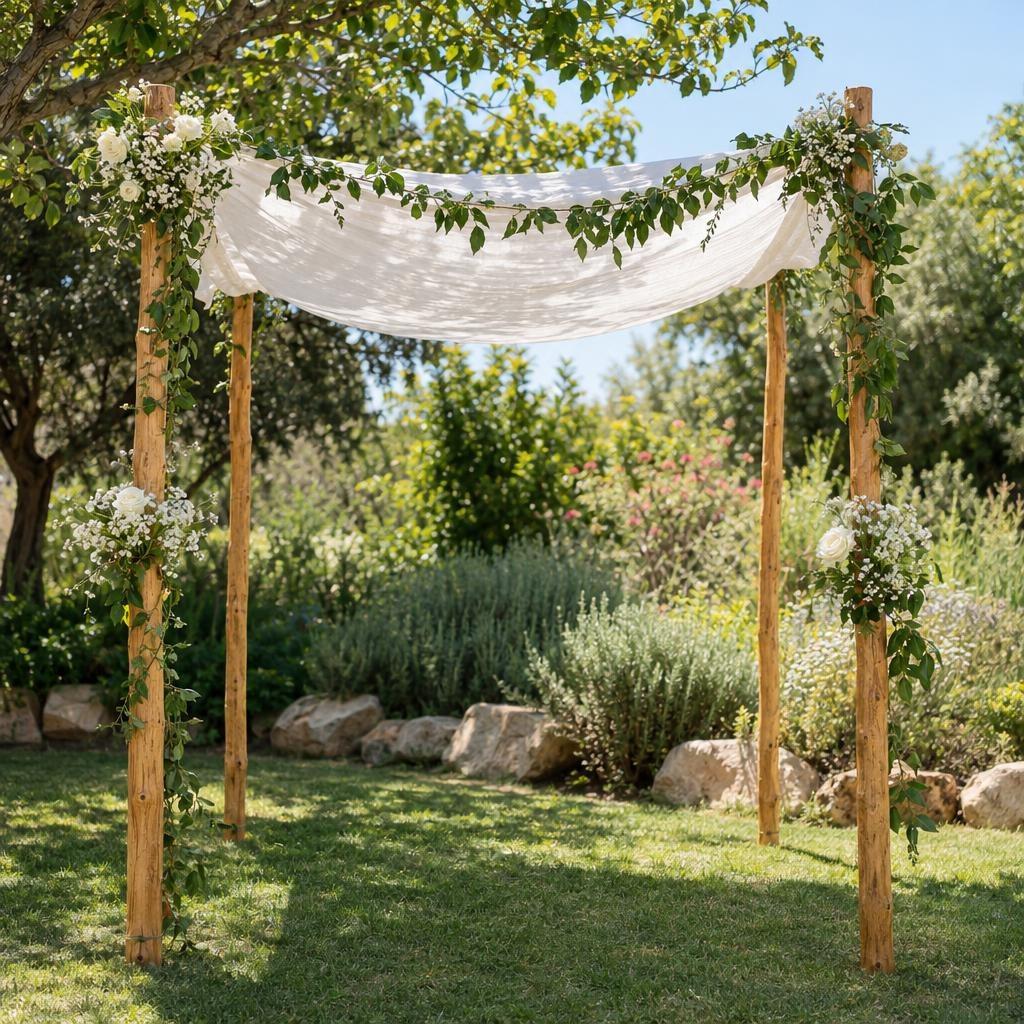
A wedding canopy, chuppah, decorated with flowers

On the label or sign

חופה וקידושין
wedding ceremony

חופה / חופה וקידושיןWedding canopy and ceremony

chuppah / chuppah vekiddushin

US English

Wedding canopy; Jewish wedding ceremony

UK English

Same as US

What it is

חופה literally means the canopy and, by extension, the ceremony beneath it. In the standard Orthodox sequence, the binding קידושין and the נישואין blessings are joined under the חופה, separated by reading the ketubah.

The difference

The חופה is not an altar, the reception or the dinner. The invitation's שעת חופה is the ceremony time, not the start of the meal.

Common mistake

Do not call the whole evening the חופה; use the word for the ceremony under the canopy.

כתובהMarriage contract

ketuba

US English

Jewish marriage contract

UK English

Same as US

What it is

A כתובה is a formal Aramaic marriage document setting out the groom's obligations to the bride in the traditional Orthodox form. The כתובה is signed before the canopy and read aloud under the חופה.

The difference

A כתובה is not the state marriage certificate and does not replace registration documents.

Common mistake

Do not treat the כתובה as decoration only or as the legal registration.

A plain gold wedding ring, taba'at kiddushin

On the label or sign

עדים
witnesses

טבעת קידושין / הרי את מקדשת ליWedding ring and declaration

taba'at kiddushin / harei at mekudeshet li

US English

Wedding ring; betrothal declaration

UK English

Same as US

What it is

In the Orthodox קידושין, the groom gives the bride a ring or other item of value and says הרי את מקדשת לי before witnesses. Two witnesses are a core part of the קידושין, not just the best man and maid of honor.

The difference

The טבעת קידושין is not the proposal ring. Reform and other egalitarian ceremonies may use mutual ring-giving and adapted words.

Common mistake

Do not assume any friend can be a witness; the officiating authority chooses or approves the witnesses.

שבע ברכותSeven blessings

sheva brachot

US English

Seven wedding blessings; post-wedding meals

UK English

Same as US

What it is

שבע ברכות are the seven blessings recited under the חופה. שבע ברכות also names the festive meals held during the seven-day wedding period, where the blessings may be said.

The difference

שבע ברכות does not mean seven wedding ceremonies. An invitation headed שבע ברכות after the wedding usually means a meal for the newlyweds.

Common mistake

Do not expect a repeat of the canopy at a שבע ברכות meal or assume every couple holds seven public meals.

A glass wrapped in cloth about to be broken, shvirat hakos

שבירת הכוסBreaking the glass

shvirat hakos

US English

Breaking the glass

UK English

Breaking the glass

What it is

שבירת הכוס is the breaking of a wrapped thin glass under the groom's foot near the end of the ceremony, a remembrance of destruction and incomplete joy. Many crowds then shout מזל טוב.

The difference

שבירת הכוס is a later custom, not the act that creates the marriage.

Common mistake

Do not treat שבירת הכוס as the signal to leave before the blessings and announcements finish.

Guests dancing in a circle at an Israeli wedding

סעודת חתונה / ריקודיםWedding meal and dancing

se'udat chatuna / rikudim

US English

Wedding meal; dancing

UK English

Wedding breakfast or meal; dancing

What it is

The סעודת חתונה and the ריקודים, the meal, music and dancing, follow the ceremony in the usual sequence.

The difference

The marriage rite happens under the חופה; the סעודת חתונה is the celebration. An invitation may list only the reception and canopy times, with no separate dinner time.

Common mistake

Do not call the meal the חופה; ask the hosts directly if seating or dancing arrangements affect you.

Invitations And Gifts

On the label or sign

נא לאשר הגעה
please confirm attendance
מגיע/ה
attending

אישור הגעהRSVP

ishur haga'a

US English

RSVP; please confirm attendance

UK English

Same as US

What it is

אישור הגעה is a request to confirm whether you will come and usually how many adults and children. Israeli systems often collect the answer through a personal WhatsApp link and send reminders.

The difference

אישור הגעה is not an optional courtesy. The hosts use the answer for the guest count and seating.

Common mistake

Do not ignore an אישור הגעה message; answer it and update the answer if your plans change.

On the label or sign

בהצלחה
good luck, success

מזל טובCongratulations

mazal tov

US English

Congratulations

UK English

Congratulations

What it is

מזל טוב congratulates someone on good news or a milestone, such as a wedding or a birth.

The difference

מזל טוב does not wish future good luck. For a future undertaking, בהצלחה is the closer wish.

Common mistake

Do not say מזל טוב before an exam or interview; say בהצלחה.

A plain gift envelope at a celebration, ma'ata'fa

מתנה / מעטפהGift envelope

matana / ma'atafa

US English

Gift; gift envelope

UK English

Same as US

What it is

At Israeli weddings and many other celebrations, the gift often means money in a named מעטפה or sent digitally. A physical present remains possible, especially at smaller family events.

The difference

No universal rule covers every community and event, and there is no official amount.

Common mistake

Do not bring an unlabeled מעטפה; write your name and a short greeting on the envelope or card.

On the label or sign

שיק
check, older spelling

המחאה / צ׳קCheck (cheque)

hamcha'a / chek

US English

Check

UK English

Cheque

What it is

The Hebrew Academy's current terms for a check are המחאה and צ׳ק. A check orders the bank to pay the named recipient from the writer's account.

The difference

The Academy labels שיק an older spelling, but banks and speakers still use שיק. המחאה in this sense does not mean protest, another meaning of the same spelling.

Common mistake

Do not read המחאה on a bank form as protest; המחאה means check.

On the label or sign

למוטב בלבד
payee only

לפקודת / למוטב בלבד / קרוסPayee and crossed check

lifkudat / lemutav bilvad / kros

US English

Pay to the order of; payee only; crossed check

UK English

Pay to the order of; account payee only; crossed cheque

What it is

לפקודת introduces the payee's name. On a check marked למוטב בלבד, only the named payee can deposit it, and two parallel lines, קרוס, mean the check must be deposited to a bank account.

The difference

קרוס and למוטב בלבד are related but different restrictions. Since 2 September 2026, most banks accept future-dated checks in their apps, initially up to ₪100,000 and 13 months, if the check is crossed and marked למוטב בלבד.

Common mistake

Do not guess a new surname on the לפקודת line; ask the couple for the exact payee wording and fill in date, amount in figures and words, and signature.

צ׳ק פתוחBlank-payee check

chek patuach

US English

Blank-payee check

UK English

Blank-payee cheque

What it is

A צ׳ק פתוח is a check with no payee written in. Under the cash-reduction rules, one private person may give another a צ׳ק פתוח only up to ₪5,000.

The difference

Above ₪5,000 the payee must be named, and when a business is a party the payee must be written for any amount.

Common mistake

Do not leave the name blank for convenience; for a wedding gift, naming the payee is the safer normal practice at any amount.

On the label or sign

שליחת מתנה
send a gift

מתנה דיגיטלית / מתנה באשראיDigital gift

matana digitalit / matana ba'ashrai

US English

Digital gift; card or app payment

UK English

Same as US

What it is

Israeli RSVP services now often offer gifts by credit card, Bit or PayBox from the event link. Service terms differ, and the guest may pay a processing fee on top of the gift.

The difference

A מתנה דיגיטלית is a practical option, not a ritual requirement.

Common mistake

Do not send money to a link copied from an unrelated message; open the link from the known invitation, check the couple's names and read the fee first.

What You Would Expect in English, and the Hebrew on the Invitation.

What you would expect in English, and the Hebrew on the invitation.
In EnglishOn the invitationKeep in mind
Bris or baby boy's circumcisionברית מילהbrit milaOften written just ברית.
Baby girl's naming partyשמחת בתsimchat batNo fixed date or single ritual.
Bar mitzvah service and partyעלייה לתורה / מסיבת בר מצווהaliya laTorah / mesibat bar mitzvaOften listed separately.
Engagement partyמסיבת אירוסיןmesibat erusinNot the halakhic אירוסין.
Drinks before the ceremonyקבלת פניםkabbalat panimThe first time printed.
Wedding ceremonyחופה וקידושיןchuppah vekiddushinThe second time printed.
RSVPאישור הגעהishur haga'aOften a WhatsApp link.
Checkצ׳ק / המחאהchek / hamcha'aUK English: cheque.
Account payee onlyלמוטב בלבדlemutav bilvadOnly the named payee can deposit.
Congratulationsמזל טובmazal tovNot good luck.

Knowing the word is half of it. Say it out loud.

A Hebrew speaking app with Maya and David, AI tutors who hold conversations, explain corrections and help you practise what you need to say. Private beta on iPhone and Android. Public store launch is still ahead. Free Classic lessons to start, no card needed.

Explore baba Learn

How we checked this guide

By the baba team. Checked on against 38 sources, mostly Israeli retailers, manufacturers and government pages, and updated . Products, labels and rules change, so check the pack or the office before you rely on a detail. Our methodology.

Frequently Asked Questions

What is a brit in Israel?

On an Israeli invitation, ברית (brit) means ברית מילה, the Jewish circumcision covenant for a baby boy, usually with his Hebrew naming. A ברית מילה is traditionally held on the eighth day, with a delay when the baby's health requires it.

Is a bat mitzvah at 12 or 13?

A בת מצווה is traditionally at 12 and a בר מצווה at 13. The form of a בת מצווה varies by community, from a speech and party to a synagogue ritual.

Is a hina the same as an engagement party?

No. A חינה (hina) is an optional henna ceremony before the wedding with roots in many Jewish communities, while an engagement party is a מסיבת אירוסין. A חינה is also not the wedding ceremony.

What does kabbalat panim mean on a wedding invitation?

קבלת פנים (kabbalat panim) is the reception before the ceremony, with food and drinks as guests arrive. The ceremony starts later, at the שעת חופה printed on the invitation.

How do I write a check as a wedding gift in Israel?

Ask the couple for the exact payee name, write it on the לפקודת line, and fill in the date, the amount in figures and words, and your signature. A check marked למוטב בלבד can be deposited only by the named payee.

More Hebrew-English Guides

All guides