
baba
Free, no AIHebrew-English guide 80 of 100

Hebrew Family Words, in Plain English

What mechutanim, gis and gisa mean, and who counts as each.

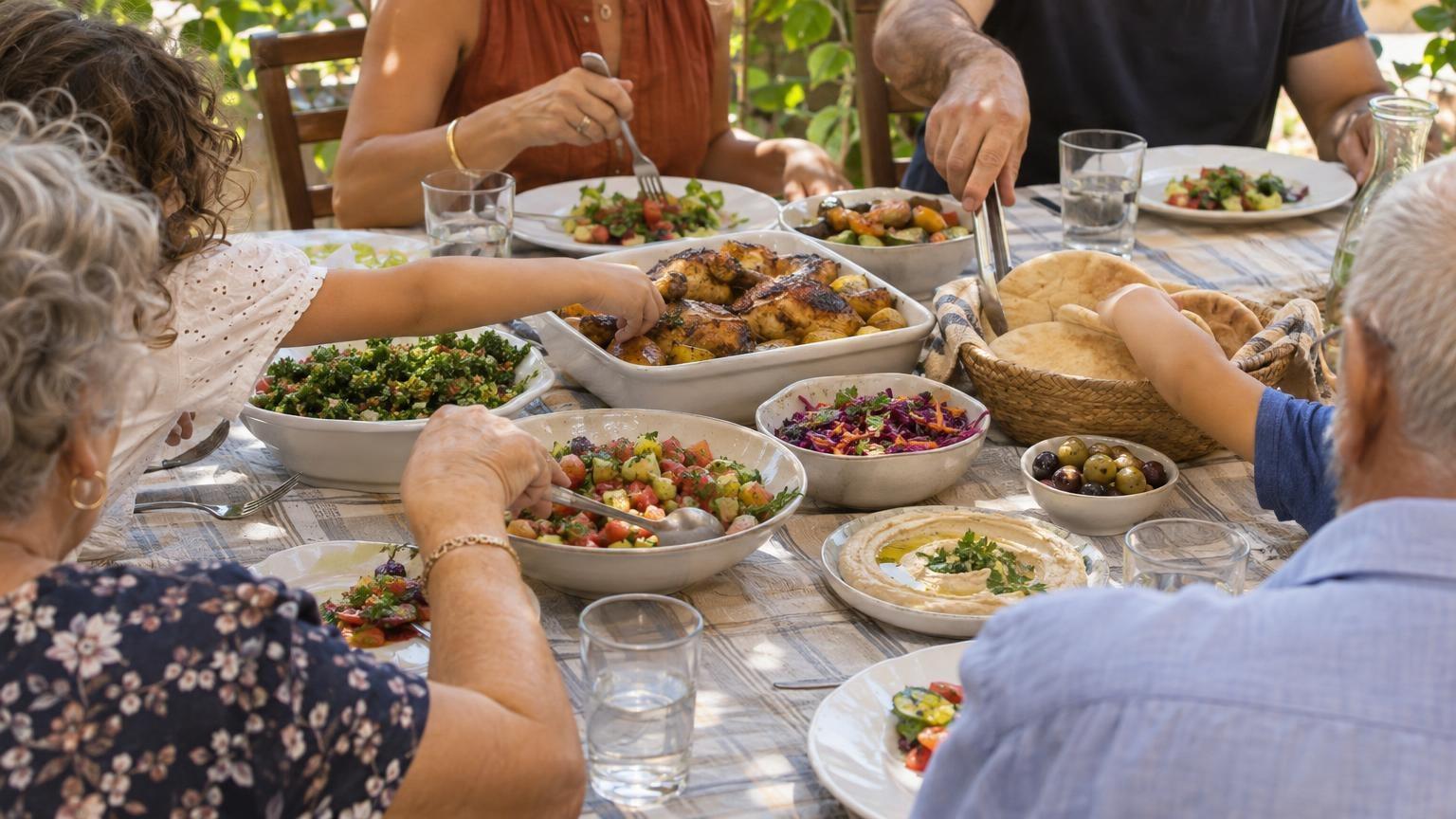
A multi-generation family meal at a table in Israel

Mix-Ups to Avoid

  1. מחותנים are not your parents-in-law. Your spouse's parents are חם and חמות; your child's spouse's parents are your מחותנים.
  2. Do not say מחותנים has no English word at all. English has co-parents-in-law, but people usually say my son's or my daughter's in-laws.
  3. גיס alone does not say which path you mean: your spouse's brother or your sibling's husband. Spell out the relationship when it matters.
In This Guide12 entries

Parents Across A Marriage

מחותןCo-father-in-law

mechutan

US English

My son's or daughter's father-in-law

UK English

Same as US

What it is

A מחותן is a father on one side of a married couple, seen by a parent on the other side. When your child marries, your child's spouse's father is your מחותן.

The difference

The exact English noun co-parent-in-law exists but is rare. A מחותן is a parent-to-parent relationship, not the married child's relationship to that man.

Common mistake

Do not translate מחותן as my father-in-law; say my son's or my daughter's father-in-law.

מחותנתCo-mother-in-law

mechutenet

US English

My son's or daughter's mother-in-law

UK English

Same as US

What it is

A מחותנת is a mother on one side of a married couple, in relation to a parent on the other side. When your child marries, your child's spouse's mother is your מחותנת.

The difference

A מחותנת is not your mother-in-law. A מחותנת is the other spouse's mother, seen from a parent's viewpoint.

Common mistake

Do not translate מחותנת as mother-in-law; say my son's or my daughter's mother-in-law.

מחותנים / מחותנותCo-parents-in-law

mechutanim / mechutanot

US English

Co-parents-in-law; our child's in-laws

UK English

Same as US

What it is

מחותנים is the masculine or mixed plural, and today usually means the parents on the two sides of a married couple in relation to each other. מחותנות is the feminine plural, used when all of them are women, such as the two mothers.

The difference

English in-laws usually means a married person's spouse's family, so the in-laws does not show the parent-to-parent link of מחותנים. Older or collective texts can use מחותנים more broadly for relatives by marriage.

Common mistake

Do not translate מחותנים automatically as the in-laws; say the two sets of parents or the bride's and groom's parents.

Your Own Parents-In-Law

חםFather-in-law

cham

US English

Father-in-law

UK English

Father-in-law

What it is

A חם is the father of your spouse, on either side, in the Hebrew Academy's definition.

The difference

A חם is your own spouse's father, while a מחותן is your child's spouse's father.

Common mistake

Do not call your spouse's father your מחותן; call him your חם.

חמותMother-in-law

chamot

US English

Mother-in-law

UK English

Mother-in-law

What it is

A חמות is the mother of your spouse, on either side, in the Hebrew Academy's definition.

The difference

A חמות is your own spouse's mother, while a מחותנת is your child's spouse's mother.

Common mistake

Do not call your spouse's mother your מחותנת; call her your חמות.

חותן / חותנתWife's father or mother

choten / chotenet

US English

Father-in-law; mother-in-law

UK English

Same as US

What it is

חותן and חותנת traditionally mean a wife's father and a wife's mother. In everyday modern Hebrew, חותן and חותנת are often used for either spouse's parents.

The difference

The Academy keeps the narrower traditional sense for חותן, while חם covers either spouse's father. Later Hebrew blurred the original distinction.

Common mistake

Do not treat חותן as a different relative from father-in-law; חותן is a father-in-law, traditionally on the wife's side.

Brothers And Sisters-In-Law

גיסBrother-in-law

gis

US English

Brother-in-law

UK English

Brother-in-law

What it is

A גיס is a man who is your spouse's brother, or a man married to your sibling.

The difference

A 2023 Interior Ministry committee decision said the mainstream meaning of גיס does not automatically include the husband of your spouse's sibling, while Cambridge and Oxford include that person under brother-in-law. Some speakers do extend גיס that far.

Common mistake

Do not assume גיס shows which path applies; say my wife's brother or my sister's husband when it matters.

גיסהSister-in-law

gisa

US English

Sister-in-law

UK English

Sister-in-law

What it is

A גיסה is a woman who is your spouse's sister, or a woman married to your sibling.

The difference

A גיסה is not only your husband's or wife's sister; a גיסה can also be your sibling's wife. The gender of גיסה marks the relative being named, not the speaker.

Common mistake

Do not limit גיסה to a spouse's sister; your brother's wife is also your גיסה.

גיסים / גיסותBrothers- and sisters-in-law

gisim / gisot

US English

Brothers-in-law; sisters-in-law

UK English

Same as US

What it is

גיסים is the masculine plural of גיס and is also used for a mixed group. גיסות is the feminine plural of גיסה.

The difference

גיסות can mean your spouse's sisters as well as your siblings' wives, not only brothers' wives.

Common mistake

Do not write brother-in-laws in English; the English plural is brothers-in-law.

גיסןBrother of a gis or gisa

gisan

US English

No fixed term; the brother of my brother- or sister-in-law

UK English

Same as US

What it is

גיסן is the Hebrew Academy's 1943 term for the brother of a גיס or גיסה, classed as a second-degree relation by marriage.

The difference

English has no familiar fixed word for a גיסן.

Common mistake

Do not use גיסן for the husband of your גיסה; the Academy defines גיסן as the brother of a גיס or גיסה.

גיסניתSister of a gis or gisa

gisanit

US English

No fixed term; the sister of my brother- or sister-in-law

UK English

Same as US

What it is

גיסנית is the Hebrew Academy's 1943 term for the sister of a גיס or גיסה, also a second-degree relation by marriage.

The difference

English has no familiar fixed word for a גיסנית.

Common mistake

Do not expect every Israeli to know גיסנית; describe the exact relationship as well.

Relatives By Marriage

קרובי חיתוןRelatives by marriage

krovei chitun

US English

Relatives by marriage; in-laws

UK English

Same as US

What it is

קרובי חיתון is a broad category for relatives created by marriage. The Academy places מחותנים, גיס and גיסה, parents-in-law and children-in-law under קרובי חיתון.

The difference

קרובי חיתון is safely broad, while the ordinary modern sense of מחותנים is specifically the parents across a married couple. Legal forms may define relatives differently from everyday speech.

Common mistake

Do not treat קרובי חיתון and מחותנים as exact synonyms; use קרובי חיתון for the whole category.

Who You Mean in English, and the Hebrew Word for That Person.

Who you mean in English, and the Hebrew word for that person.
You meanSay in HebrewKeep in mind
My spouse's fatherחםchamAlso commonly חותן.
My spouse's motherחמותchamotAlso commonly חותנת.
My child's spouse's fatherמחותןmechutanRare English: co-parent-in-law.
My child's spouse's motherמחותנתmechutenetNot my mother-in-law.
The two sets of parentsמחותניםmechutanimמחותנות if all are women.
My spouse's brother or my sibling's husbandגיסgisBrother-in-law.
My spouse's sister or my sibling's wifeגיסהgisaSister-in-law.
Brothers-in-law, or a mixed groupגיסיםgisimגיסות for women only.
Relatives by marriageקרובי חיתוןkrovei chitunThe broad category.

Knowing the word is half of it. Say it out loud.

A Hebrew speaking app with Maya and David, AI tutors who hold conversations, explain corrections and help you practise what you need to say. Private beta on iPhone and Android. Public store launch is still ahead. Free Classic lessons to start, no card needed.

Explore baba Learn

How we checked this guide

By the baba team. Checked on against 15 sources, mostly Israeli retailers, manufacturers and government pages, and updated . Products, labels and rules change, so check the pack or the office before you rely on a detail. Our methodology.

Frequently Asked Questions

What does mechutanim mean?

מחותנים (mechutanim) are the parents on the two sides of a married couple in relation to each other. When your child marries, your child's spouse's parents are your מחותנים.

Is there an English word for mechutanim?

Yes, but it is rare: co-parents-in-law. English speakers usually say my son's in-laws, my daughter's in-laws or the two sets of parents.

Are mechutanim the same as in-laws?

Not exactly. English in-laws usually means your spouse's family, such as your חם and חמות, while מחותנים are your child's spouse's parents.

What is a gis in Hebrew?

A גיס (gis) is a brother-in-law: your spouse's brother or your sibling's husband. A woman in the same position is a גיסה (gisa).

Is my wife's sister's husband my gis?

Usage varies. A 2023 Interior Ministry committee decision said the mainstream meaning of גיס does not automatically include a spouse's sibling's spouse, though some speakers use גיס that way. English dictionaries include that person under brother-in-law.

More Hebrew-English Guides

All guides