
baba
Free, no AIHebrew-English guide 30 of 100

Israeli Recipe Conversion, in Plain English

Cups, grams, Celsius, turbo and grill settings explained.

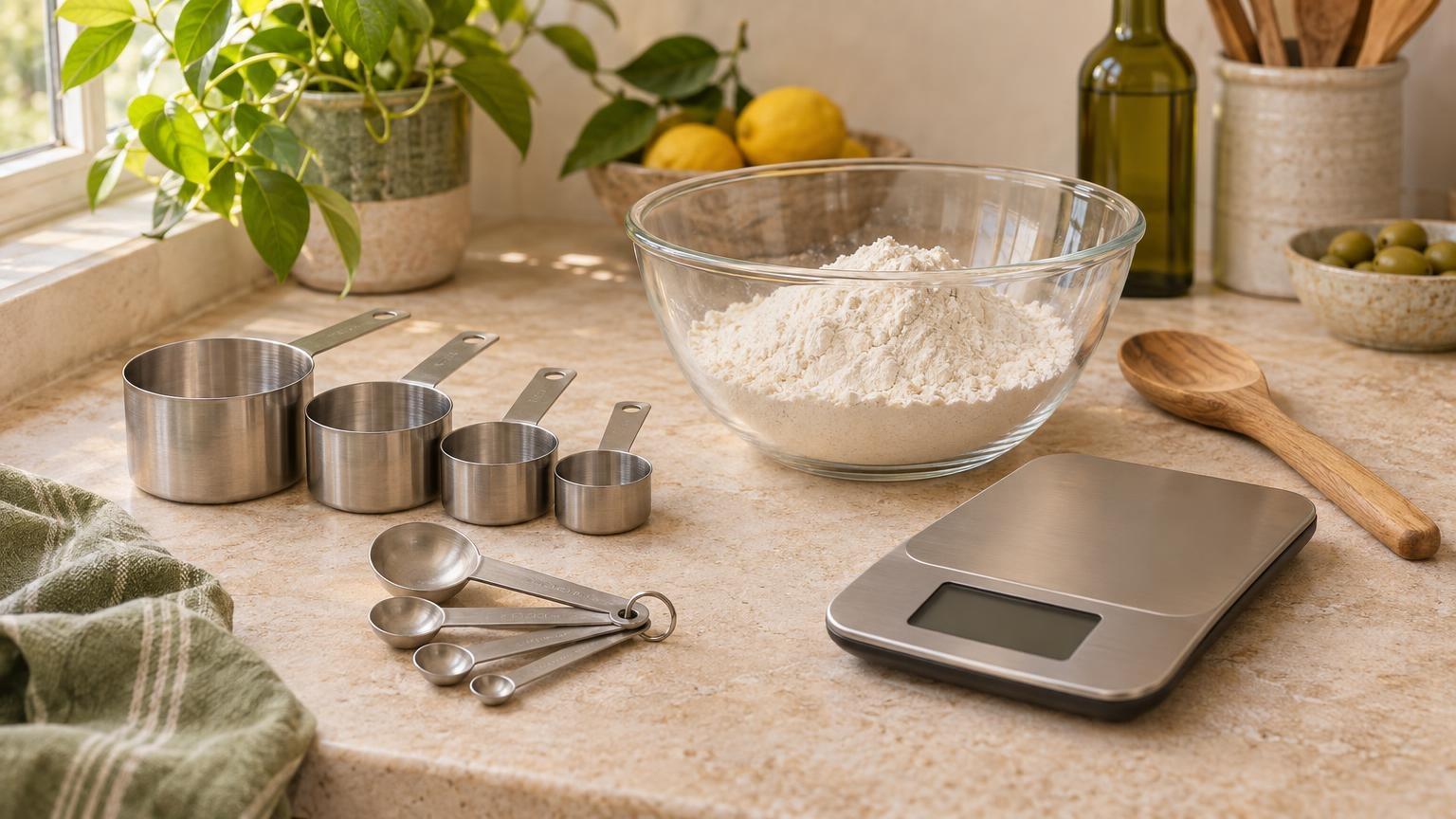
Measuring cups, a kitchen scale and a bowl of flour on an Israeli kitchen counter

Mix-Ups to Avoid

  1. Do not use a mug or חד־פעמי as one cup. Use a 240 ml measuring cup when an Israeli recipe gives no other definition.
  2. Do not use one cups-to-grams formula. Follow the recipe author's gram value or an ingredient-specific chart.
  3. Do not treat every fan icon as טוּרְבּוֹ or translate גְּרִיל as barbecue. Check the exact oven manual for the active elements and control type.
In This Guide25 entries

Measurements

On the label or sign

240 ml
standard measuring cup volume
חד־פעמי
disposable cup, cited as 180 ml

כּוֹסMeasuring cup

kos

US English

cup

UK English

cup measure, preferably in ml

What it is

כּוֹס means a 240 ml standard measuring cup in the Israeli system. A US customary cup is about 236.588 ml and is normally rounded to 240 ml in kitchen tables.

The difference

A cited חד־פעמי holds 180 ml, and a mug has no defined measuring volume. Neither vessel automatically equals one כּוֹס.

Common mistake

Use a graduated 240 ml measure instead of an arbitrary drinking vessel.

כַּףTablespoon

kaf

US English

tablespoon, tbsp

UK English

tablespoon, tbsp

What it is

כַּף is 15 ml in the Israeli reference chart. The US customary tablespoon is 14.79 ml, with 15 ml used as the metric kitchen equivalent.

The difference

A household soup spoon has no controlled capacity. A measured כַּף should be level unless the recipe says otherwise.

Common mistake

Use a 15 ml measuring spoon instead of cutlery.

כַּפִּיתTeaspoon

kapit

US English

teaspoon, tsp

UK English

teaspoon, tsp

What it is

כַּפִּית is 5 ml in the Israeli reference chart. The US customary teaspoon is 4.93 ml.

The difference

A cutlery teaspoon has no controlled capacity. The abbreviations tsp and tbsp name different measures.

Common mistake

Use a 5 ml measuring spoon and check that the recipe says tsp, not tbsp.

On the label or sign

מ״ל
milliliters
ליטר
liter

מִילִילִיטֶר / מ״לMilliliter

mililiter / mil

US English

milliliter, mL

UK English

millilitre, ml or mL

What it is

מִילִילִיטֶר is a metric unit of volume. Israeli liquid food packages state net contents in milliliters or liters.

The difference

Milliliters measure volume, while grams measure mass. Oil, honey, flour, and other ingredients cannot be changed from milliliters to grams without an ingredient-specific value.

Common mistake

Read the package volume and do not assume that every 1 ml weighs 1 g.

On the label or sign

גרם
grams
ג׳
abbreviation for grams
ק״ג
kilograms

גְּרָם / ג׳Gram

gram

US English

gram, g

UK English

gram, g

What it is

גְּרָם is a metric unit of mass. Israeli solid, semisolid, and viscous foods state net contents by weight.

The difference

A gram value cannot be divided by 240 to produce cups. Cup weight changes with the ingredient, packing, particle size, and moisture.

Common mistake

Use the recipe's gram value whenever one is given.

On the label or sign

°C
degrees Celsius

מַעֲלוֹת צֶלְזְיוּסDegrees Celsius

ma'alot Tselzius

US English

degrees Celsius, °C

UK English

degrees Celsius, °C

What it is

מַעֲלוֹת צֶלְזְיוּס is the temperature scale used on current Israeli oven controls and manuals. Israeli oven dials show °C values.

The difference

An American Fahrenheit number cannot be entered unchanged. Convert with °C = (°F minus 32) divided by 1.8, then choose a practical dial setting.

Common mistake

Convert the Fahrenheit value before setting an Israeli oven.

On the label or sign

°F
degrees Fahrenheit

מַעֲלוֹת פָרֶנְהַיְיטDegrees Fahrenheit

ma'alot Fahrenheit

US English

degrees Fahrenheit, °F

UK English

degrees Fahrenheit, °F

What it is

מַעֲלוֹת פָרֶנְהַיְיט is the temperature scale common in US recipes. A setting of 350°F converts exactly to 176.7°C and is normally rounded to 175°C or 180°C on a conventional oven.

The difference

A fan setting is a separate oven-mode adjustment. Guidance commonly starts 20°C below a conventional setting, but the exact recipe and oven manual control.

Common mistake

Do not treat the 20°C fan reduction as an exact unit conversion for every model.

Ingredient Conversions

On the label or sign

קמח רב־תכליתי
all-purpose flour
ללא צורך בניפוי
no sifting needed

קֶמַח לָבָן / רַב־תַּכְלִיתִיWhite flour

kemach lavan / rav-takhliti

US English

all-purpose flour

UK English

plain flour

What it is

קֶמַח לָבָן is white all-purpose flour. The Israeli reference chart assigns 140 g to one 240 ml cup.

The difference

A major US chart assigns 120 g to one cup of all-purpose flour. Handling, grind, packing, and moisture can change the mass in a cup.

Common mistake

Follow the recipe author's grams instead of importing a generic flour conversion.

On the label or sign

אבקת אפייה
baking powder

אַבְקַת אֲפִיָּהBaking powder

avkat afiyah

US English

baking powder

UK English

baking powder

What it is

אַבְקַת אֲפִיָּה is baking powder. The Israeli reference chart gives 3 g per teaspoon, 8 g per tablespoon, and 10 g per sachet.

The difference

Baking powder is listed separately from סוֹדָה לִשְׁתִיָּה. Both products can look like white leavening powders.

Common mistake

Read the Hebrew name and do not swap baking powder with baking soda.

On the label or sign

סודה לשתייה
baking soda

סוֹדָה לִשְׁתִיָּהBaking soda

soda lishtiyah

US English

baking soda

UK English

bicarbonate of soda

What it is

סוֹדָה לִשְׁתִיָּה is baking soda. The Israeli reference chart gives 3 g per teaspoon, 8 g per tablespoon, and 10 g per sachet.

The difference

The Hebrew word סוֹדָה does not mean sparkling water in סוֹדָה לִשְׁתִיָּה. Baking soda is not baking powder.

Common mistake

Look for סודה לשתייה and do not buy אבקת אפייה for the same step.

On the label or sign

קורנפלור
cornstarch

קוֹרְנְפְלוֹרCornstarch

korenflor

US English

cornstarch

UK English

cornflour

What it is

קוֹרְנְפְלוֹר in Israel is edible corn starch. The Israeli reference chart assigns 140 g per cup and 10 g per tablespoon.

The difference

Corn flour changes meaning across English varieties. US cornmeal and UK maize meal are not the Israeli product named קוֹרְנְפְלוֹר.

Common mistake

Buy corn starch when an Israeli recipe says קוֹרְנְפְלוֹר.

On the label or sign

שמרים טריים
fresh yeast

שְׁמָרִיםYeast

shmarim

US English

yeast

UK English

yeast

What it is

שְׁמָרִים means yeast. The Israeli reference chart gives 10 g per tablespoon for dry yeast and a 50 g cube or sachet for fresh yeast.

The difference

Fresh yeast and instant dry yeast are different forms. A 50 g fresh yeast package does not mean 50 g of instant dry yeast.

Common mistake

Check whether the recipe names fresh or dry yeast before weighing.

On the label or sign

טחינה גולמית
raw tahini paste

טְחִינָה גּוֹלְמִיתRaw tahini paste

t'chinah golmit

US English

tahini paste

UK English

tahini paste

What it is

טְחִינָה גּוֹלְמִית is concentrated sesame paste. The cited Israeli chart assigns 240 g per cup.

The difference

Prepared tahini sauce has been diluted with water and is not the same product. גּוֹלְמִית identifies the concentrated paste.

Common mistake

Use raw tahini paste when the recipe says טְחִינָה גּוֹלְמִית.

Oven Modes

On the label or sign

חימום עליון/תחתון
top and bottom heat

אֲפִיָּה רְגִילָה / חִמּוּם עֶלְיוֹן־תַּחְתּוֹןConventional bake

afiyah regilah / chimum elyon-tachton

US English

Bake / conventional bake

UK English

conventional oven / top and bottom heat

What it is

אֲפִיָּה רְגִילָה uses heat from above and below without the cooking fan. The symbol is usually one horizontal bar at the top and one at the bottom.

The difference

Conventional bake suits single-level traditional baking and roasting. A participating top element does not make the mode US broil.

Common mistake

Choose the two-bar setting for a conventional recipe and confirm the symbol in the oven manual.

On the label or sign

טורבו אקטיבי
active turbo or true convection
אֲוִיר חַם
hot air

טוּרְבּוֹ אַקְטִיבִי / אֲוִיר חַםActive turbo

turbo aktivi / avir cham

US English

true convection / convection bake

UK English

fan oven / hot air

What it is

טוּרְבּוֹ אַקְטִיבִי uses a ring heating element around the rear fan. A fan inside a circle normally identifies the active hot-air mode.

The difference

Active turbo can cook evenly on multiple levels. The word טוּרְבּוֹ alone does not prove that the rear ring element is active.

Common mistake

Confirm the fan-in-a-circle symbol and exact operation in the model manual.

On the label or sign

טורבו פסיבי
passive turbo or fan-assisted heat

טוּרְבּוֹ פַּסִיבִי / עֶלְיוֹן־תַּחְתּוֹן עִם מְאַוְרֵרFan-assisted bake

turbo pasivi / elyon-tachton im me'avrer

US English

fan-assisted bake / convection bake

UK English

fan-assisted oven

What it is

טוּרְבּוֹ פַּסִיבִי uses a fan to circulate heat from the upper and lower elements. The symbol can show a fan with top and bottom bars.

The difference

Passive turbo does not use the rear ring element described for active turbo. Both modes circulate air, but the heating hardware differs.

Common mistake

Do not assume passive and active טוּרְבּוֹ are mechanically identical.

מְאַוְרֵר / הַפְשָׁרָהFan only or defrost

me'avrer / hafsharah

US English

fan only / defrost

UK English

defrost

What it is

מְאַוְרֵר or הַפְשָׁרָה can circulate air without cooking heat on some ovens. A bare fan can identify the mode.

The difference

A bare fan is not guaranteed to mean heated convection. The exact manual must confirm whether a heating element runs.

Common mistake

Do not read every fan icon as heated טוּרְבּוֹ.

On the label or sign

גריל
US broil or UK grill

גְּרִיל / צְלִיָּה בְּאֵזוֹר גָּדוֹלOverhead grill

grill / tzliyah be'ezor gadol

US English

Broil / full broil

UK English

full-width grill

What it is

גְּרִיל is direct intense heat from the overhead grill element. The symbol is usually a zigzag or heavy line at the top.

The difference

The closest US control name is Broil, while the closest UK name is Grill. Some ovens use grill power levels 1, 2, and 3 instead of degrees.

Common mistake

Do not translate גְּרִיל as an American outdoor grill or read grill level 3 as 3°C.

On the label or sign

גְּרִיל טוּרְבּוֹ
fan grill or convection broil

גְּרִיל טוּרְבּוֹ / צְלִיָּה בְּאֲוִיר חַםFan grill

grill turbo / tzliyah be'avir cham

US English

convection broil / fan broil

UK English

fan grill / hot-air grilling

What it is

גְּרִיל טוּרְבּוֹ cycles the grill element and fan to move hot air around the food. The symbol combines a grill mark with a fan.

The difference

Fan grill is used for larger meat pieces, poultry, whole fish, and browning with circulation. Fan grill is neither ordinary fan bake nor full grill without a fan.

Common mistake

Match גְּרִיל טוּרְבּוֹ to the grill-plus-fan symbol in the model manual.

On the label or sign

מצב פיצה
pizza mode

מַצַּב פִּיצָהPizza mode

matzav pizza

US English

pizza mode

UK English

pizza setting

What it is

מַצַּב פִּיצָה uses the lower element and rear ring element in the cited mode. The symbol often shows a fan or ring with a bottom bar.

The difference

Pizza mode gives strong heat underneath for pizza and similar dishes. Pizza mode is an element combination rather than only a preset time.

Common mistake

Use מַצַּב פִּיצָה only when the oven manual confirms the symbol and element combination.

On the label or sign

אֵדִים
steam

אֵדִים / SteamBake / addedSteamSteam assist

edim

US English

steam assist / added steam

UK English

added steam / SteamBake

What it is

אֵדִים is a steam-assist mode on applicable ovens. A water-tank or steam icon can identify a mode that combines steam with hot air or adds steam during baking.

The difference

Steam assist can serve bread and roasting when the recipe and manual call for steam. Steam assist is separate from a moist fan baking label.

Common mistake

Do not pour water into an appliance unless the exact oven manual provides a steam function and instructions.

On the label or sign

אֲוִיר חַם עָדִין
gentle hot air
ECO
eco mode

אֲוִיר חַם עָדִין / ECOHot-air eco

avir cham adin

US English

convection / hot-air eco

UK English

hot-air gentle / eco

What it is

אֲוִיר חַם עָדִין is a model-specific eco fan mode for selected single-level cooking. The cited mode usually works without preheating and uses an energy-measurement cycle.

The difference

Eco hot air follows the model's own food and temperature table. Eco hot air is not a universal replacement for every טוּרְבּוֹ recipe.

Common mistake

Check the manual's food table before choosing אֲוִיר חַם עָדִין.

On the label or sign

טִגּוּן בַּאֲוִיר
air fry

AirFry / טִגּוּן בַּאֲוִירAir fry

tigun ba'avir

US English

air fry

UK English

air fry

What it is

טִגּוּן בַּאֲוִיר is a model-specific fan program. Some current oven listings combine Pizza and AirFry on the same model.

The difference

A dedicated AirFry program depends on the oven and its supported accessories. An ordinary טוּרְבּוֹ setting does not automatically include AirFry.

Common mistake

Follow the exact oven instructions and use the accessories specified for AirFry.

On the label or sign

תּוֹכְנִית אוטומטית
automatic program

coolStart / תּוֹכְנִית אוטומטיתAutomatic program

tokhnit otomatit

US English

frozen-food / auto program

UK English

coolStart / automatic programme

What it is

תּוֹכְנִית אוטומטית is a text or menu program rather than a universal icon. The cited coolStart mode uses the package's highest stated temperature without preheating, while automatic programs select the mode, temperature, and duration for listed dishes.

The difference

Automatic programs apply to supported frozen foods or named dishes. Automatic programs do not convert an unlisted recipe automatically.

Common mistake

Use coolStart or תּוֹכְנִית אוטומטית only for a food listed in the model instructions.

On the label or sign

מצב שבת
Sabbath mode

מַצַּב שַׁבָּתSabbath mode

matzav Shabbat

US English

Sabbath mode

UK English

Sabbath mode

What it is

מַצַּב שַׁבָּת is a manufacturer-specific menu feature. One cited oven guide describes extended warm operation, while available features and certification vary.

The difference

The name מַצַּב שַׁבָּת does not establish which actions are permitted. Appliance instructions and the user's halachic authority control use on Shabbat.

Common mistake

Do not assume Sabbath mode permits ordinary cooking, reheating, door opening, or temperature changes on Shabbat.

Use These Hashulchan 240 Ml Reference Values Only When the Recipe Author Gives No Grams.

Use these Hashulchan 240 ml reference values only when the recipe author gives no grams.
Recipe ingredientHebrew to look forKeep in mind
All-purpose flourקֶמַח לָבָן / רַב־תַּכְלִיתִיkemach lavan / rav-takhliti140 g per cup in the Israeli chart; a major US chart uses 120 g
Unsweetened cocoaקָקָאוֹkakao140 g per cup in the Israeli chart; a major US chart uses 84 g
Granulated sugarסֻכָּר לָבָןsukar lavan200 g per cup
Packed brown sugarסֻכָּר חוּם דָּחוּסsukar chum dachus240 g per cup; דחוס means packed down
Powdered sugarאַבְקַת סֻכָּרavkat sukar120 g per cup
Cornstarchקוֹרְנְפְלוֹרkorenflor140 g per cup
Oilשֶׁמֶןshemen200 g per cup; do not use the water weight
Honey or date syrupדְּבַשׁ / סִילָאןdvash / silan360 g per cup
Butterחֶמְאָהchem'ahPublished charts vary from about 225 g to 240 g per cup
Chopped nuts or almondsאֱגוֹזִים / שְׁקֵדִיםegozim / shkedim100 g per cup when chopped; 85 g when ground to powder
Cookie crumbsפֵּרוּרֵי עוּגִיּוֹת / בִּיסְקְוִיטִיםperurei ugiyot / biskvitim110 g per cup; crumb source and fineness matter
Dry breadcrumbsפֵּרוּרֵי לֶחֶם יְבֵשִׁיםperurei lechem yeveshim125 g per cup; do not use the dense value for airy panko

Knowing the word is half of it. Say it out loud.

A Hebrew speaking app with Maya and David, AI tutors who hold conversations, explain corrections and help you practise what you need to say. Private beta on iPhone and Android. Public store launch is still ahead. Free Classic lessons to start, no card needed.

Explore baba Learn

How we checked this guide

By the baba team. Checked on against 34 sources, mostly Israeli retailers, manufacturers and government pages, and updated . Products, labels and rules change, so check the pack or the office before you rely on a detail. Our methodology.

Frequently Asked Questions

How many milliliters are in an Israeli cup?

A standard Israeli measuring cup is 240 ml. A cited disposable cup is 180 ml, so חד־פעמי is not a substitute for a marked measuring cup.

How many grams are in one Israeli cup?

No single gram value works for every ingredient because a cup measures volume and grams measure mass. Use the recipe author's chart first, or use an ingredient-specific 240 ml reference value.

What is 350°F on an Israeli oven?

350°F is exactly 176.7°C. Set a conventional Israeli oven to the practical rounded setting of 175°C or 180°C, or start at 160°C for a fan oven when neither the recipe nor the manual gives model-specific guidance.

Does טורבו mean convection bake?

טורבו can mean active convection with a ring element or passive fan-assisted heat from other elements. Check whether the icon shows a fan in a circle or a fan with top and bottom bars, then confirm the exact model manual.

What does גריל mean on an Israeli oven?

גריל means direct overhead heat. The closest US control name is Broil, while the closest UK name is Grill. Some ovens select grill power with levels 1, 2, and 3 instead of a temperature.

More Hebrew-English Guides

All guides