baba
Free, no AIHebrew-English guide 86 of 100

Israeli Hand Gestures, in Plain English

What the pinched-fingers rega and other Israeli gestures mean.

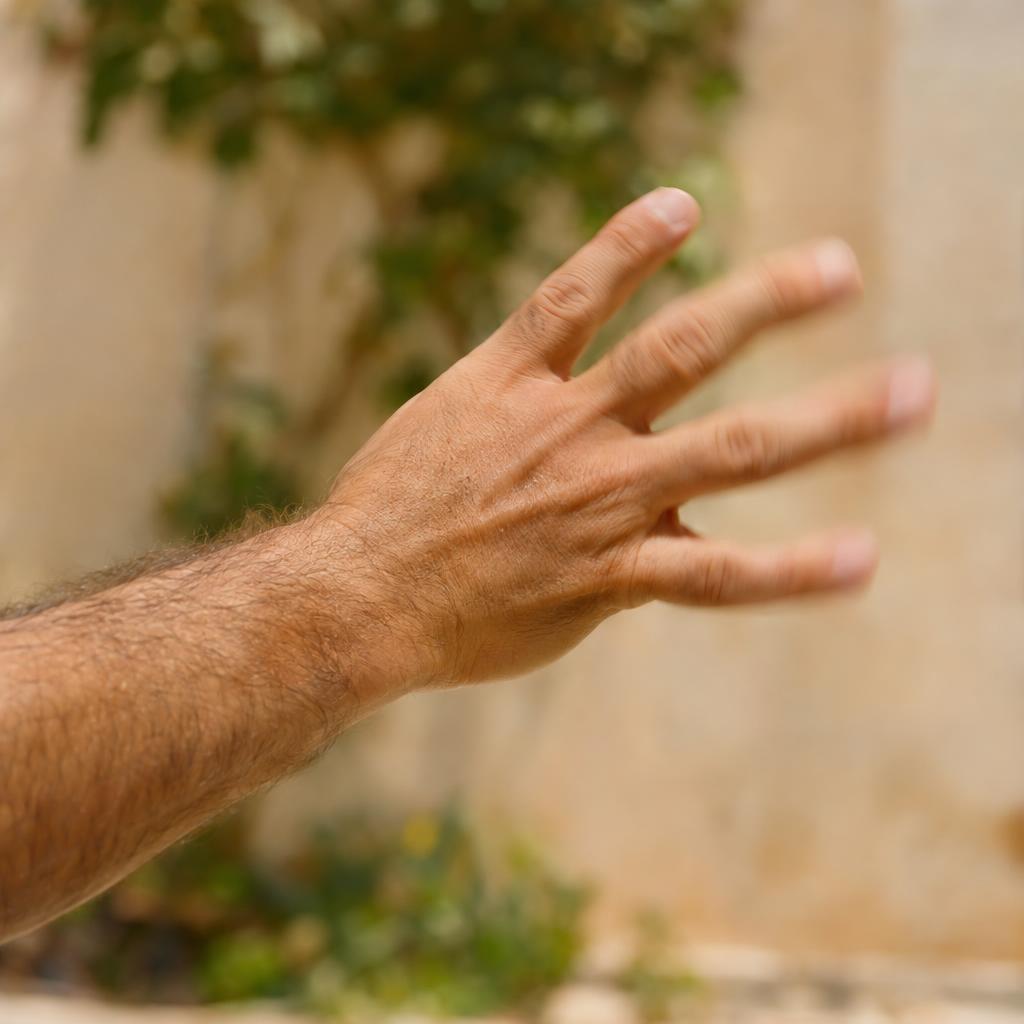
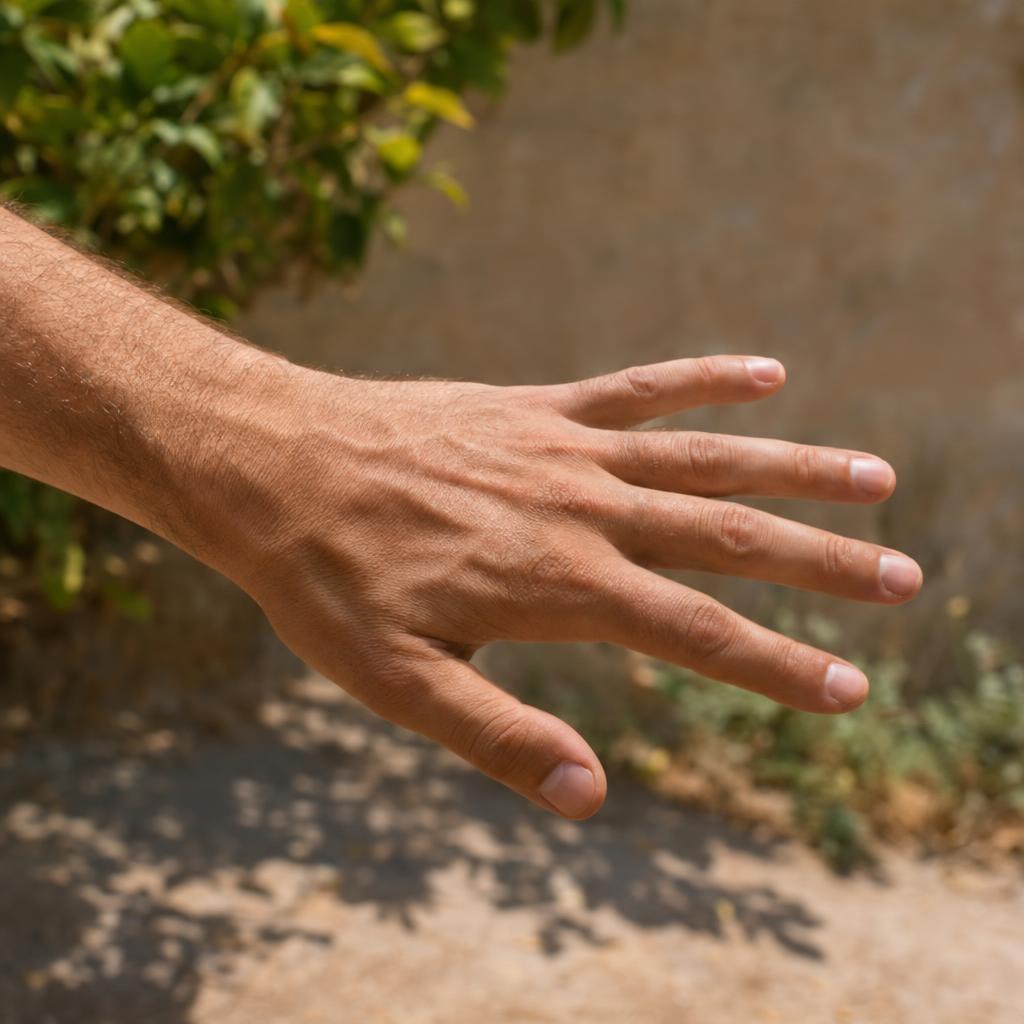
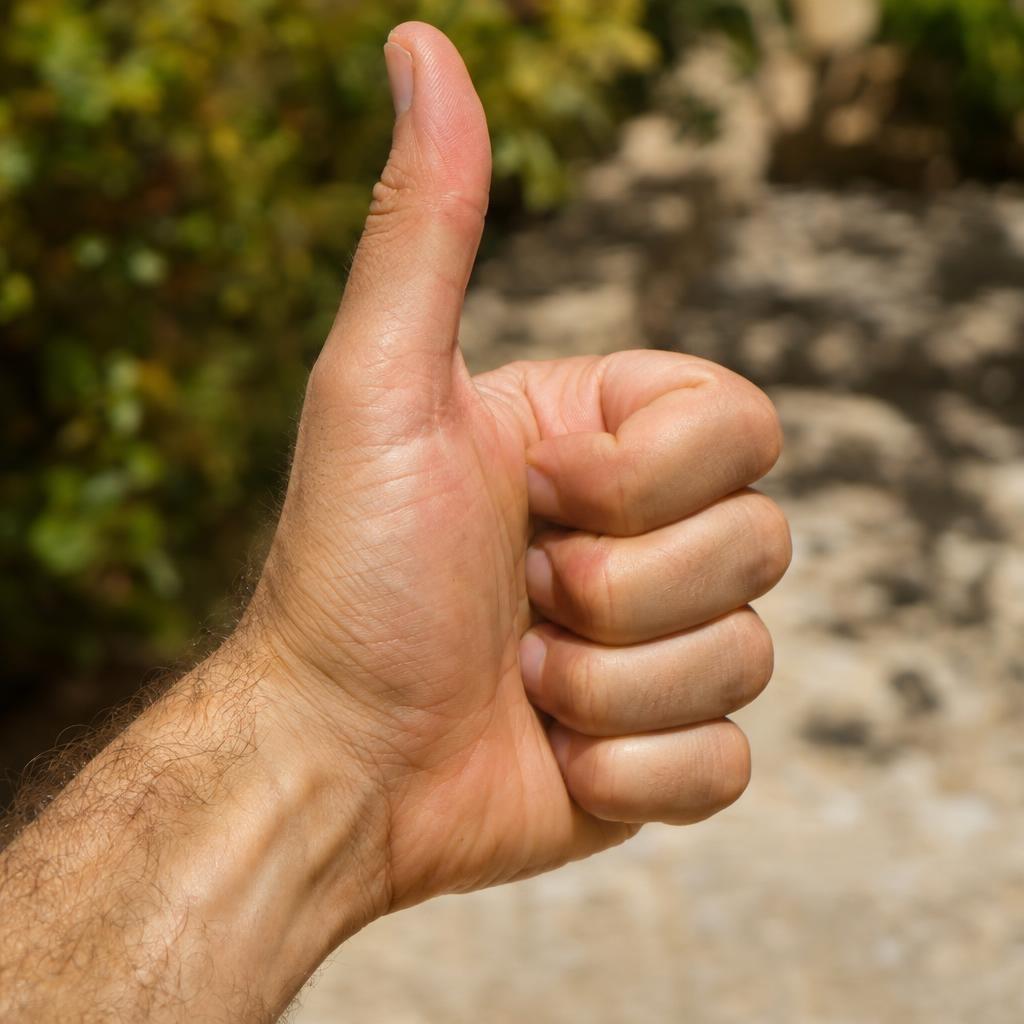
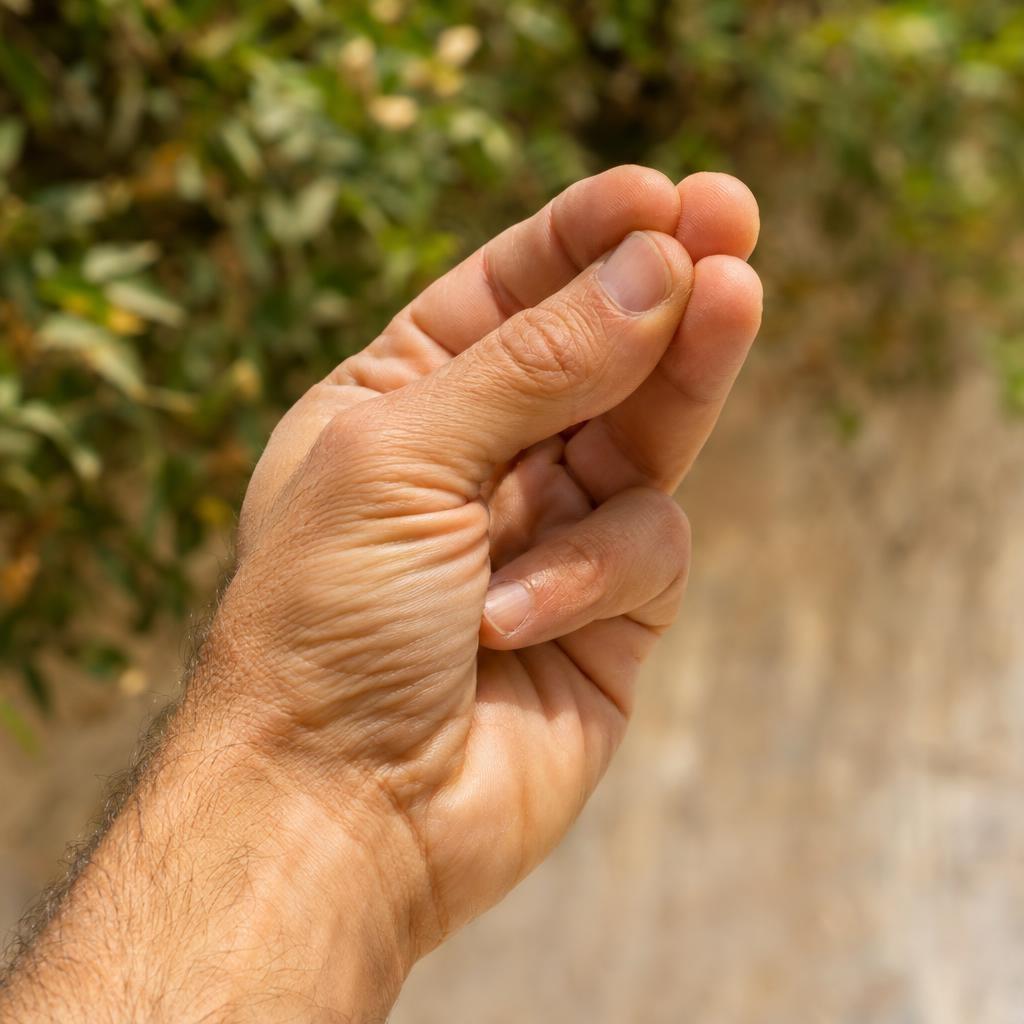
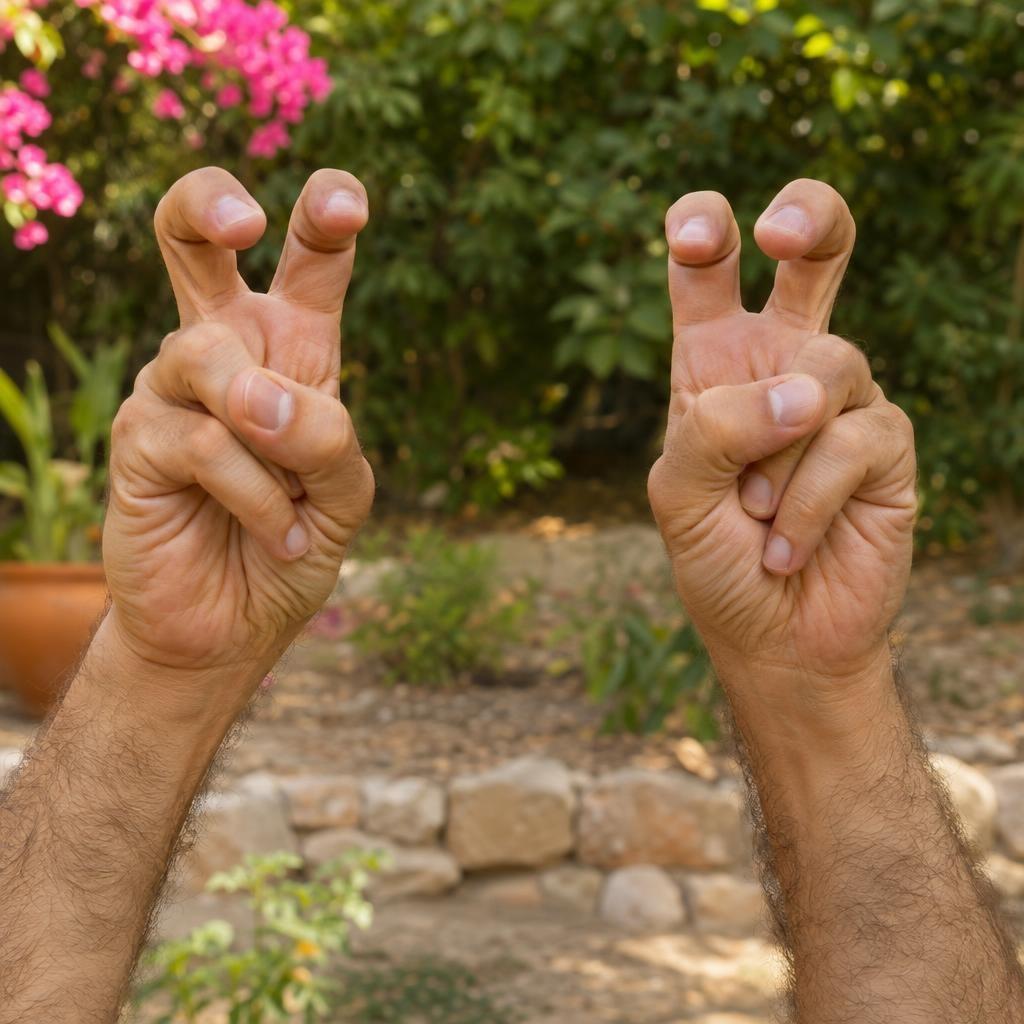
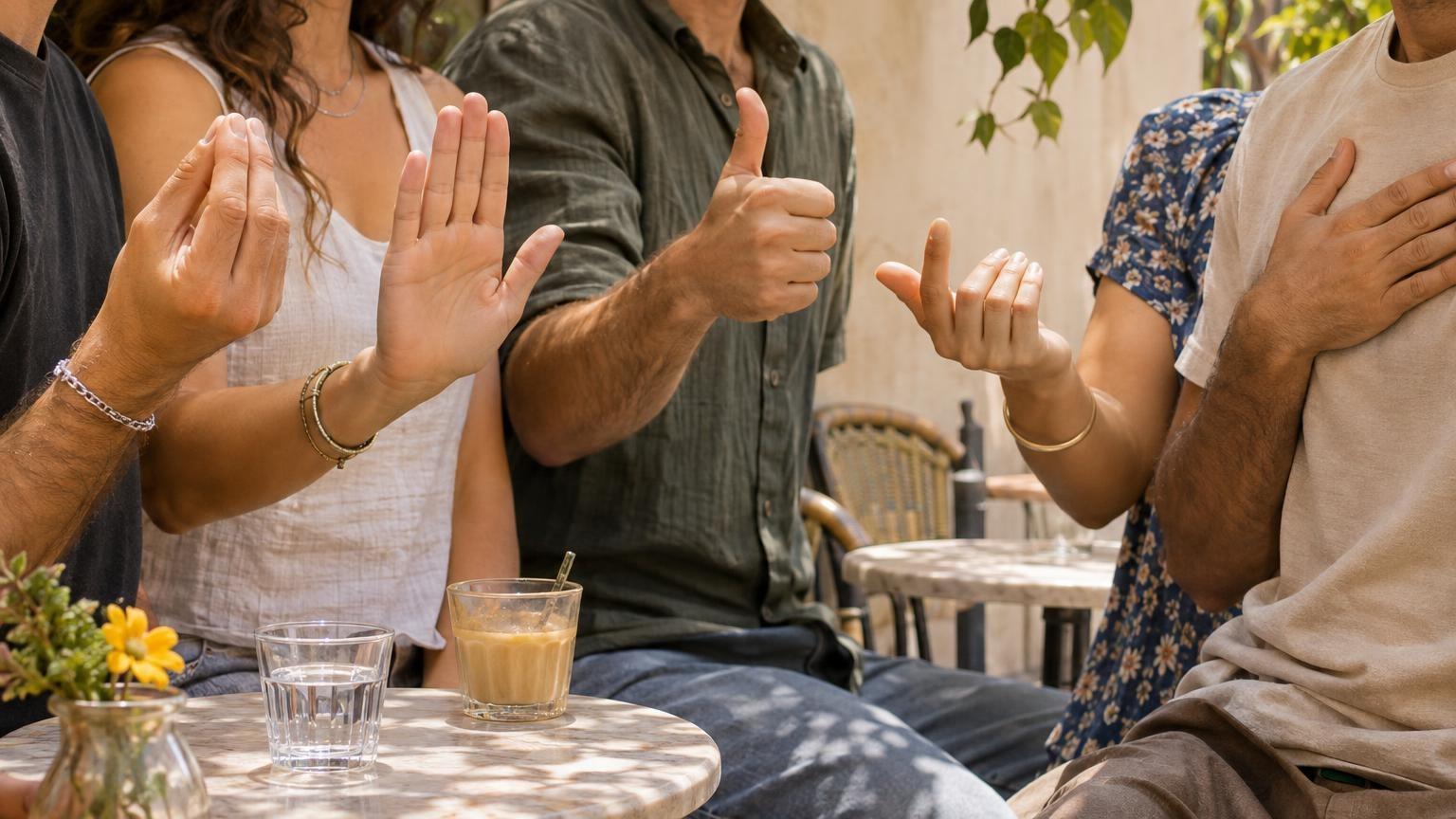
A row of hands showing everyday Israeli gestures

Mix-Ups to Avoid

  1. In Israel the raised, gently bobbing pinched hand means רגע, "wait," not the Italian "what do you want?" An angry face and a thrusting motion can still make any gesture confrontational.
  2. There is no single Israeli "come here." Hebrew speakers in a 1988 study recognized a palm-up beckon, and a palm-down beckon is also documented in the region.
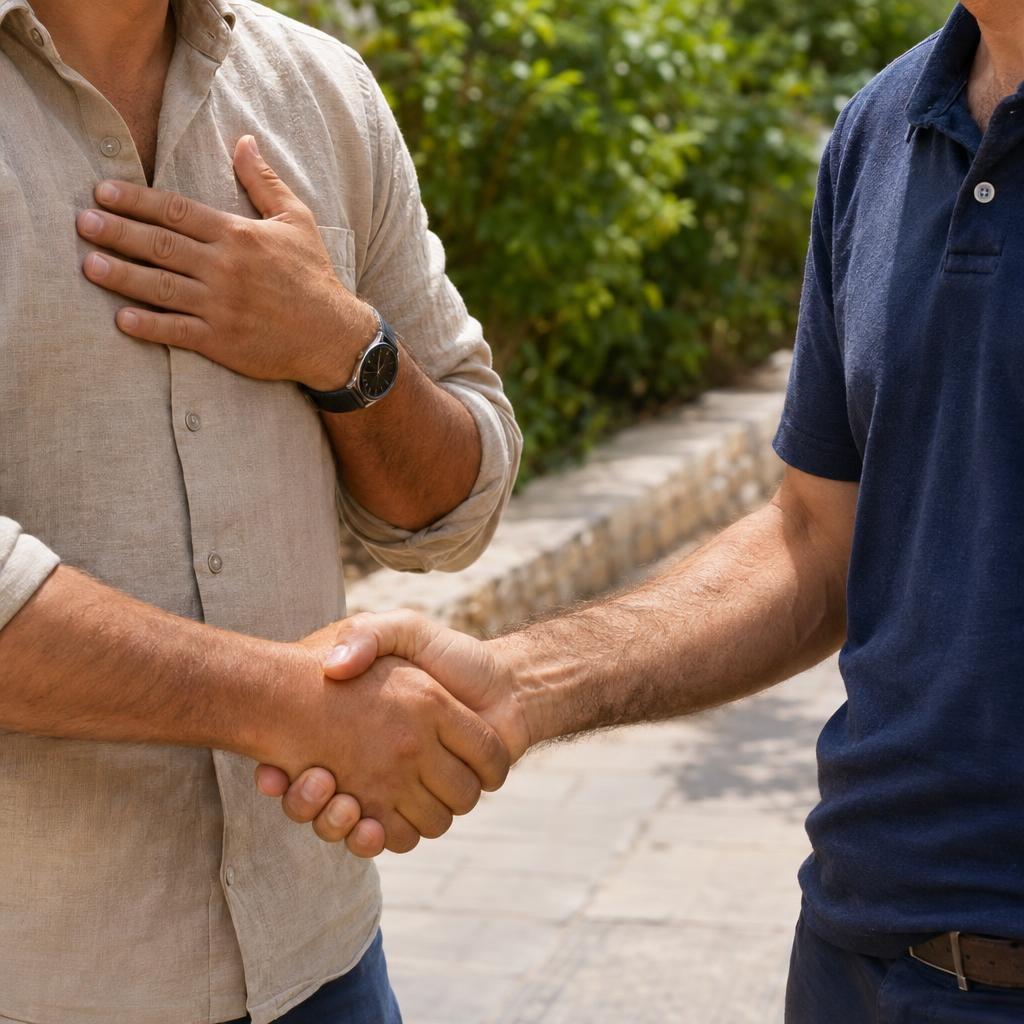
  3. A declined handshake is not hostility. Some observant Jews and Muslims avoid opposite-sex touch, so let the other person offer a hand first.
In This Guide28 entries

Wait, Stop and Move

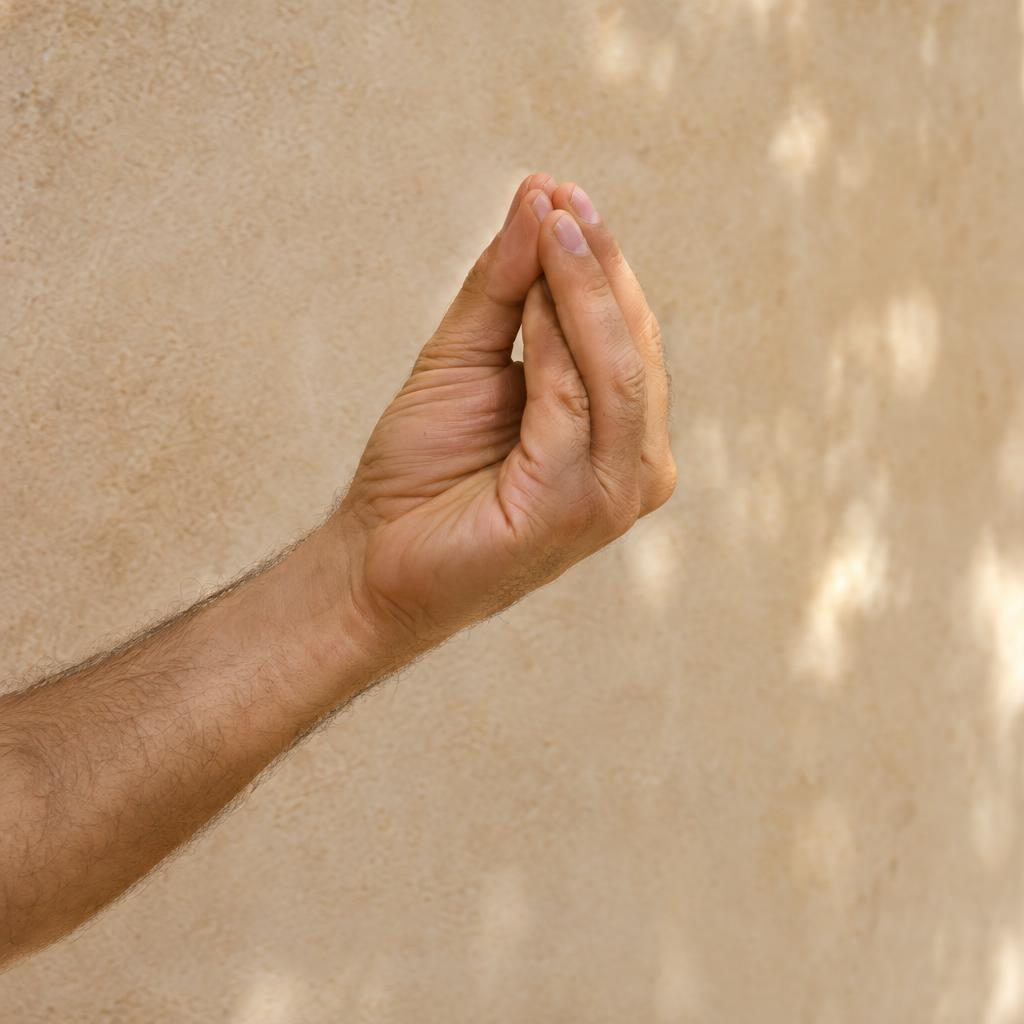
A hand with pinched fingertips raised, the Israeli rega gesture for wait a moment

On the label or sign

רגע
Wait, one moment
רק רגע
Just a moment

רגע / רק רגעRega, wait a moment

rega, rak rega

US English

Wait; hold on; give me a second

UK English

Wait; hang on; just a moment

What it is

The rega gesture gathers the thumb and fingertips into a point, raises the hand, and bobs it gently up and down. Rega asks someone to pause, be patient, or let the speaker finish. In a 1988 study, 95% of viewers read the rega hand as "wait."

The difference

The same pinched hand is best known abroad as the Italian "what do you want?" In Israel the raised, gently bobbing rega hand means "wait," and rega does not promise a literal one-second delay.

Common mistake

Do not read the Israeli rega hand as "what do you want?"; read rega as "one moment," unless the face and a thrusting motion make it angry.
On the label or sign

קצת
A little
טיפה
A drop, a tiny bit

קצת / טיפהKtzat, a little

ktzat, tipa

US English

A little; a tiny bit

UK English

A little; just a bit

What it is

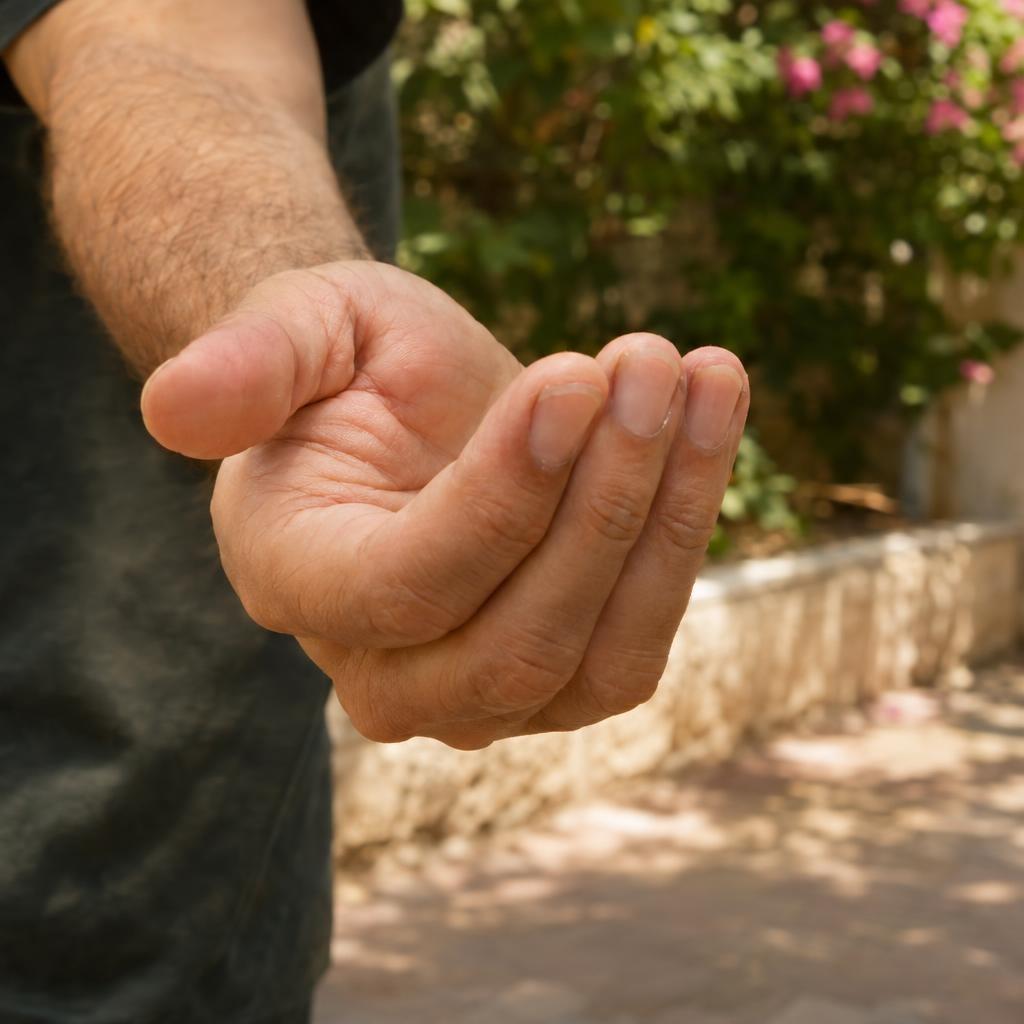
The ktzat gesture brings only the thumb and index finger close together with a small visible gap. The ktzat hand normally stays still and means a small amount or degree.

The difference

Ktzat uses two fingers, while rega gathers all the fingertips. In the 1988 study, two tested "a little" forms were recognized far less reliably than rega.

Common mistake

Do not confuse the two-finger ktzat gap with the all-fingers rega hand.

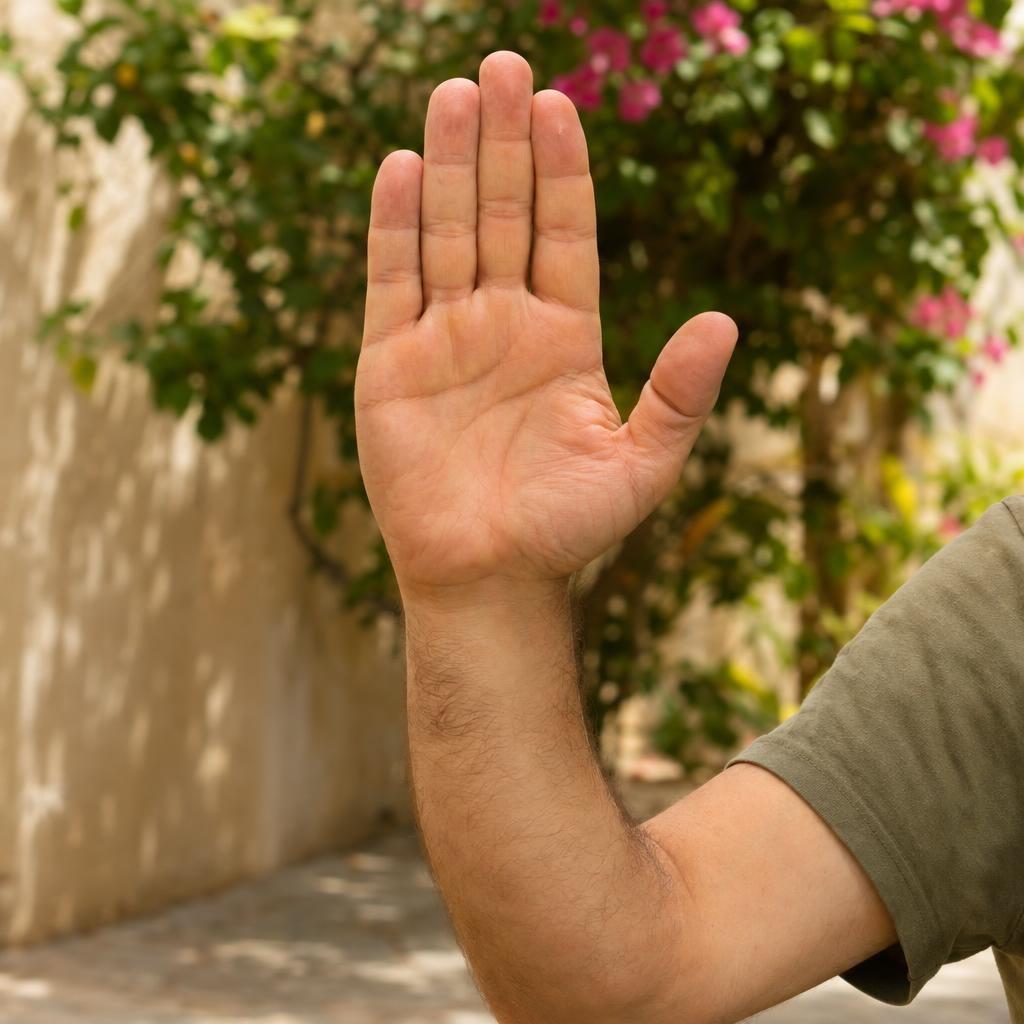
A raised open palm, an Israeli stop gesture

On the label or sign

עצור
Stop
די
Enough

עצור / דיAtsor, stop

atsor, dai

US English

Stop; enough; hold it

UK English

Stop; enough; hang on

What it is

The atsor gesture holds one or both palms toward the other person, usually around chest height, still or pushed slightly forward. Atsor ends or pauses an action.

The difference

The open palm is a broadly international stop shape and can feel firmer than the rega hand. The open palm is not a special Israeli replacement for rega, and only 79% read the atsor palm as "stop" in the 1988 study.

Common mistake

Do not assume every open palm means atsor; a wave, a traffic courtesy, an apology and a stop can share the same palm.

אפשר לעבורEfshar laavor, go ahead

efshar laavor

US English

Go ahead; you can cross

UK English

Go on; you can cross

What it is

In the efshar laavor gesture, a driver lifts an open palm gently toward a pedestrian or another road user, often followed by a sweep in the direction to go. Efshar laavor means the driver is yielding.

The difference

Efshar laavor is a courtesy, not a legal traffic signal. The same open palm can also mean thanks or sorry.

Common mistake

Never rely on the efshar laavor wave alone; confirm the car has actually stopped before you cross.

A beckoning hand, the gesture for come here, bo hena

On the label or sign

בוא הנה
Come here, to a man
בואי הנה
Come here, to a woman

בוא/י הנהBo hena, come here

bo hena, boi hena

US English

Come here

UK English

Come here; come over

What it is

The bo hena gesture curls four fingers repeatedly toward the speaker. In the 1988 study, 92% of Hebrew speakers read a palm-up, four-finger beckon as "come here."

The difference

There is no single Israeli bo hena form. Sources show palm up, hand upright, and the palm-down beckon documented across the region.

Common mistake

Do not insist that bo hena must be palm down; palm up and palm down are both seen.

A hand flicking away, the gesture for go away

On the label or sign

סע
Go, move on

לך / סעLekh, go away

lekh, sa

US English

Go away; get lost; move

UK English

Go away; clear off; move on

What it is

The lekh gesture flicks the hand away from the body, palm usually down or outward, sometimes with a head shake. Lekh ranges from a practical "go" or "move" to a rude "get lost," depending on force and face.

The difference

Lekh moves away from the speaker, while bo hena moves toward the speaker. In the 1988 study, 95% read the lekh flick as "go."

Common mistake

Watch the direction: a flick away is lekh, "go," not bo hena, "come here."

On the label or sign

שלום
Hello or goodbye
להתראות
See you, goodbye

שלום / להתראותShalom, hello or bye wave

shalom, lehitraot

US English

Hello or goodbye wave

UK English

Hello or bye wave

What it is

The shalom wave is a vertical open palm facing outward and waving side to side, often above shoulder height. In the 1988 study, 96% read the shalom wave as a greeting.

The difference

The shalom wave is international, and the spoken word depends on whether someone is arriving or leaving.

Common mistake

Do not confuse a small still raised palm with the shalom wave; a still palm may mean stop or a driver's thanks.

Opinions and Reactions

A flat hand rocking side to side meaning so-so, kaha kaha

On the label or sign

ככה ככה
So-so
לא משהו
Not great

ככה ככה / לא משהוKakha kakha, so-so

kakha kakha, lo mashehu

US English

So-so; meh

UK English

So-so; not great

What it is

The kakha kakha gesture rocks a relaxed open hand around its long axis, palm alternately up and down. Kakha kakha means middling, uncertain, or "not much." In the 1988 study, 97% read the kakha kakha rock as "so-so."

The difference

Kakha kakha is the most reliably understood gesture in that study. A still photo loses the meaning, because the rotation is the sign.

Common mistake

Show the rocking motion when you use kakha kakha; a still flat hand does not say "so-so."

On the label or sign

לא יודע
I don't know
אין מה לעשות
What can you do?

לא יודע/ת / אין מה לעשותLo yodea, palms-up shrug

lo yodea, lo yodaat, ein ma laasot

US English

I don't know; what can you do?

UK English

Dunno; what can you do?

What it is

The lo yodea shrug raises the shoulders or forearms with palms up, and Israeli descriptions also note sharply downturned lip corners. The lo yodea shrug shows uncertainty, helplessness, obviousness, or resignation.

The difference

The lo yodea shrug does not always mean indifference, and אין מה לעשות is only one possible caption. In the 1988 study, 89% read the shrug as "I don't know."

Common mistake

Do not force one Hebrew sentence onto the lo yodea shrug; listen to what is said with it.

On the label or sign

מה קרה?
What happened?
מה נסגר?
What's going on?

מה קרה? / מה נסגר?Ma kara, what happened?

ma kara?, ma nisgar?

US English

What happened?; what's going on?

UK English

What happened?; what's all this?

What it is

In the ma kara gesture, a slightly cupped hand, usually palm up, makes a small rotation in the air. Ma kara asks for an explanation, often with surprise or impatience.

The difference

A similar palm-up rotation can mean kakha kakha when it rocks repeatedly. The words and face tell the two apart.

Common mistake

Do not mistake the ma kara twist for "so-so"; ma kara is a question.

A thumbs-up, kol hakavod

On the label or sign

כל הכבוד
Well done

כל הכבוד / טובKol hakavod, thumbs up

kol hakavod, tov

US English

Thumbs-up; good job

UK English

Thumbs-up; well done

What it is

The kol hakavod thumbs-up raises one or two thumbs from a fist, commonly with a smile. Kol hakavod shows approval, encouragement, or success.

The difference

The thumbs-up is international, and the kol hakavod reading is positive in Israel. The thumbs-up can be vulgar in some other countries.

Common mistake

Pair the kol hakavod thumbs-up with a smile; the face makes the praise clear.

On the label or sign

מצוין
Excellent
עשר
A ten, perfect

נהדר / מצוין / עשר / אוקייNehedar, OK circle

nehedar, metzuyan, eser, okay

US English

OK; excellent; perfect

UK English

OK; brilliant; spot on

What it is

The nehedar gesture makes a circle with the thumb and index finger and extends the other three fingers. Nehedar means positive approval, and עשר, "ten," is praise, not a count.

The difference

עשר is a colloquial caption, not a fixed name for the nehedar circle. In the 1988 study, the circle without a smile was not read as "zero"; most read it as excellent.

Common mistake

Smile when you make the nehedar circle; face and orientation matter, and the same sign means different things in other countries.

On the label or sign

אתה עובד עליי?
Are you kidding me?
עבודה בעיניים
A trick, an illusion

אתה עובד עליי? / עבודה בעינייםAvoda baeinayim, I don't buy it

ata oved alai?, avoda baeinayim

US English

As if; you're kidding; I don't buy it

UK English

As if; pull the other one; I don't believe you

What it is

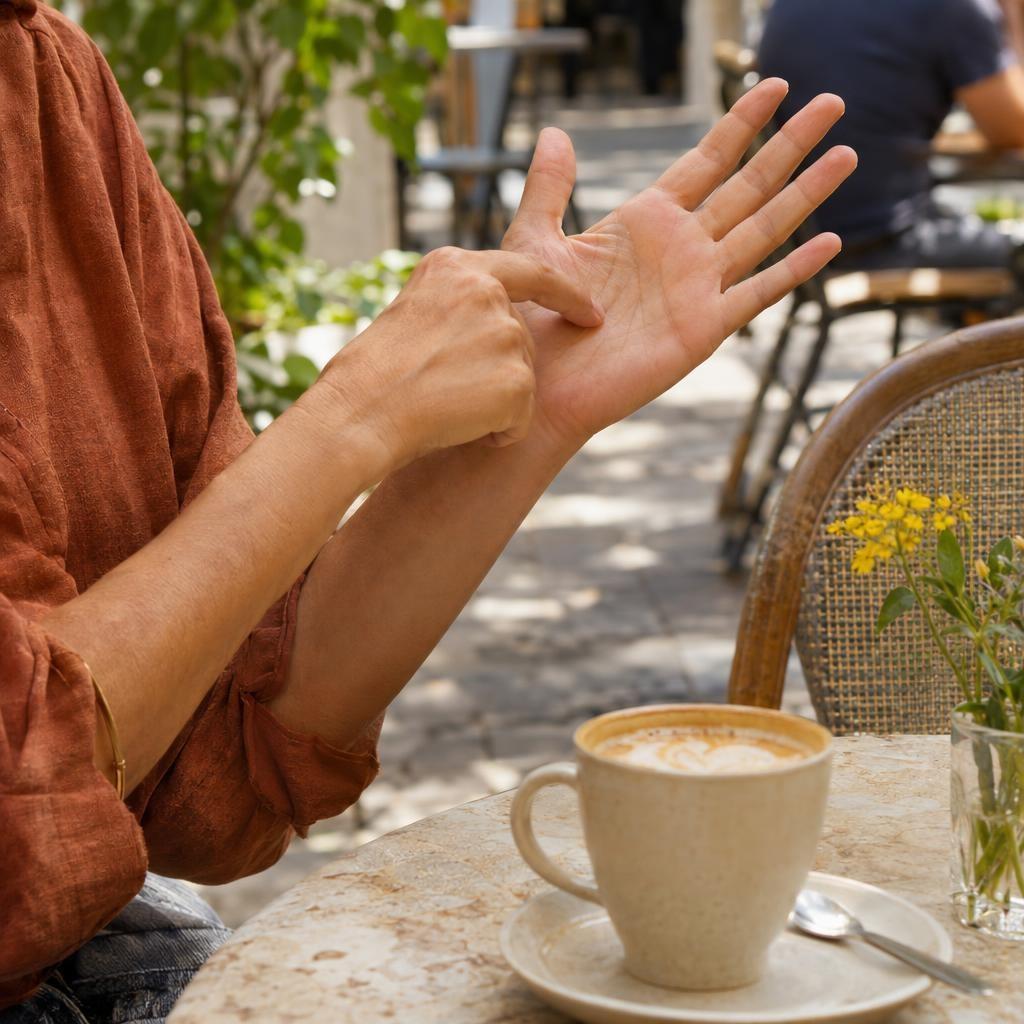
In the avoda baeinayim gesture, an index finger presses or lightly pulls the skin just below one eye. Avoda baeinayim shows skepticism or an accusation that something is a trick.

The difference

Avoda baeinayim has nothing to do with eyesight. The exact touch, a press or a pull, and how often people use avoda baeinayim vary by community.

Common mistake

Do not read the finger under the eye as "look" or an eye problem; avoda baeinayim means "you're kidding me."

On the label or sign

משוגע
Crazy

קוקו / משוגעKuku, crazy

kuku, meshuga

US English

Crazy; nuts

UK English

Mad; bonkers

What it is

In the kuku gesture, an index finger, or all five fingers, circles near the temple. Kuku calls an idea or person foolish or crazy and is often mocking.

The difference

Tapping the temple can mean "smart" elsewhere, so the kuku rotation and the face matter.

Common mistake

Avoid the kuku gesture with people you do not know well; kuku can be insulting.

A hand rubbing thumb against fingers, the gesture for money

On the label or sign

כמה?
How much?

כסף / כמה?Kesef, money

kesef, kama?

US English

Money; how much?; pay me

UK English

Money; how much?; payment

What it is

In the kesef gesture, the thumb repeatedly rubs the tips of the index and middle fingers. Kesef refers to money, price, cost, or payment.

The difference

The kesef rub is international, not uniquely Israeli. Kesef does not mean a bribe.

Common mistake

Do not read the kesef rub as a hint about a bribe; kesef usually asks "how much?"

Conversation Gestures

On the label or sign

רק רגע
Just a moment
תקשיב
Listen

רגע / נקודה חשובה / תקשיבRaised index finger

rega, nekuda khashuva, takshiv

US English

One point; listen; wait

UK English

One point; listen; hang on

What it is

A raised index finger, held or lightly wagged, often comes with אבל, דרך אגב or רגע. Hebrew conversation studies link the raised index to new or contrasting information, a change of topic, a punchline, or pausing the talk.

The difference

A raised index finger is not simply "I know best." With רק רגע, the raised index can put a conversation on hold.

Common mistake

Do not read every raised index finger as lecturing; check where the raised index falls in the sentence.

On the label or sign

זה!
That's it!

אתה / את; זה!Pointing at someone

ata, at; ze!

US English

You; that's it; you got it

UK English

You; that's it; that's the one

What it is

Pointing an index finger at the person you are talking to can select "you," praise or mock what they just did, draw attention, disagree, claim knowledge, or ask for a response.

The difference

Pointing at someone is not a fixed "good job" sign. A 2025 study of natural Hebrew conversation found several jobs for this kind of pointing.

Common mistake

Do not treat pointing at someone as praise unless a smile or words like כל הכבוד make that clear.

Two hands making air quotes

On the label or sign

בכאילו
So-called, as if

מירכאות באוויר / בכאילוMerkhaot baavir, air quotes

merkhaot baavir, bekhailu

US English

Air quotes; so-called

UK English

Air quotes; so-called

What it is

For merkhaot baavir, both hands rise and the index and middle fingers flex once or twice. Merkhaot baavir attributes words to someone else, distances the speaker from them, or marks irony.

The difference

Research on Israeli Hebrew found variation in merkhaot baavir: one or two hands, the number of flexes, and how long the gesture lasts.

Common mistake

Do not expect two identical bunny ears; a one-handed flick can be merkhaot baavir too.

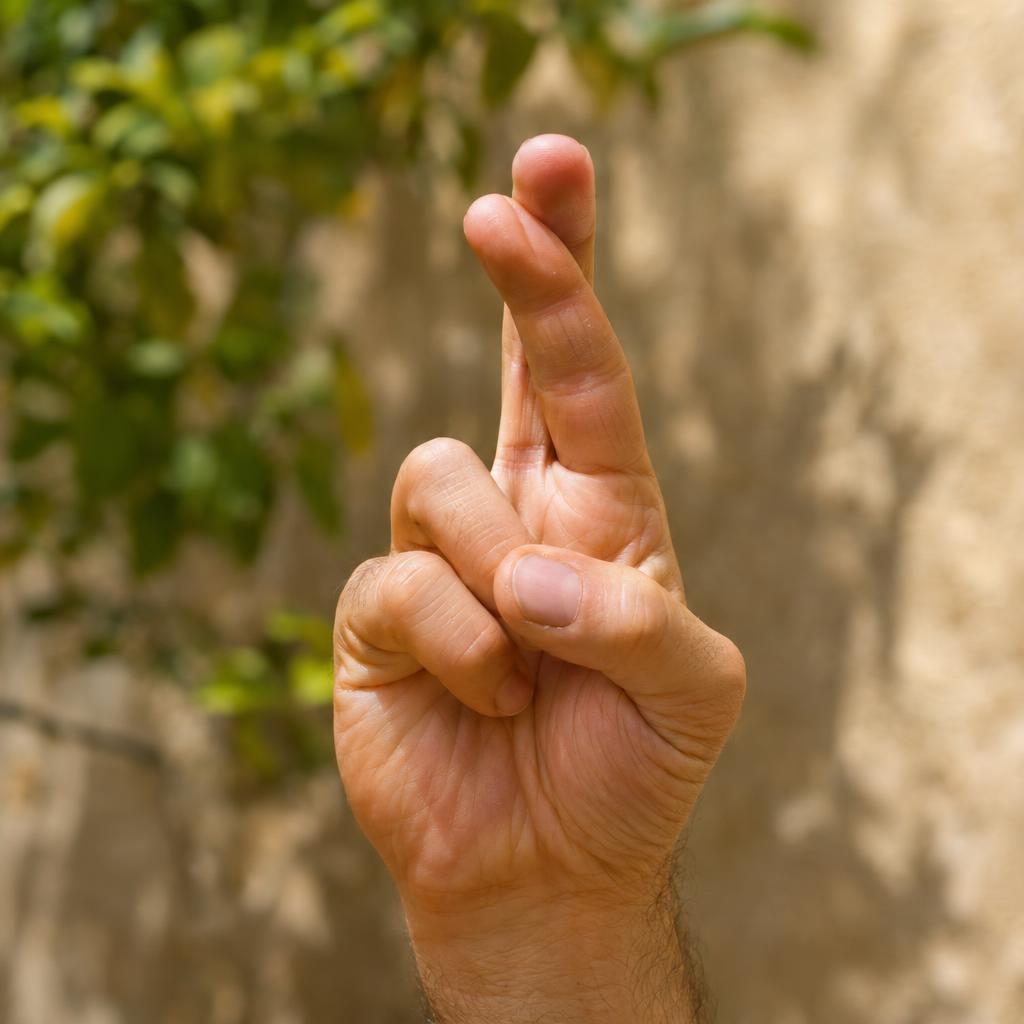
Crossed fingers, a good-luck gesture

On the label or sign

מחזיק אצבעות
Fingers crossed, said by a man
מחזיקה אצבעות
Fingers crossed, said by a woman

מחזיק/ה אצבעותMakhzik etzbaot, fingers crossed

makhzik etzbaot, makhzika etzbaot

US English

Fingers crossed; good luck

UK English

Fingers crossed; good luck

What it is

For makhzik etzbaot, the index and middle fingers cross. Makhzik etzbaot expresses hope, support, or a wish for success.

The difference

The Hebrew idiom makhzik etzbaot says "holding fingers," but the hand crosses the fingers as in English.

Common mistake

Say makhzik etzbaot, "I'm holding fingers," when you cross your fingers for someone in Hebrew.

Courtesy and Public Space

On the label or sign

תודה
Thank you
בבקשה
Please

תודה / כבוד / בבקשהToda, pressed palms

toda, kavod, bevakasha

US English

Thanks; respect; please

UK English

Thanks; respect; please

What it is

For the toda gesture, the palms press flat together, often at chest height with a small forward lean. The toda palms show thanks, respect, admiration, or pleading, depending on height and posture.

The difference

The toda palms are shared internationally and are not uniquely Israeli. Hands held higher can look prayerful or pleading.

Common mistake

Do not assume the toda palms are a religious act; read the face and the conversation.

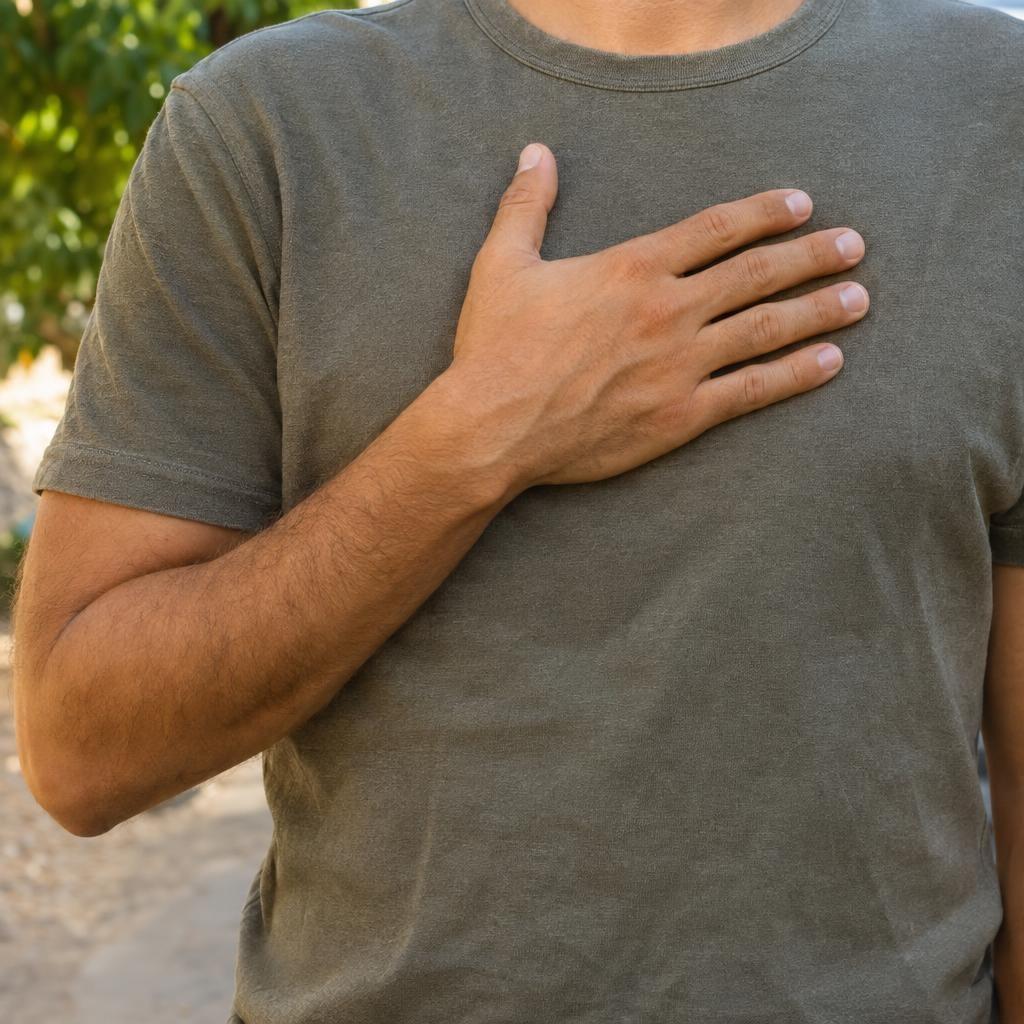
A hand on the heart, al halev, a gesture of thanks

On the label or sign

על הלב
From the heart

על הלב / תודהAl halev, hand on heart

al halev, toda

US English

From the heart; thank you

UK English

Heartfelt; thank you

What it is

For al halev, the right palm rests flat on your own chest, sometimes with a slight nod. Al halev shows sincerity, respect, gratitude, or a polite "no thank you."

The difference

Al halev is a shared Middle Eastern courtesy, documented in Arab cultural guidance and on an Israeli learner page, rather than a uniquely Israeli sign.

Common mistake

Do not confuse the resting al halev palm with the repeated fist tapping of the vidui confession.

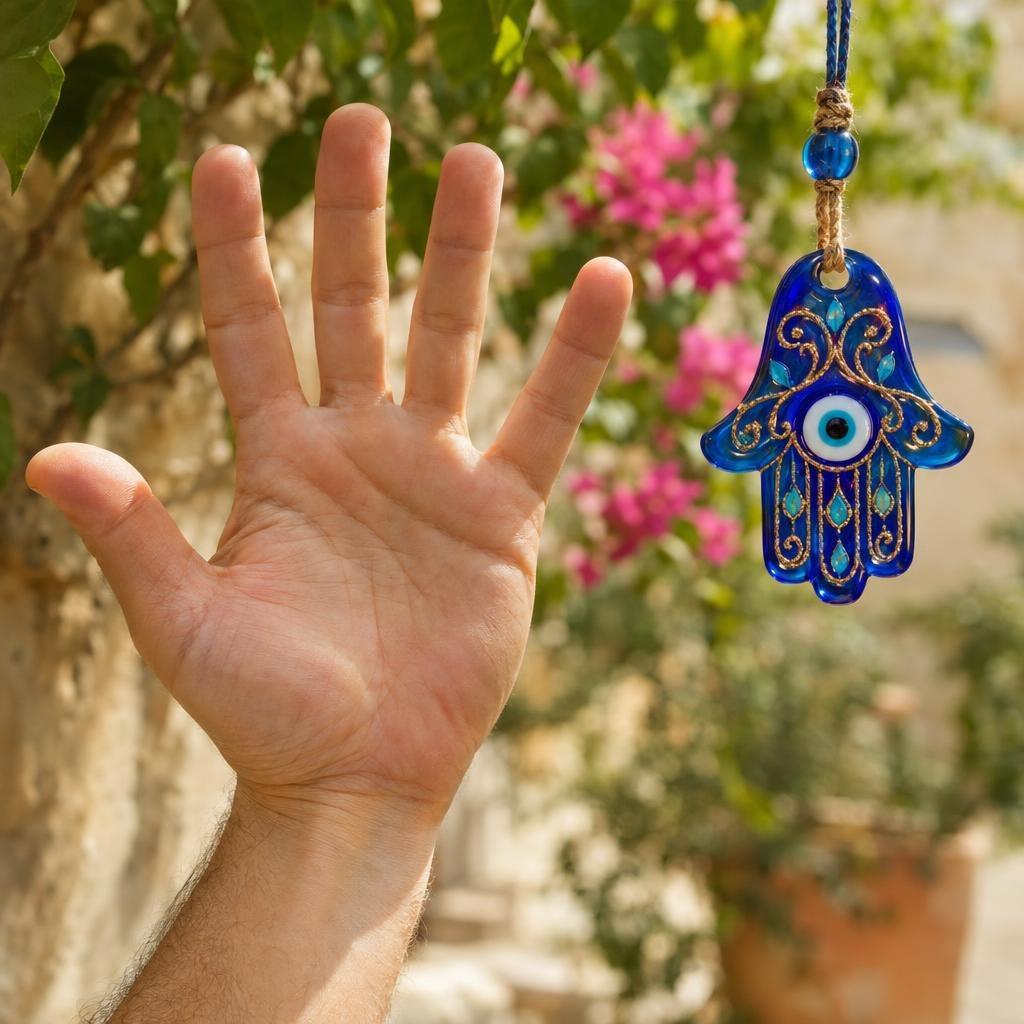
A spread hand beside a hamsa charm, khamsa

On the label or sign

חמסה חמסה
Good luck, ward off harm
בהצלחה
Good luck

חמסה חמסה / מזל טוב / בהצלחהKhamsa khamsa, good luck

khamsa khamsa, mazal tov, behatzlakha

US English

Good luck; congratulations; knock on wood

UK English

Good luck; congratulations; touch wood

What it is

For khamsa khamsa, an open palm moves gently toward another person's chest, sometimes repeatedly, without touching. Two Israeli sources describe khamsa khamsa as good luck or congratulations, linked to the hamsa.

The difference

The Israeli dictionary itself warns that the khamsa khamsa push toward someone's chest can look violent.

Common mistake

Use the khamsa khamsa gesture only when the friendly context is clear, and say בהצלחה with it.

On the label or sign

סליחה
Sorry

סליחה / תודה (בכביש)Slikha, driver's wave

slikha, toda (bakvish)

US English

Sorry or thanks wave

UK English

Sorry or thanks wave

What it is

For slikha on the road, a driver raises an open hand inside the car or briefly out the window, sometimes with a small wave. Slikha acknowledges a mistake, thanks another driver, or apologizes without stopping.

The difference

The same raised hand can mean "you may cross," "thanks," or slikha, "sorry."

Common mistake

Read slikha from who has right of way and the timing, not from the hand alone.

On the label or sign

מלצר
Waiter
מלצרית
Waitress

מלצר/ית!Meltzar, calling the server

meltzar, meltzarit

US English

Waiter, please; server, please

UK English

Waiter, please

What it is

To call a meltzar or meltzarit, raise a hand above shoulder level and hold it up or wave lightly.

The difference

A big meltzar wave may read as impatient, and some restaurants use table call buttons instead.

Common mistake

Keep the meltzar wave small and check the table for a call button.

A hand miming signing for the check at a cafe table

On the label or sign

אפשר חשבון?
Can I have the bill?

אפשר חשבון?Efshar kheshbon, check please

efshar kheshbon?

US English

Check, please

UK English

Bill, please

What it is

For efshar kheshbon, raise a hand and mime writing or signing in the air with the thumb and fingertips. Efshar kheshbon asks for the restaurant bill.

The difference

The writing mime is an international restaurant gesture. The spoken word is חשבון, like UK "bill," where US English says "check."

Common mistake

Pair the writing mime with efshar kheshbon so the server knows you want the bill.

Religious and Touch Customs

A handshake and a hand-on-chest greeting

On the label or sign

שומר נגיעה
Avoids opposite-sex touch, a man
שומרת נגיעה
Avoids opposite-sex touch, a woman

שומר/ת נגיעהShomer negia, no handshake

shomer negia, shomeret negia

US English

No opposite-sex handshake for religious reasons

UK English

No opposite-sex handshake for religious reasons

What it is

Shomer negia describes observant Jews who avoid physical contact with unrelated people of the opposite sex. A shomer negia person may keep hands together, nod, bow slightly, or explain instead of shaking hands.

The difference

Rabbinic views on a formal handshake differ, and shomer negia practice varies within Orthodox communities. Some Muslims also avoid opposite-sex handshakes.

Common mistake

Do not take a declined handshake from a shomer negia person as hostility; let the other person offer a hand first.

Hands raised in the priestly blessing shape, birkat kohanim

On the label or sign

נשיאת כפיים
Raising of the hands, the blessing

ברכת כהנים / נשיאת כפייםBirkat kohanim blessing

birkat kohanim, nesiat kapayim

US English

Priestly blessing; the "Vulcan" hand shape

UK English

Priestly blessing; the "Vulcan" hand shape

What it is

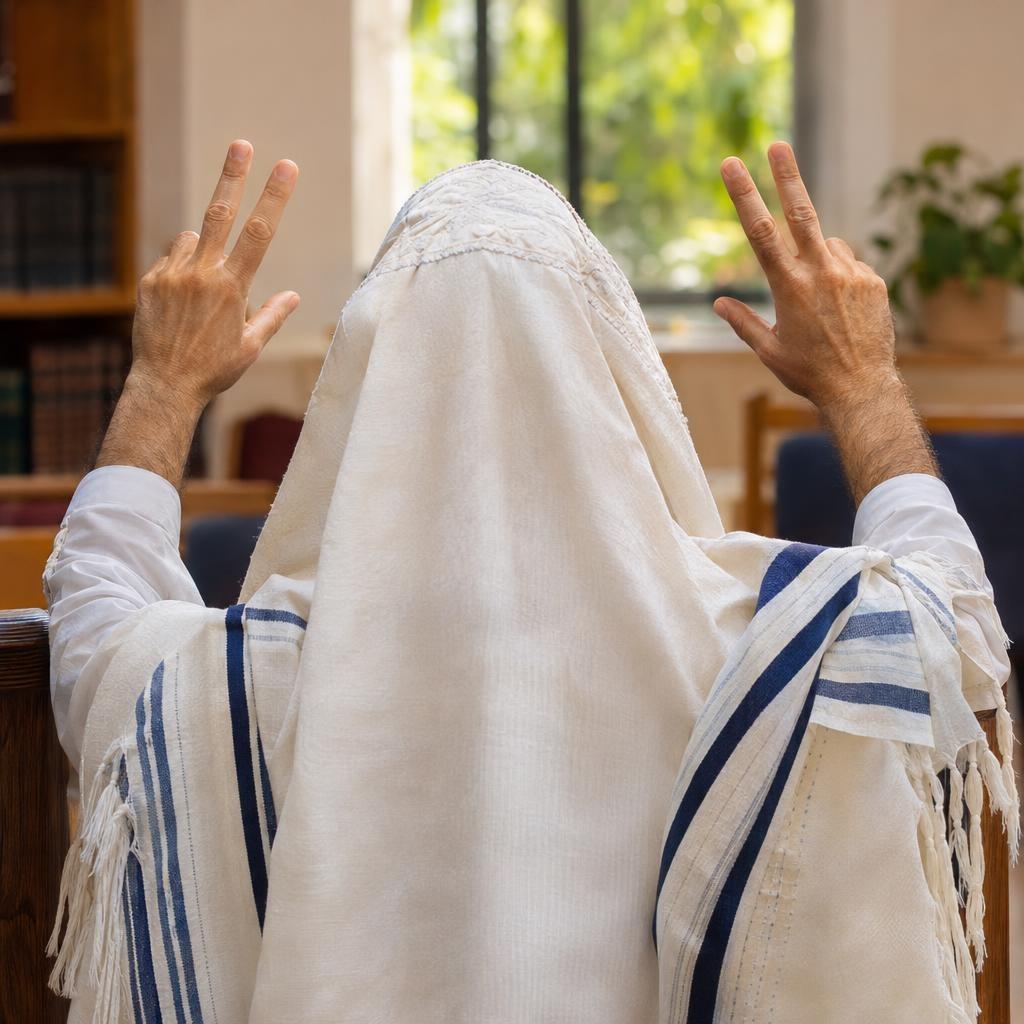
Birkat kohanim is a synagogue blessing performed by kohanim, with both hands at shoulder height under a tallit and the fingers divided to create spaces.

The difference

Birkat kohanim is a ritual, not an everyday greeting. Some Israeli communities perform birkat kohanim daily, others on Shabbat and holidays.

Common mistake

Do not flash the birkat kohanim hand casually as an Israeli greeting; birkat kohanim belongs in the synagogue.

הכאה על החזה בווידויChest tapping in confession

haka al hakhaze bavidui

US English

Breast-beating during confession

UK English

Striking the chest during confession

What it is

During the vidui confession, especially on the High Holidays, a closed right fist gently taps the left side of the chest at set words. The tapping is symbolic penitence, not painful self-punishment.

The difference

Haka al hakhaze is repeated liturgical tapping with a fist, while al halev is a resting open palm.

Common mistake

Do not confuse haka al hakhaze, a prayer ritual, with the al halev thanks gesture.

You Mean This. Here Is the Israeli Gesture and the Words to Say with It.

You mean this. Here is the Israeli gesture and the words to say with it.
You meanIsraeli gesture and wordsKeep in mind
Wait a momentרגעregaPinched fingertips raised, gentle bob.
StopעצורatsorOpen palm toward the other person.
So-soככה ככהkakha kakhaRelaxed hand rocks, palm up then palm down.
Come hereבוא הנהbo henaFingers curl in; palm up or down.
Go awayסעsaHand flicks away from the body.
I don't knowלא יודעlo yodeaPalms-up shrug.
How much?כמה?kama?Thumb rubs fingertips.
Are you kidding me?אתה עובד עליי?ata oved alai?Finger just below the eye.
Fingers crossedמחזיק אצבעותmakhzik etzbaotCrossed fingers, "holding fingers."
Check, pleaseאפשר חשבון?efshar kheshbon?Mime writing in the air.

Knowing the word is half of it. Say it out loud.

A Hebrew speaking app with Maya and David, AI tutors who hold conversations, explain corrections and help you practise what you need to say. Private beta on iPhone and Android. Public store launch is still ahead. Free Classic lessons to start, no card needed.

Explore baba Learn

How we checked this guide

By the baba team. Checked on against 41 sources, mostly Israeli retailers, manufacturers and government pages, and updated . Products, labels and rules change, so check the pack or the office before you rely on a detail. Our methodology.

Frequently Asked Questions

What does the pinched fingers gesture mean in Israel?

In Israel, raised pinched fingertips with a gentle up and down bob mean רגע (rega), "wait" or "one moment." In a 1988 study, 95% of viewers read the rega hand as "wait."

Does the 🤌 emoji mean wait in Hebrew?

Unicode added 🤌, PINCHED FINGERS, in 2020. Israelis use 🤌 for "wait," while Italians use the same shape for disagreement or questioning, and a still emoji lacks the motion and face that settle the meaning.

How do Israelis say come here with their hands?

Israelis curl four fingers toward themselves for בוא הנה, "come here." A palm-up beckon was recognized by 92% of Hebrew speakers in a 1988 study, and a palm-down beckon is also documented in the region.

Are Israeli hand gestures the same as Israeli Sign Language?

No. Israeli Sign Language is a natural language of Israel's Deaf community with its own vocabulary and grammar, and the Knesset gave Israeli Sign Language state recognition in June 2026. Everyday gestures like rega are conversational gestures, not signs.

Why won't some Israelis shake my hand?

Some observant Jews, described as שומר נגיעה, avoid touching unrelated people of the opposite sex, and some Muslims do too. A declined handshake is not hostility, so let the other person offer a hand first.

More Hebrew-English Guides

All guides