
baba
Free, no AIHebrew-English guide 87 of 100

Hebrew Color Names, in Plain English

What tkhelet, bordo, bezh and other Hebrew colors are in English.

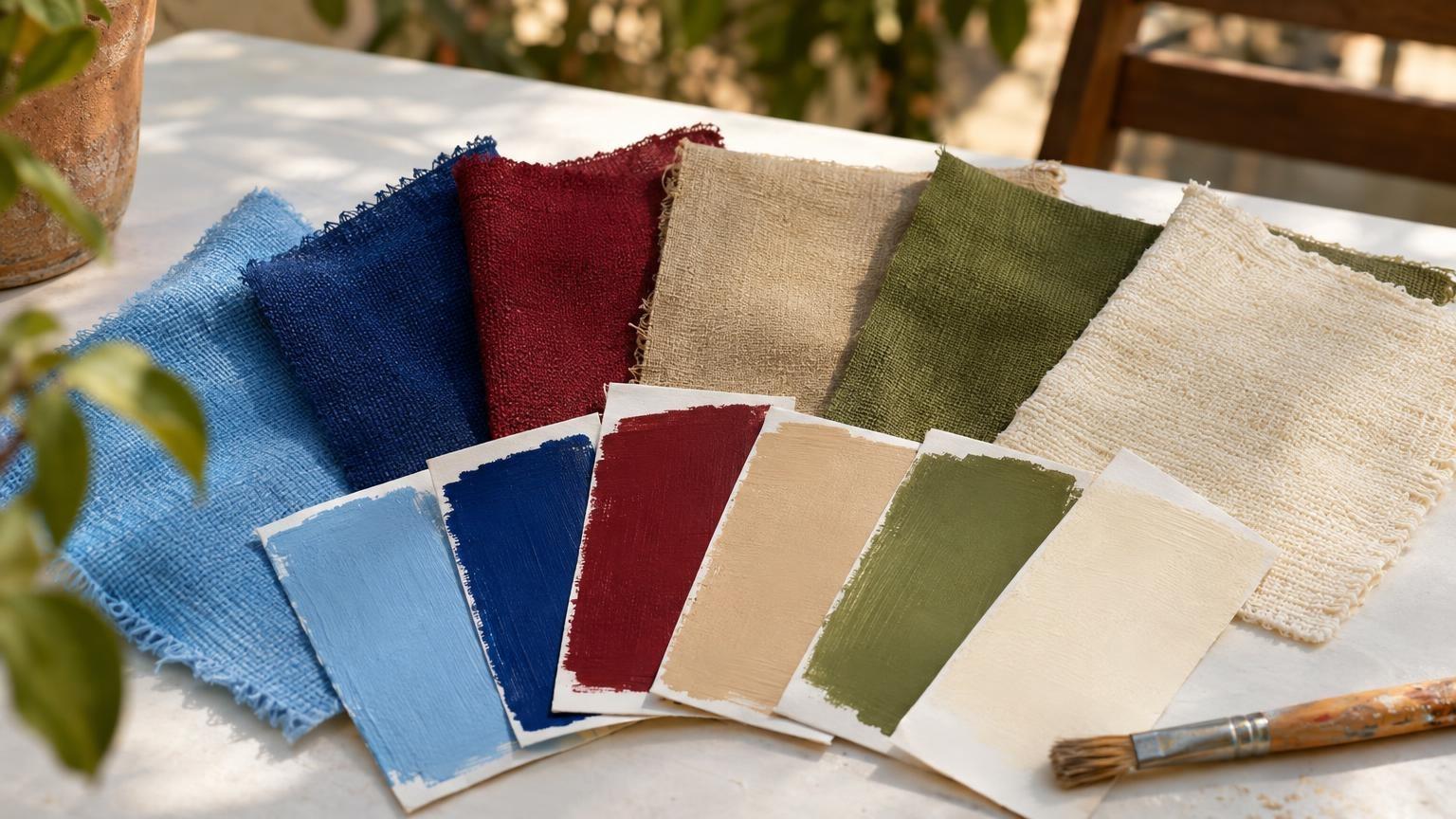
A fan of color swatches in blue, burgundy and beige

Mix-Ups to Avoid

  1. Do not ask for כחול when the listed option is תכלת. Israeli stores treat תכלת, light blue, as its own color, so כחול can get you the wrong swatch.
  2. A gold color is not gold metal. Check the materials line, because זהב in a color field can mean a metal-coated frame.
  3. Do not translate a color field literally: חציל is eggplant purple, חרדל is mustard yellow, and פטרול is a blue-green, not gasoline.
In This Guide29 entries

Tkhelet, Bordo and Bezh

On the label or sign

צבע: תכלת
Color: light blue
כחול שמים
Sky blue, a separate option

תכלתTkhelet, light blue

tkhelet

US English

Light blue; sky blue; baby blue

UK English

Light blue; sky blue; baby blue

What it is

תכלת (tkhelet) is a normal modern Hebrew word for pale or light blue, separate from כחול, blue. Israeli clothing listings show צבע: תכלת, and Bank of Israel has used tkhelet as a standalone color description.

The difference

Tkhelet has no single universal shade, and stores may list tkhelet, טורקיז and כחול שמים separately. Modern tkhelet is also not an exact match for the biblical or ritual dye of the same name.

Common mistake

Do not translate tkhelet automatically as turquoise; compare the actual tkhelet swatch with any listed turquoise.

On the label or sign

צבע: בורדו
Color: burgundy

בורדוBordo, burgundy

bordo

US English

Burgundy; wine red

UK English

Burgundy; wine red; claret in technical use

What it is

בורדו (bordo) is a dark reddish purple, wine red color. The Academy of the Hebrew Language maps the full term to Bordeaux red and claret, and stores use the short label בורדו.

The difference

Bordo is a separate option from ordinary אדום, red. "Burgundy" is the best US and UK shopping translation, while "claret" is a narrower technical alternative.

Common mistake

Do not translate bordo in a color field as the city of Bordeaux; bordo means burgundy.

On the label or sign

בז׳
Beige
בז'
Beige, keyboard spelling

בז׳Bezh, beige

bezh

US English

Beige

UK English

Beige

What it is

בז׳ (bezh) is beige, a pale brown or pale creamy brown, and a normal Israeli store label. The geresh in ז׳ marks the zh sound at the end of French and English "beige."

The difference

Bezh is not the same as שמנת (cream), קרם, שנהב (ivory) or אוף־ווייט (off-white), which sellers may list separately. Stores write bezh both as בז׳ and as בז' with a keyboard apostrophe.

Common mistake

When you search online for bezh, try both בז׳ and בז'.

Core Colors

On the label or sign

צבע לבן
Color: white

לבןLavan, white

lavan

US English

White

UK English

White

What it is

לבן (lavan) is the core Hebrew adjective for white.

The difference

Stores may separate pure lavan from warmer שמנת, שנהב or אוף־ווייט. Lavan agrees with the noun: חולצה לבנה, חולצות לבנות.

Common mistake

Do not call every near-white lavan, and change lavan to match the noun.

שחורShakhor, black

shakhor

US English

Black

UK English

Black

What it is

שחור (shakhor) is the core Hebrew adjective for black and a normal label in clothing and homeware.

The difference

Stores distinguish shakhor from פחם and אנטרציט, which are dark grays.

Common mistake

Do not read a very dark navy, charcoal or anthracite swatch as shakhor without checking the label.

On the label or sign

אפור בהיר מלאנז׳
Light gray heather

אפורAfor, gray

afor

US English

Gray

UK English

Grey

What it is

אפור (afor) is the core adjective for gray; only the English spelling differs between US and UK. Sellers qualify afor with בהיר, כהה, מלאנז׳ or a second color.

The difference

In אפור בהיר מלאנז׳, the word מלאנז׳ means a heathered, mélange effect, not a flat gray.

Common mistake

Do not ignore מלאנז׳ after afor; מלאנז׳ means heathered.

On the label or sign

חום טבעי
Natural brown

חוםKhum, brown

khum

US English

Brown

UK English

Brown

What it is

חום (khum) is the core adjective for brown. Stores also split the brown family into labels such as שוקולד, קפה, מוקה, אגוז and קאמל.

The difference

A food or object name in a color field is the seller's own brown option, not just "brown."

Common mistake

Read the full khum label in furniture and fashion; each food-named brown is a separate option.

אדוםAdom, red

adom

US English

Red

UK English

Red

What it is

אדום (adom) is the core adjective for red.

The difference

Adom does not cover every darker red: בורדו and שני may be separate categories.

Common mistake

Do not ask for adom when the product option you want is listed as בורדו.

כתוםKatom, orange

katom

US English

Orange

UK English

Orange

What it is

כתום (katom) is the core adjective for orange.

The difference

Fruit names such as אפרסק (peach) and קורל (coral) cover paler or pinker shades than katom.

Common mistake

If a catalogue says אפרסק or קורל, use that label rather than katom.

On the label or sign

חרדל
Mustard, brownish yellow

צהובTsahov, yellow

tsahov

US English

Yellow

UK English

Yellow

What it is

צהוב (tsahov) is the core adjective for yellow.

The difference

Store names such as חרדל, לימון or בננה are narrower categories than tsahov. חרדל, mustard, is brownish yellow.

Common mistake

Do not expect חרדל to be a bright tsahov; חרדל is mustard.

On the label or sign

מנטה
Mint
מרווה
Sage

ירוקYarok, green

yarok

US English

Green

UK English

Green

What it is

ירוק (yarok) is the core adjective for green. Israeli catalogues also use green labels such as זית, חאקי, מנטה, מרווה, פיסטוק, דשא and תפוח.

The difference

Plant and food names like מנטה (mint), מרווה (sage) and פיסטוק (pistachio) are separate seller swatches, not calibrated shades of yarok.

Common mistake

Compare the product photo when a yarok option has a plant or food name.

On the label or sign

כחול כהה
Dark blue
כחול שמים
Sky blue

כחולKakhol, blue

kakhol

US English

Blue

UK English

Blue

What it is

כחול (kakhol) is the general adjective for blue. Kakhol changes form: כחול, כחולה, כחולים, כחולות.

The difference

Hebrew gives pale blue its own word, תכלת, and stores separately list navy, sky blue, royal blue, petrol and turquoise.

Common mistake

Do not use kakhol for a product whose listed option is תכלת; you will be understood but may get the wrong swatch.

On the label or sign

פודרה
Powder pink

ורודVarod, pink

varod

US English

Pink

UK English

Pink

What it is

ורוד (varod) is the core adjective for pink, and stores add many modifiers to varod.

The difference

פודרה, פוקסיה and קורל may be separate choices from varod.

Common mistake

Do not drop the modifier after varod, and do not confuse vivid פוקסיה with ordinary varod.

סגולSagol, purple

sagol

US English

Purple; violet in broad use

UK English

Purple; violet in broad use

What it is

סגול (sagol) is the ordinary broad adjective for the purple family.

The difference

Stores may separately name lilac, lavender, eggplant or fuchsia. The English line between purple and violet does not map neatly onto sagol.

Common mistake

Use sagol for the family, but use the catalogue's narrower label when matching a product.

Blues and Greens

טורקיזTurkiz, turquoise

turkiz

US English

Turquoise

UK English

Turquoise

What it is

טורקיז (turkiz) is turquoise, a blue green, used on Israeli paint swatches and products.

The difference

Turkiz is not a synonym for תכלת; stores can list both turkiz and tkhelet.

Common mistake

For paint, rely on the manufacturer's coded turkiz shade rather than the name alone.

On the label or sign

נייבי
Navy
כחול כהה
Dark blue

נייבי; כחול כההNeyvi, navy

neyvi; kakhol kehe

US English

Navy blue; dark blue

UK English

Navy blue; dark blue

What it is

נייבי (neyvi) is the common store borrowing for navy, and כחול כהה (kakhol kehe) is the plain Hebrew phrase for dark blue.

The difference

The Academy's technical term is כחול מלחי, but fashion stores visibly use neyvi.

Common mistake

Search both neyvi and kakhol kehe, and do not read navy as black.

On the label or sign

פטרול
Petrol blue, teal

רויאל; פטרולRoyal and petrol blues

royal; petrol

US English

Royal blue; petrol blue or teal

UK English

Royal blue; petrol blue or teal

What it is

רויאל (royal) is a vivid deep blue and פטרול (petrol) a darker green blue. Royal and petrol are seller labels, not fixed Hebrew standards.

The difference

Petrol in a color field is a color, close to English teal, not gasoline. One seller's petrol may not equal a standard teal.

Common mistake

Do not translate petrol as fuel; check the petrol swatch.

On the label or sign

זית בהיר
Light olive

זית; ירוק זיתZayit, olive green

zayit; yarok zayit

US English

Olive; olive green

UK English

Olive; olive green

What it is

זית (zayit) and ירוק זית (yarok zayit) name a muted olive green. Stores use both the short and full forms.

The difference

Zayit and חאקי overlap but are not guaranteed to be the same shade.

Common mistake

Do not treat zayit and khaki as synonyms; check the zayit swatch.

On the label or sign

צבע חאקי
Color: khaki

חאקיKhaki

khaki

US English

Khaki; "khakis" also means trousers

UK English

Khaki

What it is

חאקי (khaki) is a yellowish brown or greenish brown associated with military-style cloth. Israeli stores use khaki as a standalone option.

The difference

English khaki itself spans both tan and green. In US clothing, "khakis" also names trousers.

Common mistake

Inspect the khaki swatch to see whether that seller means tan or green.

Neutrals and Near Whites

On the label or sign

צבע: שמנת
Color: cream

שמנתShamenet, cream

shamenet

US English

Cream; creamy off-white

UK English

Cream; creamy off-white

What it is

שמנת (shamenet) is also the Hebrew word for cream the food. As a store color, shamenet is a warm near-white, used as an option on Israeli clothing.

The difference

Shamenet is not identical to beige, white, or every seller's קרם; the exact boundary is up to the seller.

Common mistake

Do not read food content into a shamenet clothing label.

On the label or sign

אופוויט
Off-white, alternate spelling
שנהב
Ivory

קרם; אוף־ווייט; שנהבKrem, off-white and ivory

krem; off-white; shenhav

US English

Cream; off-white; ivory

UK English

Cream; off-white; ivory

What it is

קרם (krem), אוף־ווייט (off-white) and שנהב (shenhav) are three overlapping near-white labels for cream, off-white and ivory.

The difference

Israeli catalogues use krem, off-white and shenhav as separate labels, so treat them as separate options. Spellings vary: אוף-ווייט, אופוויט.

Common mistake

Do not assume krem is a cosmetic or food word when krem appears in a color field.

On the label or sign

כאמל
Camel, alternate spelling

קאמל; אבןKamel and even, camel and stone

kamel; even

US English

Camel or tan; stone

UK English

Camel or tan; stone

What it is

קאמל (kamel) and אבן (even) are fashion and homeware neutrals in the beige to brown family. Kamel is also spelled כאמל.

The difference

Kamel and even are color fields, not a literal camel or stone, and the shade is not stable across brands.

Common mistake

Look at the swatch for kamel or even rather than translating the object word.

On the label or sign

צבע פחם
Color: charcoal

פחם; אנטרציטPekham, charcoal gray

pekham; antratsit

US English

Charcoal gray; anthracite

UK English

Charcoal grey; anthracite

What it is

פחם (pekham) and אנטרציט (antratsit) are very dark grays, listed independently in Israeli catalogues.

The difference

Pekham and antratsit are dark grays, not black.

Common mistake

Compare pekham and antratsit beside black before you order a dark neutral.

Pinks, Purples and Oranges

אפרסק; קורלAfarsek and koral, peach

afarsek; koral

US English

Peach; coral

UK English

Peach; coral

What it is

אפרסק (afarsek), peach, is a pale pink orange, and קורל (koral), coral, sits between orange and pink.

The difference

Neither afarsek nor koral is simply orange, and the two are not interchangeable.

Common mistake

Do not read afarsek in a color filter as the fruit category.

לילך; לבנדרLilakh, lilac

lilakh; lavender

US English

Lilac; lavender

UK English

Lilac; lavender

What it is

לילך (lilakh), lilac, and לבנדר (lavender) are pale purple labels. Israeli schoolwear lists lilakh and dark lavender separately.

The difference

Lilakh sits between pink and purple, so lilakh is narrower than סגול.

Common mistake

Do not ask for סגול when a product has a separate lilakh or lavender option.

On the label or sign

פוקסיה זוהר
Neon fuchsia

פוקסיה; מגנטהFuksya, fuchsia

fuksya; magenta

US English

Fuchsia; magenta

UK English

Fuchsia; magenta

What it is

פוקסיה (fuksya), fuchsia, and מגנטה (magenta) are vivid pink purple colors. Fashion catalogues use fuksya, while printing and software more often use magenta.

The difference

A fashion fuksya and a technical printing magenta are not guaranteed to look the same.

Common mistake

Do not confuse vivid fuksya with ordinary ורוד, pink.

חצילKhatsil, eggplant purple

khatsil

US English

Eggplant

UK English

Aubergine

What it is

חציל (khatsil) is a deep purple label named after the vegetable.

The difference

Khatsil in a color field is not an ingredient. US English says eggplant and UK English says aubergine.

Common mistake

Translate khatsil in product copy as a color, eggplant or aubergine, not as the vegetable.

Metallic and Historical Words

On the label or sign

צבע זהב
Gold color
גוון זהב
Gold tone

זהב; זהובZahav, gold color

zahav; zahov

US English

Gold; gold-colored

UK English

Gold; gold-coloured

What it is

זהב (zahav) is the noun "gold" and is widely used in color fields, and זהוב (zahov) is the adjective "golden."

The difference

A zahav color does not mean the object is gold: IKEA's gold-color mirror has an aluminum frame with a metal coating.

Common mistake

Do not infer precious metal from zahav; read the materials line.

ארגמן; שניArgaman and shani, old dyes

argaman; shani

US English

Tyrian purple, crimson family; scarlet

UK English

Tyrian purple, crimson family; scarlet

What it is

ארגמן (argaman) and שני (shani) are historical, biblical, literary and technical color words rather than dependable shop swatches.

The difference

Ancient dye materials could produce a range, so argaman has no single modern color chip. Likewise, a modern tkhelet shirt does not settle the ancient hue of biblical tkhelet.

Common mistake

For shopping, use the seller's term, such as סגול, בורדו or אדום, instead of argaman or shani.

Your English Says This. Look for This Hebrew Label.

Your English says this. Look for this Hebrew label.
In EnglishHebrew labelKeep in mind
Light blueתכלתtkheletIts own color, separate from כחול.
BurgundyבורדוbordoNot the city of Bordeaux.
Beigeבז׳bezhAlso spelled בז'.
NavyנייביneyviOr כחול כהה.
Gray or greyאפורaforSame word for US and UK.
CreamשמנתshamenetA color, not dairy, on clothing.
Off-whiteאוף־ווייטoff-whiteAlso אופוויט.
Charcoal grayפחםpekhamDark gray, not black.
Eggplant or aubergineחצילkhatsilDeep purple.
MustardחרדלkhardalBrownish yellow.
TealפטרולpetrolGreen blue, not fuel.
Gold colorזהבzahavCheck materials for real gold.

Knowing the word is half of it. Say it out loud.

A Hebrew speaking app with Maya and David, AI tutors who hold conversations, explain corrections and help you practise what you need to say. Private beta on iPhone and Android. Public store launch is still ahead. Free Classic lessons to start, no card needed.

Explore baba Learn

How we checked this guide

By the baba team. Checked on against 46 sources, mostly Israeli retailers, manufacturers and government pages, and updated . Products, labels and rules change, so check the pack or the office before you rely on a detail. Our methodology.

Frequently Asked Questions

Is tkhelet the same as blue?

No. תכלת (tkhelet) is light or pale blue, a separate everyday color from כחול (kakhol), blue. Israeli stores list tkhelet as its own option.

What color is bordo in Hebrew?

בורדו (bordo) is burgundy or wine red, a dark reddish purple. Stores list bordo separately from אדום, red.

Why is beige written בז׳ in Hebrew?

The geresh after ז marks the zh sound at the end of "beige." Stores also write בז' with a keyboard apostrophe, so search both spellings.

Do Hebrew colors change for masculine and feminine?

Core colors like כחול do: כחול, כחולה, כחולים, כחולות. Borrowed store labels like בז׳, בורדו and נייבי usually stay the same after צבע.

Is modern tkhelet the biblical tkhelet dye?

No. A Ministry of Education research note separates today's color word תכלת from the dyed material used in the Tabernacle, so a modern tkhelet shirt does not settle the ancient hue.

More Hebrew-English Guides

All guides