
Try Pro Free
Products מוצרים
Mobile AppWeb TranslatorChrome ExtensionSpeak HebrewAPIs & DevelopersHebrewCore APIEnterpriseFor NewsroomsFor GovernmentTools כלים
All Hebrew ToolsHebrew to English TranslatorEnglish to Hebrew TranslatorOnline Hebrew KeyboardVerb ConjugatorGematria CalculatorHebrew Date ConverterToday's Hebrew DateJewish Holidays This YearZmanim by CityYour Name in HebrewThe Hebrew AlphabetSlang Dictionarybaba AtlasLearn ללמוד
baba LearnBest AI Hebrew TutorsCompare AI TutorsHebrew GuidesAI Hebrew TutorHebrew for Yom KippurHebrew for TravelHebrew in the NewsIsraeli News in EnglishHebrew News in EnglishHebrew on WhatsAppBlogNews חדשות
baba NewsGood Morning, IsraelIsraeli NewsroomsIsraeli News APIMore עוד
PlansAboutSupportUN Ambassadors Tour Gaza Tunnel and Kibbutz Devastated by Oct. 7 Attack
Good Morning, Israel · Monday, November 16, 2026 · 7:47
Good Morning, Israel · Episode 50
In This Episode
The stories Maya and Daniel cover, in order. Read any of them in full on baba News.
- UN Ambassadors Tour Gaza Tunnel and Kibbutz Devastated by Oct. 7 Attack
- Northern Israel Man Indicted for Spying for Iran
- Netanyahu Urges National Unity Government, Invites Eisenkot to Unconditional Talks
- Woman Killed in Kafr Manda Bakery Grenade Attack
- Israeli Court Approves Class Action Lawsuit Against ITA Airways
- Israeli Consumer Prices Dip Unexpectedly, Annual Inflation Hits 1.1%
Listen in Your Podcast App
Transcript
- Maya
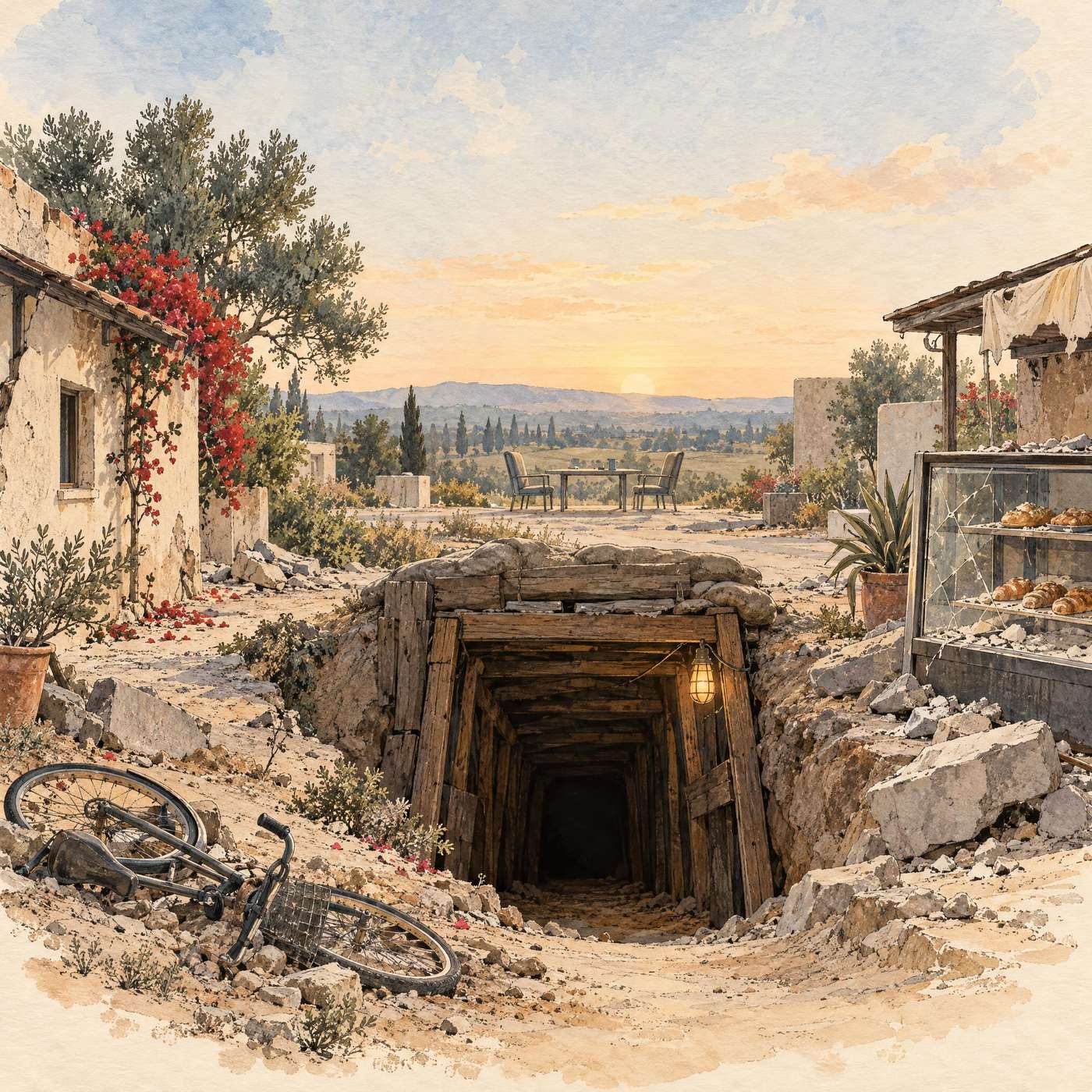
- U N ambassadors walked through a Hamas tunnel in Gaza on Sunday, then through the ruins of an Israeli kibbutz.
- Daniel
- And in northern Israel, a man has been charged with photographing an army base for Iran.
- Maya
- This is Good Morning, Israel from baba News. It's Monday, November sixteenth. I'm Maya.
- Daniel
- And I'm Daniel.
- Maya
- So, the tour. Who went, and where exactly?
- Daniel
- A delegation of ambassadors to the United Nations. They were accompanied by Danny Danon, Israel's ambassador to the U N, and they visited two places linked to October seventh.
- Maya
- The tunnel first.
- Daniel
- Right. A Hamas tunnel inside Gaza. The point of showing it was the threat that's still there, and the need to stop the terrorist organization Hamas from rearming.
- Maya
- Because tunnels are how Hamas moves, hides weapons, and, of course, held hostages.
- Daniel
- Exactly. It's one thing to read about the network in a report in New York. It's another to stand inside it.
- Maya
- And then Kfar Aza.
- Daniel
- Kfar Aza is a kibbutz, a small Israeli community, right on the Gaza border. On October seventh, sixty-four of its residents were killed, and eighteen were kidnapped into Gaza in the Hamas-led massacre.
- Maya
- Sixty-four people, from one small community.
- Daniel
- Yes. And the ambassadors saw the devastation that's still visible there, the homes, the damage.
- Maya
- Why does this kind of visit matter? These are diplomats, not soldiers.
- Daniel
- Because the U N is where a lot of the pressure on Israel plays out, resolutions, debates about Gaza's future. Israel wants the people casting those votes to understand what Hamas did, and what it's still building.
- Maya
- So the message is, before you talk about Gaza's future, look at what Hamas wants to rebuild.
- Daniel
- That's it. Rearmament is the core concern. Israel's argument is that any arrangement for Gaza that lets Hamas rebuild just sets up the next October seventh.
- Maya
- Next, another espionage case tied to Iran.
- Daniel
- An indictment was filed on Sunday against Wisam Galeb Salah Awad. He's a fifty-year-old Israeli citizen from northern Israel.
- Maya
- And the accusation?
- Daniel
- According to prosecutors, he contacted Iranian agents on Telegram, the messaging app, and offered to provide information. They say he wanted money, and also revenge over Gaza.
- Maya
- So, cash and a grudge. What did he allegedly hand over?
- Daniel
- Prosecutors say that between July and October he photographed several sites. That includes the approach to an I D F base, a police station, and a factory.
- Maya
- The approach to a base. That's the kind of thing you'd want if you were planning something.
- Daniel
- Right. Routes in, routes out. And the investigation was run by the police together with the Shin Bet, Israel's internal security agency.
- Maya
- Has he responded to the charges?
- Daniel
- According to the reports, he admitted to the alleged actions.
- Maya
- This isn't the first case like this, is it?
- Daniel
- Far from it. Israeli security services have uncovered a steady stream of these cases, Iran recruiting Israelis online, often offering money for photos and information.
- Maya
- And with everything we've talked about this past week on Iran, that's not a small thing.
- Daniel
- Not at all. While Israel debates how to deal with Iran's nuclear program, Iran is trying to build eyes inside Israel. Cases like this are how it's caught.
- Maya
- Let's do something cheerier. Prices.
- Daniel
- Finally, some numbers going in a direction people like.
- Maya
- Go on.
- Daniel
- Israel's Consumer Price Index actually fell, by zero point one percent in October. That brings annual inflation down to one point one percent.
- Maya
- And nobody saw it coming.
- Daniel
- Analysts didn't, no. They were expecting something different, and prices dipped instead.
- Maya
- So what does that mean for people with a mortgage?
- Daniel
- Possibly good news. The Bank of Israel, the country's central bank, meets next week. A surprise like this may push it to consider cutting interest rates.
- Maya
- Because when inflation is that low, there's less reason to keep rates high.
- Daniel
- Exactly. And housing is moving too. Apartment prices are in their longest annual decline in a decade.
- Maya
- A decade. What's an apartment going for?
- Daniel
- The average price in the third quarter of twenty twenty-six was about two point two nine million shekels.
- Maya
- Still not cheap.
- Daniel
- No, but it's falling. Most districts saw prices drop over the year. The one exception was Haifa, the big port city in the north.
- Maya
- Haifa, holding out. To politics now, and a fight between a governing party and the country's top legal official.
- Daniel
- Right. Otzma Yehudit, the far-right party led by National Security Minister Itamar Ben Gvir. Its director-general, Itiel Neeman, has been summoned for questioning.
- Maya
- And the party isn't taking it quietly.
- Daniel
- Not at all. It's attacking Attorney General Gali Baharav-Miara and law enforcement. It calls the summons political persecution.
- Maya
- The same Attorney General we told you about Saturday, the one ordered to appear in person in Netanyahu's trial.
- Daniel
- The same one. She's having quite a week.
- Maya
- What's Otzma Yehudit's argument?
- Daniel
- Selective enforcement. The party says authorities move quickly against its people, but drag their feet on cases involving opposition figures. And it links this summons to an earlier incident involving one of its lawmakers, Member of Knesset Yitzhak Kroizer.
- Maya
- So, the question of whether law enforcement treats everyone equally, which comes up a lot in Israel.
- Daniel
- Constantly. And with coalition talks still unsettled, every clash like this gets political very fast.
- Maya
- Now, if you've ever had a flight cancelled and been left stranded, this one's for you.
- Daniel
- An Israeli court has partly approved a class-action lawsuit against ITA Airways, Italy's national airline.
- Maya
- Over what?
- Daniel
- A Rome to Tel Aviv flight it cancelled in August twenty twenty-four. Passengers say the airline didn't offer alternative flights or help, so they ended up paying significant costs themselves.
- Maya
- And the airline's defense, presumably, was the war.
- Daniel
- The court addressed that directly. It said war may be a factor, but airlines still have legal obligations to assist passengers.
- Maya
- So the war isn't a blank check for leaving people at the gate.
- Daniel
- Exactly. And it's broad. The class covers flights cancelled or delayed from October seventh, twenty twenty-three, to November eleventh, twenty twenty-six.
- Maya
- That's a lot of travelers. Quick round now, and it starts with more violence in Arab towns.
- Daniel
- Yes. Police shot and killed a man on Sunday in Zemer, an Arab town in central Israel. Police say officers were responding to a domestic disturbance, and he drew a knife on them.
- Maya
- And the same evening, Haifa.
- Daniel
- A man was seriously wounded in a criminal shooting there.
- Maya
- This comes right after the grenade at the bakery in Kafr Manda that we told you about yesterday.
- Daniel
- Right, and the scale is stark. Arab communities accounted for over eighty percent of Israel's homicides last year.
- Maya
- And the politics?
- Daniel
- Critics blame National Security Minister Ben Gvir for neglecting the issue. His party says police activity has increased.
- Maya
- Before we go, what's worth watching?
- Daniel
- Gadi Eisenkot, the former army chief who holds the mandate to form a government. He still hasn't publicly answered Netanyahu's invitation to unity talks. Whether he accepts, refuses, or sets terms could come any day now.
- Maya
- Follow Good Morning, Israel so tomorrow's episode is waiting for you.
- Daniel
- See you tomorrow morning.
Every Israeli newsroom on the same story.
The podcast is built from baba News. Get the app for the live wire, alerts when a story breaks, and the full coverage behind every episode.
 Scan with your phone to install
Or read on the web at news.itsbaba.com.