
Try Pro Free
Products מוצרים
Mobile AppWeb TranslatorChrome ExtensionSpeak HebrewAPIs & DevelopersHebrewCore APIEnterpriseFor NewsroomsFor GovernmentTools כלים
All Hebrew ToolsHebrew to English TranslatorEnglish to Hebrew TranslatorOnline Hebrew KeyboardVerb ConjugatorGematria CalculatorHebrew Date ConverterToday's Hebrew DateJewish Holidays This YearZmanim by CityYour Name in HebrewThe Hebrew AlphabetSlang Dictionarybaba AtlasLearn ללמוד
baba LearnBest AI Hebrew TutorsCompare AI TutorsHebrew GuidesAI Hebrew TutorHebrew for Yom KippurHebrew for TravelHebrew in the NewsIsraeli News in EnglishHebrew News in EnglishHebrew on WhatsAppBlogNews חדשות
baba NewsGood Morning, IsraelIsraeli NewsroomsIsraeli News APIMore עוד
PlansAboutSupportIsraeli Court Sentences Man for Repeatedly Violating Anti-Organized Crime Restrictions
Good Morning, Israel · Thursday, November 12, 2026 · 8:13
Good Morning, Israel · Episode 46
In This Episode
The stories Maya and Daniel cover, in order. Read any of them in full on baba News.
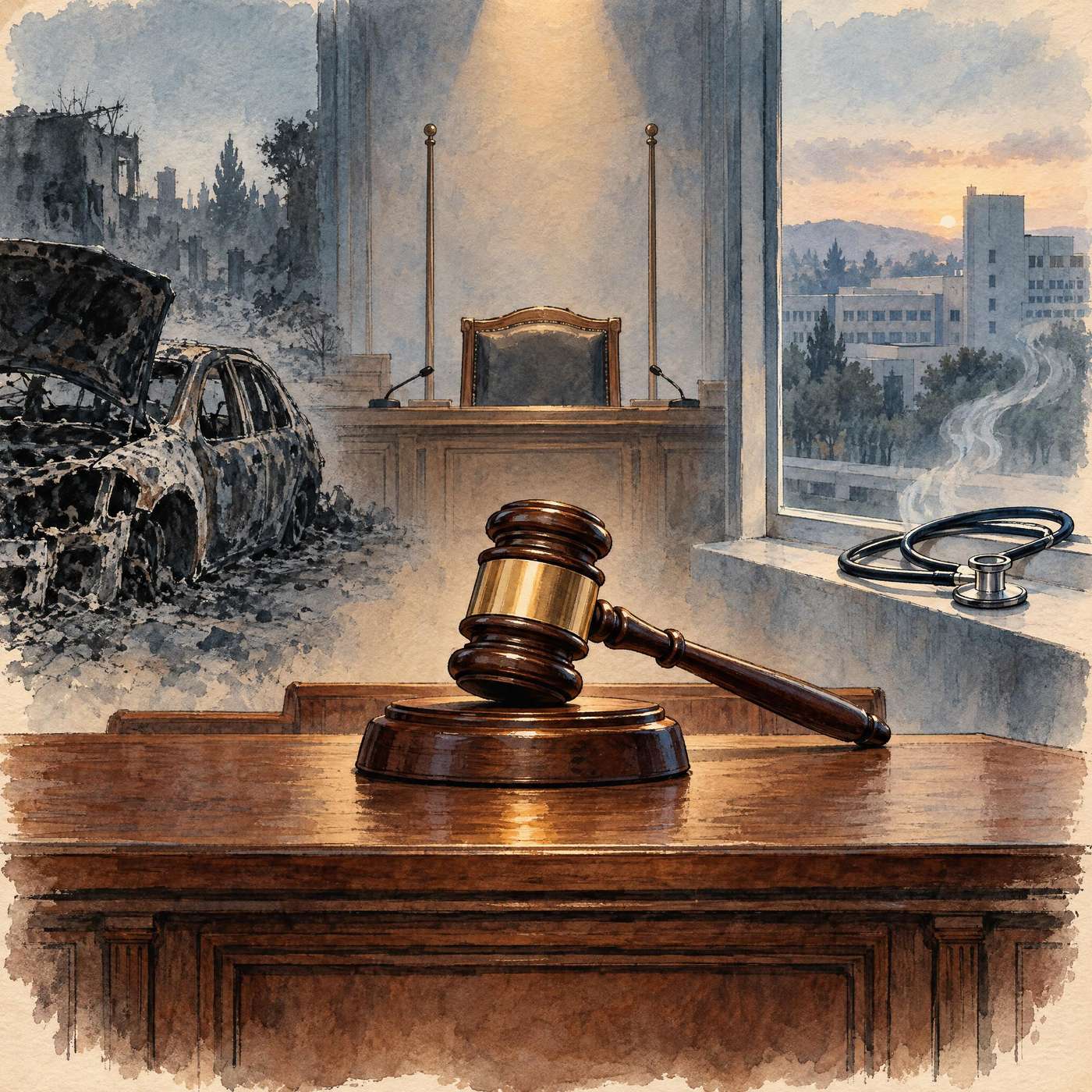
- Israeli Court Sentences Man for Repeatedly Violating Anti-Organized Crime Restrictions
- Car Arson and Triple Murder: Charges Filed Against Triangle Area Resident
- Gaza Hospital Hit by Israeli Airstrike, Causing Casualties and Worsening Crisis
- Netanyahu Bloc Delays Lieberman's Vote for Foreign Affairs Committee Chair
- Israel Must Adapt to Shifting US Support
- Israel Katz and Avigdor Lieberman Clash Over Military Operation Authority
Listen in Your Podcast App
Transcript
- Maya
- Israel's parliament has a committee meant to oversee its military, and right now nobody's chairing it.
- Daniel
- And the man in line for the job has already picked a fight with the Defense Minister over Iran.
- Maya
- This is Good Morning, Israel from baba News. It's Thursday, November twelfth. I'm Maya.
- Daniel
- And I'm Daniel.
- Maya
- Yesterday we had Gadi Eisenkot walking out of coalition talks with Likud. Today it's Avigdor Lieberman's turn in the spotlight. Set it up for me.
- Daniel
- Lieberman leads Yisrael Beytenu, the secular right-wing party. He's slated to chair the Knesset's Foreign Affairs and Defense Committee.
- Maya
- Which is a big deal in Israel.
- Daniel
- It's arguably the most powerful committee in the Knesset, Israel's parliament. It's where lawmakers oversee the army, the intelligence services, and decisions on war.
- Maya
- And the vote to give him the job?
- Daniel
- Delayed until Monday. The bloc backing Prime Minister Benjamin Netanyahu pushed it back.
- Maya
- What does Lieberman want to do once he's in the chair?
- Daniel
- He plans to summon the I D F Chief of Staff and the head of the Mossad, Israel's foreign intelligence agency, for discussions on Iran.
- Maya
- So the delay isn't just a scheduling issue.
- Daniel
- Not according to Eisenkot. The National Unity Party leader criticized Netanyahu for the delay, and accused him of creating an oversight vacuum.
- Maya
- Wait, National Unity? Earlier this week we called his party Yashar.
- Daniel
- Right, he's been identified with both. Either way, it's the same Eisenkot, the former Chief of Staff who holds the mandate to form a government.
- Maya
- Okay. And he had something to say about Iran too.
- Daniel
- He did. He urged restraint on military action against Iran.
- Maya
- Then Defense Minister Israel Katz and Lieberman went at it in public.
- Daniel
- Over a basic question. Who gets to order I D F operations, especially abroad?
- Maya
- And Katz's answer?
- Daniel
- Katz says he and Prime Minister Netanyahu have full authority, even in the current transitional government.
- Maya
- Transitional meaning caretaker, since there's no new coalition yet.
- Daniel
- Exactly. Lieberman's argument is that decisions like that need parliamentary oversight.
- Maya
- Is there an actual rulebook here, or just two strong personalities?
- Daniel
- There's a rulebook. The dispute centers on Israel's Basic Law covering government decisions on war and major military action. Israel doesn't have a single written constitution, so its Basic Laws do a lot of that work.
- Maya
- So one side says the government decides, and the other says the Knesset needs a say.
- Daniel
- And with Iran in the background, that's not a seminar question.
- Maya
- And it lands on top of a coalition fight where Lieberman and Eisenkot are supposed to be partners.
- Daniel
- Partners who still disagree on relying on Raam, the United Arab List. Now Lieberman has a committee fight with the caretaker government as well.
- Maya
- Staying with Iran, a sharp warning from a retired general.
- Daniel
- Former I D F General Yisrael Ziv criticized Netanyahu's decision-making. He warned that political motives, not security needs, are driving possible action against Iran.
- Maya
- That's a serious charge.
- Daniel
- It is. Ziv said he doesn't trust Netanyahu. He suggested the Prime Minister might defy Donald Trump, and create what he called a false sense of emergency.
- Maya
- And he had a message for the army's top officer.
- Daniel
- For Chief of Staff Eyal Zamir. Ziv urged him to resist any unjustified military action, and stressed that the military leadership carries real responsibility.
- Maya
- That's Ziv's view, to be clear.
- Daniel
- His view, yes. He also said he believes Netanyahu is unconcerned with the consequences of his decisions.
- Maya
- So between Eisenkot, Lieberman and Ziv, the question of who decides on Iran is coming from three directions at once.
- Daniel
- Exactly. And the man answering it for now is Katz, insisting the government already has that power.
- Maya
- Now to crime, and a legal first.
- Daniel
- A man named Baha Jaber has been sentenced to twenty-one months in prison. The Hadera Magistrate's Court found him guilty of violating court orders that restricted his activities linked to organized crime.
- Maya
- What did he actually do?
- Daniel
- Three breaches, including using a car and a phone he was banned from using.
- Maya
- A phone and a car. That doesn't sound like twenty-one months.
- Daniel
- That's the point of the law. It's the first conviction under a new law passed in December twenty twenty-four to fight serious organized crime.
- Maya
- So the restrictions themselves are the weapon.
- Daniel
- Right. Courts can limit what a suspected crime figure can use and do, and breaking those limits can now bring up to four years in prison.
- Maya
- Which matters, because organized crime has become one of Israel's biggest domestic problems.
- Daniel
- Especially in Arab communities. And that brings us to a much darker case.
- Maya
- The triple murder from September.
- Daniel
- On September thirteenth, twenty twenty-six, three relatives from Jaljulia, including a minor, were shot. Their bodies were burned in a car.
- Maya
- Jaljulia being an Arab town in central Israel.
- Daniel
- Right. Now Israeli police are set to indict a suspect from the Triangle area. That's a cluster of Arab towns in central Israel, close to the line with the West Bank.
- Maya
- Who do police say is behind it?
- Daniel
- Members of the Hariri crime family, according to the police. They allegedly used what investigators are calling a Red Riding Hood tactic.
- Maya
- And the investigation?
- Daniel
- One suspect is under arrest. Police are hunting three others who are on the run.
- Maya
- How are the investigators describing it?
- Daniel
- The commander of Lahav four three three, the Israel Police's elite unit for major crime, called it one of the most brutal murders in recent years.
- Maya
- And the new law we just talked about is aimed at exactly these networks.
- Daniel
- Exactly. One conviction for a phone and a car, while three suspects in a killing like this are still out there. That's the scale of the challenge.
- Maya
- Quick round. Another violent incident, this time in Tayibe.
- Daniel
- Tayibe is another Arab city in central Israel. On Tuesday evening, Magen David Adom, Israel's emergency medical service, got a call at eight oh one.
- Maya
- Who was hurt?
- Daniel
- A twenty-seven-year-old man and a fifteen-year-old boy, both with penetrating injuries. The man was taken to Meir Hospital in serious condition, and the boy is in moderate condition.
- Maya
- Fifteen.
- Daniel
- Yes. And it's the same story of violence in Arab towns that the police are under pressure to stop.
- Maya
- North of the border, Lebanon's economy is in freefall.
- Daniel
- The World Bank projects it will shrink by six point four percent this year. There's a chronic electricity shortage, so people and businesses depend on private generators.
- Maya
- Expensive ones, I'm guessing.
- Daniel
- One business owner in Beirut pays more than sixteen hundred dollars a month just for generator power.
- Maya
- That's a rent payment for the lights.
- Daniel
- And in the Beqaa Valley, Lebanon's farming heartland, labor costs for grape growers have risen fivefold.
- Maya
- Which is what years of Hezbollah dominance and state paralysis look like on the ground.
- Daniel
- Right, a country that can't keep its own lights on.
- Maya
- And a bigger-picture argument about Washington.
- Daniel
- There's a case being made that Israel's relationship with the United States is weakening, and that's a serious strategic threat. The argument is that countries like China or India can't replace it.
- Maya
- And the prescription?
- Daniel
- A proactive effort to repair the alliance, rather than what it calls Netanyahu's approach of preparing to rely less on the U S. That includes the leadership showing a clear commitment to peace.
- Maya
- And something for the lobby.
- Daniel
- A reset for AIPAC, the main pro-Israel lobby group in Washington, so it reaches beyond partisan politics.
- Maya
- Something Israelis will keep arguing about well past this coalition fight.
- Daniel
- For sure.
- Maya
- So, one thing to watch.
- Daniel
- The Jaljulia case. Police say the indictment is coming, and the question is whether any of the three suspects on the run are caught first.
- Maya
- Follow Good Morning, Israel so tomorrow's episode is waiting for you.
- Daniel
- See you tomorrow morning.
Every Israeli newsroom on the same story.
The podcast is built from baba News. Get the app for the live wire, alerts when a story breaks, and the full coverage behind every episode.
 Scan with your phone to install
Or read on the web at news.itsbaba.com.