
baba
Free, no AIHebrew-English guide 71 of 100

Israeli School Stages, in Plain English

How gan chova, yesodi, chativa and tichon match US and UK years.

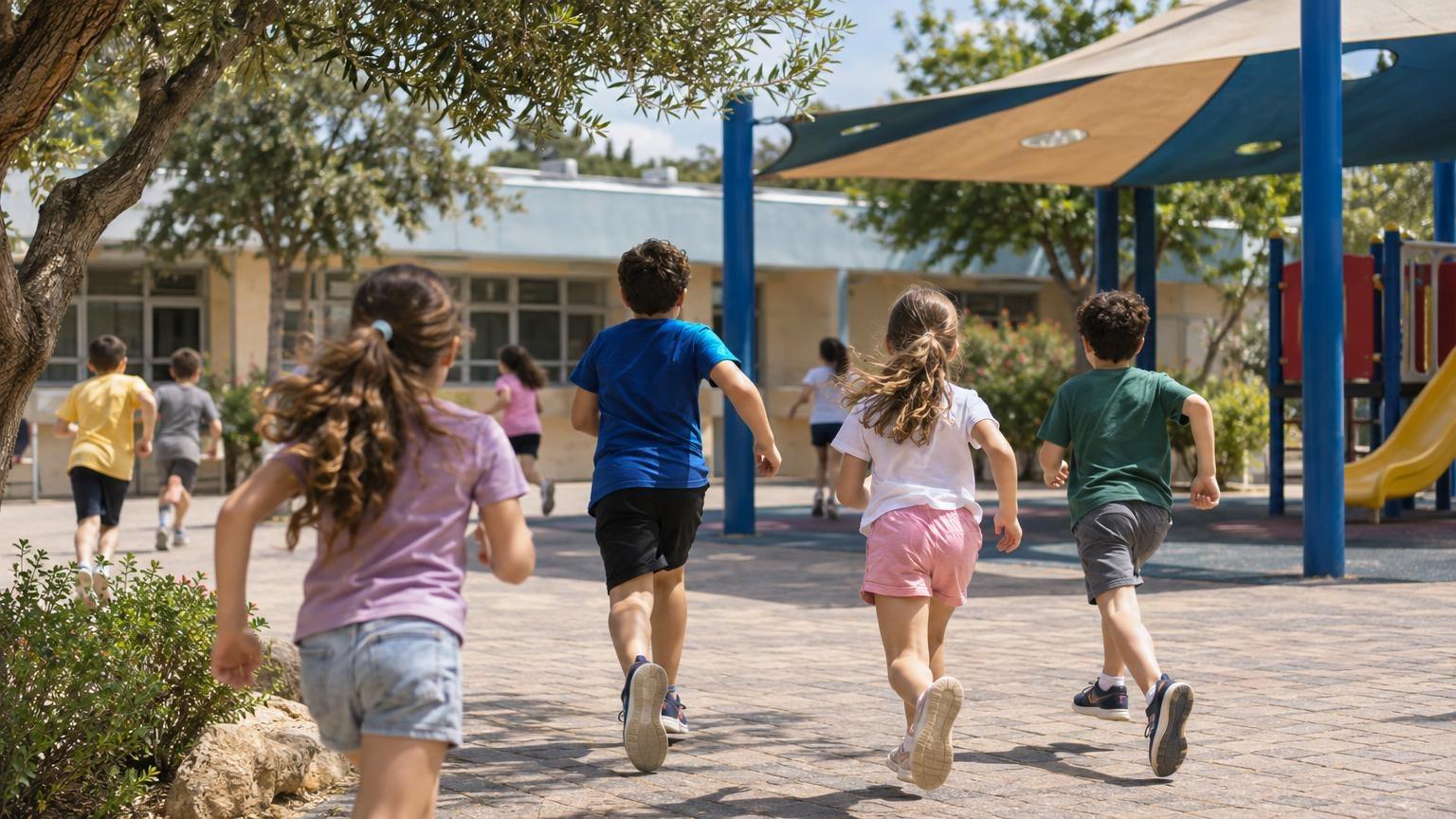
A school yard during recess

Mix-Ups to Avoid

  1. גן חובה is not the only compulsory kindergarten year. Recognized education is compulsory from age three, and גן חובה is only the final year before first grade.
  2. חטיבת ביניים runs grades 7 to 9, so its ninth grade is usually already high school in the US. תיכון commonly starts at grade 10.
  3. Israeli classes are grouped by calendar birth year, not a September cutoff. Bring prior school records, since placement follows the grade attended abroad.
In This Guide16 entries

Before First Grade

מעון יום / פעוטון / משפחתוןDaycare

ma'on yom / pa'uton / mishpachton

US English

Infant or toddler daycare, family daycare

UK English

Nursery, early-years childcare or childminder

What it is

מעון יום, פעוטון and משפחתון are care settings before the recognized kindergarten ladder, generally from birth to under three.

The difference

An official Knesset review cautions that names such as משפחתון, מעון and פעוטון do not necessarily mark real differences. Check the age range, license, supervision and registration page.

Common mistake

Do not translate מעון יום, פעוטון or משפחתון as US kindergarten.

גן ילדים / חינוך קדם־יסודיKindergarten (three years)

gan yeladim / chinuch kedam-yesodi

US English

Preschool, pre-K or kindergarten, by cohort

UK English

Nursery, Reception or Year 1, by cohort

What it is

גן ילדים and חינוך קדם־יסודי are umbrella terms for the recognized three-year preschool ladder, ages three through five by cohort.

The difference

In Israel, גן covers three years, not the single US kindergarten year. Registration pages list a birth-year line for each גן cohort.

Common mistake

Do not assume גן always means the one US kindergarten year; read the birth-year line.

On the label or sign

טרום־טרום חובה
age-three kindergarten

גן טרום־טרום חובהAge-three kindergarten

gan trom-trom chova

US English

Preschool or PK3

UK English

Nursery, age 3 to 4

What it is

גן טרום־טרום חובה is the first recognized kindergarten cohort, conventionally age three. For 2026/27, גן טרום־טרום חובה is the 2023 birth cohort.

The difference

Despite the name, recognized education is compulsory from age three. A narrow exemption route exists: for 2026/27, a municipal page says parents of children born September to December 2023 may apply for a one-year exemption, but must still register.

Common mistake

Do not read טרום־טרום חובה literally as "pre-pre-compulsory" and assume attendance is optional.

On the label or sign

גיל 4
age 4

גן טרום חובה / גן קדם חובהAge-four kindergarten

gan trom chova / gan kedem chova

US English

Pre-K or PK4

UK English

Reception, age 4 to 5

What it is

גן טרום חובה is the middle kindergarten cohort, conventionally age four. For 2026/27, גן טרום חובה is the 2022 birth cohort.

The difference

גן טרום חובה is legally compulsory but is not the final year before first grade.

Common mistake

Do not call גן טרום חובה "gan chova" because attendance is compulsory.

On the label or sign

גיל 5
age 5

גן חובהFinal kindergarten year

gan chova

US English

Kindergarten

UK English

Year 1, age 5 to 6

What it is

גן חובה is the final kindergarten year before כיתה א׳, conventionally the age-five cohort. For 2026/27, גן חובה is the 2021 birth cohort.

The difference

The historic name גן חובה stays attached to the age-five year only, though all three kindergarten years are now compulsory. By sequence and usual age, גן חובה is closer to US kindergarten and England's Year 1 than to Reception.

Common mistake

Do not map גן חובה to Reception or call every compulsory kindergarten גן חובה.

On the label or sign

חט״צ
early-primary unit

חטיבה צעירה / חט״צEarly-primary unit

chativa tze'ira

US English

K to grade 1 or 2 early-primary unit

UK English

Early-years and primary unit

What it is

A חטיבה צעירה is a multi-age unit inside a primary school that combines גן חובה and grade 1, sometimes also grade 2.

The difference

A חטיבה צעירה is a school organization model, not an extra nationwide grade.

Common mistake

Do not confuse חטיבה צעירה with junior high because both names contain חטיבה.

School Stages

בית ספר יסודי / יסודיPrimary school

beit sefer yesodi / yesodi

US English

Elementary school, normally grades 1 to 6

UK English

Spans Years 2 to 7

What it is

בית ספר יסודי is the common Israeli primary stage, grades 1 to 6, roughly cohort ages 6 to 11. Some schools continue through grade 8.

The difference

Israeli יסודי usually includes grade 6, which is already secondary in England and Wales (Year 7) and may be middle school in the US. School sites show the span, such as א׳ to ו׳ or א׳ to ח׳.

Common mistake

Do not assume יסודי ends at the same grade as a US elementary or UK primary school.

On the label or sign

חט״ב
junior high

חטיבת ביניים / חט״בJunior high (grades 7 to 9)

chativat beinayim

US English

Junior high or middle school, grades 7 to 9

UK English

Years 8 to 10

What it is

חטיבת ביניים is the usual lower secondary division, grades 7 to 9, roughly cohort ages 12 to 14. A חטיבת ביניים may stand alone or be the lower division of a six-year school.

The difference

חטיבת ביניים includes grade 9, which is usually high school in the US.

Common mistake

Do not translate חטיבת ביניים simply as US middle school, and do not shorten it to bare חטיבה.

On the label or sign

חט״ע
upper secondary

חטיבה עליונה / חט״עUpper secondary

chativa elyona

US English

Senior high, usually grades 10 to 12

UK English

Years 11 to 13

What it is

חטיבה עליונה is the precise official name for upper secondary, commonly grades 10 to 12, roughly cohort ages 15 to 17.

The difference

Official documents may use חטיבה עליונה instead of תיכון.

Common mistake

Do not treat the חטיבה in חטיבה עליונה as junior high.

בית ספר תיכון / תיכוןHigh school

beit sefer tichon / tichon

US English

High school

UK English

Secondary school, including sixth-form years

What it is

תיכון is the everyday name for the upper secondary school, usually grades 10 to 12.

The difference

Where primary runs through grade 8, a תיכון covers grades 9 to 12. Most Israeli תיכון schools start a year later than the common US high school.

Common mistake

Do not assume every תיכון starts at grade 9; check the printed grade span.

בית ספר על־יסודי / חינוך על־יסודיSecondary (post-primary)

beit sefer al-yesodi / chinuch al-yesodi

US English

Secondary school, broad umbrella

UK English

Secondary education, broad umbrella

What it is

על־יסודי literally means post-primary and covers both lower and upper secondary, grades 7 to 12 or, in another structure, 9 to 12.

The difference

על־יסודי is broader than תיכון.

Common mistake

Do not translate every על־יסודי as high school.

בית ספר שש־שנתיSix-year secondary school

beit sefer shesh-shnati

US English

Combined junior and senior high, grades 7 to 12

UK English

Secondary school, roughly Years 8 to 13

What it is

A בית ספר שש־שנתי is a six-year secondary school containing both חטיבת ביניים and חטיבה עליונה.

The difference

In a שש־שנתי school the child still moves from the lower to the upper division, even if the campus name stays the same.

Common mistake

Do not think a שש־שנתי school is a primary school for ages six to twelve.

יסודי שמונה־שנתי / תיכון ארבע־שנתיGrades 1 to 8, then 9 to 12

yesodi shmone-shnati / tichon arba-shnati

US English

Elementary through grade 8, then high school 9 to 12

UK English

Does not match the England and Wales boundary

What it is

יסודי שמונה־שנתי followed by תיכון ארבע־שנתי is the documented alternative structure: primary grades 1 to 8, then high school grades 9 to 12.

The difference

In the שמונה־שנתי structure there is no separate חטיבת ביניים.

Common mistake

Do not assume every locality has a חטיבת ביניים move after grade 6.

Classroom Words

On the label or sign

כיתה א׳
grade 1
כיתה י״ב
grade 12

כיתהGrade or class

kita

US English

Grade, or class and homeroom

UK English

Year, or class

What it is

כיתה ו׳ means grade 6, while a label such as ו׳2 is one class within that grade. Grades are named by Hebrew letters, from כיתה א׳ to כיתה י״ב.

The difference

Context decides whether כיתה means the grade level or one class group.

Common mistake

Do not translate כיתה as "class" when a form asks for the grade level.

On the label or sign

שכבת גיל
age cohort

שכבהGrade cohort

shichva

US English

Grade-level cohort

UK English

Year group

What it is

A שכבה is all the classes in one grade, for example שכבת ז׳. Ministry guidance uses שכבת גיל for an age cohort.

The difference

A שכבה is neither a school stage nor a single class.

Common mistake

Do not read שכבה as a stage or as one class.

שנתוןBirth-year cohort

shnaton

US English

Birth-year cohort

UK English

Birth cohort

What it is

A שנתון is the calendar birth-year group used for kindergarten and first-grade registration. In 2026/27, all children born from 1 January through 31 December 2020 are in the normal first-grade שנתון.

The difference

England uses a 1 September to 31 August cohort, and US cutoffs vary by state, so children in one Israeli שנתון can be almost a year apart.

Common mistake

Do not apply a US district or England cutoff to the Israeli שנתון.

The Closest Grade by Sequence and Usual Age. Placement Follows the Grade Completed Abroad.

The closest grade by sequence and usual age. Placement follows the grade completed abroad.
US grade / England and Wales yearIsraelKeep in mind
Preschool (PK3) / Nurseryגן טרום־טרום חובהgan trom-trom chovaAge 3, already compulsory
Pre-K (PK4) / Receptionגן טרום חובהgan trom chovaAge 4
Kindergarten / Year 1גן חובהgan chovaAge 5, last year before school
Grade 1 / Year 2כיתה א׳kita alefStarts יסודי
Grade 5 / Year 6כיתה ה׳kita heStill יסודי
Grade 6 / Year 7כיתה ו׳kita vavUsually last year of יסודי
Grade 7 / Year 8כיתה ז׳kita zayinUsually starts חטיבת ביניים
Grade 8 / Year 9כיתה ח׳kita chetחטיבת ביניים
Grade 9 / Year 10כיתה ט׳kita tetUsually last year of חטיבת ביניים
Grade 10 / Year 11כיתה י׳kita yodUsually starts תיכון
Grade 11 / Year 12כיתה י״אkita yod-alefUpper secondary
Grade 12 / Year 13כיתה י״בkita yod-betFinal school grade

Knowing the word is half of it. Say it out loud.

A Hebrew speaking app with Maya and David, AI tutors who hold conversations, explain corrections and help you practise what you need to say. Private beta on iPhone and Android. Public store launch is still ahead. Free Classic lessons to start, no card needed.

Explore baba Learn

How we checked this guide

By the baba team. Checked on against 20 sources, mostly Israeli retailers, manufacturers and government pages, and updated . Products, labels and rules change, so check the pack or the office before you rely on a detail. Our methodology.

Frequently Asked Questions

What is gan chova in English?

גן חובה is the final kindergarten year before first grade, for the age-five cohort. By sequence and age, גן חובה is closest to US kindergarten and England's Year 1.

Is kindergarten compulsory in Israel?

Yes. Recognized education has been compulsory from age three since the 2015/16 school year, so גן טרום־טרום חובה and גן טרום חובה are compulsory too, despite their names.

What grade is chativat beinayim?

חטיבת ביניים usually covers grades 7 to 9. Its ninth grade is usually already high school in the US.

What grade does tichon start?

תיכון usually covers grades 10 to 12. Where primary school runs through grade 8, a four-year תיכון covers grades 9 to 12.

How is a new immigrant child placed in an Israeli school?

Ministry guidance says the child should be admitted to the grade equivalent to the one attended abroad. Bring prior school records, since the Israeli שנתון uses calendar birth years.

More Hebrew-English Guides

All guides