How Humor Connects People Across Cultures
Laughter has a unique ability to bring people together, even across cultural divides. Hebrew humor, deeply tied to Israeli life, serves as a bridge, fostering understanding and connections.
Shared Laughter in Context
Humor may be universal, but it often thrives on local nuances. When humor aligns with shared experiences, it creates meaningful bonds, even across cultural boundaries.
Here’s a quick look at key elements of Hebrew humor and how they resonate:
| Humor Element |
Cultural Impact |
Cross-Cultural Connection |
| Self-deprecation |
Counters antisemitic stereotypes |
Reduces cultural barriers and fosters empathy |
| Military references |
Reflects Israel's military history and challenges |
Highlights shared human struggles during conflict |
| Tech culture jokes |
Balances admiration and satire of the tech world |
Connects through shared modern work experiences |
Hebrew Humor Reflects Israeli Life
Hebrew humor does more than entertain - it offers insights into Israeli society and creates opportunities for cultural exchange. A great example is the popular TV show Hayehudim Ba'im (The Jews are Coming). This satirical series turns complex cultural and historical themes into engaging and relatable content. Professor Wendy Zierler highlights its impact:
"With Hayehudim Ba'im, Israeli TV satire of the Jewish Holy Book has returned but this time, better and funnier than ever." [8]
The show’s success underscores that humor can tackle serious topics while appealing to a wide audience. Even jokes that are difficult to translate, like "אתה כזה סטארטאפיסט" (You're such a startup guy)[6], blend humor with cultural commentary, offering a mix of praise and playful critique of Israel's tech scene.
As Sigmund Freud famously noted:
"I do not know whether there are many other instances of a people making fun to such a degree of its own character." [9]
This self-reflective humor not only strengthens cultural identity but also opens doors for meaningful conversations between different communities.
sbb-itb-7e51dcc
Key Elements of Hebrew Humor
Hebrew humor uses its unique language and cultural cues to connect people and break down communication barriers.
Hebrew Language Jokes and Wordplay
Hebrew humor often taps into the language's root-based structure to create jokes packed with layers of meaning. This tradition goes back to ancient texts, where names and words often carried deeper significance.
Here are a few examples of Hebrew wordplay:
| Word |
Related Term |
Humor Connection |
| shaqed (almond tree) |
shoqed (watching) |
Refers to the almond tree's early blooming, symbolizing the swift fulfillment of God's word [10]. |
| kabed (heavy) |
kabod (honor) |
Highlights the link between physical heaviness and the concept of honor in biblical stories [10]. |
| Ya'akov (Jacob) |
akev (heel) |
Reflects the idea of "heel holder", tying Jacob's name to the act of grasping a heel in biblical tradition [10]. |
This kind of wordplay continues to influence modern Israeli humor, setting the stage for contemporary themes.
Main Topics in Israeli Comedy
Modern Hebrew humor builds on its linguistic roots while reflecting the realities of Israeli society. Known for its fast-paced, direct delivery, it often relies on cultural references and precise timing that can be challenging to translate [6][7].
Some common themes in Israeli comedy include:
-
Military Experience
Military service is a shared experience in Israel, offering endless material for humor. Stories, often called chizbat, are a staple of Israeli comedy [4].
-
Tech Culture
With Israel's reputation as a global tech hub, jokes about the tech industry frequently appear in modern Israeli humor [6].
-
Urban Life
Everyday urban experiences serve as a relatable source of comedy for audiences across the country [6].
Israeli humor's direct and informal nature, often paired with expressive gestures, makes it particularly effective in bridging cultural gaps [4].
Tips for Using Hebrew Humor with Other Cultures
Making Friends Through Humor
Sharing humor can help build international friendships, especially when it reflects cultural exchange. Israelis often communicate in a direct and lively way, using hand gestures and speaking with enthusiasm [4]. To successfully share Hebrew humor, focus on universal themes and clear delivery:
- Highlight relatable topics like family, work, or everyday life.
- Use expressive gestures to help convey meaning beyond words.
- Provide brief cultural context while keeping the joke's flow intact.
Common Humor Mistakes to Avoid
Cross-cultural humor can be tricky, and avoiding common mistakes is key to ensuring your jokes land well. Here are some pitfalls and how to handle them:
| Potential Pitfall |
Why It Matters |
Better Approach |
| Wordplay translated literally |
Hebrew puns often lose meaning in translation [2] |
Focus on the sentiment behind the joke. |
| Cultural assumptions |
Humor that works in Israel might offend elsewhere [11] |
Learn about your audience's culture first. |
| Complex references |
Military or tech jokes may not resonate globally [11] |
Stick to universal themes or add context. |
"Humor brings people together under shared laughter. However, since humor requires highly sensitive linguistic and cultural competence, expressing and appreciating humor is often a challenge in cross-cultural communication. What is considered as funny may differ across cultures. A humorous remark in one culture is not necessarily humorous in another culture; moreover, it might be considered as inappropriate or even offensive." - Terre F. [7]
Bridging cultural gaps through humor takes careful thought and the right tools.
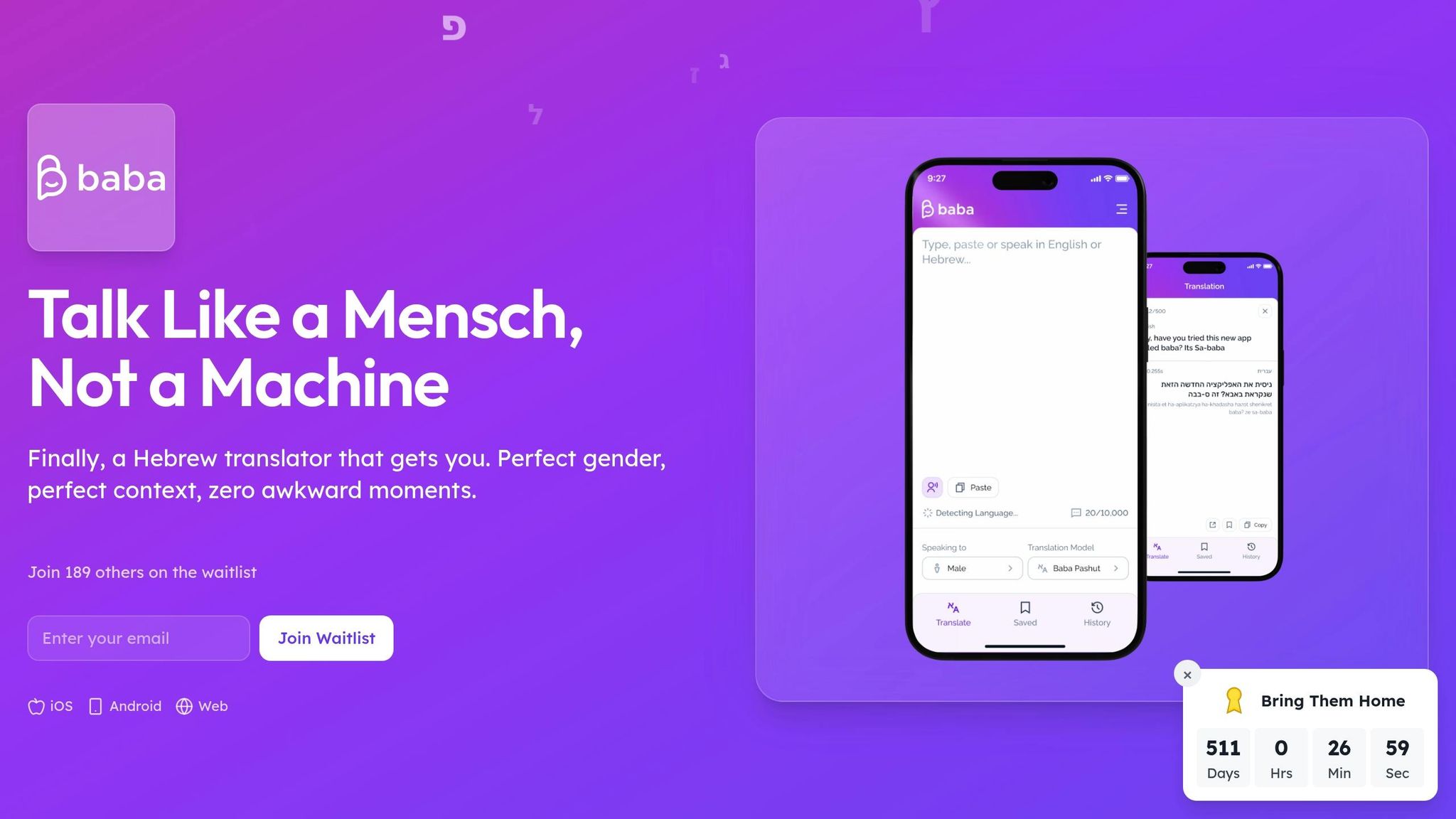
When sharing Hebrew humor across cultures, accurate translation is essential. baba's AI-powered platform helps bridge cultural differences by understanding subtle nuances and context. It excels at handling gender references in Hebrew jokes, preserving cultural significance, and ensuring smooth, natural translations. For instance, when translating chizbat (humorous anecdotes) [4], baba keeps the cultural essence intact while making it accessible to a global audience. This ensures that Israeli humor retains its charm, even for non-Hebrew speakers.
Join the waitlist for the baba mobile app at www.itsbaba.com.
Conclusion: Hebrew Humor Builds Better Understanding
Hebrew humor acts as a bridge in cross-cultural communication. Its direct and fast-paced style helps break down cultural barriers, opening up opportunities for genuine engagement [4]. This unique role turns potential cultural challenges into moments of connection.
Israeli comedian Jonathan Barak captures this sentiment perfectly:
"The first rule of comedy is that comedy is tragedy plus time. But for Jews, time is irrelevant, that's why Jews can make fun of tragedies as they occur... Because we have been enduring for 5,000 years, no joke is too soon or too late. We can still make jokes about being slaves in Egypt and we can still make jokes about the Holocaust, and we can still make jokes about the coronavirus." [12]
This highlights how Hebrew humor not only reflects cultural resilience but also offers a window into Israeli business culture and social norms [6].
Hebrew humor also serves as a unifying language, bringing together diverse experiences. Experts Hershey H. and Linda Weiser Friedman describe it as the "lingua franca of the Jewish people" [12]. When approached with cultural awareness, this shared humor transforms difficult interactions into meaningful connections built on mutual respect.
Frequently Asked Questions
Why do Hebrew jokes usually fall flat when translated literally?
Hebrew humor is built around root-based wordplay, cultural shorthand, and a direct communication style called dugriut that doesn't map cleanly onto other languages. A literal translation strips out the timing, the layered meaning, and the cultural context that make the joke work in the first place—what's left sounds awkward or just confusing.
What is chizbat and how does it fit into Israeli humor?
Chizbat refers to the Israeli tradition of telling tall tales and exaggerated humorous stories, often rooted in military life and shared communal experiences. It's a celebrated part of Israeli culture—think of it as the art of the good-natured stretch of the truth—but it can read as abrasive or over-the-top to audiences unfamiliar with that style.
How is Israeli humor different from Yiddish humor?
Yiddish humor tends to lean on elaborate setups, self-pity, and layered storytelling, while modern Israeli humor is fast, blunt, and leans into boldness and exaggeration. The shift reflects broader cultural differences between diaspora Jewish identity and the directness associated with Israeli society.
Which types of Hebrew humor travel best across cultures?
Humor anchored in universal experiences—family dynamics, workplace frustrations, everyday urban life—tends to cross cultural lines more successfully than jokes built on military service or local tech-scene references that require insider knowledge. Adding a quick line of cultural context can help without killing the joke's momentum.
How do you translate a Hebrew pun or wordplay without losing the meaning entirely?
The approach is transcreation rather than translation—you adapt the joke to preserve its emotional tone and intent rather than rendering it word for word. That might mean finding a parallel pun in the target language or replacing the specific wordplay with a culturally equivalent joke that lands the same way for the audience.