
Products מוצרים
Mobile AppWeb TranslatorChrome ExtensionSpeak HebrewAPIs & DevelopersHebrewCore APIEnterpriseFor NewsroomsFor GovernmentTools כלים
All Hebrew ToolsHebrew to English TranslatorEnglish to Hebrew TranslatorOnline Hebrew KeyboardVerb ConjugatorGematria CalculatorHebrew Date ConverterToday's Hebrew DateJewish Holidays This YearZmanim by CityYour Name in HebrewThe Hebrew AlphabetSlang Dictionarybaba AtlasLearn ללמוד
Hebrew GuidesAI Hebrew TutorHebrew for Yom KippurHebrew for TravelHebrew in the NewsIsraeli News in EnglishHebrew News in EnglishHebrew on WhatsAppBlogNews חדשות
baba NewsGood Morning, IsraelIsraeli NewsroomsIsraeli News APIMore עוד
PricingAboutSupportIDF and Shin Bet Launch Major Counter-Terror Operation in Hebron
Good Morning, Israel · Sunday, October 25, 2026 · 7:30
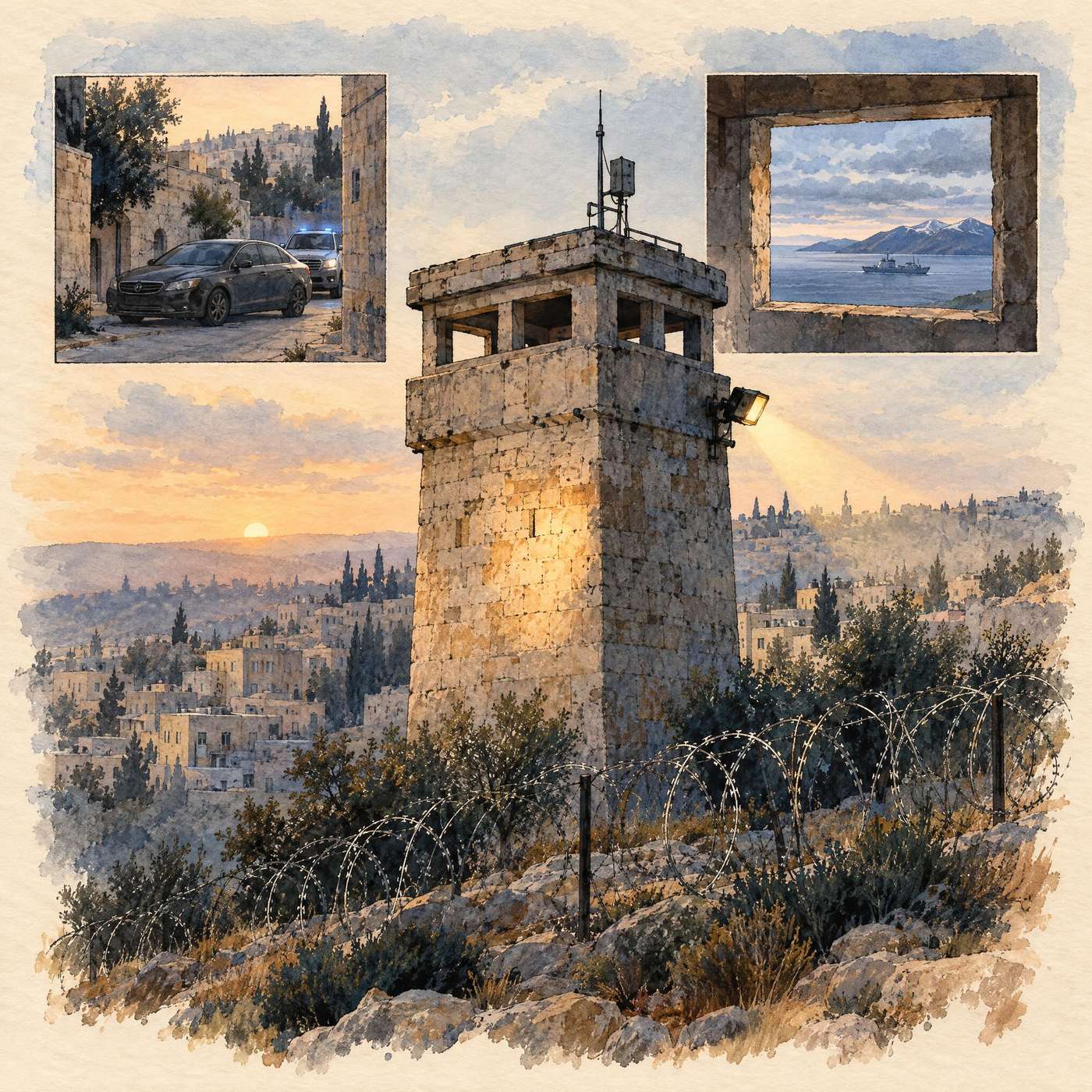
Good Morning, Israel · Episode 28
In This Episode
The stories Maya and Daniel cover, in order. Read any of them in full on baba News.
- IDF and Shin Bet Launch Major Counter-Terror Operation in Hebron
- Report: Netanyahu Ordered Diplomats to Back Argentina in Falklands Dispute
- Shin Bet to Provide Security Detail for Gadi Eisenkot
- Bank of Israel Warns Against Crypto Use for Sanctions Evasion
- Shin Bet to Oversee Gadi Eisenkot's Security via Private Firm
- Thousands Rally in Hostages Square Demanding State Inquiry Commission
Listen in Your Podcast App
Transcript
- Maya
- Israeli forces are going house to house in Hebron, hunting the network behind Friday's deadly attack.
- Daniel
- And in Tel Aviv, thousands rallied to demand a state inquiry into October seventh, two days before Israelis vote.
- Maya
- This is Good Morning, Israel from baba News. It's Sunday, October twenty-fifth. I'm Maya.
- Daniel
- And I'm Daniel.
- Maya
- Daniel, yesterday we told you about the two soldiers killed near Hebron and the blockade of the city. What's changed since?
- Daniel
- The operation has moved from sealing the city to digging into it. The I D F and the Shin Bet, Israel's internal security service, launched a major counter-terror operation in Hebron on Saturday.
- Maya
- Hebron being the large Palestinian city in Judea and Samaria, what many abroad call the West Bank.
- Daniel
- Right. Forces are focusing on the area the terrorists came from. They're sweeping terror infrastructure and interrogating suspects.
- Maya
- Interrogating suspects. So the working assumption is these two didn't act alone.
- Daniel
- That's what an operation like this is built to find out. Who supplied them, who sent them, who else might be ready to go.
- Maya
- And that ammunition in the car.
- Daniel
- That's the key detail. According to the intelligence, the terrorists were carrying a large amount of ammunition, meant for a much more extensive attack.
- Maya
- Which is why the army keeps saying the soldiers who died prevented something worse.
- Daniel
- Exactly. And there's a second track. Finance Minister Bezalel Smotrich announced the demolition of dozens of illegal structures near the site of the attack.
- Maya
- How long does this go on?
- Daniel
- It's expected to last several days. So it runs right through Tuesday's election, when the army is already on maximum alert.
- Maya
- Let's go to a story that sent us reaching for the atlas. The Falkland Islands.
- Daniel
- Not where you'd expect Israeli diplomacy to turn up. A report in the British newspaper The Telegraph claims Prime Minister Benjamin Netanyahu told Israeli diplomats to back Argentina's claim to the islands.
- Maya
- Quick refresher for anyone who skipped that history class.
- Daniel
- The Falklands are a British territory in the South Atlantic. Argentina claims them, and the two countries fought a war over them in nineteen eighty-two.
- Maya
- So what exactly does the report say Israel would do?
- Daniel
- Support negotiations over the islands, and recognize Argentina's historical ties to them.
- Maya
- And the supposed motive?
- Daniel
- The report links it to Netanyahu's close relationship with Argentina's President, Javier Milei. And it suggests it could be a response to British sanctions on Israeli communities in Judea and Samaria.
- Maya
- What does Israel say?
- Daniel
- Israel flatly denies it. The Israeli Embassy in London says no such directive was issued.
- Maya
- Is there an Israeli business angle in there?
- Daniel
- There is. The Israeli company Navitas is focused on oil reserves near the islands, with production slated to begin in twenty twenty-eight.
- Maya
- So a denied directive, an oil field, and a very sensitive subject in London.
- Daniel
- That's the whole package.
- Maya
- Back to the campaign, and protection for the man the polls put in front.
- Daniel
- Gadi Eisenkot, former I D F Chief of Staff and now chairman of the Yashar party, gets a security detail starting today.
- Maya
- Provided by whom?
- Daniel
- A private company, working under the direction of Unit seven thirty. That's the Shin Bet unit that guards Israel's most senior officials.
- Maya
- Why not the unit itself?
- Daniel
- Because back in August, the Shin Bet chief ruled Eisenkot didn't qualify for direct protection by that elite unit. So this is a supervised arrangement instead.
- Maya
- And the reason for the change?
- Daniel
- We don't know. His party announced it but didn't spell out any threat assessment. And the Shin Bet hasn't commented.
- Maya
- Which, a few days after a Rabin memorial warning that words kill, is hard not to notice.
- Daniel
- It is. Though officially, nobody has said what prompted it.
- Maya
- Now that rally in Tel Aviv.
- Daniel
- Thousands gathered on Saturday evening in Hostages Square. That's the plaza that became the center of the campaign to bring the hostages held by Hamas home.
- Maya
- And the demand?
- Daniel
- A state commission of inquiry into October seventh. That's Israel's most powerful kind of investigation, led by a judge, independent of the government.
- Maya
- Who organized it?
- Daniel
- A group called the October Council. Opposition leaders attended. Bereaved father Elhanan Danino spoke, and so did opposition figure Yair Golan.
- Maya
- Golan promised something specific.
- Daniel
- He vowed to push for the commission starting Wednesday.
- Maya
- The day after the vote.
- Daniel
- Right. Which tells you he sees this as the first fight of whatever government comes next.
- Maya
- Let's go back to cryptocurrency. Yesterday we told you about Netanyahu's idea of using it to get around possible sanctions. Now the reaction.
- Daniel
- And it's been fierce. The first answer came from the Bank of Israel, the central bank.
- Maya
- Which said what, roughly, no thanks?
- Daniel
- Pretty much. The bank declared that cryptocurrencies can't be used to get around international sanctions.
- Maya
- So what does it suggest instead?
- Daniel
- Governor Amir Yaron said the priority should be preserving Israel's economic ties, and avoiding sanctions in the first place. He called that crucial for the economy.
- Maya
- Prevention rather than workarounds.
- Daniel
- Exactly. Then the politicians. Former Prime Minister Naftali Bennett and Yair Lapid, who leads the Yesh Atid party, both slammed the plan. They warned of severe economic consequences, and a threat to national security.
- Maya
- National security? From a finance idea?
- Daniel
- That's their argument. And an Israeli economic analysis backs up the worry. It warns the plan amounts to an evasive economy, one built around dodging the banking system.
- Maya
- And why is that dangerous?
- Daniel
- Because Israel's economic strength depends on its connection to the Western financial system. The analysis says stepping away from that could mean capital flight, less investment, and lost jobs.
- Maya
- And the tech sector, I'd guess, isn't thrilled.
- Daniel
- No. Economists and tech leaders fear it puts Israel's place in global markets at risk. For a country whose economy runs on foreign investment in tech, that's a big deal.
- Maya
- So the Prime Minister says prepare for the worst, and the central bank says don't build an economy around the worst.
- Daniel
- That's the clash, two days before the election. And yesterday we noted Netanyahu also warned American security aid might not last forever. He repeated that warning.
- Maya
- One more, and it's a hard one, from Haifa, the port city in Israel's north.
- Daniel
- Yana Zykova was killed on October twenty-third. Police say she was allegedly murdered by her former partner.
- Maya
- And she left a child.
- Daniel
- A son with special needs, who reportedly witnessed it. Her mother, his grandmother, is now traveling from Ukraine to care for him. He's said to be very attached to her.
- Maya
- She'd been helping out before this, too.
- Daniel
- Yes. Zykova had been recovering from a car accident, and her mother had been helping with childcare. Police have arrested a suspect and recovered what they believe is the murder weapon.
- Maya
- Before we go, one thing to watch.
- Daniel
- Hebron. The operation is expected to run for several days, so watch for what the I D F and the Shin Bet say today about arrests, and whether they uncover a wider network behind Friday's attack.
- Maya
- Follow Good Morning, Israel so tomorrow's episode is waiting for you.
- Daniel
- See you tomorrow morning.
Every Israeli newsroom on the same story.
The podcast is built from baba News. Get the app for the live wire, alerts when a story breaks, and the full coverage behind every episode.
 Scan with your phone to install
Or read on the web at news.itsbaba.com.