Top AI Tools for Gamified Hebrew Learning
Learning Hebrew can be challenging, especially when dealing with grammar rules, right-to-left script, and slang. Gamified tools and AI-driven platforms make this process engaging and efficient, particularly in multilingual classrooms. Here's a rundown of the top tools:
- Duolingo: Beginner-friendly with streaks, leaderboards, and Hebrew-specific lessons like breaking down the alphabet and introducing common words early.
- Talkpal: Uses AI for real-time conversations and feedback, simulating real-life scenarios like ordering food or attending meetings.
- Memrise: Focuses on vocabulary with gamified repetition and native speaker videos, addressing issues like Hebrew's lack of vowels.
- Ling App: Teaches the Alef-Bet with tracing tools and AI speech recognition for pronunciation practice.
- Drops: Offers 5-minute daily sessions with swipe-based games and a focus on vocabulary through visuals.
- Gus on the Go: Designed for kids, it pairs native pronunciations with visuals in mini-games.
- baba: Combines AI-powered translation with gender-aware grammar and slang, helping learners sound natural in conversations.
These tools combine gamification and AI to simplify Hebrew learning for all levels. Whether you're a teacher or a student, there's an option tailored to your needs.
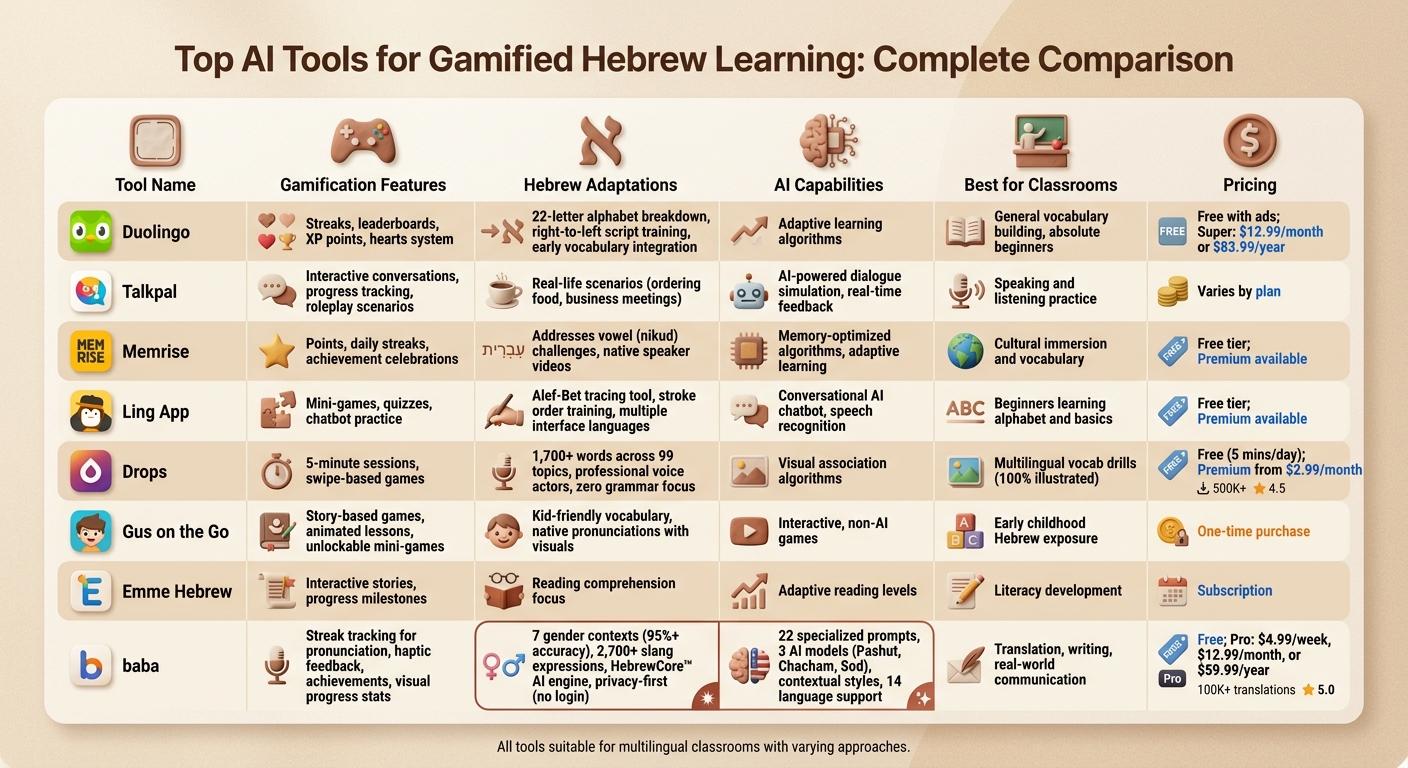
Comparison of 8 AI-Powered Hebrew Learning Tools: Features, Pricing, and Best Use Cases
1. Duolingo
Gamification Features
Duolingo uses engaging game mechanics to encourage daily Hebrew practice. Features like streak counters motivate consistency, while hearts limit the number of mistakes learners can make per lesson, adding a challenge to keep users focused. The app’s friendly mascot also helps maintain interest, especially for beginners and multilingual classrooms [5].
Lessons are broken into small, manageable segments that rely on repetition. Quizzes and progress trackers are included to help beginners ease into Hebrew’s unique script and see their growth over time [5].
Hebrew-Specific Adaptations
Duolingo goes beyond general language learning by tailoring its approach specifically for Hebrew. It breaks down the 22-letter Hebrew alphabet into smaller parts and integrates real words like "water" (מים) and "bread" (לחם) early on. This method not only introduces vocabulary but also helps learners get used to Hebrew’s right-to-left script and its distinct, consonant-heavy structure [5].
"Duolingo is the most approachable Hebrew learning app for complete beginners. It breaks the alphabet into small chunks with repetition, and it mixes in real words... so you're not drilling letters forever." - Clozemaster [5]
The app is ideal for absolute beginners, acting as a starting point to build script recognition before tackling more advanced grammar concepts [5].
Suitability for Multilingual Classrooms
Designed with diverse learners in mind, Duolingo’s free version offers basic Hebrew lessons and daily practice that fit well in multilingual classrooms [5]. Its automated feedback system is particularly helpful for teachers managing students from different language backgrounds. However, some users have noted that while the app is great for foundational learning, it might not fully prepare students for real-world Hebrew conversations [1].
sbb-itb-7e51dcc
2. Talkpal
AI Integration
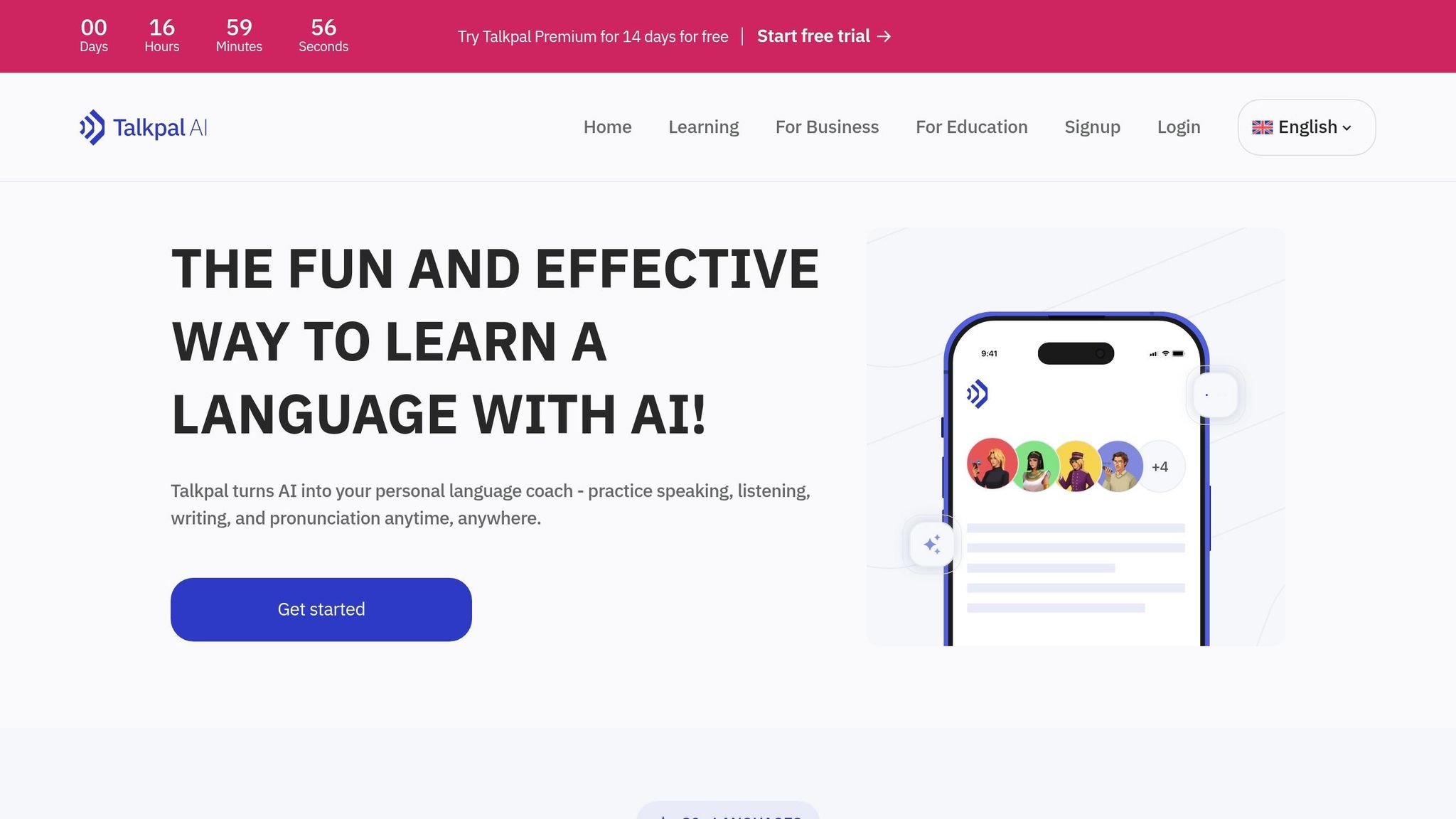
Talkpal leverages generative AI to create immersive, real-time Hebrew conversations tailored to each student's skill level. Its AI tutor provides instant feedback on pronunciation, grammar, and vocabulary, offering a low-pressure space for learners to experiment and improve without the stress of face-to-face interactions. To keep learners engaged, Talkpal incorporates gamified elements into its practice sessions.
Gamification Features
Talkpal includes AI-powered "Roleplays" and "Character" modes that mimic real-life scenarios. For instance, users can practice ordering a meal at a café in Tel Aviv using conversational Hebrew for travelers or navigating a business meeting in Hebrew. The AI dynamically adjusts the complexity of these exercises based on the learner's ability, ensuring that beginners and advanced users alike are challenged appropriately.
Suitability for Multilingual Classrooms
The platform's adaptive AI makes it an excellent choice for multilingual classrooms. It personalizes interactions for each student's proficiency level, enabling realistic and engaging Hebrew practice for diverse learners.
3. Memrise
Gamification Features
Memrise makes vocabulary practice engaging through gamification elements like points, daily streaks, and achievement celebrations. These features encourage learners to build consistent habits and add a layer of friendly competition, making it a great fit for classroom use.
Tailored Tools for Hebrew Learning
Learning Hebrew can be tricky for beginners due to the lack of vowels (nikud) in most texts. Memrise tackles this issue with tools designed to improve pronunciation and clarify differences between similar-sounding letters. This makes the early stages of learning Hebrew less overwhelming.
Personalized Learning Experience
Memrise uses adaptive learning technology to customize the experience for each user. As you advance, the platform adjusts how often it reviews challenging words, helping to reinforce memory and ensure you truly grasp the material.
Ideal for Multilingual Classrooms
With its self-paced structure and visual learning tools, Memrise allows students from various backgrounds to learn at their own speed. At the same time, it provides educators with clear insights into each student’s progress. This makes it a strong addition to tools for teaching Hebrew, especially with its focus on addressing specific language hurdles through personalized learning.
4. Ling App
Hebrew-Specific Features
Mastering the Hebrew alphabet (Alef-Bet) can feel daunting for beginners, but Ling App makes it easier. It includes an on-screen tracing tool to teach the correct stroke order, helping users get comfortable with the unique right-to-left script. Plus, an AI-powered chatbot simulates real-life scenarios - like reading street signs in Jerusalem - making the learning process more practical and engaging.
Unlike many other apps that focus primarily on conversation, Ling App places extra emphasis on improving script accuracy and pronunciation.
Advanced AI Tools
Ling App goes beyond basic learning by incorporating advanced AI technology. Its AI-powered speech recognition listens to users’ pronunciation and offers instant feedback. This feature allows learners to practice independently while fine-tuning their speaking skills.
Ideal for Multilingual Classrooms
Ling App’s versatility shines in diverse learning environments. With support for multiple interface languages, it’s accessible to students from various linguistic backgrounds. Teachers can easily integrate it into multilingual Hebrew classrooms, enabling students to navigate the app in their native language while focusing on developing Hebrew proficiency.
5. Drops
Gamification Features
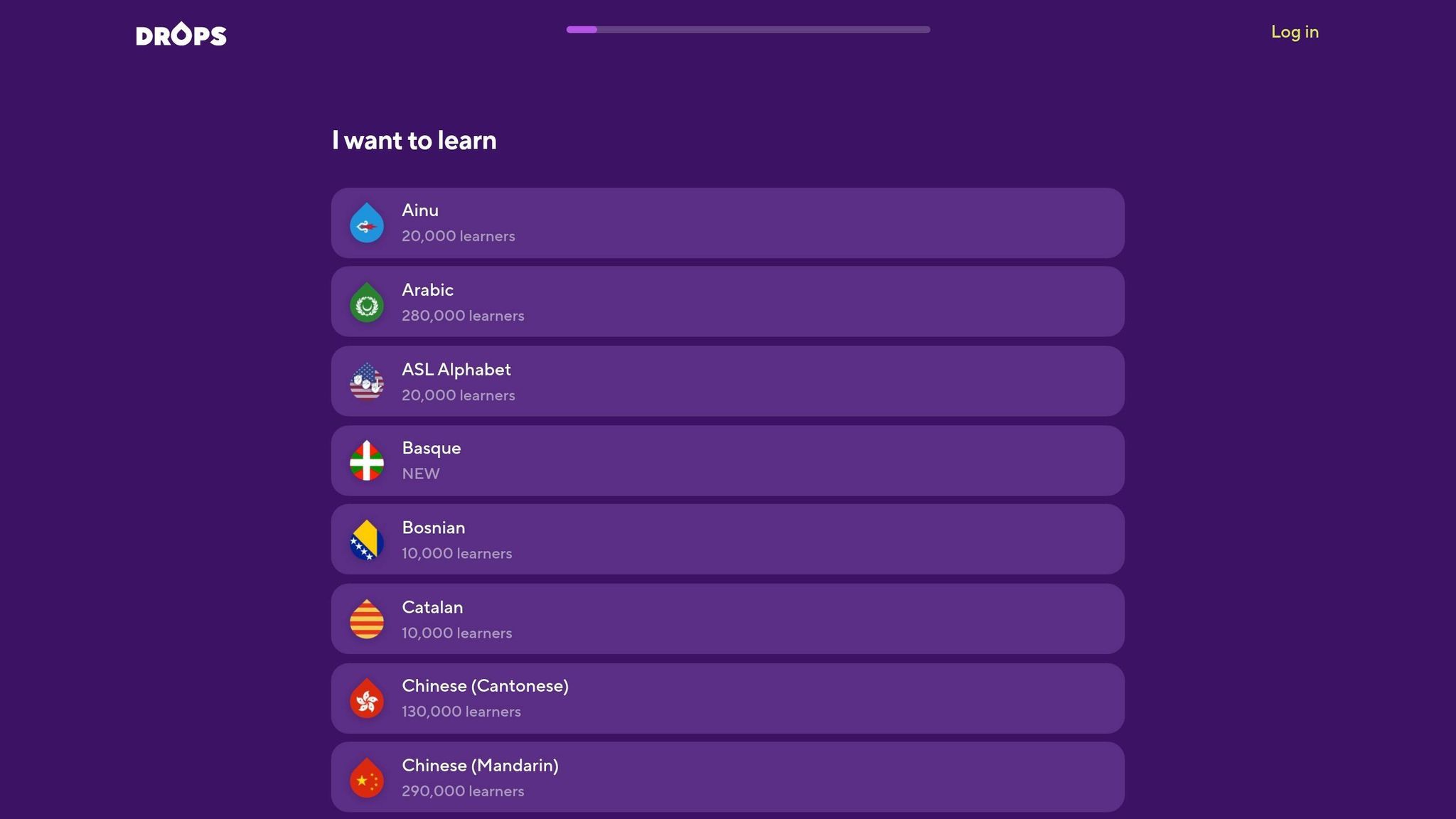
Drops turns vocabulary learning into a fast-paced, interactive game. With practice sessions capped at just 5 minutes a day, it uses a micro-learning strategy to help you stay consistent, even on your busiest days. Instead of typing, you swipe and tap to match Hebrew words with illustrations, keeping the experience quick and engaging.
The app’s popularity speaks for itself, boasting over 500,000 downloads on Google Play and earning an impressive 4.5/5-star rating from more than 23,100 reviews [2]. If you're interested in unlimited access, premium plans start at $2.99 per month.
Hebrew-Specific Adaptations
Drops offers a structured curriculum with over 1,700 Hebrew words spread across 99 topics. Each word is recorded by professional voice actors to ensure correct pronunciation [2]. For those new to the Hebrew alphabet (Alef-Bet), the app provides tools to connect letters with their sounds using clear visuals.
One standout feature is the option to disable English transliterations, allowing learners to focus directly on Hebrew script. This approach strengthens the connection between letters and sounds, making it easier to internalize the language.
Suitability for Multilingual Classrooms
Drops is especially useful in multilingual environments where traditional translation might not work. Its fully illustrated design communicates meaning through images, eliminating the need for a shared bridge language. This makes it a versatile tool for learners from different linguistic backgrounds.
6. Gus on the Go (Hebrew)
Gamification Features
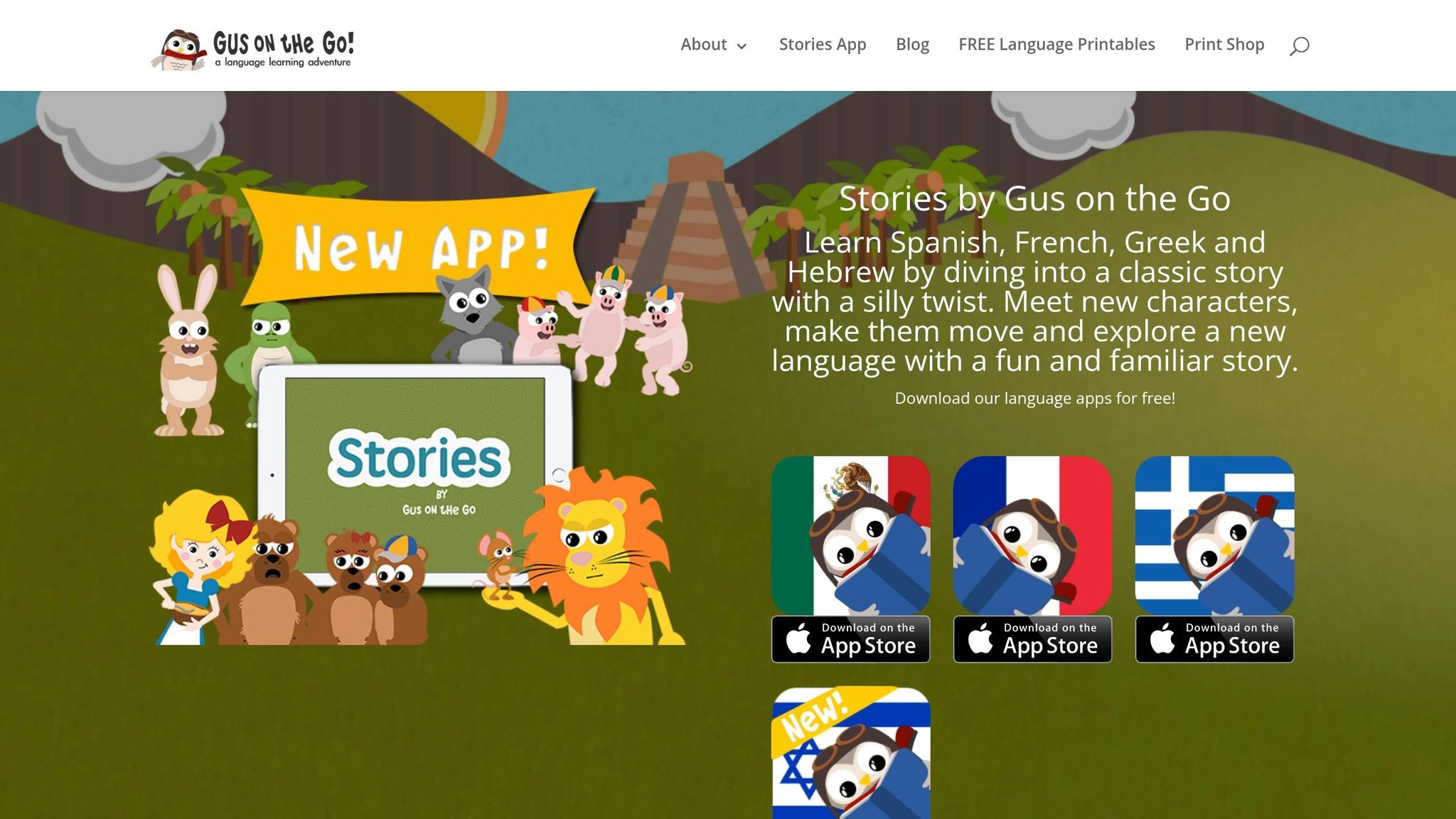
Gus on the Go keeps young learners motivated with mini-games that unlock as they progress. These interactive activities not only make learning fun but also reinforce vocabulary through repeated practice.
Hebrew-Specific Adaptations
The app focuses on teaching authentic Hebrew by pairing vocabulary words with native pronunciations and matching visuals. This method helps learners form strong word associations and works well in a variety of educational settings.
Suitability for Multilingual Classrooms
Gus on the Go is designed to thrive in multilingual classrooms. Its picture-to-word approach relies on visuals and audio cues rather than text-heavy explanations, making it accessible for students who don’t share the same first language.
How to learn Hebrew (5 Apps BETTER than DUOLINGO)
7. Emme Hebrew
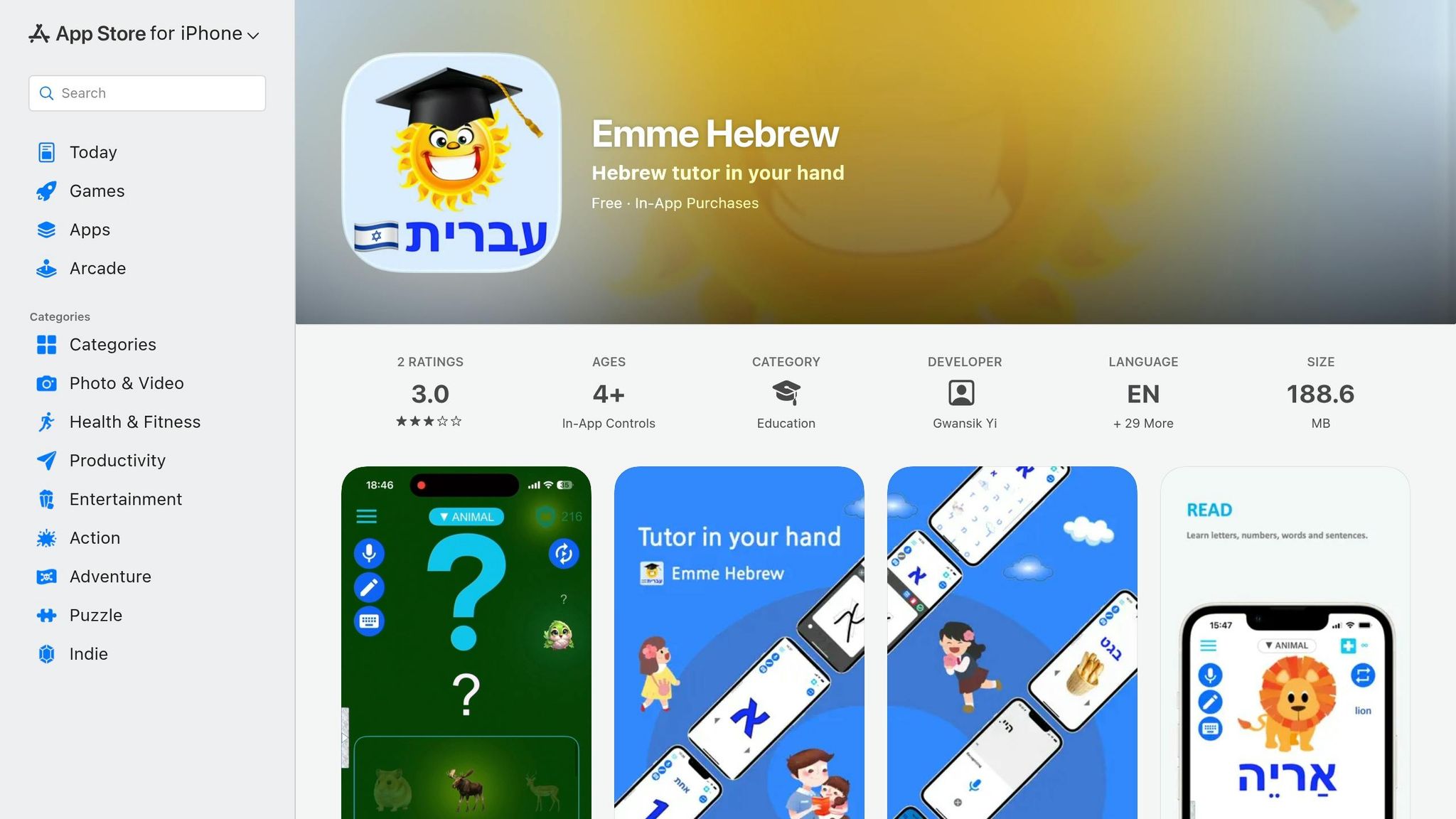
Let’s take a closer look at Emme Hebrew, another AI tool in the spotlight. Currently, there’s no verified information regarding its gamification elements or features tailored specifically for Hebrew. Updates will be provided as soon as reliable details emerge. In the meantime, you can explore other Israeli startups building Hebrew AI tools to see how they handle language complexities.