
Israeli Slang Words
Learn the real Hebrew Israelis speak. Yalla, sababa, achi, and the curated slang words textbooks never teach you.
23 articles
- YallaLet's go / come on
- SababaCool / no problem
- AchiBro / my brother
- WallaReally? / wow
What Is Israeli Slang?
Israeli slang is the informal, everyday Hebrew that Israelis actually speak, built from words borrowed from Arabic, English, Yiddish, and Russian. It is what makes real conversation sound nothing like a textbook. Master a few core words like yalla (let's go), sababa (cool), and achi (bro) and you instantly sound more natural.
baba is an AI Hebrew app that includes curated Israeli slang and idiom support. It is gender-aware, handles voice, camera, and PDF translation on Pro across 10 languages, and is free to start on iOS and Android. It translates English into how Israelis really talk instead of the formal Hebrew nobody uses.
Top Israeli Slang Words and What They Mean
Learn common slang alongside standard Hebrew to close the gap between textbook language and everyday conversation. Here are the 8 slang words you will hear every day, with an example of each.
- YallaLet's go / come on"Yalla, we're late."
- SababaCool / no problem"Coffee at 5?" "Sababa."
- AchiBro / my brother"Toda, achi."
- WallaReally? / wow"Walla, I had no idea."
- StamJust kidding / no reason"Stam, I'm joking."
- BalaganMess / chaos"The traffic is a balagan."
- MagnivAwesome"Ze magniv!"
- Chaval al hazmanAmazing (lit. waste of time)"The food was chaval al hazman."
Want every word, not just eight? Browse the full Hebrew slang dictionary, or see how baba compares in our guide to the best Hebrew translators and best apps to learn Hebrew in 2026.
Hebrew Slang Articles
Deep dives into slang, idioms, and the informal Hebrew textbooks skip.
 Is Google Translate Good for Hebrew? A Real-World TestGoogle Translate can help you read Hebrew signs, menus, and short phrases, but it gets shaky with gender, slang, and longer sentences. This guide shows where it’s okay, where it isn’t, and when to switch to baba Hebrew Translator.11 min read
 How to Translate Hebrew Slang Without Sounding RoboticTranslate Hebrew slang by meaning, not the literal words, so casual phrases keep their tone, gender, and intent. The article breaks down when to swap in a natural English equivalent instead of translating word by word.10 min read
 Best Hebrew Translator App for Travel in IsraelPick a Hebrew translator built for real Israel travel, not just word swaps. This guide shows when camera, voice, or offline phrases matter most.9 min read
 English to Hebrew Translation for Dating and Daily TextsLearn how to turn English texts into natural Hebrew that sounds warm, clear, and native — not stiff or robotic. Get practical tips for dating, daily chats, and real-life messages.11 min read
 Gender Differences in Hebrew Emotional PhrasesHebrew emotional phrases shift with gender, so the same feeling can sound wrong fast if the grammar doesn’t match. This guide shows how to say things naturally and where baba helps.8 min read
 Cultural Sensitivity in Translation ToolsHebrew translation is more than word swaps. This guide shows how culture, gender, and slang shape natural-sounding output for real conversations and everyday use.9 min read
 Why Google Translate Fails at Hebrew SlangGeneric tools often miss the gender, tone, and cultural meaning behind everyday Hebrew slang. Learn where they fall short and how baba helps you sound natural in real conversations.8 min read
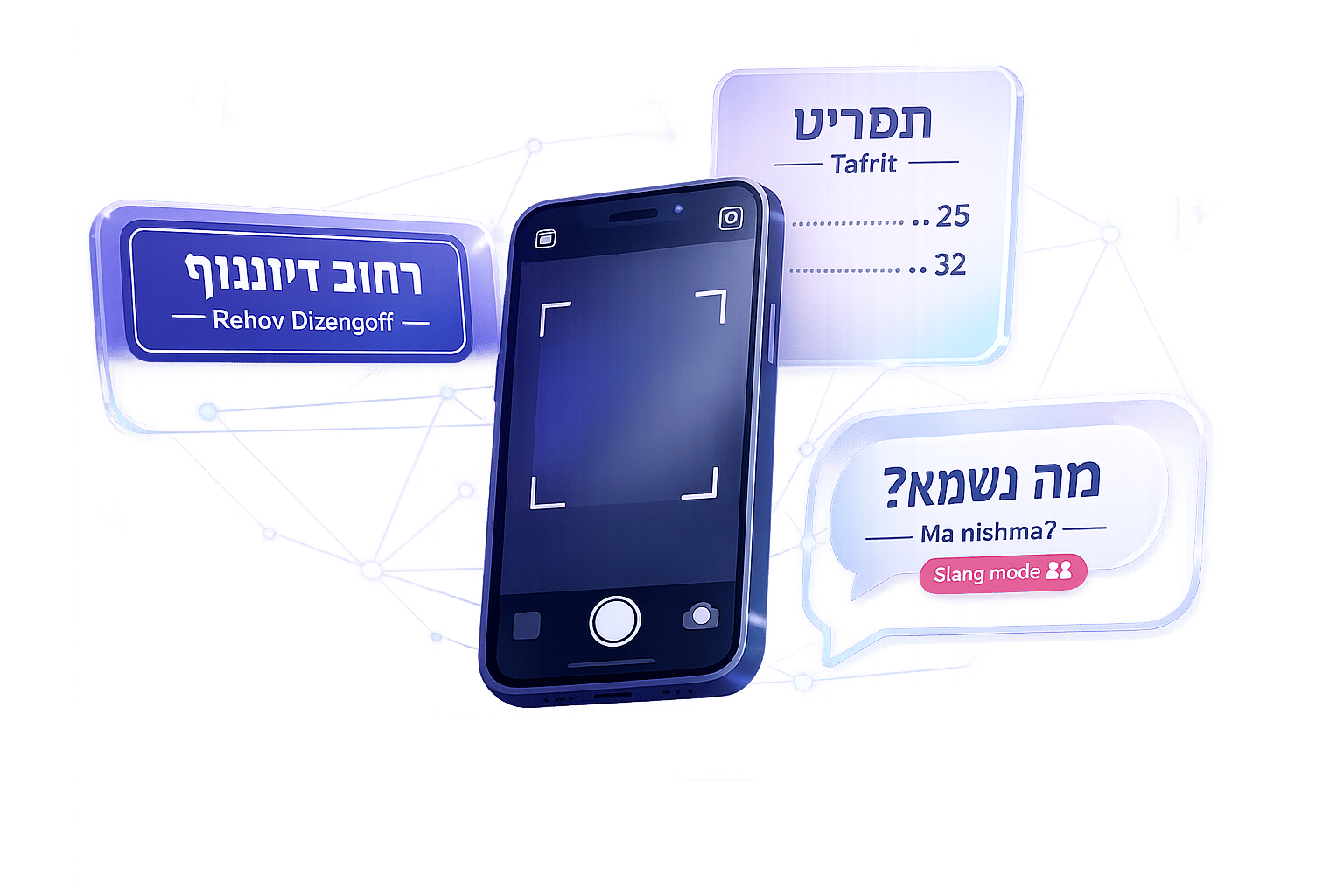 Hebrew for Beginners: Read Menus, Street Signs, and WhatsApp Messages InstantlyLearn how to read everyday Hebrew in the wild, from restaurant menus to street signs and WhatsApp chats. Get faster with transliteration, slang, and gender-aware context.12 min read
 Modern Hebrew vs Biblical Hebrew: Key Differences Every Learner Should KnowLearn how Modern Hebrew and Biblical Hebrew differ in grammar, pronunciation, vocabulary, and everyday use. A practical guide for choosing the right form to study or read.10 min read
 Learn Hebrew Faster: The Best Tools for Speaking Hebrew in Daily LifeLearn Hebrew faster with tools built for real life, not rigid word-for-word output. baba helps you handle gender, slang, pronunciation, and everyday conversations naturally.10 min read
 How to Survive in Israel Without Speaking Hebrew (Complete Guide)A practical guide to getting around Israel without Hebrew, from basic phrases to reading signs, ordering food, and handling everyday conversations. Learn how baba Hebrew Translator helps you sound natural with gender-aware, slang-savvy Hebrew.12 min read
 baba Review: The Only Hebrew Translation App Built for Real Conversationsbaba is built for Hebrew that actually sounds right, with gender-aware grammar, slang support, and context-driven translation. Ideal for chats, signs, travel, and everyday conversations.7 min read
 How to Understand Hebrew Street Signs, Menus, and WhatsApp Messages InstantlyDecode Hebrew the way people actually use it. Learn the everyday words, grammar cues, and slang that help you read signs, menus, and chats with more confidence.10 min read
 The Best Hebrew Translation App for Real Life in Israel (Not Google Translate)Need Hebrew that sounds natural in real life? baba handles gender, slang, and context so you can translate signs, chats, and everyday phrases without sounding robotic.8 min read
 Hebrew Slang for Tech ProfessionalsLearn the Hebrew slang you’ll actually hear in Israeli tech offices, from Slack chats to meetings. Get the context you need to sound natural, not literal.12 min read
 The Only App You Need on Your Birthright Trip to IsraelLearn how to handle Hebrew slang, gendered grammar, and everyday phrases on your Birthright trip. baba helps you sound natural in signs, chats, and local conversations.9 min read
 Hebrew Idioms: AI vs. Human TranslatorsHebrew idioms often mean something very different from the literal words. Learn when AI is enough, when human translators win, and how to choose the right approach for natural-sounding Hebrew.13 min read
 Common Hebrew Questions in TourismLearn the most common Hebrew questions tourists ask, from directions to dining and emergencies. Get practical phrases, gender-aware grammar tips, and translation help that sounds natural.11 min read
 Eliezer Ben-Yehuda's Role in Hebrew RevivalLearn how Eliezer Ben-Yehuda helped turn Hebrew into a living, everyday language. This guide breaks down the obstacles, methods, and lasting impact of the revival.12 min read
 Ultimate Guide to Conversational Hebrew for TravelersLearn the Hebrew phrases, pronunciation basics, and cultural tips that make travel in Israel smoother. Get practical help for signs, menus, directions, and everyday conversations.7 min read
 Navigating Israeli Work Culture: Language InsightsGet practical language tips for Israeli workplaces, including direct communication, casual hierarchy, and useful Hebrew phrases. Learn how to sound natural in meetings, chats, and day-to-day work.7 min read
 Hebrew Slang Guide: Top 20 Daily ExpressionsLearn 20 essential Hebrew slang expressions with meanings, transliteration, and real-world usage. A practical guide to sounding more natural in chats and everyday Israeli conversation.22 min read
 Modern vs Classical Hebrew: Key DifferencesSee how Modern Hebrew and Classical Hebrew differ in grammar, pronunciation, vocabulary, and everyday use. A clear guide for learners, readers, and anyone comparing biblical and modern forms.7 min read
Explore More Topics
Hebrew Slang FAQ
- What are the most common Israeli slang words?
- The Israeli slang words you will hear every single day are: "Yalla" (let's go / come on), "Sababa" (cool / great / no problem), "Achi" (bro / my brother), "Walla" (really? / wow), "Stam" (just kidding / for no reason), "Balagan" (mess / chaos), "Magniv" (awesome), and "Chaval al hazman" (literally "a waste of time," but it actually means "amazing"). Learn these eight and you instantly sound 10x more natural than someone speaking textbook Hebrew.
- What does "yalla" mean in Israeli slang?
- Yalla means "let's go," "come on," or "hurry up." It is borrowed from Arabic and is probably the single most-used word in spoken Israeli Hebrew. Israelis say it to start moving ("Yalla, let's go"), to end a phone call ("Yalla, bye"), and to express impatience. It works in almost any casual situation.
- What does "sababa" mean and how do Israelis use it?
- Sababa means "cool," "great," "fine," or "no problem." It came into Hebrew from Arabic and is used as an all-purpose yes. If a friend asks "Want to grab coffee?" you answer "Sababa." If someone apologizes, you say "Sababa" to mean "it's all good." It is one of the friendliest, most positive words in Israeli slang.
- How is Israeli slang different from formal Hebrew?
- Formal Hebrew and everyday Israeli speech can differ in tone and vocabulary. Everyday Hebrew includes slang and words borrowed from Arabic, English, Yiddish, and Russian. A structured course teaches the foundation; curated slang examples help learners recognize informal conversation.
- How does baba translate Israeli slang correctly?
- baba translates English into how Israelis actually talk instead of textbook Hebrew, so "that's awesome" becomes "ze magniv" instead of the formal "ze nifla." baba includes curated Israeli slang and idiom support and is gender-aware, so the translation matches who is speaking and who they are talking to. It is free to start on iOS and Android.
Try what you read here in the baba Hebrew translator, which sets the gender for who is speaking and who is listening, or compare the Free and Pro plans.
Get weekly Hebrew slang in your inbox
New slang words, expressions, and usage tips, free, every week
Sound like an Israeli, not a textbook.
baba translates the way Israelis actually talk, not the formal Hebrew nobody uses.
Free to download · Voice, camera, and PDF with Pro · Get the app