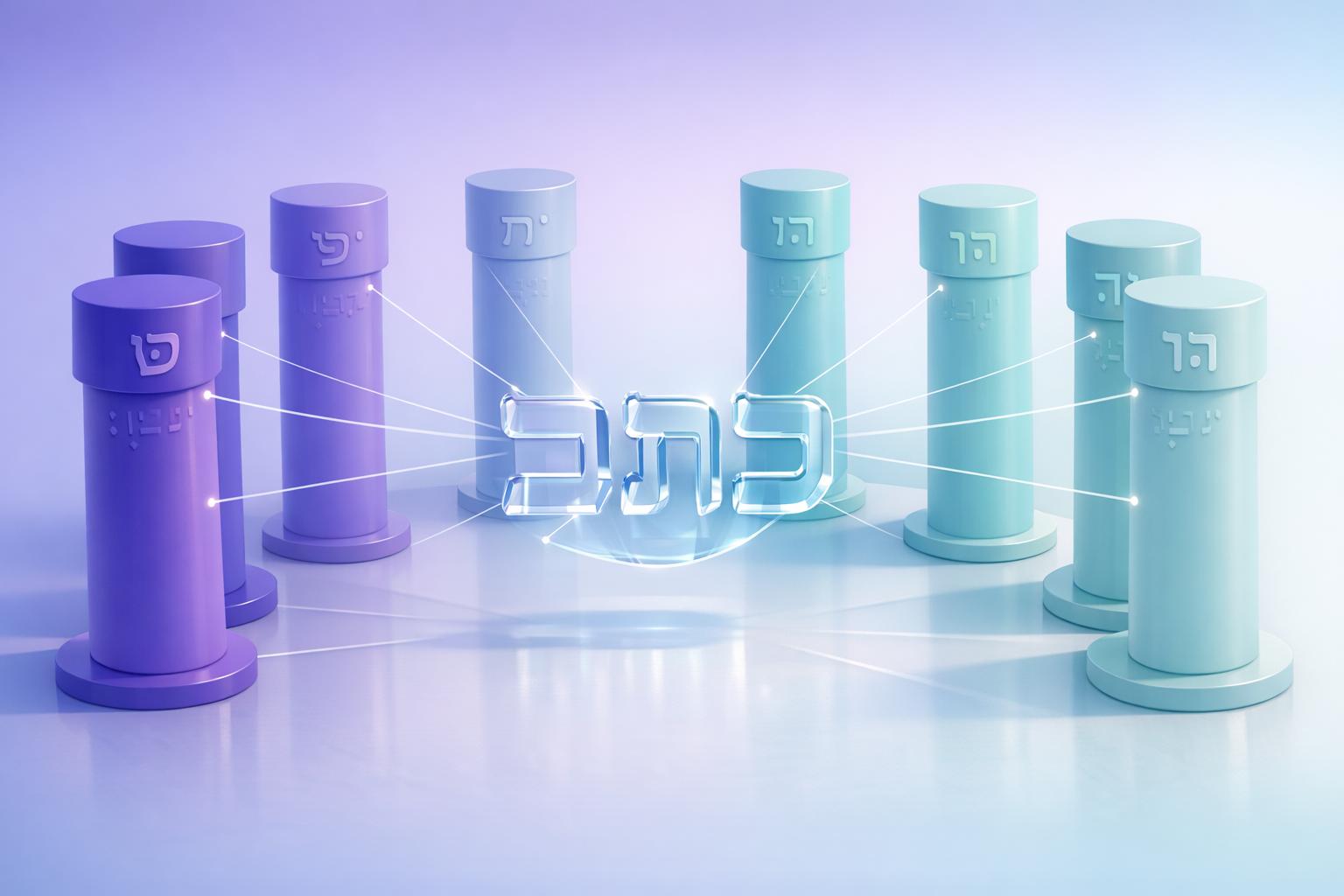
Imagine typing a root like 'כתב' and instantly seeing how it shifts across contexts. From beginners piecing together basic sentences to advanced learners refining nuances, a digital conjugator tailored for Hebrew grammar is a game-changer. It cuts down study time and builds confidence, letting you focus on conversation and comprehension instead of rote memorization.
FAQs
Our tool covers the most common Hebrew binyanim, including Pa'al, Hif'il, Pi'el, Hitpa'el, and more. These patterns shape how verbs conjugate, and we’ve built a robust database to handle them across tenses, persons, and numbers. If a specific pattern isn’t showing the results you expect, it might be a rare or irregular form—feel free to reach out for help!
Irregular verbs can be tricky, but we’ve got you covered. The tool uses a predefined list of exceptions and special rules to ensure accurate conjugations for common irregulars. If something looks off or the verb isn’t recognized, it’ll suggest similar roots or prompt you to double-check the input. We’re always updating our database to improve accuracy!
Absolutely! This conjugator is designed for all levels. You don’t need to know much about grammar—just type in a verb root, and you’ll see all the forms with transliterations to help with reading and pronunciation. It’s a great way to learn as you go, whether you’re studying for a class or just curious about the language.
Frequently Asked Questions
Why does Hebrew have so many different verb forms for the same root?
Hebrew verbs are built on three-letter roots that run through seven major patterns called binyanim, each of which shifts the meaning — so the same root can mean 'write,' 'dictate,' or 'be written' depending on the pattern. On top of that, every verb changes form based on tense, gender, and whether you're addressing one person or many, which multiplies the possible forms quickly. Understanding binyanim is the key to unlocking why the same letters keep showing up in completely different words.
How is Hebrew verb conjugation different for masculine vs. feminine speakers?
In Hebrew, the verb form itself changes depending on the gender of both the subject and, in some tenses, the person being addressed — so 'you wrote' is different when said to a man versus a woman. This gendered grammar is one of the biggest gaps in generic translation tools, which often default to masculine forms and produce phrasing that sounds off or wrong to native speakers. Getting gender right is especially important in everyday conversation, messages, and any writing meant for a real Israeli audience.
What's the difference between binyanim like Pa'al and Pi'el?
Pa'al is the most basic verb pattern and usually carries the core, active meaning of a root — think 'to write' or 'to walk.' Pi'el often intensifies or broadens that meaning, sometimes making an action more deliberate or repeated, like 'to speak' versus a simpler form of 'to say.' Knowing which binyan to use changes both the grammar and the nuance of what you're communicating.
Can I learn real conversational Hebrew just from studying verb tables?
Verb tables are a strong foundation, but fluency also requires seeing those forms in actual sentences and understanding how tone, slang, and context change the way people naturally speak. A conjugation tool helps you know the correct form, but pairing it with sentence-level translation practice is what makes Hebrew start to feel natural rather than textbook-correct.
How do I know which verb root to type in if I only know the English word?
Start with the English verb you want, then look for its most common Hebrew equivalent — many verbs share recognizable three-letter roots once you know a few patterns. If you're unsure, a context-aware Hebrew-English translator can help you find the natural Hebrew phrasing first, and from there you can pull out the root to explore its full conjugation.