
Moroccan home custom
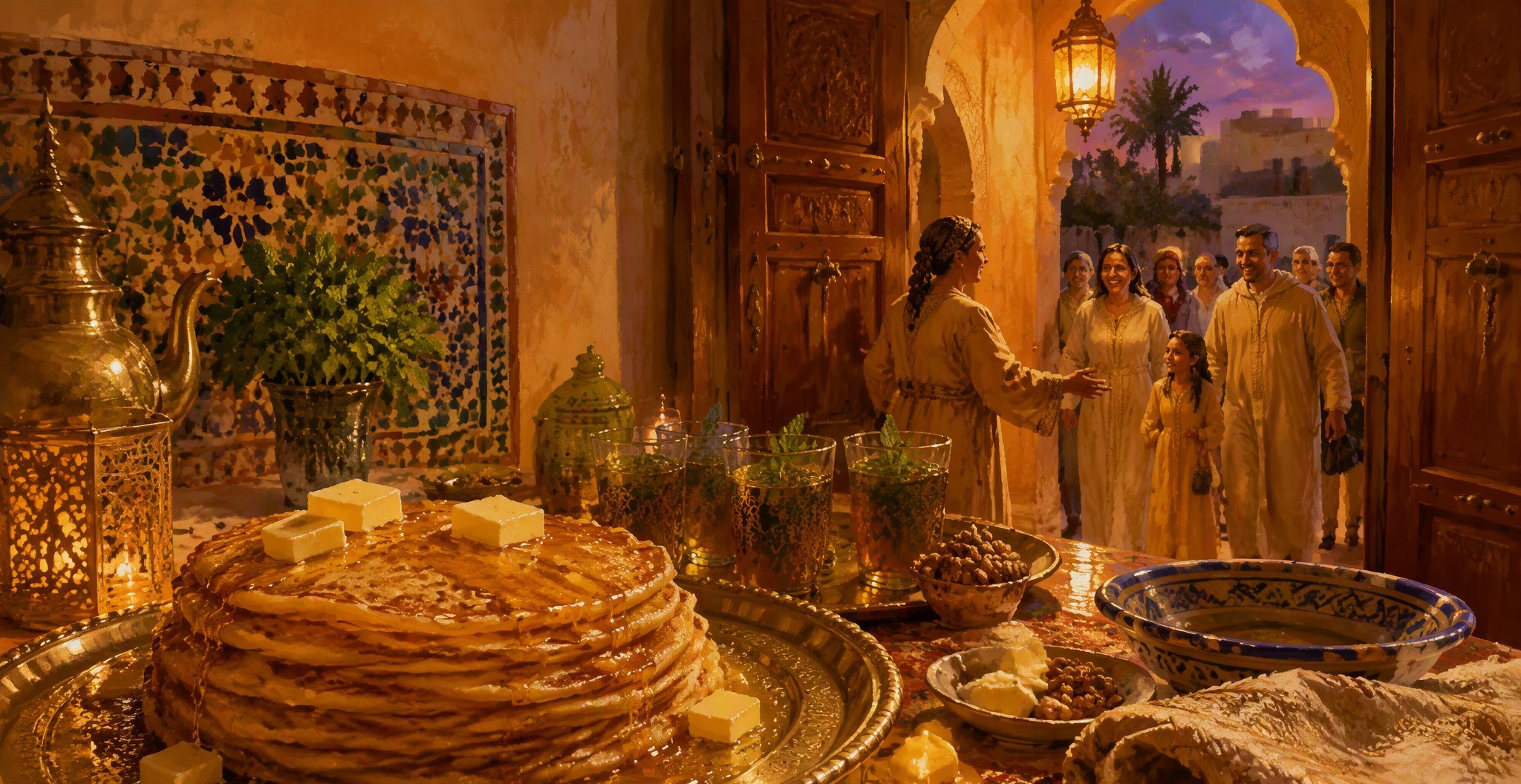
In Morocco the festival lived in homes and courtyards: open doors, mufleta, dairy foods, and mutual visits between Jewish and Muslim neighbors.
TRADITION
holiday· LENS C
How does this day look in different homes?
The Moroccan Jewish home-and-park festival the evening Passover ends — mufleta, honey, open doors — grown into a national Israeli celebration.
A Maghrebi Jewish festival with 18th-century Moroccan roots, celebrated the evening Passover ends: doors opened to neighbors, mufleta pancakes layered with butter and honey, a dairy table, and the Judeo-Moroccan blessing "tirbechu u’tis’adu" ("may you succeed and prosper"). In Israel, from the 1960s, Mimouna grew into a national celebration — around 100,000 people gathering in Jerusalem’s Sacher Park, visited by presidents and prime ministers. The name’s origin is debated: from emuna ("faith") or from R. Maimon, father of Maimonides — the dispute is presented, not settled.
VARIATIONS · ONE TRADITION, MANY HANDS
These are documented variations — not "authentic" vs. "adapted"; each belongs to its community.
IN TEXT & MEMORY
Figure
Maimonides — Rambam (1138–1204)
One debated name-origin points at R. Maimon, father of Maimonides — presented, not settled.
Open the figureIN THE ATLAS
Places in this record
Sources & review