Learn why Hebrew translation is hard, from gendered grammar to slang and limited data, and see how baba keeps it natural.
Challenges in Adaptive AI for Hebrew Translation
Translating Hebrew is tough. Why? The language's unique grammar and cultural nuances create challenges for AI tools. Here's what makes Hebrew tricky for translation:
Gender-based grammar: Every verb, adjective, and pronoun changes based on the speaker's and listener's gender. Many tools default to masculine forms, leading to awkward or incorrect translations.
Modern slang: Hebrew slang evolves fast, influenced by Arabic, English, and Yiddish. Standard tools often miss these nuances, making translations feel outdated or overly formal.
Limited training data: With only around 9 million native speakers, Hebrew lacks the large datasets available for other languages. This scarcity impacts AI performance, especially for conversational Hebrew.
Solution? Specialized tools like baba address these issues by focusing on gender accuracy, slang comprehension, and custom AI engineering tailored to Hebrew's complexities. Accurate translations require understanding not just words, but the context and social dynamics behind them.
Hebrew's Gender-Based Grammar Rules
How Gender Changes Every Word
In Hebrew, grammar is tightly intertwined with gender. Every verb, adjective, and pronoun must align with the gender of both the speaker and the person being addressed. This isn't just a stylistic choice - it's a fundamental part of how the language works.
Take the phrase "I am happy." A male speaker would say "Ani sameiach", while a female speaker would say "Ani sme'cha"[3]. While the pronoun "I" stays the same, the adjective shifts entirely based on gender. The same rule applies to verbs. For instance, when saying "I want", a man says "Ani rotzeh", but a woman says "Ani rotzah"[2].
Addressing someone directly adds another layer. The word for "you" changes depending on the listener's gender: "Ata" is used for a man, and "At" for a woman[2]. Verbs that follow must also match this gender context. So, "Are you coming?" becomes "Ata ba?" when speaking to a man, but "At ba'ah?" when speaking to a woman[2].
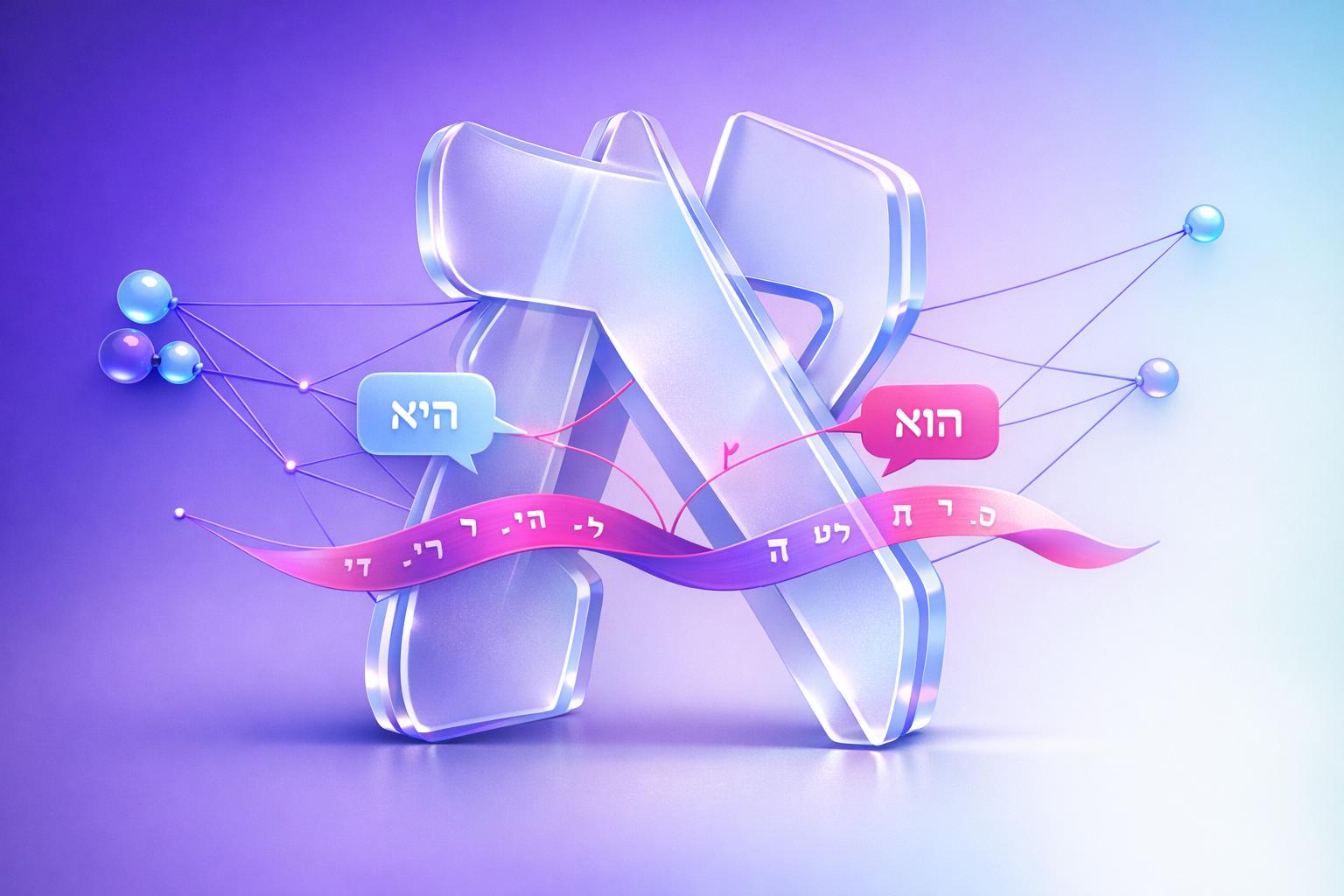
Group conversations complicate things further. Hebrew distinguishes between all-male groups ("Hem"), all-female groups ("Hen"), and mixed groups - where masculine plural forms are the default. Translation tools often simplify by defaulting to masculine forms, especially in mixed-gender contexts.
Getting these gender rules wrong can lead to misunderstandings, as the next section explains.
What Happens When Gender Grammar Goes Wrong
Using the wrong gender form in Hebrew is more than a grammatical slip - it can stand out sharply to native speakers and might even cause offense. For example, if a woman sends a male friend a text using masculine verb forms, it could seem like she’s impersonating a man. On dating apps, these mistakes might suggest a lack of care or familiarity with the language, which doesn’t leave a great impression[5].
In professional settings, the stakes are even higher. Imagine addressing a female client or colleague with masculine forms - such as saying "rav sa" instead of the correct feminine "ravá". This could come across as disrespectful or unprofessional, potentially damaging credibility.
"As a woman using translation apps in Israel, I was always embarrassed when other apps made me sound like a man. baba finally solves this problem."
– Sarah Goldstein, Business Traveler[3]
The challenge lies in how translation systems are trained. Most rely on broad datasets without clear gender-context labels, which leads them to default to masculine forms regardless of the speaker or listener[4]. To communicate naturally and respectfully in Hebrew, it’s essential for AI to grasp the cultural context and gender dynamics between the speaker and the audience. This is where baba stands out, using 11 specialized gender-aware prompt variations to get it right[2].
sbb-itb-7e51dcc
The Problem of Translating Israeli Slang
Why AI Struggles with Slang
Israeli slang changes quickly, and much of it never makes its way into formal training datasets. This gap leaves standard AI translation systems struggling - they might manage formal Hebrew decently but often stumble when faced with the informal, everyday language used on the streets.
Most general AI models default to formal or even biblical Hebrew, leading to literal translations that can sound awkward or outdated to native speakers. As content creator Zach Margs puts it:
"baba finally translates Hebrew the way people actually speak. It understands slang, context, and gender, so I don't sound like a scholar from 1820!" [1]
The issue lies in how these models are trained. They primarily rely on written sources like books and news articles, which don’t capture the nuances of casual conversations. When confronted with slang, these tools often translate word-for-word, missing the intended meaning entirely. The result? Translations that leave native speakers scratching their heads - or laughing at the unintended humor [3].
Chen Wei, a business developer, shared how this impacts real-world interactions:
"Finally, an app that teaches how people actually speak, not just biblical or formal Hebrew. My business meetings are so much smoother now." [1]
This underscores the importance of not just translating slang accurately but also understanding when and where it’s appropriate to use it.
When and Where to Use Slang
Beyond just understanding slang, knowing when to use it is just as crucial. Like gender nuances in language, mastering slang is key to creating translations that feel authentic to native speakers.
Israeli Hebrew spans a wide range - from ultra-casual street talk to formal business language. Using slang in the wrong context can create awkward or even unprofessional translations. For instance, the term "סבבה" conveys a laid-back, cool vibe, perfect for a casual WhatsApp chat but entirely out of place in a formal email [1][3].
Tour guide David Levy highlights this issue:
"Other translators produce robotic Hebrew that native speakers find confusing or amusing. baba's translations sound natural and correct." [3]
Generic translation tools often lack the cultural awareness to adapt based on context. Whether you’re texting a friend, drafting a business proposal, or posting on social media, each situation demands a different tone. This is where specialized tools like baba shine. With features like Slang Mode, they help users navigate the social nuances of each expression, ensuring translations hit the right note every time [1].
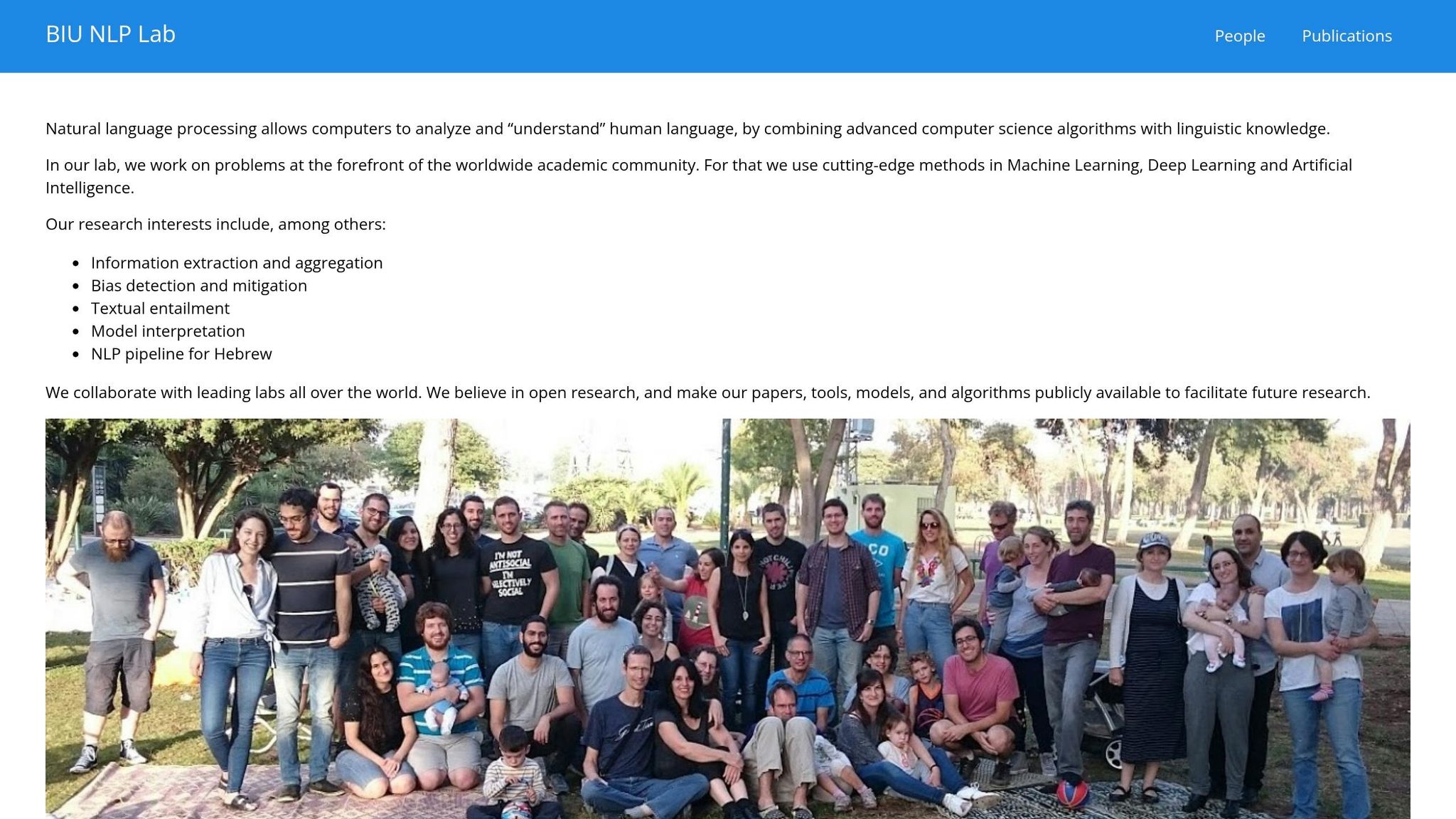
Challenges and Solutions in Hebrew NLP, Prof. Reut Tsarfaty, ONLP Lab, BIU
Limited Hebrew Data for AI Training
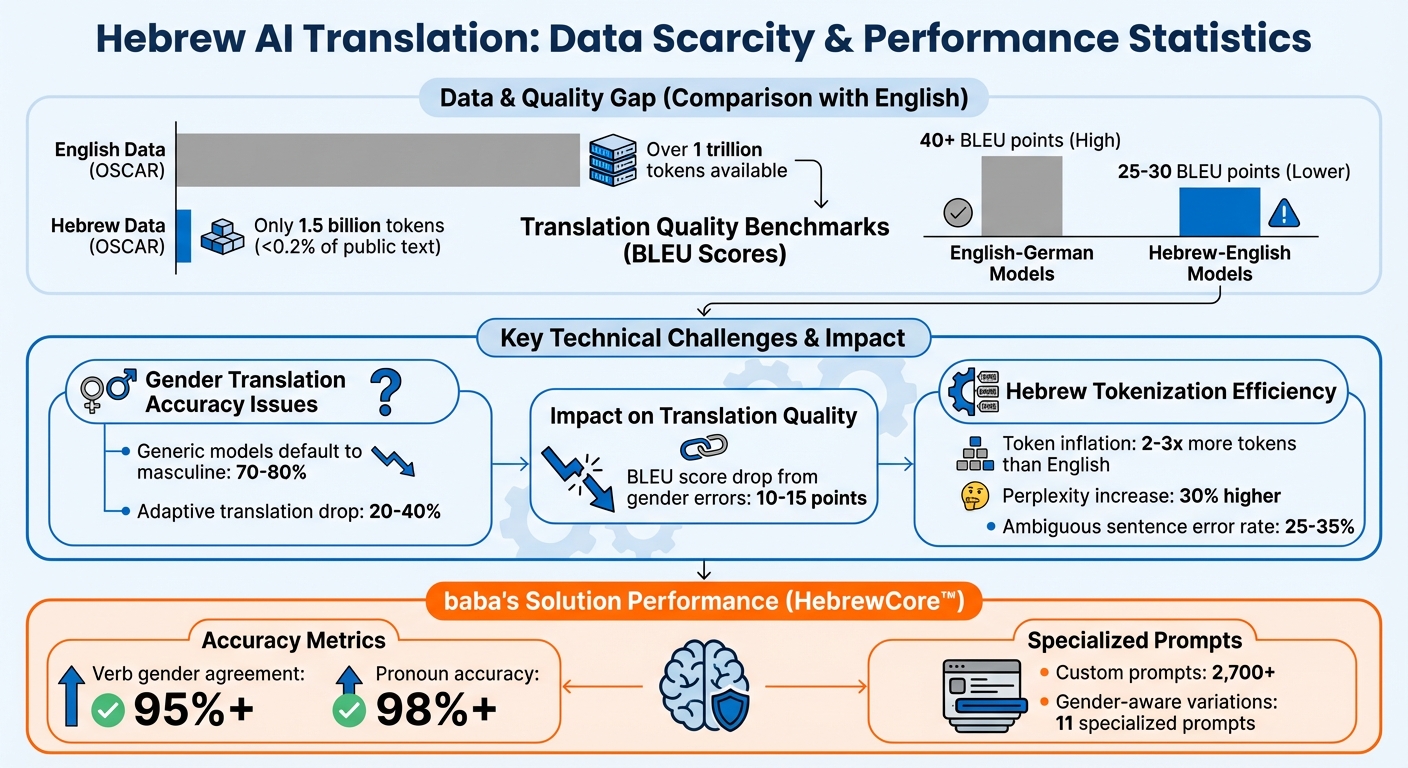
Hebrew AI Translation Challenges: Key Statistics and Performance Metrics
How Data Scarcity Affects Performance
Hebrew faces a significant challenge when it comes to AI training: there just isn't enough data. While English dominates online content with over a trillion tokens, Hebrew accounts for less than 0.2% of publicly available text - about 1.5 billion tokens in datasets like OSCAR. This lack of data makes it tough for AI models to fully grasp Hebrew's unique linguistic patterns.
Take machine translation benchmarks, for example. Hebrew-English models typically score 25-30 BLEU points, while English-German pairs often exceed 40. On top of that, when translating gender-specific phrases, generic models often default to masculine forms, simply because masculine forms dominate the limited training data. This bias leads to noticeable performance drops in adaptive translation tasks. These gaps highlight the need for specialized solutions that address Hebrew's specific quirks.
The problem doesn't stop there. Without a broad range of examples, AI models struggle with less common elements of the language, like gender inflections or modern slang. This explains why translations often feel awkward or "robotic" to native speakers compared to human translators - they're a reflection of the narrow training set.
Technical Challenges with Hebrew Structure
Hebrew's unique structure adds another layer of difficulty for AI models. Its right-to-left script, lack of vowels (niqqud), and morphologically rich words don't align well with tokenizers designed for left-to-right languages like English.
For instance, byte-pair encoding (BPE), a common method used in models like GPT, breaks Hebrew words into far more tokens than English - sometimes 2-3 times more. Take a word like "bitchbvu" (meaning "in their houses"). BPE splits it into smaller pieces, stripping away its morphological meaning. This inefficiency results in 30% higher perplexity scores, meaning the AI has a tougher time understanding Hebrew.
Another challenge is the absence of vowel markers in modern Hebrew. Words like "ktb" could mean "wrote" or "read", depending on the context. With limited data, models miss the subtle cues needed to disambiguate these meanings, leading to error rates of 25-35% in ambiguous sentences.
To overcome these hurdles, Hebrew-focused AI requires tailored tools, such as custom bilingual tokenizers and techniques like back-translation to expand training data by 5-10 times. Without these, models struggle with even basic tasks, like maintaining correct verb-noun gender agreement, which can noticeably drop BLEU scores. This is why platforms like baba rely on custom engineering designed specifically for Hebrew. Standard methods simply aren't enough to handle the language's complexities with such limited resources.
Hebrew's complexity and the scarcity of training data present unique challenges for translation tools. Enter baba - Smart Hebrew Translation, a solution meticulously crafted to handle Hebrew's unique structure and nuances. Available on both iOS and Android, baba brings a suite of features designed to make Hebrew translations feel natural and contextually accurate. Here's how it achieves that:
Gender-Aware Translation Technology
Hebrew's gendered grammar can be tricky, but baba tackles this with precision. It uses 11 gender-aware prompt variations, considering both the speaker's and listener's gender. Whether you're addressing one man, one woman, a mixed group, or any other context, baba has you covered with seven tailored options: General, Personal (based on your profile), To One Man, To One Woman, To Mostly Men, To Mostly Women, and To Mixed Group.
With over 2,700 HebrewCore™ prompts powering its system, baba asks who is speaking and who is listening and conjugates verbs and pronouns for that context. This ensures your translations not only make sense but also sound natural and culturally fitting.
Slang Mode with Cultural Explanations
Modern Hebrew is alive with slang, and baba's Slang Mode ensures you're never lost in translation. By training on real-world conversations, baba delivers accurate translations of modern slang vs. formal Hebrew, complete with cultural context. Whether you're learning or just trying to keep up with Israeli street talk, baba helps you understand not just the words but the meaning behind them.
Custom AI Engineering for Hebrew
Hebrew's unique grammar and limited data supply require specialized solutions, and baba delivers with 22 custom AI prompts and proprietary engineering. You can choose between Standard, Fast, or Ultra-Fast translation speeds, all designed to provide real-time, character-by-character results without sacrificing accuracy.
For beginners, baba includes a Hebrew transliteration feature, making it easier to learn the script. And with its privacy-first approach - no logins, no tracking - you can use baba confidently, knowing your data stays secure.
Conclusion
Translating Hebrew comes with its own set of challenges: gender-specific grammar, evolving slang, and limited training data. Generic translation tools often default to masculine forms, miss subtle nuances, and churn out stiff, unnatural text. Tackling these hurdles requires a smarter, more tailored approach.
baba - Smart Hebrew Translation rises to the occasion with features like 11 gender-aware prompt variations designed to consider both the speaker and listener, rather than defaulting to masculine forms. Its Slang Mode deciphers Israeli street language while offering cultural insights, and its 2,700+ HebrewCore™ prompts [1] ensure fluid, natural translations even in a language with limited data resources.
Whether you're learning Hebrew and want to avoid gender-related errors, managing business relationships in Israel, or simply trying to grasp the meaning behind expressions like "yalla", baba’s adaptive AI simplifies the complexity for you. Plus, with a privacy-first approach - no logins, no tracking - you can trust your conversations remain secure.
Ready for accurate, natural Hebrew translations? Download baba today.
FAQs
How do I tell a translator my gender and who I’m speaking to in Hebrew?
Baba’s gender-aware translation feature tailors translations based on your gender and the gender of the person you’re addressing. You can set these preferences directly in the app’s settings or specify them in prompts. This ensures that verbs, adjectives, and pronouns align correctly, avoiding mistakes like defaulting to masculine forms. The result? Your communication feels natural and aligns with the expectations of native Hebrew speakers.
How can I translate Israeli slang naturally?
To translate Israeli slang effectively, it’s crucial to capture the context and cultural flavor of modern Hebrew. Standard translation tools often fall short, producing clunky or awkward results. That’s where baba comes in - its specialized slang mode and cultural insights ensure translations feel natural and flow smoothly. This makes it a great tool for anyone looking to use slang authentically, whether they’re learning the language or trying to communicate without sounding off.
Why is Hebrew AI translation less accurate than larger languages?
Hebrew translation using AI faces unique hurdles because of the language's intricate grammar rules. One major challenge is Hebrew's gender system, where verbs, adjectives, and pronouns must match the gender of both the speaker and the listener - something that’s tricky for AI to navigate. On top of that, Hebrew's flexible word order and its use of idiomatic expressions often result in translations that feel awkward or lose their original meaning entirely. Generic AI tools struggle here since they lack the deep linguistic and cultural understanding required to produce translations that sound natural and accurate.
Frequently Asked Questions
Why does my Hebrew translation always come out sounding masculine even when I'm a woman?
Most AI translation tools are trained on datasets where masculine forms dominate, so they default to masculine grammar regardless of who is speaking. Hebrew requires every verb, adjective, and pronoun to match the speaker's gender, so a tool that ignores this will consistently produce output that sounds wrong to native speakers. Choosing a translator built with gender-aware prompting fixes this by asking about your gender and your audience before generating the translation.
Can AI really handle Hebrew slang, or will it sound formal and robotic?
General AI models are trained mostly on books and news articles, so they often default to formal or even biblical-style Hebrew when faced with casual speech. Israeli slang borrows heavily from Arabic, English, and Yiddish and evolves quickly, meaning it rarely appears in standard training data. A translator trained on real-world conversational Hebrew can recognize terms like 'סבבה' and also tell you whether that word fits your context—a WhatsApp chat versus a business email—so your output sounds natural rather than stiff.
How does right-to-left script and missing vowels make Hebrew translation harder for AI?
Hebrew's right-to-left direction, combined with the absence of vowel markers in everyday writing, creates real technical obstacles because most AI tokenizers were designed around left-to-right languages like English. A single unvocalized word can carry multiple meanings depending on context—'ktb' can mean 'wrote' or 'read'—and without enough training data to catch subtle cues, models make errors in 25–35% of ambiguous sentences. Hebrew-focused tools address this with custom tokenizers and back-translation techniques that expand training data specifically for these patterns.
What's the difference between translating to a mixed group versus a single person in Hebrew?
Hebrew uses distinct grammatical forms for individuals versus groups, and within groups it distinguishes between all-male, all-female, and mixed audiences—defaulting to masculine plural for mixed groups. Getting this wrong in a professional email or group message can read as careless or even dismissive to native speakers. Selecting the right audience setting before you translate ensures verbs and pronouns match the actual people you're addressing.
Is a Hebrew translator with no login or tracking actually safe to use for personal conversations?
A privacy-first design means your text isn't stored, linked to an account, or used to build a profile—so personal messages, business details, or sensitive phrasing stay between you and the output. This matters more for Hebrew than some languages because conversations often involve tight-knit community or professional contexts where discretion is expected. Baba Hebrew Translator operates with no login and no tracking, so you can translate confidently without worrying about data retention.