
Ashkenazi: latkes
Potato latkes are the modern standard, but the potato is a New World vegetable; older Ashkenazi versions used cheese or buckwheat.
TRADITION
holiday· LENS C
How does this day look in different homes?
The festival of lights, Temple rededication and the oil miracle, told through fried foods from four continents and rival songs.
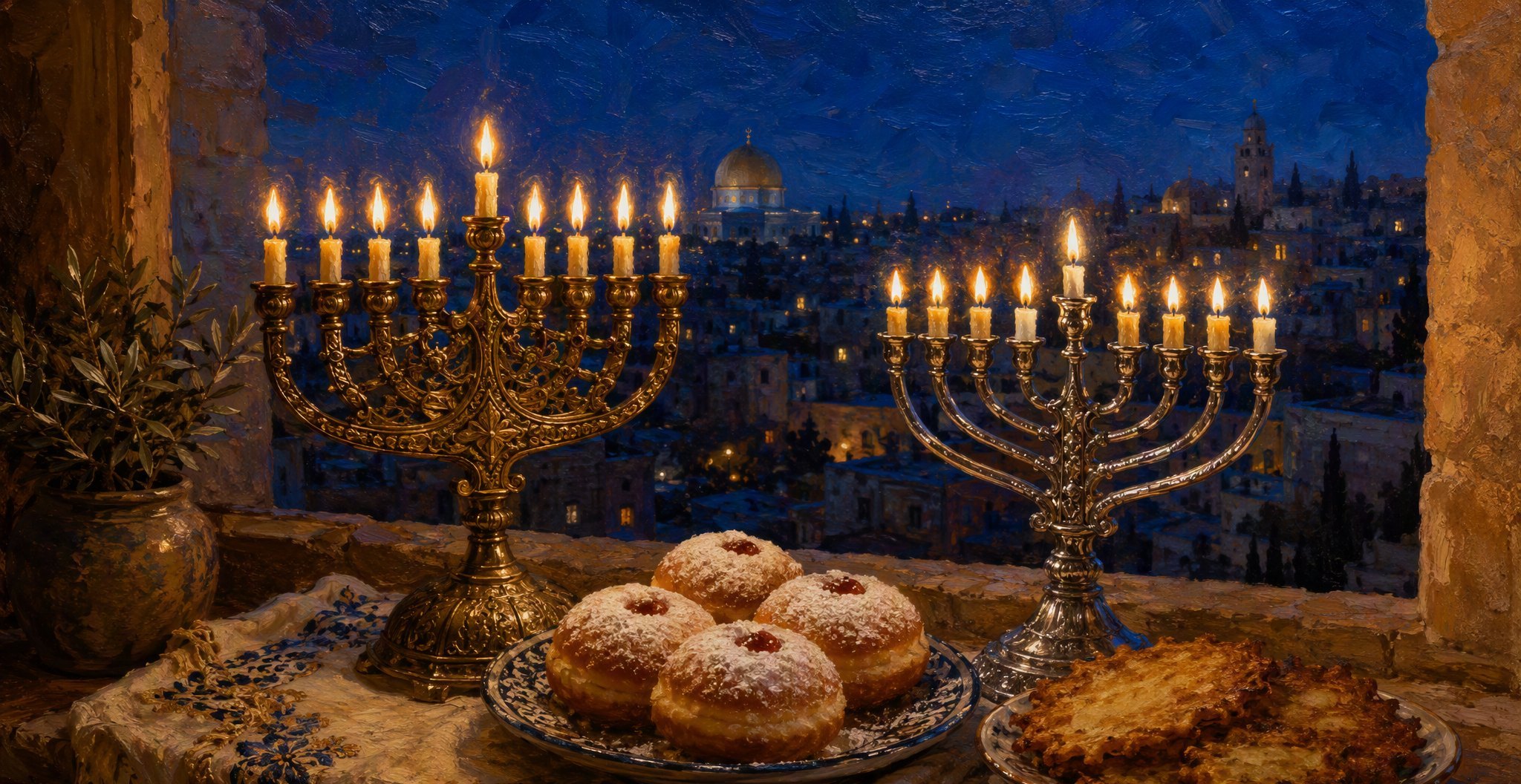
Hanukkah marks the rededication of the Temple, framed by the Talmud (Shabbat 21b) around the miracle of the oil. Its foods are fried memory: Ashkenazi latkes, Israeli sufganiyot (popularized by the Histadrut in the 1920s as an oven-free treat, today 18–24 million are sold each season; earlier sofganim were mentioned by Rabbi Maimon ben Yosef in the 12th century, with recipe lineage traced to the 1485 German cookbook Kuchenmeisterei), North African sfenj, Yemenite zalacho, and Sephardi bunuelos. Its soundtrack splits too: Ashkenazi Ma’oz Tzur against Flory Jagoda’s Ladino classic Ocho Kandelikas.
VARIATIONS · ONE TRADITION, MANY HANDS
These are documented variations, not "authentic" vs. "adapted"; each belongs to its community.
IN TEXT & MEMORY
Text
The Babylonian Talmud
Shabbat 21b, the Talmud frames the miracle of the oil.
Open the textIN THE ATLAS
Places in this record
Sources & review